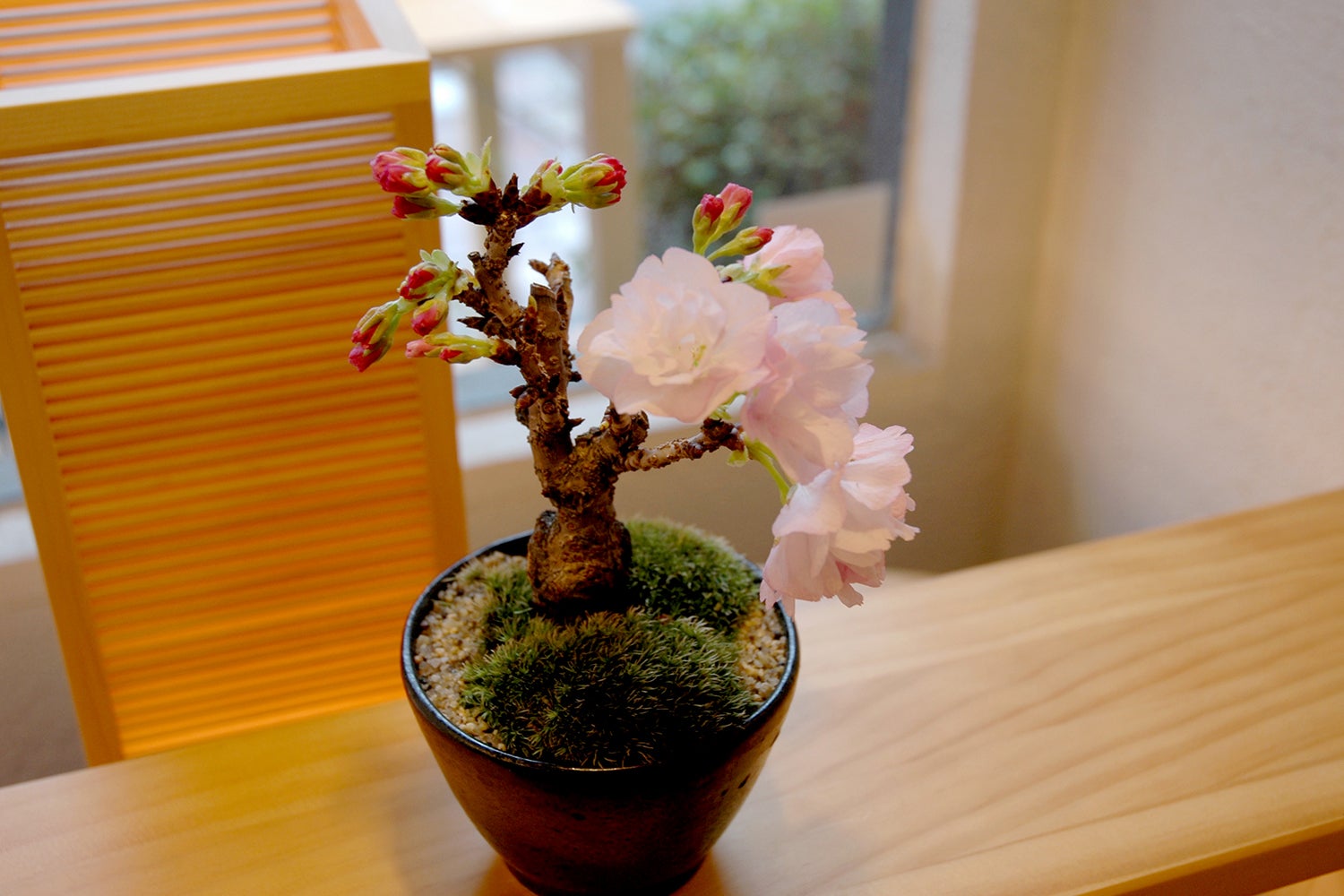
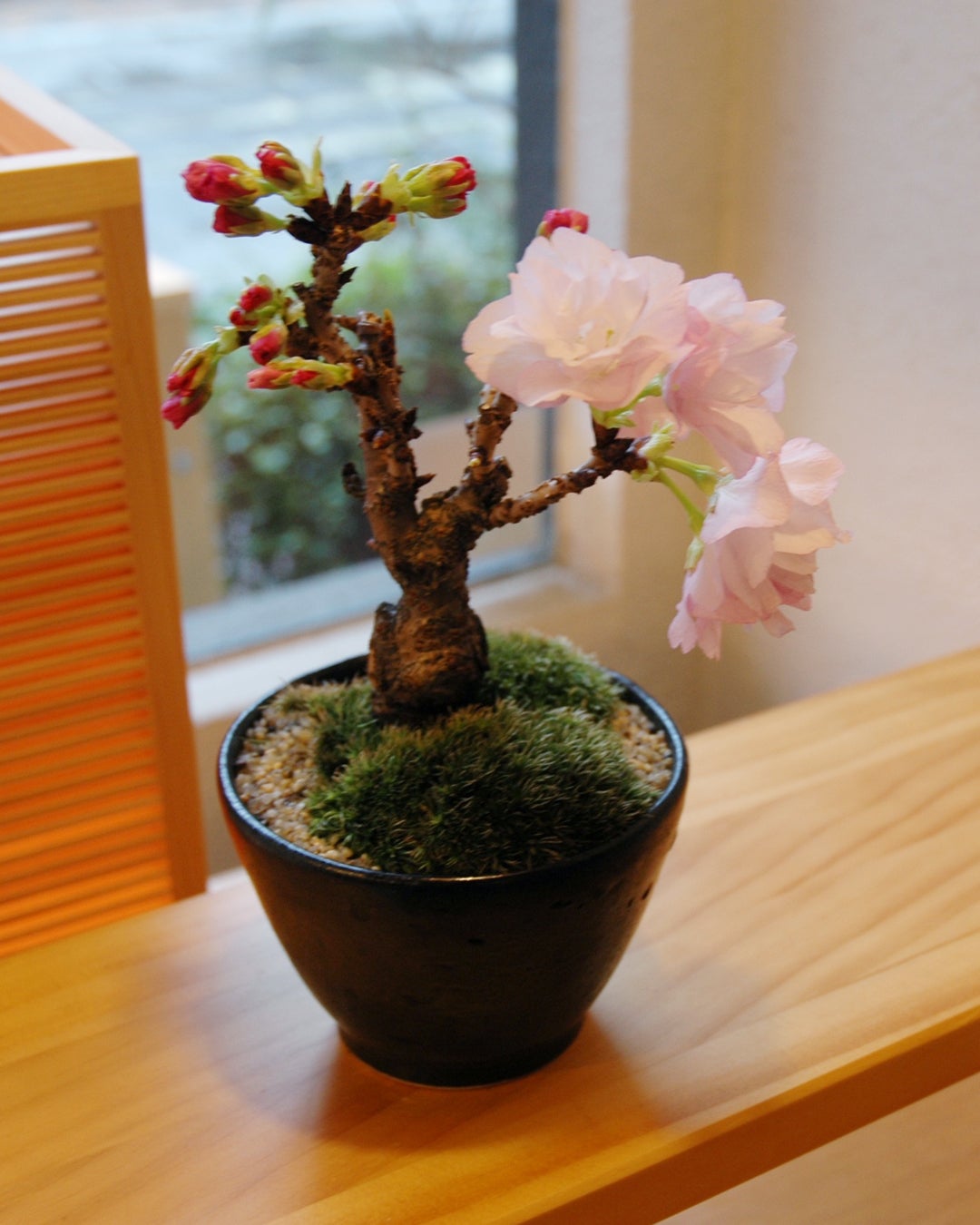
日本の春の象徴とも言える桜、園芸品種は400以上と豊富にありますが、
盆栽では、剪定に強い山桜系や江戸彼岸系の富士桜などが人気です。
Sakura are a symbol of spring in Japan, and there are over 400 cultivated varieties.
For bonsai, the most popular are the Yamazakura,
which tolerates pruning well, and the Edohigan variety, Fujizakura.
旭山桜
(アサヒヤマサクラ)
花:八重咲き 中輪(淡紅紫色)
Flowers: Double, medium-sized (pale pink-purple)
花弁枚数:10〜20枚
Petal count: 10–20
開花時期:4月中旬
Flowering Season: Mid-April
盆栽の桜として広く栽培され、見事な花付きが魅力の品種。
ひとつの花芽から3〜4個の花を咲かせ、絵に描いたような満開の桜が楽しめます。
Widely cultivated as a bonsai cherry tree, this variety is known for its stunning blooms.
Each flower bud produces three to four flowers, creating a picture-perfect full-bloom experience.
鬱金桜
(ウコンザクラ)
花:八重咲き 大輪 (黄緑色)
Flowers: Large, double-flowered (yellow-green)
花弁枚数:10枚~25枚
Petal count: 10–25
花期:4月上旬~中旬
Flowering Season: Early–mid-April
東京の荒川堤で栽培されていた品種。花が淡黄色で珍しいことから、全国で栽培されており、
欧米でも好まれている品種です。つぼみ、花弁の外側は赤く、散り際、花は赤く染まります。
This variety was originally cultivated on the banks of the Arakawa River in Tokyo.
Due to its unusual pale yellow flowers, it is cultivated throughout Japan and is also popular
in Europe and the United States.
The buds and outer petals are red, and the flowers turn red as they fall.
御殿場桜
(ゴテンバサクラ)
花:一重咲き (淡紅色)
Flower: Single (Pale Pink)
花弁枚数:5枚
Petal count: 5
開花時期:4月上旬
Flowering Season: Early April
静岡県御殿場市で昔から、庭園樹として植栽されていたことから
この名がつきました。
マメザクラと他種の交雑種と考えられている品種。
低木でも花付きが良く、丸みのある桜色の花が可憐に咲き誇ります。
This variety is named after its long history as a garden tree in Gotemba City, Shizuoka Prefecture.
It is thought to be a hybrid of the Japanese cherry and other species.
Although a shrub, it produces a good flowering shrub, with lovely, rounded, cherry-pink blossoms.
南殿桜
(ナデンザクラ)
花:八重咲き 中輪 (淡紅色)
Flowers: Double, medium-sized (pale pink)
花弁枚数:10枚~15枚
Petal count: 10–15
開花時期:4月中旬
Flowering Season: Mid-April
花弁の先にはピンク色が残り、細かい切れ込みがあるのが特徴です。
荒川堤由来の桜で古くからあった品種とされ、全国で栽培されています。
本種はチョウジザクラとサトザクラの交雑種と考えられています。
様々な品種の成立に関与している極めて学術的に重要な品種です。
The petals are characterized by finely slitted petals and remaining pink at the tips.
Originating from the banks of the Arakawa River, this ancient variety is cultivated throughout Japan.
This species is thought to be a hybrid of Chojizakura and Satozakura.
It is an extremely important species from an academic perspective,
having been implicated in the development of various cultivars.
枝垂れ (富士桜)
(フジサクラ)
花:一重咲き 小輪〜中輪 (白色〜淡紅白色)
Flowers: Single, small to medium-sized flowers (white to pale pink-white)
花弁枚数:5枚
Petal count: 5
開花時期:3月中旬〜
Flowering Season: Mid-March onwards
低木でも花付きが良く、下向きに花をつけます。
咲き始めは白色。徐々に濃いピンクへと変化していき、グラデーションの美しいサクラです。
エドヒガンまたはシダレザクラとマメザクラ系の品種の雑種と推定される品種です。
Although a shrub, this variety produces a good number of flowers, with the flowers facing downward.
The flowers begin to bloom white, gradually turning deep pink, creating a beautiful gradation of color.
This variety is believed to be a hybrid of Edohigan or weeping cherry and a variety of Mamezakura.
染井吉野
(ソメイヨシノ)
花:一重咲き 中輪 (淡紅白色)
Flower: Single, medium-sized (pale pinkish-white)
花弁枚数:5枚
Petal count: 5
開花時期:3月下旬〜4月上旬
Flowering Season: Late March to early April
江戸時代末に江戸染井村(東京都豊島区)の植木屋が、吉野桜として売り出したのが始まりといわれています。
花付きが良く、咲いた姿も豪華、育てやすいなどの理由で江戸後期から全国に一気に植栽されました。
It is said that this variety first appeared at the end of the Edo period
when a nurseryman in Edo Somei Village (Toshima Ward, Tokyo) began selling it as Yoshino cherry blossoms.
During the late Edo period, this variety was rapidly planted nationwide due to its abundant flowering,
gorgeous blooms, and ease of cultivation.
2026年度
下記品種の取り扱い予定はございません↓
湖上の舞
(コジョウノマイ)
花:一重咲き (淡紅色)
Flower: Single (Pale Pink)
花弁枚数:5枚
Petal count: 5
開花時期:3月下旬
Flowering Season: Late March
枝が不規則に屈曲する雲竜系。可憐な花が枝に広がり、
湖面に浮かび上がる花火のような風情。
咲き始めの白色から濃いピンクへと変化し、グラデーションの美しいサクラです。
This Unryu variety features irregularly curved branches. The delicate flowers spread across the branches,
resembling fireworks floating on the lake's surface.
The color changes from white at the beginning to a deep pink,
creating a beautiful gradation of color.
手弱女桜
(タオヤメサクラ)
花:八重咲き 中輪 (淡紅白色)
Flowers: Double, medium-sized (pale pink-white)
花弁枚数:8〜15枚
Petal Count: 8–15
開花時期:4月上旬~
Flowering Season: Early April onward
サトザクラの園芸品種
桜の名所として知られる、京都市の平野神社由来の桜です。
手弱女=しなやかで優美。花弁のしわが目立ち特徴の一つです。
A cultivar of Satozakura (Satozakura)
This cherry tree originates from Hirano Shrine in Kyoto, a famous cherry blossom spot.
Taoyame refers to supple and graceful beauty. One of its distinctive features is the pronounced wrinkles on the petals.
河津桜
(カワズサクラ)
花:一重咲き (淡紅紫色)
Flower: Single (Pale Pink-Purple)
花弁枚数:5枚
Petal Count: 5
開花時期:2月下旬~3月上旬
Flowering Season: Late February to Early March
カンヒザクラとオオシマザクラの交雑種。
野生で発見され、後に静岡県河津町に移植されました。
早春に咲く、大きな花弁と花の濃さが特徴。
気温の低い頃から開花が始まるので、一気に開花せず、ゆっくり鑑賞できるのも河津桜の魅力の一つです。
A hybrid of Kanhizakura and Oshimazakura.
Discovered in the wild, it was later transplanted to Kawazu Town, Shizuoka Prefecture.
Blooming in early spring, it is characterized by its large petals and dense blooms.
Since it begins to flower when temperatures are cooler, it doesn't bloom all at once.
One of the charms of Kawazu cherry blossoms is that you can enjoy the blossoms at your own pace.
信濃寒桜
(シナノカンザクラ)
花:白~淡い桃色の小輪
花弁枚数:5枚
開花時期:10月頃~春(2~3月がメイン)
オオシマザクラとヒカンザクラの交配種。10月から春にかけて徐々に開花する希少品種です。
A hybrid of Oshima and Hikanzakura. This rare variety blooms gradually from October to spring.