This small lake outside Stockholm, Sweden, emits otherworldly sounds as Mårten Ajne skates over its precariously thin, black ice. “Wild ice skating,” or “Nordic skating,” is both an art and a science. A skater seeks out the thinnest, most pristine black ice possible—both for its smoothness, and for its high-pitched, laser-like sounds.
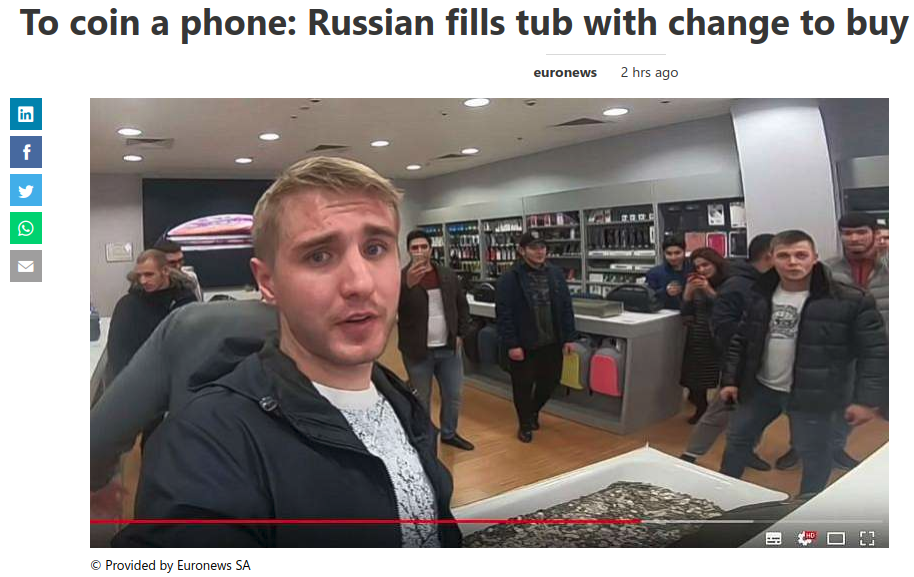
Lyudmila Semushina, public relations manager at the store, told Euronews: “I received a phone call from our store saying that some bloggers came and brought a bath filled with coins.
“I thought they were joking but they sent me a picture to prove it. But the bloggers didn't say who they were.
"They came with company and they had a camera. I think they just wanted to film how funny it was to have a bath full of coins," he said.
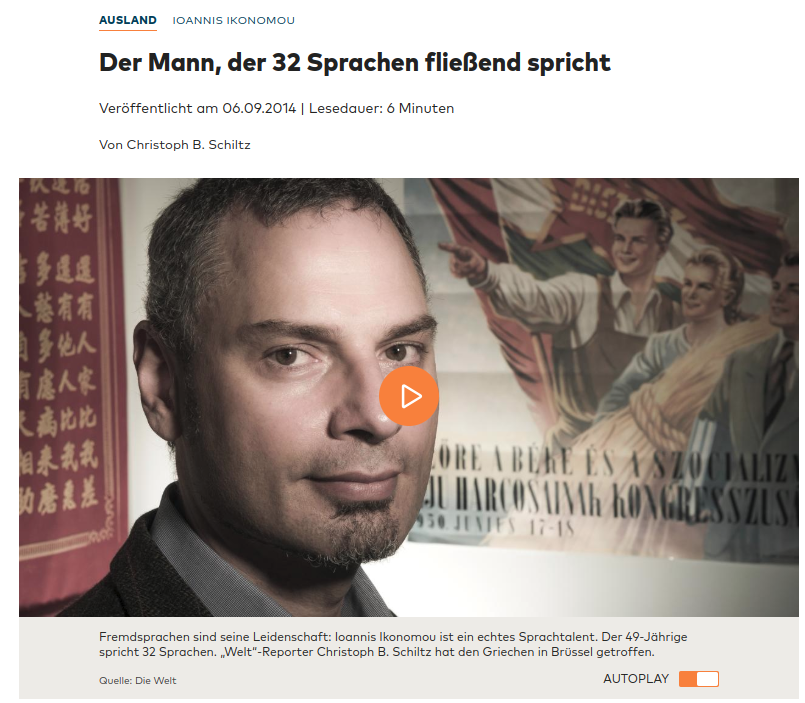
Mit fünf Jahren lernte er Englisch, mit sieben Deutsch („Frau Rosi, eine Deutsche auf Kreta, hat es mir beigebracht“), mit knapp zehn Jahren Italienisch („Ein Schulkamerad fing damit an, ich wollte besser sein als er“), mit 13 Russisch („Ich liebte Dostojewski“), mit 14 das ostafrikanische Suaheli („Das war nur Spaß“) und mit 16 Türkisch. „Ich wollte keine Feinde haben, ich wollte mit ihnen sprechen.“ In Griechenland gab es damals keine türkischen Lehrbücher. „Meine Eltern fanden Frau Ayse, eine emigrierte Architektin aus Nordzypern. Sie war streng.“
Nach dem Türkischen lernte er Arabisch, wurde Sufist, ein Anhänger islamischer Mystik. „Die Regeln einer Sprache sind nur der Anfang für mich. Ich will alles verstehen, das Essen, die Musik, die Religion, die Traumata eines Volkes.“ Dann ein Quantensprung: Ikonomou war plötzlich fasziniert von Indien, er studierte Urdu, Hindi und Sanskrit. Er war 18 Jahre lang strenger Vegetarier und lebte nach hinduistischen Regeln.
„Aber meine Mutter wurde verrückt, sie sagte: ‚Schluss jetzt mit dieser indischen Musik. Und warum musst du mit den Fingern essen?‘ Meine Eltern haben mich immer unterstützt, aber zu viel war zu viel. Manchmal denke ich, dass sie glücklicher wären, wenn ich ganz normal wäre und griechischen Pop hörte.“ Aber trotzdem machte Ioannis weiter. „Irgendwann wurde mir dann klar: Du wirst nie ein echter Hindu.“ Heute glaubt Ikonomou an gar keinen Gott mehr, lässt sich Fleisch mit Messer und Gabel schmecken und trinkt gelegentlich Alkohol. „Wichtig ist, Gutes zu tun“, sagt er.
„Chinesisch ist meine Lieblingssprache. Sie ist total anders, der Mount Everest für Europäer.“ In China war er schon ein paar Mal. Jedes Mal hat er mehr gelernt. Die Kosten trägt die Kommission. Meistens. In manchen Ländern, deren Sprache er spricht, war Ikonomou dagegen noch nie. In Äthiopien oder im Kongo zum Beispiel. „Ich habe einfach keine Zeit.“
Jetzt will er Albanisch lernen. Das Land ist seit wenigen Wochen EU-Beitrittskandidat. „Ich brauche immer einen Anreiz“, sagt er. Sein Ziel: In drei Monaten die Nachrichten des albanischen Rundfunks verstehen. Ein Vokabelheft braucht er nicht. Er benutzt elektronische Wörterbücher – und gräbt sich im Internet in die neue Sprache ein. „Ich konzentriere mich mehrere Monate nur auf Albanisch, lerne die Wörter, mache Querverbindungen, speichere sie und wende sie sofort an beim Chatten oder Zeitungslesen.“ Gibt es einen Begriff für seine Methode? „Totale Hingabe“, sagt er.
Roman really likes finding an unusual type of fish aboard the trawl. "I decided to create social media accounts because many people have no idea how some of the fish look. I'm constantly impressed by the appearance of some deep water fish and want to share my experiences with other people."
"I have never been scared of the fish I catch," he said. "I'm always interested and impressed."
Although Australians and Kiwis might sound comparatively close to the untrained ear, research has shown there is a distinct contrast in the pronunciation of vowels. Australians tend to pronounce their vowels with more emphasis on the sound [ee], whereas New Zealanders are more prominent with [u] sounds. A clear example of this can be found in how most Kiwis pronounce “fish and chips.” They’re likely to say something closer to fush and chups or f’sh and ch’ps, whereas most Aussies would say something closer to feesh and cheeps.
発音は基本的には似ているものの、母音の発音に違いがあり、たとえば、ニュージーランドでは、 「fish and chips.」を「fush and chups」あるいは「f’sh and ch’ps」っぽく発音するのに対して、オーストラリアでは「feesh and cheeps」に近いとのこと。
2.スラング、語彙
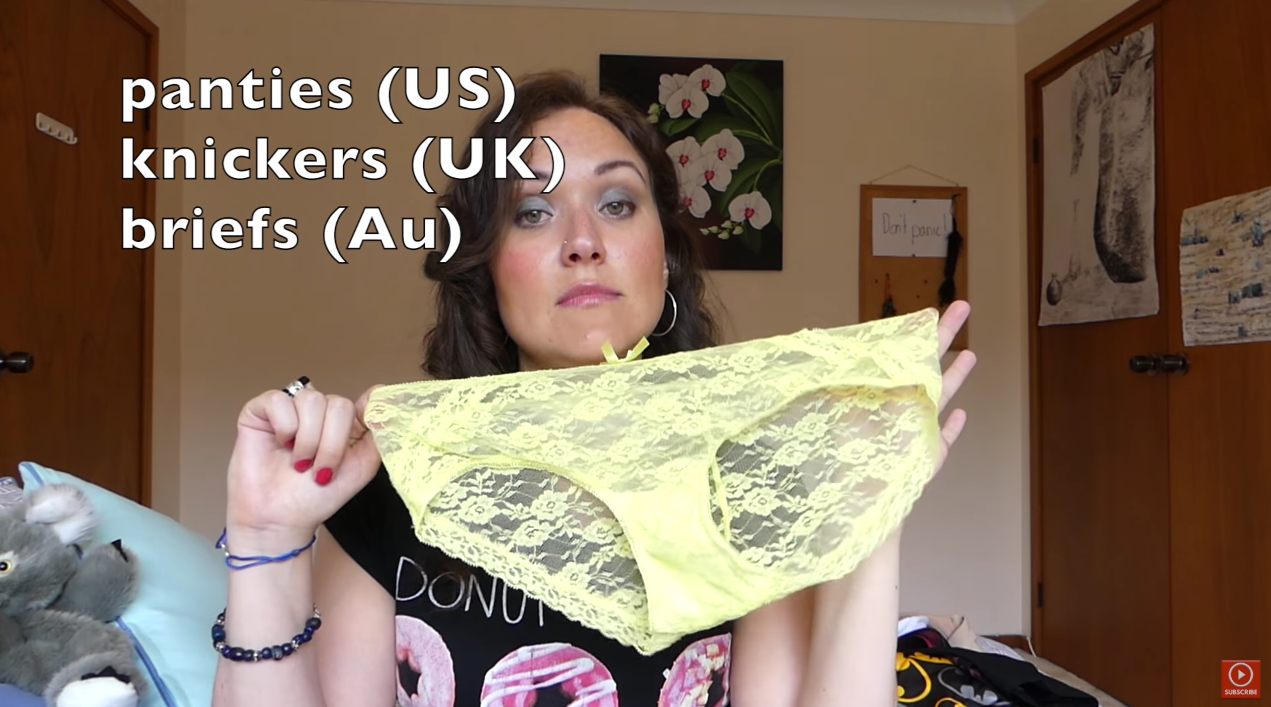
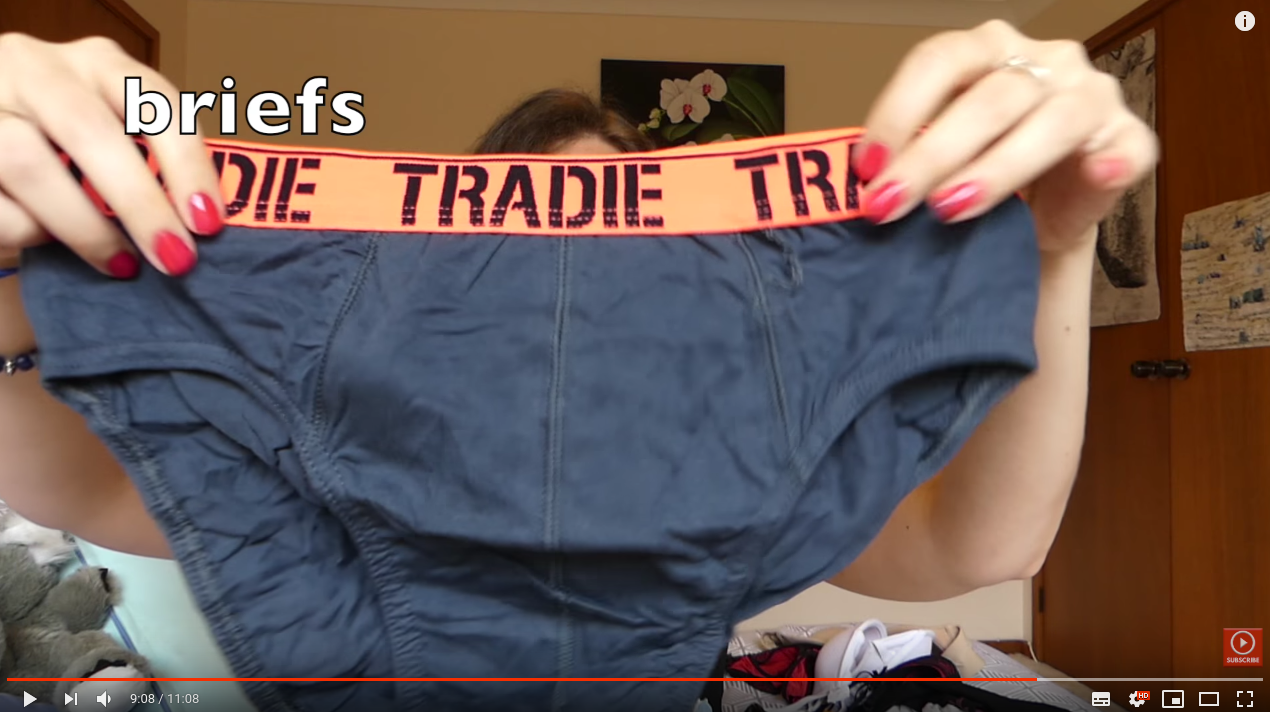
Australians and New Zealanders are two countries that are particularly fond of using colloquialisms and slang in everyday speech. It’s almost as though we have two words for everything in Australia — and it seems our Kiwi neighbors love to do it too! For example, Australians will call a portable cooler an esky while New Zealanders know them as a chilly bin.
Australians also love to shorten and abbreviate their words, which is a key aspect of Australian English. For example: breakfast = brekkie, McDonalds = Maccas, dinner = dins, and so on. It took all my self-restraint, as a true blue Aussie, to write “vocabulary” in the header above rather than vocab. Seriously.