
N. Korea cash may end up in U.S. bank
By Nicholas Kralev
THE WASHINGTON TIMES
May 10, 2007
The Bush administration said yesterday that it would consider allowing North Korea to transfer $25 million from Macao to an account in a U.S. bank -- a move that would disregard Washington's own policy on terrorism financing -- in the hope of nailing down an agreed deal for North Korea to shut down its main nuclear reactor.
The State Department said it badly wanted the North Koreans to withdraw their money from Banco Delta Asia (BDA), which was blacklisted by the Treasury Department in March, so negotiations with Pyongyang on ultimately scrapping all its nuclear programs can resume.
But any bank that would accept the transfer in effect would be doing business with BDA, facing potential U.S. penalties. The Treasury has so far not been able to satisfy any third-country institution that it can safely handle the money, and diplomats said it might be easier to grant an exemption to an American bank.
"If there is any requirement for an opinion from the Treasury Department as to whether or not this is a transaction that the financial institutions involved would feel comfortable doing, then the Treasury Department will take a look at that, see what it is that they can do," State Department spokesman Sean McCormack said when asked if the money could be deposited in an American bank.
"The main issue is to get BDA over and done with, to have it completed so we can get back to the six-party talks and focus on denuclearizing the Korean Peninsula," he said at a daily briefing.
Treasury officials refused to comment but did not dispute Mr. McCormack's remarks. A senior State Department official declined to rule out that the $25 million -- or part of it -- might end up in a U.S. bank account. The money has been linked to illicit activities.
The two departments have had disagreements in the past on how to handle the funds, with Secretary of State Condoleezza Rice championing a more conciliatory approach.
In a landmark Feb. 13 deal with the United States, China, Japan, South Korea and Russia, the North agreed to shut down the Yongbyon nuclear reactor by April 14. But it missed the deadline, demanding the $25 million be released first.
The Bush administration designated BDA as a "primary money-laundering concern" in the fall of 2005 under Section 311 of the Patriot Act. U.S. officials said the action had a significant impact on the North's proliferation and other illicit activities, and it sent a strong signal to other violators, such as Iran.
But as nuclear negotiations with Pyongyang progressed this spring, Washington allowed BDA to release the money even as the Treasury banned U.S. banks from doing business with the Macao bank.
Administration officials could not explain yesterday the legal process of granting an exemption from that ruling for one bank, or how allowing that same $25 million into a U.S. bank would not violate the Patriot Act.
Former administration officials, who belong to opposite sides of the North Korea policy debate, expressed shock and disbelief yesterday that the administration was thinking of letting the "dirty" North Korean money make its way to an American institution, with full access to the international financial system.
"I can't believe they will do that," said Charles L. Pritchard, the State Department's former special envoy for talks with the North who resigned in protest at the administration's hard-line policy in 2003. "They would be violating their own [March] ruling."
The hard-line policy fell apart this year when the United States agreed to rewards for the North if it dismantled its Yongbyon reactor. Moreover, the State Department said it would trust Pyongyang to spend the $25 million properly.
The North Koreans have refused to withdraw the money in cash, insisting that it be transferred to an account in another bank so they can make withdrawals and deposits as they please. They first wanted to use a Chinese bank, and then were reported to have approached institutions in Russia, Italy, South Korea, the United States and other countries.
"The individual banks, regardless if they are American or Italian or Russian or whatever flavor, they are going to have to make their own decisions about risk and reward, about any reputational risk that might come along with this," Mr. McCormack said of a potential transfer.
"I would assume that, as part of that calculation, that they are going to look at what the reaction from the Department of Treasury might be," he said. He added that the Treasury would be willing to give "some opinion or signal."
The White House said yesterday that President Bush called Chinese President Hu Jintao from Air Force One to discuss North Korea. It was not clear if the financial issue was mentioned, but China has also been trying to help resolve the matter.
N. Korea cash may end up in U.S. bank?-?World?-?The Washington Times, America's Newspaper
北朝鮮、WFPの食糧支援活動範囲拡大を示唆
【ソウル10日聯合】世界食糧計画(WFP)のロッジ報道官は9日、北朝鮮当局がWFPに支援範囲の拡大を要望する意向を示していることを明らかにした。自由アジア放送とのインタビューに答えたもので、WFPはこれを歓迎すると述べた。現在WFPは北朝鮮の120の郡のうち50の郡で活動を展開している。ロッジ報道官は「活動範囲が広がると支援品の分配に透明性が確保できる」とし、これにより支援国も安心して食糧を送れると説明した。
WFPは昨年4月から2年間、北朝鮮への食糧支援事業のために1億200万ドルの資金確保を目標に募金活動をしているが、現在まで2300万ドルが集まったにとどまっている。WFPによると、昨年半ば以降、北朝鮮への食糧支援に最も積極的だった国はロシアで、500万ドルを支援している。次いでスイスが260万ドル、豪州が240万ドルなどの順となった。一方、WFPを通じた最大の食糧支援国だった米国は、昨年半ば以降1ドルも出していない。
YONHAP NEWS
金正日の弟, 金平日の最近の活動を捉える
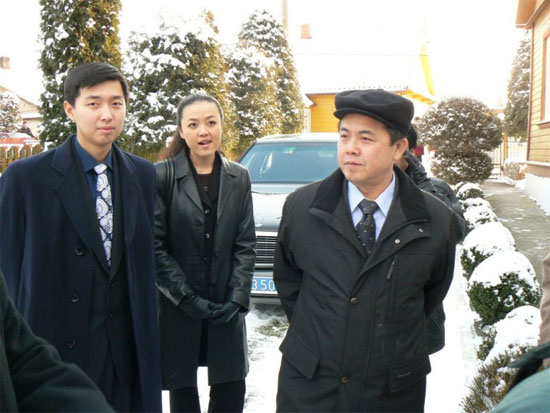
金正日の異母弟、金平日(54)駐ポーランド北朝鮮大使の最近の活動の様子が、多くの写真と共に公開された。
写真にはこの間、ベールに隠されていた金平日の二人の子供、ウンソン(女)とインガン(男)も登場する。この子供たちは、金正日の姪と甥にあたる。
写真は去る3月に、ポーランドのナレフ(Narew)市のホームページに掲載されたもので、金平日とその子供たちが市の役人とともに、産業視察及び展示館の観覧、体育行事などに参加している姿が写っている。写真の説明によれば、この日の行事は去る2月10日に開かれたものだ。
この間、北朝鮮はポーランドやチェコなど東欧圏の国々と、親善協会(Korea friendship association)を通じて、経済・文化交流を行ってきた。親善協会主催で開かれたこの日の行事には、ポーランドにいる北朝鮮の人たちも参加したという。
ホームページは写真を‘息子、娘と共にいる金平日’と説明している。写真には金平日が‘ナルメット(NARMET)製造・貿易会社’を視察する場面、息子インガンが卓球のゲームをする姿が写っている。娘のウンソンが直接ピアノを演奏する姿もある。
写真を見ると、金平日の外貌は、父親の金日成にそっくり似ており、‘若き日の金日成’を見ている印象を受ける。ポーランドで、修士課程で学んでいるという金平日の二人の子供たちにも、きれいで爽やかな外貌と、洗練された美しさが見られる。
金正日の兄弟には、実の妹の金キョンヒ(張成沢の妻)がおり、異母兄弟には金平日、ヨンイル(2000年死亡)、キョンジン(女 51・キム・クァンソプ、オーストリア駐在大使の妻)がいる。金正日は74年に後継者に公認された後、彼らを‘小枝’に分類して、海外に勤務させるなど、権力の周辺から押し出した。
北朝鮮の高位関係者たちの証言によれば、金日成はひととき後継者構図を'党は正日、軍は平日、政・内閣はヨンイルに任せる'という構想を持ったことがあるという。しかし、金正日は叔父のキム・ヨンジュとの権力争いで勝利した後、キム・ヨンジュを慈江道に左遷し、平日などの'小枝'は権力に立ち入ることができないようにした。
1954年8月10日生まれの金平日は、金日成総合大学の経済学部を卒業した後、常委に任官、金日成軍事総合大学を経て護衛司令部の装甲車大隊長を勤めた。以後、金正日が後継者に確定した後、79年にユーゴ駐在北朝鮮大使館に勤務するため、平壌を発った。当時、キム・キョンジンは夫と共にチェコに、キム・ヨンイルは東ドイツに向けて発った。
その後、金平日は88年にハンガリー大使に任命されたが、その年の12月に韓国とハンガリーが修交すると、直ちにブルガリア大使に任命され、1994年にフィンランド大使を経て、1998年からポーランド駐在大使として活動してきた。
金平日の妻はキム・スングムであり、彼の娘のウンソンと息子のインガンの写真が公開されたのは今回が初めてだ。金日成は金正日の公式の妻であるキム・ヨンスクが長女を生むと、'ソルソン'と名づけ、金キョンヒの長女は 'クムソン'と名づけた。金平日の長女'ウンソン'も、これに従ったと思われる。金キョンヒの長女のチャン・クムソンは親が反対した結婚の問題のため、去年フランスで自ら命を絶ったという。
北朝鮮の労働党中央委員会(中央党)の組職指導部の'第10号室'は、彼ら'小枝'たちの監視、統制を専門で担当する部署として知られている。
Daily NK - 金正日の弟, 金平日の最近の活動を捉える