
Rice seeks N.Korea solution before window closes
By Arshad Mohammed
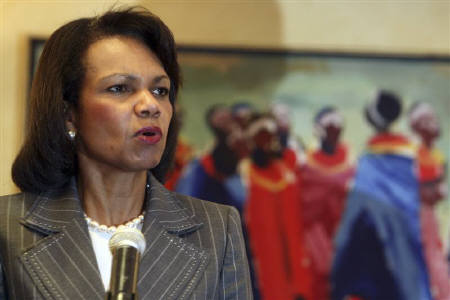
WASHINGTON (Reuters) - U.S. Secretary of State Condoleezza Rice visits South Korea, China and Japan next week to seek ways to persuade North Korea to give up its nuclear programs before the window closes on the Bush administration.
President George W. Bush has less than a year left to wean North Korea of its nuclear ambitions in exchange for economic and diplomatic benefits under a 2005 deal in which Pyongyang agreed to abandon all of its nuclear weapons and programs.
Making her first visit to Northeast Asia in more than a year, Rice will attend the inauguration of South Korean President-elect Lee Myung-bak in Seoul on Monday and then travel to Beijing and Tokyo for consultations.
U.S. officials said there were no plans for Rice to go to Pyongyang or to meet North Korean officials in Beijing.
At the top of her agenda will be reviving the six-party agreement under which North Korea has begun to dismantle key nuclear facilities at Yongbyon but has balked at providing a complete declaration of all of its nuclear programs.
The agreement was hammered out among the two Koreas, China, Japan, Russia and the United States.
U.S. officials regard the declaration -- which North Korea had agreed to produce by Dec. 31 -- as a necessary condition for removing certain U.S. sanctions on Pyongyang and as a key step toward its eventual denuclearization.
According to U.S. officials and analysts, the declaration's sticking point has been Pyongyang's reluctance to discuss any transfers of nuclear technology to other nations, notably Syria, as well as its suspected pursuit of uranium enrichment.
North Korea has produced plutonium, which can be used to make atomic bombs, at Yongbyon. Uranium enrichment would give it a second pathway to fissile material for nuclear weapons.
The United States has questions about any possible North Korean role in a suspected Syrian covert nuclear site that was bombed by Israel in September. Syria has denied having a nuclear program but the case remains murky.
A senior U.S. official said Washington has begun exploring whether Pyongyang might disclose any proliferation and uranium enrichment in a separate document to be kept secret.
"We are flexible on this issue. We are open to ideas on how to do that," said the official, who spoke on condition that he not be named because of the sensitivity of the negotiations.
He said China and South Korea had floated ideas to North Korea on what it might say in such a separate document but the United States had not.
However, he insisted that North Korea must disclose all of its nuclear programs at the same time to be relieved of sanctions under the U.S. state sponsors of terrorism list and the U.S. Trading with the Enemy Act (TWEA).
He ruled out the idea of North Korea making a sequential declaration -- offering some information up front and disclosing the proliferation and uranium enrichment later.
"The difficulty with that is that the North is quite clear that ... their expectation is that they would be removed from the terrorism list and TWEA. And those things really are impossible to consider without this issue settled," he said.
'PAINFULLY SLOWLY'
Michael Green, a former White House official now at the CSIS think tank in Washington, said he thought the North Koreans were "unlikely to agree a declaration on the proliferation and the HEU (highly enriched uranium), even as a separate format."
Rather, he said Pyongyang may stall in the hopes of getting a better deal from a new U.S. president next year.
Green said he would like to see the Bush administration adopt a more coercive stance in its diplomacy to suggest there would be a price to pay for North Korea not keeping its agreements.
"It seems to me that the only way to make progress is if you sustain that mix of pressure and inducements," he said.
Lee's inauguration may give Washington a way to get tougher with North Korea because of his plans to link economic aid to North Korea with progress on denuclearization.
The senior U.S. official played down the idea of the United States itself taking a harder line, saying it would consider more punitive measures if it concluded the six-party process had ground to a halt but that it was not near such a conclusion.
"We continue to believe that however slowly -- however painfully slowly -- their system is moving, it is trying to grapple with this question" of making the declaration.
He said it was remarkable that North Korea had begun the process of giving up its nuclear programs and had allowed U.S. technicians to disable Yongbyon.
"That is not a simple thing. So, I think those who want to claim this should be done on an American schedule are really quite naive about dealing with a place as closed up as North Korea," the U.S. official said.
"This takes patience. This takes effort."
(Additional reporting by Paul Eckert)
窓が閉じる前にライスは北朝鮮解決策を求めます。
Arshadモハメッド
ワシントン(ロイター)--米国務長官コンドリーザ・ライスは、来週、窓がブッシュ政権に迫る前に核開発計画をあきらめるように北朝鮮を説得する方法を求めるために韓国、中国、および日本を訪問します。
ジョージ W. ブッシュ大統領には、平壌がその核兵器とプログラムのすべてを捨てるのに同意した2005年の取引における経済の、そして、外交の利益と引き換えに核開発の意図の北朝鮮を乳離れさせるのを残っている1年未満があります。
彼女を1年以上後に最初に北東アジアを訪問させて、ライスは、月曜日にソウルでの次期韓国のリーMyung-bak大統領の就任に出席して、次に、相談のために北京と東京に旅行するでしょう。
米当局者は、ライスが平壌に行くか、または北京で北朝鮮政府関係者に会う計画が全くなかったと言いました。
彼女の先端では、議題は6パーティーの協定を北朝鮮がニョンビョンで主要な核施設を解体し始めましたが、核開発計画のすべての完全な宣言を提供するのをためらった蘇らせるでしょう。
協定は南北朝鮮、中国、日本、ロシア、および合衆国に作られました。
米当局者は宣言を見なします--どの北朝鮮が、平壌で、ある米国の制裁を取り除くための必要条件として最後の非核化に向かった重要段階として12月31日までに生産するのに同意しましたか?
米当局者とアナリストによると、宣言の行き詰まりになる問題は著しく他の国への核技術のどんな転送、シリア、およびウラン濃縮のその疑われた追求についても議論するという平壌の不本意です。
北朝鮮はニョンビョンでプルトニウムを生産しました。(原子爆弾を作るのにそれを使用することができます)。 ウラン濃縮は核兵器のために核分裂性物質への2番目の小道をそれに与えるでしょう。
合衆国は9月にイスラエルによって爆撃された疑われたシリアのひそかな核サイトにどんな可能な北朝鮮の役割に関する質問も持っています。 シリアは、核開発計画を持っているのを否定しましたが、ケースは暗いままで残っています。
上級米国の職員は、平壌が秘密に保たれるために別々のドキュメントのどんな増殖とウラン濃縮も明らかにするかもしれないか否かに関係なく、米国政府が探検し始めると言いました。
「私たちはこの問題でフレキシブルです。」 「私たちはどうそれをするかに関する考えにオープンです。」と、職員(彼が交渉の感度のために名前付でないなら、話した)は言いました。
彼は、それがそのような別々のドキュメントで何を示すかもしれないかに関して中国と韓国が考えを北朝鮮に広めたと言いましたが、合衆国はそのように言っていませんでした。
しかしながら、彼は、北朝鮮が同時に米国テロ支援国リストと米国Tradingの下で制裁でEnemy条例(TWEA)に安心しているように核開発計画のすべてを明らかにしなければならないと主張しました。
前払いで何らかの情報を提供して、後で増殖とウラン濃縮を明らかにして、彼は北朝鮮が連続した宣言をするという考えを除外しました。
「それにおける困難は北部が… 彼らの期待がテロリストとTWEAからそれらを取り除くだろうということであることがかなり明確であるということです。」 「そして、それらのものはこの解決された問題なしで考えるのは本当に不可能です。」と、彼は言いました。
'痛々しいほどゆっくり'
マイケル・グリーン(現在、ワシントンのCSISシンクタンクの元ホワイトハウスの職員)は、彼が、北朝鮮人に「別々の形式としてさえ増殖とHEU(高濃縮ウラン)で宣言に同意しそうにない」と考えたと言いました。
むしろ、彼は、平壌が来年新しい米国大統領からより良い結果を得るという望みで失速するかもしれないと言いました。
グリーンは、彼が、ブッシュ政権が協定を守らない北朝鮮に支払う価格があると示唆するために外交における、より高圧的な姿勢を採用するのを見たがっていると言いました。
「進展する唯一の方法があなたが圧力と誘導のそのミックスを支えるかどうかということであるように私にとって思えます。」と、彼は言いました。
リーの就任は進歩が非核化にある状態で経済援助を北朝鮮にリンクする彼の計画のために北朝鮮と共に、より厳しくなる方法をワシントンに与えるかもしれません。
上級米国の職員は、より困難な線を取る合衆国自体の考えを見くびりました、ほぼそのような結論にそれがあったなら6パーティーの過程がゆっくり止まったと結論づけるなら、より懲罰的な測定を考えると言って。
「私たちは、しかしながら、そんなにゆっくり、しかしながら、痛々しいほどゆっくり信じ続けます--それらのシステムは動いていて、この質問と格闘しようとしています」。宣言をするのについて。
彼は、北朝鮮が、核開発計画をあきらめるプロセスを開始して、米国の技術者がニョンビョンを無能にするのを許容したのが、顕著であると言いました。
「それは簡単なものではありません。」 「したがって、私は、アメリカのスケジュールでこれをするべきであると主張したがっている人々が本当に北朝鮮として閉ざされるように場所に対処することに関してかなりナイーブであると思います。」と、米国の職員は言いました。
「これは忍耐を取ります。」 「これは発効します。」
(ポールEckertによる追加報告)
Rice seeks N.Korea solution before window closes
| World
| Reuters
How Pyongyang Plays the West
By B. R. MYERSHow Pyongyang Plays the West - WSJ.com
THE WALL STREET JOURNAL ASIA
February 21, 2008
In defending the New York Philharmonic's upcoming performance in Pyongyang, conductor Lorin Maazel argues -- primarily on the basis of his experience in the old Soviet bloc -- that "bringing peoples and their cultures together" can lead to "roots of peaceful interchange." (See "Why We'll Play Pyongyang," – Feb. 20) Judging from similar remarks made in the past few weeks, Assistant Secretary of State Christopher Hill shares this optimism. There is evidently no disabusing some people of the notion that North Korea is a Marxist-Leninist state, and thus one that can be expected to show some positive response, as our Cold War adversaries did, to bold gestures of goodwill and conciliation.
It is time America realized that Kim Jong Il derives his regime's legitimacy not from communism, but from crude, race-based nationalism. According to Pyongyang's domestic propaganda, North Koreans are the world's most pure-blooded and virtuous people, and the mongrel Americans an inherently evil race that can never be trusted. The Dear Leader routinely blames his country's many woes on the Yankee "jackals." When statist economic policies caused a famine in the mid-1990s that killed a million people, Kim claimed that the American threat had forced him to concentrate on military matters. (Former U.S. President Bill Clinton was in fact sending the North massive aid at the time.) The North also claims that the only thing preventing Korean reunification is the U.S. troop presence in the South.
Not that the North shows any more goodwill toward its main aid provider in Seoul. Propaganda acknowledges the South's material affluence while asserting that the North is the only Korea the world fears and respects. The South Korean government is condemned for allowing miscegenation and other contaminations of racial purity.
The implications are obvious. Were Kim to normalize relations with America, his all-purpose scapegoat, the North Korean people would expect the prompt unification of the peninsula -- under his rule, of course -- and a quantum leap in their standard of living, neither of which has a chance of actually happening. The regime would never survive the public disillusionment that would ensue, and Kim knows it. Having long ago abandoned any pretence of Marxism-Leninism, he has nothing left to justify his rule but confrontational anti-Americanism.
Domestic propaganda thus makes very clear that nothing is to be expected from ongoing negotiations with the Americans, whose eschewal of a military solution to the nuclear standoff is attributed not to a desire for peace but to cowardice. "As the jackal cannot become a lamb," runs an expression known to every schoolchild, "the Yankees cannot change their rapacious nature." Just last December the party monthly Chollima called for a "blood reckoning" with America, quoting Kim Jong Il himself as saying that the U.S. imperialists and the North Korean people "can never live under the same sky." One finds nothing in the official media to support Mr. Hill's assertion that "there has been a shift in how they view us." The North Koreans do know, however, that if they want to keep the Bush administration in futile negotiation mode for the rest of its term, they must feign the occasional change of heart. The invitation to the orchestra serves this end.
It was not such a bold invitation to make, either. Though Mr. Maazel seems to believe there is something groundbreaking about playing Dvorak and Gershwin in Pyongyang, Kim Jong Il has never objected to light classical music. Even if average North Koreans were allowed to attend the concert -- Mr. Maazel is dreaming if he thinks anyone but the elite will be there -- they would encounter nothing to make them doubt the party line. They know from movies and magazines to be especially on their guard when the "jackals" are smiling.
We can of course expect Mr. Maazel to return home claiming to have found cultural "common ground" with his hosts. We will also hear a lot of patriotic hooey about the spine-tingling effects of playing the Star-Spangled Banner in Kim Jong Il's front yard. Meanwhile North Korean propaganda -- not the glossy-papered, English-language kind, but the gray-papered stuff the locals get -- will set about misrepresenting the performance as a tributary visit, the paper tiger's latest effort to curry favor from the iron-willed "General."
The timing is fortuitous, since the months from February to April mark the annual highpoint of the North's personality cult ritual. And two or three years from now, the regime will almost certainly publish a new installment of Immortal Leadership, a series of novels celebrating the main triumphs of the Dear Leader's rule. The story will be simple: Kim tests nuke, Washington protests, Kim hangs tough, Washington sends musicians to entertain him. And isn't that a fairly accurate version of events?
平壌はどう西洋をプレーするか。
B.R.マイアーズで
THE WALL STREET JOURNALアジア
2008年2月21日
平壌でニューヨーク・フィルハーモニック管弦楽団の今度の性能を防御する際に、主として古いソビエト圏の彼の経験に基づいて導体ローリン・マーゼルは、「民族と彼らの文化を集めます」が「平和な置き換えのルーツ」に通じることができると主張します。 (–2月、「私たちはなぜ平壌をプレーするつもりですか」と見てください、20) 過去数週間で作られた同様の所見から判断すると、国務次官補のクリストファー・ヒルはこの楽天主義を共有します。 明らかに北朝鮮がマルクスレーニン主義者状態であるという概念から何人かの人々の迷いを覚まさないで、その結果何らかの積極的な応答を示すのを期待することができるのがあります、私たちの冷戦敵が好意と懐柔の大胆なジェスチャーにしたように。
アメリカが、キムジョンイルが共産主義から派生するのではなく、粗雑で、レースベースの愛国心から彼の政権の合法性を引き出すともうわかるべきである時間です。 平壌の国内のプロパガンダによると、北朝鮮人は世界の最も純血の、そして、徳の高い人々であり、雑種アメリカ人は決して信じることができない本来不吉なレースです。 Dear Leaderはきまりきって彼の国の多くの悲哀をヤンキーの「ジャッカル」のせいにします。 国家統制主義者経済政策が100万人の人が死んだ1990年代の半ばで飢饉を引き起こしたとき、キムは、彼がアメリカの脅威によってやむを得ず軍事の件に集中したと主張しました。 (事実上、元米国大統領のビル・クリントンは当時北部の大規模な援助を送っていました。) また、北部は、韓国の再統一を防ぐ唯一のものが南部での米国の軍の存在であると主張します。
北部はそれ以上の好意をソウルの主な援助者に向かって示すというわけではありません。 北部が世界が恐れて、尊敬する唯一の韓国であると断言している間、プロパガンダは南部の物質的な豊富を承認します。 韓国政府は、民族純化の異種族結婚と他のcontaminationsを許容するために非難されます。
含意は明白です。 キムがアメリカとの関係、彼の万能の身代わりを正常にするなら、北朝鮮の人々はもちろん彼のやり方の下の半島の迅速な統一を予想するでしょうに。--彼らの生活水準における大躍進。そのどちらも、実際に起こるという機会がありません。 政権は続く公共の幻滅を決して乗り切っていません、そして、キムはそれを知っています。 昔にマルクスレーニン主義のどんな見せかけも捨てたので、彼には、対立的な反アメリカ主義以外の彼のやり方を正当化するのを残っているものは何もありません。
その結果、何も核にらみ合いの軍事の解決策のeschewalが平和に関する願望ではなく、臆病に結果と考えられるアメリカ人と共に進行中の交渉から予想されることになっていないのが非常に明確に国内のプロパガンダは作ります。 「ジャッカルがラムになることができないとき」、走行すべての学童にとって知られている表現、「ヤンキーズは彼らの強欲な本質を変えることができない」。 ちょうど去年の12月に、パーティーの毎月のChollimaはアメリカとの「血液計算」を求めました、キムジョンイル自身が、米国帝国主義者と北朝鮮の人々が「同じ空の下に決して住むことができない」と言ったと伝えて。 人が見つける、「それらがどう私たちを見るかにおけるシフトがあった」というヒルさんの主張を支持するために公式のメディアで何でもない。 しかしながら、北朝鮮人は、用語の残りのための空しい交渉モードでブッシュ政権を維持したいなら、彼らが時々の気持ちの変化のふりをしなければならないのを知っています。 オーケストラへの招待はこの終わりに役立ちます。
それはするそのように大胆な招待状ではありませんでした。 マーゼルさんは、平壌でドヴォルジャークとガーシュウィンをプレーすることに関して何か革新的なものがあると信じているように思えますが、キムジョンイルは、クラシック音楽を点灯するために一度も反対したことがありません。 普通の北朝鮮人がコンサートに出席したことができるとしてもさえ(エリート以外のだれでもそこにいると考えるなら、マーゼルさんは夢見ています)、彼らは何も彼らに共同回線を疑わせるものに遭遇しないでしょうに。 彼らは、「ジャッカル」が微笑んでいるとき、特に彼らの警備にはいるように映画と雑誌から知っています。
彼のホストと共に文化的な「共通基盤」を見つけたと主張しながら、私たちは、マーゼルさんが家に帰るともちろん予想することができます。 また、私たちはキムジョンイルの前庭で星条旗をプレーするという背骨をうずかせる効果に関する愛国的のばかげた話を大いに知るつもりです。 その間、北朝鮮のプロパガンダ(光沢紙の雑誌で紙を張られた英語種類ではなく、ローカルが手に入れるグレーで紙を張られたもの)は、進貢している訪問として性能を誤り伝えるのに着手するでしょう、強固な意志を持つ「一般」から機嫌をとるための張り子の虎の最新の努力。
タイミングは思いがけないです、2月から4月までの数カ月が北部の個人崇拝儀式の年に一度のhighpointをマークするので。 そして、現在から2年か3年、政権はほぼ確実にImmortal Leadership(Dear Leaderの規則の主な功績を祝う小説のシリーズ)の新しい分割払いを発行するでしょう。 話は簡単になるでしょう: 米国政府は、キムが核兵器をテストすると主張して、キムは頑張って、米国政府は、ミュージシャンを彼を楽しませに行かせます。 そして、それは出来事のかなり正確なバージョンではありませんか?
New Sounds for North Korea
By EVAN RAMSTADNew Sounds for North Korea - WSJ.com
February 22, 2008; Page W4
SEOUL, South Korea
North Korean dictator Kim Jong Il keeps a tight rein, even orchestrating the soundtrack of his citizens' lives. Upbeat music blares from loudspeakers in some cities to signal when it's time to get up or go to work. The leader forbids the sale of Western music CDs in favor of pop tunes that deal sometimes with love but mostly hail him and the government.
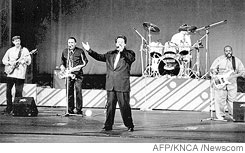
This airtight seal has opened a crack in recent years. Roger Clinton, the former president's brother, brought his rock band in 1999. South Korean pop bands began performing in 2000. And dozens of foreign classical musicians have played at the annual spring homage to the country's founder and former ruler, Kim Il Sung.
Next week's performance by the New York Philharmonic in Pyongyang will be another watershed event, bringing one of music's most famous orchestras to one of the world's most isolated countries.
Music in North Korea is limited to either classical tunes or government-approved pop, which blends martial music and nationalistic hymns. "If you just listen to the melody without the propaganda-oriented lyrics, you would find it really good," said Kim Cheol-woong, a pianist who defected in 2001 and now lives in South Korea. He never heard jazz until he studied music abroad as a young man.
The New York Philharmonic plans to perform North Korea's national anthem, created in 1947 by Kim Il Sung, who picked the lyrics from submissions by various poets. Every April, hundreds of musicians, including foreigners, perform in a festival honoring him at venues around the capital city. "When you play well, they really respond," said Kim Young-nam, a violinist and professor at the University of Minnesota. He led an American quartet at the 2004 festival. He is returning to play this year.
So many North Koreans watch the performances on TV that they recognize Im Mi-jung, a South Korean pianist who plays at the festival. When she left North Korea, a customs official asked about her up-tempo rendition of a Korean folk song. "I don't think he'd heard it played like that before," she says. Other times, she's been stopped on the street by fans.
North and South Korea share a rich history of folk songs, which people sing at home and work. North Korea's largest newspaper quoted Kim Jong Il last month saying that music is the "closest form of art affecting people's daily lives." Some years back, he let it slip that he was interested in electronic music. But he added this caveat: "Our electronic music should be developed to cater to contemporary aesthetic tastes with the main emphasis on national melodies and tunes, not like the wild and mad electronic music prevalent in different countries."
photo:Singer Roger Clinton, the former president's younger brother, brought his band to Pyongyang in 1999.