無限への目覚め〜 Becoming Awaken to Infinity, 弥勒菩薩ラエルの教えと共に -6ページ目

無限への目覚め〜 Becoming Awaken to Infinity, 弥勒菩薩ラエルの教えと共に

世の中の様々な出来事について、自分なりの視点から書いて行きたいです。
今まで弥勒菩薩ラエルから教えていただいたお話もちょこっと紹介しますね〜。

NOTICE;If you haven't yet read "Conflict between Israel & Palestine About Land, Water, & Resources No.4", please read it before reading the folowing article.
※お知らせ:イスラエルとパレスチナの紛争は土地と水と資源が原因No.4。弥勒菩薩ラエルは全戦争をやめるべきという』をお読みでない方は、こちらから先にお読みください。


Conflict between Israel & Palestine Is
About Land, Water, & Resources (No.5)
イスラエルとパレスチナの紛争は土地と水と資源が原因(No.5)
弥勒菩薩ラエルは全戦争の廃止を主張


【YouTube】Why US and Israel wants to ban this video..

何故米国とイスラエルがこのビデオを禁止にしたいのか・・・

URL:http://youtu.be/Ch5XlEZoi1c


★ ★ ★ PRESENTATION
プレゼンテーション ★ ★ ★

by Anna


Life in Occupied Palestine: Eyewitness Stories & Photos(No.5)
占領されたパレスチナでの生活:目撃者のストーリー&写真(No.5)


2. Resistance/抵 抗
  2-1.Everyday Nonviolent Resistance/日々の非暴力の抵抗


No.95
No.95

(No.95)Here is a young boy who is building his own roadblock out of rocks and wire that he found in his village. He told me, “Anna, I’m going to build a roadblock so that the jeeps can’t rape my village tonight.” This is nonviolent resistance.
(No.95)こちらは若い少年で、彼の村で見つけた岩とワイヤーを使って自分の道路障壁を作っています。彼は私に、「アンナ、僕は今道路の障壁をつくっているんだ。それで、ジープが僕らの村を今晩襲わないようにしてるの。」と言いました。これは非暴力の抵抗です。


  2-2.Demonstrations/デモ行進

No.96
No.96
 
No.97
No.97
(No.96/97)Finally, demonstrations are a kind of resistance happening almost daily in Palestine, we
just don’t hear very much about them, where communities of Palestinians will march down to the land that has been threatened.
(No.96/97)最後に、デモはパレスチナで殆ど毎日起きているある種の抵抗運動です。そのことについてあまり私達は聞きませんが、パレスチナ地域社会の人達が脅かされてしまった土地まで行進するのです。

No.98
No.98
(No.98)Here you can see a farmer trying to explain to soldiers that have been placed there to basically protect the bulldozers that are uprooting the trees, he’s trying to explain to them that the trees being uprooted belong to him and his family and half for generations.
(No.98)この写真では、木々を根こそぎ引き抜いているブルドーザを守るために配備された兵士達に、その木々が彼と彼の家族に、数世代にわたって属してきた事を説明しようとしています。

No.99
No.99
(No.99)This is something else you might see at a demonstration, Palestinians who’ve come together to pray on their land. I find it particularly moving, given that for many of these Palestinians this could be their last chance to ever be on their land, and they’re choosing to spend these final moments together, as a community, in silence, in worship on their land.
(No.99)これはデモで見かけられる別の光景ですが、パレスチナ人達が彼らの土地に集まり祈りを捧げているところです。私はこの光景に特に心を動かされます。というのは、これらのパレスチナ人の殆どにとって、この機会が彼らの土地にいられる最後のチャンスになるかもしれないからです。そして、彼らの土地で、地域社会として、静けさの中で、祈りの中で彼らは共にこの最後の一時を過ごす事を選んでいます。

No.100
No.100
 
No.101
No.101
(No.100/101)Now, although most of these demonstrations are primarily peaceful, they are often met with a great deal of violence from the soldiers, who throw tear gas or sound bombs. There are sometimes rubber bullets or even live ammunition used against nonviolent demonstrators.
(No.100/101)さて、これらのデモ運動の殆どがそもそも平和的であるのですが、彼らはしばしばイスラエル兵士たちからのとても沢山の暴力に遭遇します。兵士達は催涙ガス弾やサウンド爆弾などを投げてきます。時には、彼らはゴム弾や非暴力的なデモ参加者達に対して実弾さえも使われる時があります。

No.102
No.102
(No.102)There is also sometimes violence from the Palestinians side. Here you can see a picture of a Palestinian boy who has picked up a stone and is throwing it at Israeli soldiers and jeeps at a demonstration. And, I include it not because stone throwing has anything to do with my work with IWSP, it doesn’t, but first of all because it’s the reality. There are stones thrown at these demonstrations, and second of all to give it a little bit perspective. So the stone throwing that you see here is used as a justification for the mass imprisonment of young Palestinian men who are put in jail for throwing these stones. While I would agree that a stone is definitely a weapon, right, you could kill somebody with a stone, no question about it. But we don’t get much sort of context in which these stones are actually thrown. So, for example, this
boy he hasn’t sort of gathered together a bunch of stones and snuck across the border to Israel to sort of stone as many Israelis as possible because he hates Jews. This boy is in his village and he’s watching jeeps and bulldozers surround his village, uproot his trees, and build a wall around his community. And he’s picking up a stone and throwing it at those jeeps, at those bulldozers. I guess I would just ask you, you know, if someone were to come into your home and start carrying out your television, and then your stereo, and then your computer, at what point would you pick up lamp and throw it at them? You know, it’s not about justifying it, it’s about what is realistic. What would you expect of yourself in that situation and how does it compare to what you expect of Palestinians in the situation they are in right now with the wall?
(No.102)パレスチナ人側からも時々暴力が行われる時があります。ここに、パレスチナ人の少年の写真がありますが、彼はデモ抗議の最中に、石を拾い上げ、イスラエル兵士達とジープにめがけてその石を投げつけています。そして、私がこの写真をプレゼンに入れたのは、石を投げるのが私の国際女性平和サービスでの仕事と何らかの関係があるからではなくて、何の関係はありません。しかし、第一に、その理由は、それが現実だからです。これらのデモ抗議の時に石が投げつけられることはあります。第二に、この事について少しながら全体像が得られるようにするためにです。ですので、この写真に写っている石を投げるというのは、石を投げたという事で多くの若いパレスチナ人男性達が大量に投獄された事を証明するために使われています。もちろん、石は凶器にはなりえます。誰かを石で殺害することも可能なのは疑問の余地もありません。しかし、これらの石が実際に投げられた事の背景については、私達(アメリカ人)はあまり(ニュースなどで)聞いたりすることがありません。ですので、例えばですが、この少年、彼は沢山の石ころをかき集めて、イスラエルの国境からイスラエル国内に忍び込み、イスラエル人の事が大嫌いなのでできるだけ数多くのイスラエル人に石を投げつけたのではありません。この少年は自分の村にいて、イスラエル兵士のジープとブルドーザーが彼の村を取り囲み、彼らの木々を根こそぎ引っこ抜き、彼の住む地域社会の周囲に壁を建設しているのを見ているのです。そして、彼は石を1つ拾い上げて、それを数台のジープとブルドーザーに向けて投げつけていたのです。私はあなた方にここで質問した方がいいと思うのですが、いいですか、もし、誰かがあなたの家に突然やってきて、あなたのテレビやステレオ、そして、それからコンピュータなどを運び出したら、あなたは一体どの時点で、家の照明器具を取り上げて、彼らに投げつけるでしょうか?それは、正当化するということではなくて、何が現実的かということなのです。あなたがその状況下に置かれていたら、あなたは一体どんな行動に出るでしょうか?そして、壁に囲まれた状況にいるパレスチナ人達がどうするかという事と、もしあなただったらという事とくらべて見て下さい。


  Imprisonment/投 獄


No.103
No.103
(No.103)Like I said, many of these kids end up in jail. Here are five kids from the village of Marda, near where I lived, and a jeep was raiding their village one night and they threw stones to the jeep. No soldiers were hurt, in fact very few soldiers have actually been hurt by these stones because they are usually thrown from very far away, for fear of being arrested. In fact, these five kids were picked up for stone throwing and put into jail for 6 months.
More than 340 Palestinian children and 9,500 adult Palestinian political prisoners are being held in Israeli prisons today. More than 10% of these are what are called “administrative detainees,” which means that they can be held without charge, indefinitely.
(No.103)が言いましたとおり、これらの子どもたちの多くが刑務所に最終的に送られています。この写真に写っているのは、私が住んでた場所の近くのマルダ村出身の5人の子どもたちです。そして、ジープが彼らの村をある晩に急襲して、彼らはそのジープに向けて石ころを幾つか投げました。兵士たちは誰も怪我はしませんでした。というのは、普通、子どもたちは逮捕されるのが怖くて、非常に遠くから石を投げるからです。実際には、この5人の子どもたちは石を投げたことで逮捕され、六ヶ月間も刑務所に入れられていましたち。
340人以上のパレスチナ人の子どもたち、そして、9500人以上の大人の政治犯達が現在イスラエルの刑務所に入れられています。これらの人たちの10%以上が、「行政上の勾留者達」であり、それは、つまり彼らは罪状なしで無期限に勾留されることを意味しています


(No.104-106)00:50/ I was once walking in Ramallah where I found a silence procession of people holding photographs of their loved ones being held in Israeli prisons. They asked me to show to the people of America, so that’s what I am doing.
(No.104-106)はかつてラマラ-という場所を歩いていた時、イスラエル刑務所に勾留されている彼らの愛する人達の写真を持って沈黙しながら歩いている人たちを見つけた事があります。彼らは私にアメリカの人たちに見せてほしいと頼みましたので、今あなた方にお見せしています。

About 40% of the entire adult Palestinian male population in the Occupied Territories has been detained in Israeli detention. Torture, humiliation are systematic according to Amnesty International. I guess what I find so incredible is that , in spite of the systematic imprisonment of Palestinians involved in violent and nonviolent resistance, in spite of the checkpoints, and the roadblocks, and the settlements, and the outposts, and the wall, and the land confiscation, in spite of all of these things, that Palestinians continue to resist, continue to stand up for their rights.
領された領域のパレスチナ人男性の全人口のおよそ40%がイスラエルの刑務所に勾留され続けています。アムネスティー・インターナショナルによると、拷問、辱めなどが計画的に行われています。私が非常に信じられないと思ったのは、暴力的な、非暴力的な抵抗に関わったパレスチナ人達の計画的な投獄にもかかわらず、チェックポイントにもかかわらず、そして、道路障壁にもかかわらず、イスラエル人専用の居住社会や、パレスチナ人の私有地の離れにバンなどに乗って突然やってきて居座るイスラエル人達、壁、そして、土地の剥奪などがあるにもかかわらず、パレスチナ人達は抵抗し続け、彼らの権利のために立ち上がり続けているということです。

The finale of my presentation is a slideshow photographs that I and my colleagues took at demonstrations that I think kind of illustrates what I see as the incredible resilience and strength that remains with the Palestinian people. It is really this resilience and strength that gives me hope for the future and that is why I would like to share it with you now. Thank you.
のプレゼンの最後には、私と私の同僚が一緒にデモの時に撮影した写真のスライドをお見せしたいと思います。これらの写真は、私が見た、パレスチナ人達の中にあり続ける信じられないほどの不幸からの回復力と力を良く表現していると思います。私に将来への希望を持たせてくれるのは、彼らのこの回復力と力であり、だからこそ、私はあなた方と今それを共有したいと思っているのです。ありがとう。

(デモの写真のスライド)


朝のプラットフォーム

{B49A22CD-8BDE-4D49-8D16-AB57DC6DCD13:01}

今日はとっても天気がいいですね。

今から瞑想をしに行ってきます。坐禅をした時に座る座丸━座ふ━を持っていきまぁす。むちうちは、床に座る姿勢が背中や腰、首に良くないので、このような座ふが必須です。

と思って電車内の電子掲示板を見たら……電車が逆戻りしています。うー、電車を乗り間違えてしまいました。

電車を乗り換えて、


この瞑想、実は、人類を科学的に創造したと言われる宇宙人エロヒムの最後の預言者ラエルがセミナーで教えてくださる瞑想法なんです。

この瞑想をするととっても気持ちがいいんです。意識が遠のいている感じなんですけど、とこかに意識がある、体の感覚は一番瞑想の状態が深くなると何もない状態になると、ラエルはセミナーで話されてました。この説明は、セミナー中にある方が体がピリピリしたり、じんじんしたりすることがあると発言したのに対して、ラエルが説明されたことでした。瞑想が一番深くなると、体の感覚が何もなくなるんですね。

こういうのは、普段いろんなことを考え、いつも、脳が何かを考えている状態によるストレスを完全に無くす効果があるんです。

この瞑想は、ラエルがいろんなことを教えてくださるセミナーで学びました。その時は、恐らく一番多くて500人は会場にいましたので、その時の部屋の波動はとても素晴らしくいいものでした。

瞑想については、電子版の本も無料でダウンロードできますので、宜しかったらどうぞ

いまのところ、電車は正しい方角に進んでいます。
そして、新宿、、、

{7872E4F8-960E-4E4E-9715-5FCB0F6099D5:01}


それでは、また


NOTICE;If you haven't yet read "Conflict between Israel & Palestine About Land, Water, & Resources No.3", please read it before reading the folowing article.
※お知らせ:イスラエルとパレスチナの紛争は土地と水と資源が原因No.3。弥勒菩薩ラエルは全戦争をやめるべきという』をお読みでない方は、こちらから先にお読みください。


Conflict between Israel & Palestine Is
About Land, Water, & Resources (No.4)
イスラエルとパレスチナの紛争は土地と水と資源が原因(No.4)
弥勒菩薩ラエルは全戦争の廃止を主張


【YouTube】Why US and Israel wants to ban this video..

何故米国とイスラエルがこのビデオを禁止にしたいのか・・・

URL:http://youtu.be/Ch5XlEZoi1c


★ ★ ★ PRESENTATION
プレゼンテーション ★ ★ ★

by Anna


Life in Occupied Palestine: Eyewitness Stories & Photos(No.4)
(The following article is continued from No.1 of "Life in Occupied Palestine.")
占領されたパレスチナでの生活:目撃者のストーリー&写真(No.4)


1-3&4. The Wall And Imprisonment/壁と投獄

No.66
No.66
(No.66)Here you can see the region I was living in and the way that Palestinian territory has been sort of chopped up and compartmentalized by that wall.
(No.66)こには私が住んでいた地域がありますが、パレスチナ領土が散り散りバラバラにされ区分化された様子がわかります。
No.67
No.67
 
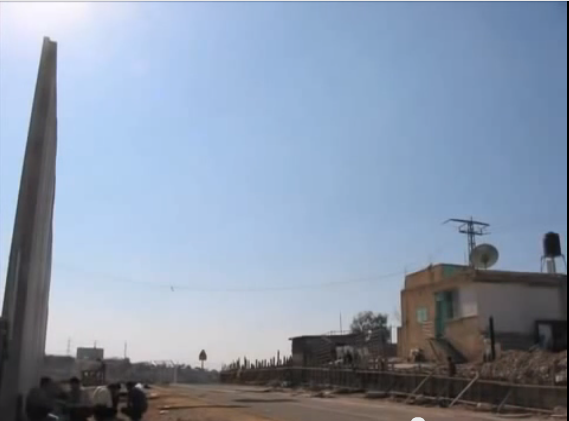
(No.67)In particular, at the top left is the city of Qalqilya, a city of more than 50,000 Palestinians that has been completely surrounded by this 25-foot concrete wall, such that …
(No.67)に、左上に見えるカルキリヤ市は五万人以上のパレスチナ人が住む都市ですが、この都市は25フィートのコンクリートの壁に囲まれています。そのため・・・
No.68
No.68
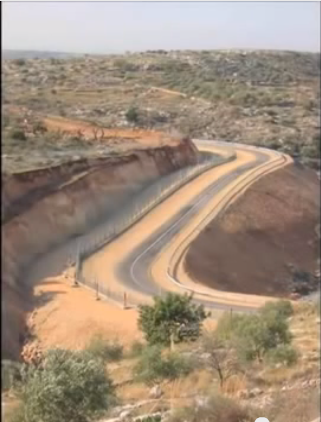
(No.68)its outskirts look something like this now. These are the sniper towers, razor wire, and the concrete wall around the Qalqilya city, also known as the Qalqilya ghetto now or an open air prison even.
(No.68)の郊外は今ではこのような感じに見えます。これは狙撃タワーにカミソリ刃のワイヤー、そして、コンクリートの壁がカルキリヤ市を囲んでおり、この市はまたの名をカルキリヤ隔離地区として知られています。戸外刑務所と言っても過言ではありません。

No.69
No.69
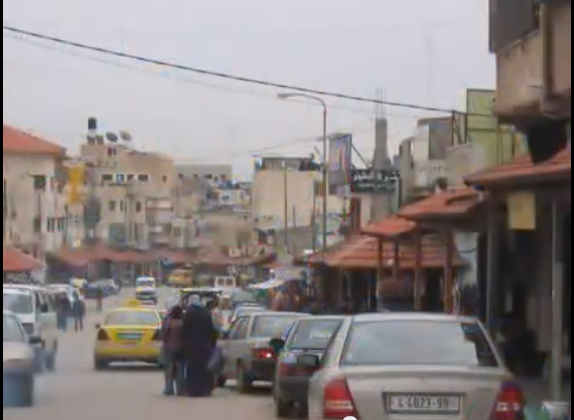
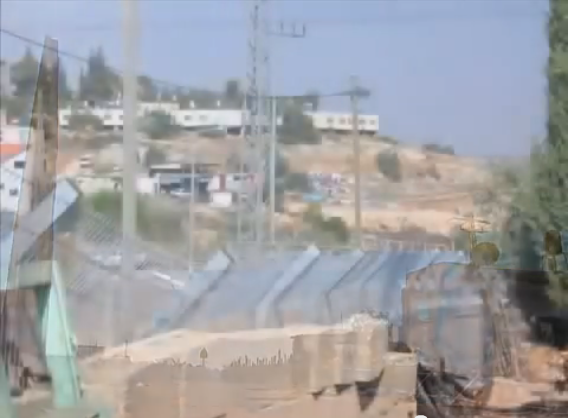
(No.69)Very interesting is that, as a person of privilege in this part of the world, as an American, as a Jewish person, as a white person, I was actually able to see this wall from both sides of it. So here are the photographs of the Qalqilya wall from the city of Qalqilya, the Palestinian side.
(No.69)常に面白いのは、世界のこの場所にいる特権を持つ人として、アメリカ人として、ユダヤ人として、白人として、私はこの壁を実際に両方の側から見ることが出来たのです。そこで、ここにカルキリヤ市側から、パレスチナ側から撮られたカルキリヤの壁の写真があります。

No.70
No.70
(No.70)Meanwhile, the next photograph that I am going to show you is a picture of the exact same wall from the Israeli highway that passes by on the other side of it.
(No.70)の一方で、私がお見せする次の写真は、その反対側にイスラエルのハイウェイが通っている側から見た全く同じ壁の写真です。

And, I think this is very interesting; they’ve sort of built up on a slant up to the wall, where they plant flowers in the spring time, such that it doesn’t even look like a wall. As I said before, many Israelis are much better informed about the situation than American Jews or Americans in general in this country. Yet, at some point I actually think that most Israelis probably don’t even know what the wall looks like, where it is being built, what it is doing to Palestinians farmers and families. This, to me, is almost a kind of censorship, preventing that message from getting across. And, of course, censorship is something happening in our country as well.
れはとても面白い趣向を凝らしいます。彼らはなんというか傾斜地を壁に向かって作っていて、そこに春の季節の花を植えていて、そうすることでそれが壁とは思いも付きません。私が先に言いましたように、この国では、アメリカ系ユダヤ人や一般のアメリカ人よりも、多くのイスラエル人のほうがこの状況についてより多くの情報を持っています。しかし、それにもかかわらず、ある時点においては、殆どのイスラエル人達がその壁がどんな風に見えるのか、どこにその壁が建てられているのか、パレスチナの農家の人達や家族達にその壁が何を一体しているのかについては知りさえもしないのではないかと、私は実は考えるのです。この花の植えられた傾斜地は、私にとって、殆どある種の検閲のようであり、そのメッセージが周りに広がるのを防いでいるのです。そして、もちろん、検閲は私達の国でも起きています。ヽ(^。^)ノ


  Sensorship/検閲

No.72
No.72
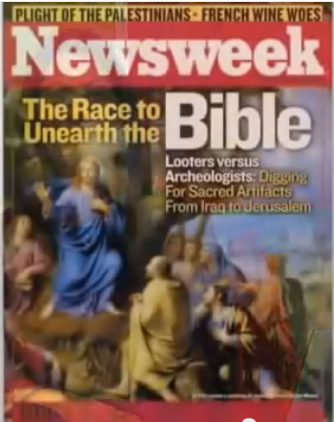
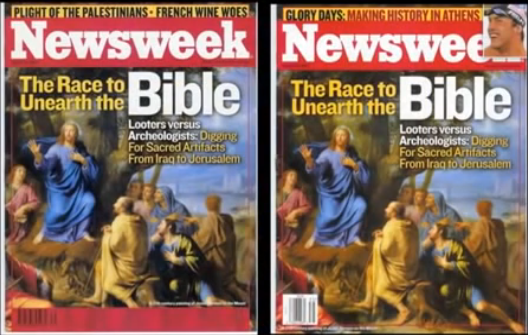
(No.72)Here is a little anecdote, a friend of mine was flying back from Palestine to the US, she had a layover in Germany along the way and she picked up this issue of International Newsweek because it had a particularly sympathetic article about the plight of the Palestinians, as you can see at the top there.
(No.72)こで私のちょっとした秘話を話してみたいと思います。私の友人がパレスチナから米国に飛行機で帰国する途上で、ドイツで飛行機の乗り継ぎの待ち合わせ時間の時に彼女はインターナショナル・ニューズウィーク誌を手に取りました。と言うのは、その雑誌にとりわけ同情を引き起こさせるパレスチナ人の苦境に関する記事が掲載されていたからです。この雑誌の一番上にありますよね。

No.73
No.73
(No.73)Then, she had another layover in Chicago on her flight home where she found this, this is also Newsweek, August 2004, but the US version, with almost the same information, but one major difference:
(No.73)れから、彼女はシカゴで自分の故郷に向かうフライト便の中で、また待ち合わせ時間に遭遇し、そこでこれを見つけました。これは、2004年8月版のニューズウィークですが、合衆国版であり、ほぼ同じ情報が表紙にありますが、ただ一つ違うのは・・・

No.74
No.74
(No.74)That article about the plight of the Palestinians had been completely removed from the entire magazine and replaced by one about the Olympics. Well, some people will tell you that’s just because some Americans don’t care about the Middle East. But, you know, look at the cover story, of course Americans care about the Middle East. We read about what’s happening in Iraq, we read about what’s happened in Lebanon. This is a kind of censorship and its happening all over the place. We need to be aware of it. It’s very dangerous of course, because the very people who are paying for what’s happening don’t know what’s happening.
(No.74)の雑誌から、パレスチナ人の苦境に関する記事が完全に削除されオリンピックの記事に変わってしまっていたのです。そこで、それはアメリカ人の中には中東の事など全く関心のない人達がいるからだよと、あなたに言う人たちがいるかもしれません。しかし、この特集記事を見て下さい。もちろん、アメリカ人は中東の事も気にかけています。私達は、イラクで何が起きているのかについて読みますし、レバノンで何が起きているのかも読みます。これは一種の検閲であり、至る所で起きています。私達はそれに気づいている必要があります。それはとても危険です。何故なら、起きている事に対してお金を支払っている当の本人達が何が起きているのか知らないからです。

So, you know, you don’t have to take my word for it. Tell people, “Do your own research.” I didn’t believe it when I first heard it, I did my own research and that’s what I recommend for other people to do.
すので、私の言葉を鵜呑みにする必要はありません。他の人達に「まずは自分で調べてください」と言ってください。私も初めてそれを聞いた時は信じませんでした。私は自分なりに調査をしましたし、多の人達にもそうすることをおすすめします。

Now, another kind of censorship is just also in the wording. So, for example, instead of calling it a “wall” calling it a “fence.”
て、もう一つの検閲は表現の中にもあります。例えば、それを「壁」と呼ぶ代わりに、「フェンス(柵、塀)」と呼んでいます。


  The Wall from Palestina side/パレスチナ側から見た壁

No.75
No.75
(No.75)Well, to be fair in rural parts of Palestine the wall looks like this- at its base it is wire fence. But, if you look a little bit closer you’ll find this fence is not the kind of fence that you would have like in your backyard kind of fence.
(No.75)あ、公平のためにパレスチナの農村部についてもお話しますが、その壁はこのように見えます・・・その土台のところには鉄条網があります。しかし、それをもっと近くから見てみると、それが貴方の裏庭に作るような類のフェンスではないことが分かるでしょう。

No.76
No.76
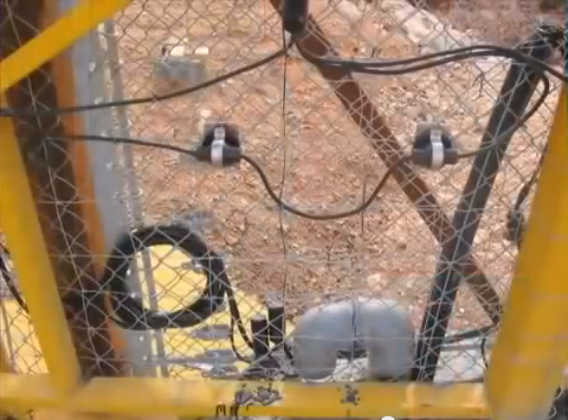
(No.76)Much of it is reinforced with heavy duty electric wire and almost everywhere with razor wire.
(No.76)の殆どが極めて頑丈な電線で、そして、ほぼ全ての場所がレーザーワイヤーで強化されています。

No.77
No.77
(No.77)Back to the concrete areas, this is Abu Dis, a neighborhood of East Jerusalem. What I want to illustrate here is that when you have a Palestinian built up area and an Israeli settlement in the Palestinian territories, the wall won’t be built, first of all, along the actual border or even right in between the Palestinian town or village and the nearest settlement, or even sort of right up against the settlement to just get it onto the Israeli side.
(No.77)ンクリートの場所に戻って、これがアブディスです。東イェルサレムの近隣地区です。私がここで説明したいのは、パレスチナの市街地がありイスラエル人の地域社会がパレスチナ領土内にある場合、パレスチナ人の領土を出来る限りイスラエル側に横取りすめたに、壁は、まずもって、実際の国境線沿いには作られず、また、パレスチナの町や村とその一番近いイスラエル人の地域社会の中間地点にも作られず、また、地域社会の直ぐ外にさえも作られはしません。(その代わり、出来る限りパレスチナ人の建物に接近して壁が立てられ、それにより、パレスチナ人の所有する領土を出来る限り最大限にイスラエル側のものにします。)

No.78
No.78
(No.78)But, oftentimes in my experience, they’ve built the wall as close as possible to the Palestinian built area so that not only the settlement, but all the land between the settlement and the nearest Palestinian town or village also ends up on the Israeli side.
(No.78)かし、私の経験では、しばしば、彼らは壁をパレスチナ市街地に出来る限り接近して建てており、それによりイスラエル人のコミュニティ住宅エリアだけではく、そこと一番近いパレスチナの町や村との間の土地が全てイスラエル側になるようにし続けています。


2.Resistance/抵抗

  2-1.Everyday Nonviolent Resistance/毎日の非暴力的抵抗

No.79
No.79
(No.79)This land, you know, it’s not just pretty land to have a picnic on once in a while, this land is usually the land that farmers and families in surrounding areas have been living off for generations or even hundreds of years.
(No.79)の土地は、時々ピクニックをするのに適した素敵な場所であるだけではなく、パレスチナの農家や家族の人達がその周辺地区で数世代、または、数百年間もの間、普段生計を立てて暮らしてきた土地なのです。

No.80
(No.80)This is their livelihoods that’s been taken away from them.
One of the things I do at IWPS is actually accompanying farmers to their land that has now been stranded on the other side of the wall or checkpoints. Israel says, although it is cutting farmers off from their land, it will allow them through at certain times with a certain kind of permit.
(No.80)れが彼らから奪い去られた暮らしなのです。国際女性平和サービス(IWPS)の一員として私がすることは、壁かチェックポイントの反対側に取り残されてしまった土地を所有する農場主達に一緒に付き添って、その土地のところまで行ってあげることです。イスラエルは、イスラエルが彼らの土地から農場主達を切り離してはいるが、ある時間にある種の許可証を使うことで行き来することができるといいます。

No.81This is the man
(No.81)Well, this is a man that I accompanied to the gate of the wall in hopes of getting to his land. He had gone to acquire one of these permits to get to his own land, and he had actual papers, as well, dating back to the Ottoman era proving that he was the owner of that land on the other side that he could see through, but he couldn’t get to what he wanted to. Well, we went together and we waited for two days trying to flag down any jeep that would pass by, hoping that soldiers would let us pass. They wouldn’t. This man, he didn’t even want to go to pick his olives, he just wanted to go to be on his land. He said, “I want to, I just want to sit under my trees,” and he couldn’t.
(No.81)ちらの男性が、彼の土地まで行ける事を期待して壁の門のところまで私が一緒に付き添って行ってあげた人です。彼は自分自身の土地に行くために、これらの許可証の一つを取得しにいき、そして彼が、実際のオスマン帝国時代に遡るその壁の向こう側にある、壁を通して見える土地の所有者であることを証明する書類も持っていましたが、彼が行きたかったところへ行くことは出来ませんでした。ええ、私達は一緒に行って、そこで2日間ずっと通りすぎるジープを待ち続け、そのジープを止めて、兵士達が私達を通してくれるのを待ち望んでいました。彼らは通してくれませんでした。この男性は、自分のオリーブの実を摘み取りに行くことさえしたいとは思っていませんでした。彼はただ自分の土地に行きたかっただけでした。彼はこう言いました─「私はそうしたいのです。私はただ私の木々の下に座りたいだけです。」しかし、彼はそうすることは出来ませんでした。

So, another thing that people are cut off from is each other. So sometimes if you have a house on the outskirts of a village, because they built the wall right up against the village, that house will end up on the wrong side of the wall.
れで、彼らが切り離されるもう一つのことは何かというと、それは彼らの仲間や家族です。ですので、時々、もしある人が村の外れに家を持っている場合、イスラエル政府は壁をパレスチナ人の村に接近した場所に建設するので、その離れにある家が壁の反対側に置き去りにされてしまうことがあります。

No.82
No.82
(No.82)That is exactly what happened to my friend, Munira who lives in this house. In front of it you can see that 25-foot concrete wall separating Munira and her husband and their 6 children from their village, from their community.
(No.82)れはこの家に住むムニラと言う私の友人が現実に体験したことなのです。その家の真ん前に25フィートのコンクリートの壁が見えます。その壁はムニラと彼女の夫と6人の子どもたちを彼らの村から、彼らの地域社会から切り離してしまいました。

No.83
No.83
 
No.84
No.84
(No.83/84)Behind the house is another wall, separating the family from the nearest settlement. And, (No.84)on the right and left sides of the house are two more fences, separating the family from their own land, land that has been annexed by Israel. So, Munira and her family are basically living in a kind of cage.
(No.83/84)の家の後ろにはもうひとつの壁があります。その壁は近くのイスラエル人専用の居住地域から彼らを分離しています。そして、(No.84)その家の右と左側にはもう2つのフェンスがあり、そのフェンスは、イスラエル政府から併合されてしまった彼らの所有する土地から彼らを切り離しています。ですので、ムニラと彼女の家族は基本的にある種の檻(捕虜収容所)の中に住んでいるのです。


No.85
No.85
 
No.86
No.86
 
No.87
No.87
(No.85)So, here’s the gate to the cage, you can see it’s manned by soldiers. So people, who want to visit Munira, whom you can see in the back with one of her kids, have to sort of hope the soldiers are in a good mood and will let them through. Munira, at this point, hardly dares to leave her cage because she and her husband have been served something called demolition papers, which means that the Israeli army actually intends to demolish their home. And, many people actually consider Munira sort of lucky, because, often times, if a house is in the way of an expanded settlement or a road or the wall, they won’t bother building a whole fence around it, and getting a soldier to come and man it, but (No.86/87)they’ll actually just bulldoze that house. So Munira is actually afraid to leave her house for fear that she could come back and it would be gone, not that they wouldn’t bulldoze the house with people there, which they have also done in the past as well.
(No.85)れがその檻への門です。そこに兵士たちが配置されているのが見えますでしょうか。ムニラを訪ねたい人達は(ムニラは写真の後ろに彼女の子供の一人と一緒にいるのが見えますが)、兵士たちの機嫌が良くなり彼らを通してくれるのを待たなくてはいけません。ムニラは、この時点では彼女の檻から思い切って離れようとしません。何故なら、彼女と彼女の夫は取り壊し書類と呼ばれるものを渡されていたからです。つまり、イスラエル軍は彼らの家を取り壊すつもりなのです。そして、多くの人達がムニラは運が良いと考えています。何故なら、もし自分の家がイスラエル人の居住区域や道路や壁の延長線上にある場合、彼らはわざわざその家の周囲にぐりるとフォンスをはり、兵士たちにそこに配置する代わりに、
(No.86/87)その家をブルドーザーで解体し平地にしてしまうからです。ですので、ムニラは実は、彼女がもし自宅を離れてから戻ってきた時に、その家自体がなくなってしまい、その中にいる人達共々彼らがブルドーザーで壊してしまわないとも言えないので、その可能性を恐れているのです。現実にイスラエル軍は過去に人がいたまま家を取り壊したことがありました。


(41:53→)Um, but, anyway, here is a picture of her family – that’s Munira, on the left; her husband Hani, on the right; and one of their six children. Well, Hani and his family actually originally came to the Mas’ha, the village where he lives with Munira, in 1948 as refugees of the 1948 war. The majority of the people living on the land the UN designated for a Jewish state in 1947, the majority of the people living there were not Jewish. The Zionist forces actually expelled 750,000 Palestinians from their homes to surrounding areas in the West Bank, and Gaza, and the Diaspora.
(41:53→)ちらの写っているのが彼女の家族の写真です。左がムニラで、その右側にいるのが彼女の夫のハニ。そして、彼らの6人の子どもたちの1人です。ハニと彼の家族は、実は、マサと言うムニラと一緒に住んでいる村に、元々1948年戦争の難民としてやってきました。国連が1947年にイスラエル国家として指名した土地に住む大半の人達は、イスラエル人ではありませんでした。シオニスト主義の軍隊は実際には75万人のパレスチナ人たちを彼らの家からウェストバンクやガザ、そして、ディアスポラなどの周辺地域に追放しました。

Hani and his family, for example, were homeless for 10 years before they were able to finally save up enough money to buy themselves some land and build themselves a home. Hani says that he built this home with his own hands for his family. So just to give this thing some perspective, what this demolition order, what this wall, what this occupation, what these things are doing are threatening to make Hani, and families like his, refugees for the 2nd time in recent history.
ニと彼の家族は例えば、最初の頃10年間はホームレス状態であり、その後ようやく十分な資金を貯金して自分達が住むための土地を買い、家を建てることが出来たのです。ハニは、この家を彼の自分の手で家族のために建てたのだといいます。ですので、この事の全体像を把握するために言いますが、この取り壊し命令が、この壁が、この占領が・・・これらの全てが彼らにしていることは、ハニや彼の家族のような家族達に最近の歴史の中で2度目の難民にするぞと脅しているのです。

Keep in mind that 60% of the Palestinians living in the West Bank and Gaza are already refugees, having lost almost everything already. So keep that in mind when you hear people say things like, “Palestinians just aren’t willing to compromise.” I don’t know about you, but looking at this family and all the Palestinians I worked with during my time in Palestine, what I kept thinking was just, “How long could people live like this? How long can people endure this kind of a system before rising up, standing up for their rights, resisting?” Well, of course, the answer is that Palestinians are, and have been resisting for a very long time. We hear about one kind of resistance, violent resistance- suicide bombers that kill innocent Israelis. People are always asking me, you know, “Anna, why are Palestinians always resisting with bombs? Why are they always strapping bombs to themselves, trying to kill as many Israelis as possible? Why don’t they use nonviolent resistance, like Martin Luther King talked about, like Ghandi talked about? Where are those things happening? The answer is that Palestinians are, and have been, using nonviolent resistance not just once in a while, not just here and there, but literally almost every second of, almost every single day of their lives. Just think about it for a moment, think about Munira and her family simply staying in their home, simply saying, “Look, you’ve taken our land, you’ve taken our freedom, but you will not take our home,”is a kind of resistance, and it is nonviolent.
ェストバンクやガザ地区に住んでいるパレスチナ人達の60%の人達は既に難民であり、既に殆ど全てを失っている人達です。ですので、もし、誰かが、「パレスチナ人はただ前向きに妥協して物事を解決しようとしていないのだ」などと言うような人達がいたら、この事を思い出してください。他の人達のことは分かりませんが、でも、この家族やパレスチナに滞在中に一緒に働いたパレスチナ人の人の皆さんを見ていると、「どれだけの間この人達はこのような生き方ができるのだろうか。人々は、立ち上がり、自分達の権利のために抵抗するまで、どれだけの間この種のシステムに耐える事ができるのだろうか。」とばかり私は考えていました。もちろん、その答えは、パレスチナ人は今でも、そして、これまでもずっと長い間抵抗し続けきてました。私達はひとつの種類の抵抗について聞きます。それは暴力的な抵抗・・・罪もないイスラエル人を殺す自殺テロ犯です。人々はいつも私のこう聞いてきます─「アンナ、何故パレスチナ人は、いつも爆弾をしっかりと自分の身体に巻き付けて、できるだけ多くのイスラエル人を殺害しようと試みるのでしょうか?何故彼らは非暴力的な抵抗をしないのでしょうか。例えば、マーティン・ルーサー・キングが話した事やガンディが話した内容のように。どこでそのようなことが起きているのでしょうか?その答えは、パレスチナ人は今も、そして、これまでも、時々だけではなく、あちこちでだけではなく、文字通り、彼らの人生のほぼ毎日、ずっと非暴力的な抵抗をしてきました。ちょっとの間そのことについて考えてみて下さい。ムニラや彼女の家族が、自分達の家にいて、「ほら、貴方達は私達の土地を奪い取り、私達の自由を奪ったけども、私達の家は渡さないぞ」とはっきりと言うのを。それはある種の抵抗であり、非暴力です。


No.88
(No.88)This is nonviolent resistance. Think about the villagers of Yanoun who’ve come back to their homes with no land. They know that they could be beaten up, they know they could even be killed by the settlers, but they also know that it is their right to be in their homes, on their land, and they’re coming back to defend their right. This is nonviolent resistance. In my opinion, any attempt on the part of Palestinians to maintain any kind of normalcy or dignity in their daily lives in spite of this occupation is a kind of resistance to that system; it’s just not something you ever hear about in the newspapers and media. Here’s a couple of other examples of everyday nonviolent resistance in Palestine.
(No.88)れは非暴力的な抵抗です。ヤヌーン村の人達のことを考えて見て下さい。彼らは全く土地がなくなった彼らの家に戻ってきたのです。イスラエル人の居住者達によりひどく打ちのめされたり、殺されたりする可能性が有ることを彼らは知っていましたが、自分の家に、自分達の所有する土地にいることは彼ら自身の権利である事も知っていました。そして、彼らの権利を守るために戻ってきているのです。これが非暴力の抵抗です。私の考えでは、この占領にもかかわらず、彼らの日々の生活の中で一種の正常な状態や尊厳をパレスチナ人の側で保とうとする如何なる試みをもそのシステムに対向するある種の抵抗だと思います。それは、あなた方が新聞やメディアでこれまで聞いたりしたことではないだけです。ここに日々パレスチナで彼らがおこなっている非暴力的な抵抗の事例を幾つかご紹介してみたいと思います。


No.89
(No.89)Here is a group of women from the Tulkarem region who have been cut off from their trees by the wall. They’ve lost their livelihoods, so they’ve formed an embroidery cooperative to sell embroidery, to support themselves and their families.
(No.89)こにいる女性のグループはタルカレム地域出身の人達で、彼女たちは壁によって自分達の木々から切り離されてしまいました。彼女たちは自分達の生計手段を失ってしまい、刺繍の協同組合を形成して刺繍を販売することで自分達や家族を支えていこうとしています。諦めるのではなく、逃げるのではなく、これが誹謗力の抵抗なのです。

No.90
No.90
 
No.91
No.91
 
No.92
No.92
(No.90-92)This is the village of At-Tawani, where settlers have actually boiled barley seeds in rat poison and spread that poison around the landscape of At-Tawani to try and dissuade shepherds from bringing their sheep to their land, in fear that the sheep will eat the poison and be killed. Well, I talked to the shepherd and she knew about the poison, but she also knew that if she doesn’t come back to her land then the settlers would have gotten exactly what they wanted and overtime they would have come and confiscated the land saying, “Well, nobody else was using it.” So she’s coming back to defend her right to be on her land, even if she might lose a sheep or two. This is nonviolent resistance.
(No.90-92)れはアタワニ村ですが、ここでは、イスラエル人の居住者達が、殺鼠剤溶液の中にオオムギ種子を入れて沸騰させたものをアタワニ村の土地にばら撒いて、羊飼いの人達が、自分の羊がその毒入りの殺鼠剤を食べて死なないようにするために、羊をその土地に連れて来ないように仕向けようとしていました。私はその羊飼いの人と話したことがありますが、彼女はその毒の事を知っていましたが、彼女はまた、もし、彼女が自分の土地に戻ってこなかったら、居住者達は彼らがそれまで欲しがってたまさにその土地を手に入れてしまい、そのうち、彼らはやってきて、「誰もこの土地を使ってなかったからね」と言い、その土地を押収してしまう可能性も有ることを知っていました。なので、彼女は彼女の土地にいるために自分の権利を守るため、そこに戻ってきているのです。たとえ、それが彼女の羊を数等失う事になったとしてもです。これが非暴力的抵抗なのです。

No.93
No.93
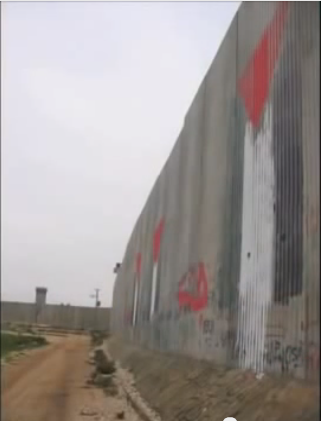
(No.93)Painting the wall, nonviolent resistance.
(No.93)壁にペンキを塗る、非暴力の抵抗

No.94
No.94
(No.94)Climbing the wall is nonviolent resistance.
(No.94)壁にのぼることは非暴力の抵抗です。


to be continued...

・・・続く


NOTICE;If you haven't yet read "Conflict between Israel & Palestine About Land, Water, & Resources No.2", please read it before reading the folowing no.3.
※お知らせ:イスラエルとパレスチナの紛争は土地と水と資源が原因No.2。弥勒菩薩ラエルは全戦争をやめるべきという』をお読みでない方は、こちらから先にお読みください。


Conflict between Israel & Palestine Is
About Land, Water, & Resources (No.3)
イスラエルとパレスチナの紛争は土地と水と資源が原因(No.3)
弥勒菩薩ラエルは全戦争の廃止を主張


【YouTube】Why US and Israel wants to ban this video..

何故米国とイスラエルがこのビデオを禁止にしたいのか・・・

URL:http://youtu.be/Ch5XlEZoi1c


★ ★ ★ PRESENTATION
プレゼンテーション ★ ★ ★

by Anna


Life in Occupied Palestine: Eyewitness Stories & Photos(No.3)
(The following article is continued from No.1 of "Life in Occupied Palestine.")
占領されたパレスチナでの生活:目撃者のストーリー&写真(No.3)

(No.2からの続きです。)


1-2(2) Outpost/辺境地の居住者
    (※管理人:イデオロギー(信条的理由)により違法に単独でパレスチナ領土内の人里から離れた場所に勝手に移住してくるイスラエル人や彼らが住む場所のことを指すようです。)

No.40

No.44
No.44
 
No.45
No.45
 
No.46
No.46
(No.44)Well, a farmer wakes up the next morning and there’s an outpost on his land. While the Israeli government says that it doesn’t condone this kind of practice, it doesn’t do a whole lot to prevent the settlers from coming, or to make them leave.
(No.44)て、農業経営者が翌朝おきて、(彼の土地の離れた場所にテントやトレーラーに住んでいる)移住者がいるのを発見します。イスラエル政府がこの種の行いを許可しないと言いますが、それも大した役には立たず、移住者達が来るのを防ぐことは出来ませんし、彼らを立ち去らせる事も出来ません。

Note: This outpost is a tent or trailer with Jewish Israelis in it. If the Palestinian farmer asks them to leave, they might threaten him with a gun - which they're allowed to have and he isn't.
管理人:この突然に離れに現れたイスラエル人の移住者に立ち去るようパレスチナ人の農夫が頼むと、イスラエル人は銃で彼を脅すかもしれません。イスラエル人は銃を持つことを許され、パレスチナ人は許されません。


(No.45)So, over time these outposts begin to grow. More settlers move into them, eventually they want a school for their children, they want a fence around them for security, they want a road to connect them to Israel,
(No.45)うして、時間とともにイスラエルから来た居住者達の数は増えていきます。更に多くの人達が彼らのいる場所に移住してきて、遂には彼らの子供達のために学校がほしい、安全のために周囲に柵がほしい、彼らの場所からイスラエルに通じる道路がほしいと言い出します。

(No.46)And over time what you have is it’s no longer an outpost, it’s a new settlement. That’s the way a lot of these settlements were originally founded and grew into what they are today. Once they become settlements and recognized by the Israeli government and such, they become subsidized by the Israeli government, which means subsidized by the U.S. government, by us. The U.S. government gives Israel between 3 and 5 billion American tax dollars every year. That’s more than 10 million dollars every single day. That is going towards upholding these illegal practices. You know, this may seem like something kind of on the other side of the world has nothing to do with us as Americans, but we are the ones paying for this. You know, we have a right, we have a responsibility to know where our tax dollars are going and to ensure that they are not being used to violate human rights, international law, and even U.S. law. (23:44)
(No.46)して、時間とともにそこにあるのは居住地区ではなくなり、新しい共同社会になります。このようにして共同社会の多くが最初に作られ、 今日ある姿にまで成長したのです。その居住地区が共同社会になるや否や、イスラエル政府により資金援助を受けるようになりますが、それはとどのつまり、アメリカ政府…私達により資金援助を受けていることを意味します。米国政府はイスラエルに30億から50億ドルのアメリカの税金を毎年提供しています。その額は一日あたり1000万ドル以上になります。このお金がかれらの違法な行動を指示する事に使われています。 これは世界の反対側の出来事で私達アメリカ人には何も関係ないように見えるかもしれませんが、私達がこのお金を支払っている人達なのです。私達は私達の税金がどこに送られているのか知る権利と責任があり、その税金が人権や国際法、そして、アメリカの法律さえも侵害しないことを確かにする権利と責任があります。(23:44)

No.47
No.47
(No.47)Here’s a few pictures of outposts. This is one is above the village of Yanoun. Oftentimes they’re placed on hilltops for sort of strategic reasons. Here’s the village of Yanoun, a Palestinian village of about 300 people. Here’s one of the homes in the village and again you can see at top there, the outpost. As I mentioned before, a lot of the settlers living in these outposts don’t think the Palestinians have any right to be where they are.
(No.47)ちらはその居住地区の何枚かの写真です。これはヤヌーン村の上にある居住地区です。この種の居住地区は、しばしばある種の戦略的な理由で丘の頂上に作られています。これはヤヌーン村で、約300人の人達が住むパレスチナの村です。こちらはその村にある民家の一つで、ここでもまた、その上の方に居住地区が見られます。前に言いましたように、これらの居住地区に住む居住者の多くは、彼らがいる場所にパレスチナ人達がいる権利はないと考えています。
No.48-1
No.48-1
So they’ll actually come down, with large weapons even, to try and threaten the villagers, to try to make them leave their homes and land.
(No.48-1)Here’s a pictures of one of these armed settlers that’s come down to threaten a villager picking her olives. In the past these settlers have beaten up numerous villagers, they’ve poked a young boy’s eye out of his face. They’ve beaten an old woman with her walking stick, they’ve killed a villager, they’ve stolen olives.
すので、彼らは実際に大きな武器さえも手にして降りてきて、村人達を脅して彼らの家と土地から立ち退かせようとします。
(No.48-1)こちらの写真は、オリーブをとろとうしている村の女性を脅しに降りてきた武装した居住者の1人の写真です。これらの居住者達は、過去に、多くの村人たちを殴りつけたことがあり、若い少年の眼球をつつき出したことがあります。彼らは、杖を付いているお年寄りの女性の杖でその女性を叩いたことがありますし、村人を殺したり、オリーブを盗んだりしたことがあります。


No.48-2
No.48-2

No.48-3
No.48-3
 
No.48-4
No48-4
(No.48-2)Keep in mind, of course, that the Palestinians in this part of the world are not allowed to have any kind of weapons. Now, clearly some Palestinians do manage to get weapons, we hear about it in the media, but the vast majority of Palestinians don’t. They don’t have anything to defend themselves with besides stones or their bodies.
(No.48-2)えておいてほしいのですが、もちろん、世界の中でここの場所にいるパレスチナ人はどんな類の武器も持つことが許されていません。それで、疑いもなく、あるパレスチナ人達は武器を何とか手に入れることもあります。マスメディアがそういう報道をするのを私達は聞いたりしますが、パレスチナ人の圧倒的多数は武器を手に入れません。彼らは石や自分の身体以外に、自分自身を守るものは持たないのです

(No.48-3)Meanwhile, Israeli soldiers and civilians, these settlers, are often times carrying around these large weapons.
(No.48-3)一方で、イスラエルの兵士や市民、そして、この居住者達は、しばしば大きな武器を持ち歩いています。

(No.48-4)So that’s the kind of balance of power that you feel going into the territories.
(No.48-4)れが、この領土に立ち入った時にあなた方が感じるある種の力の均衡なのです。
No.49
No.49
 
No.50
No.50
 
No.51
No.51
(No.49)The settlers have burned the village generator so that Yaunoun villagers didn’t have any more electricity.
(No.49)住者たちは村の発電機を焼き、ヤヌーン村の人達は電気を使えなくなりました。

(No.50)This is the Yanoun water source where the settlers have come down and urinated in the water source, they’ve poisoned it with dead chickens, anything to try to make the villagers leave. At the end of 2002, the village of Yanoun came together to make a decision about this issue. What they decided was that they were going to leave.
(No.50)れはヤヌーン村の水源ですが、居住者達がそこに降りてきて、その水源に排尿し、死んだ鶏肉をそこに入れて汚染させてしまいました。彼らは村人達を立ち去らせる事なら何でもしました。そして、2002年の暮れに、ヤヌーン村の人達は集まり、この問題についてある決定を下したのです。

(No.51)They decided to abandon their ancestral homes and land, because they felt so threatened by the settler presence, and one day they picked up and left, all 300 of them.
(No.51)らは先祖伝来の自分たちの家と土地を放棄することにしたのです。何故なら、彼らはその居住者達の存在により非常に恐怖を感じていましたから。そして、ある日、彼らは片付けをして出て行きました。村人300人の全てが。


Well, the international and Israeli peace communities heard about what had happened in Yanoun and went to the villagers staying in a nearby town with an offer. What we said was,
If you choose to return to your homes and your land, we will commit to maintaining a constant presence of international and Israeli peace activists to live with you in your community for as long as you want us there. We will bear witness to these crimes, we will document them, try to get them into the media, we will stand beside you in solidarity, should those settlers attack.
And, about a third of the villagers accepted our offer and have come back to their homes, almost 100 of them, and living along with them now are these international and Israeli peace activists.
て、国際的且つイスラエルの平和グループはヤヌーン村で起きた事を耳にして、近くの町に滞在していた村人達のところに行きある提案をしました。私達はこう言いました─
もし、あなた達が自分達の家と土地に戻ることを選択したら、私達は国際的且つイスラエルの平和活動家達が常時あなた達の側にいることを約束し、あなた達が私達にそうしてほしいと思う間ずっとあなた達の地域であなた達と一緒に住む事を誓います。もし、その居住者達が攻撃してきたら、私達はこれらの犯罪の証言をし、文書に記録し、その居住者達をメディアに引きずり出し、私達はあなた達と連帯してあなた達の側にいます。
そして、村人達の3分の1のほぼ100人の人達が私達の提案を受け入れました。そして彼らと一緒に住んでいるのは、この国際的且つイスラエルの平和活動家達です。


  Israeli Activists/イスラエル人の活動家達

This is a picture of one of those activists, his name is David, he is a friend of mine. David was actually the victim of a particularly brutal settler attack, in which he was beaten to a pulp in his face, which shows that settlers will attack not only Palestinians but internationals and Israelis, who are there in solidarity with those farmers.
れはその活動家達の1人でデイビッドといいます。彼は私の友人です。デイビッドは実は特に残忍な移住者の攻撃を受けた被害者です。その時、彼は顔をこてんぱんに叩きのめされました。この事件が、移住者達がパレスチナ人だけではなく、その村に来て農場経営者達と連帯して滞在している外国人達やイスラエル人達をも攻撃する事がわかります。
No.52
No.52
(No.52)But, David continues to do wonderful work in the Palestinian territories. He is recovering. He is a citizen of Israel, a Jewish Israeli, and one of many Israeli activists that I’ve had the privilege to work with in Palestine.
(No.52)かし、デイビッドはパレスチナ領域で素晴らしい仕事を続けています。彼は回復しているところです。彼はユダヤ系イスラエル人の市民ですが、私がパレスチナで共に仕事をする機会に恵まれた多くのイスラエル人活動家達の1人です。

Now, it’s very important for people to distinguish between...
  • what it means to be Jewish, someone from the Jewish religion or culture like myself;
  • what it means to be Israeli, a citizen of the state of Israel and
  • what it means to be a Zionist, someone who supports the idea of an exclusively Jewish state.
These are three separate categories.
て、私たちは以下の違いを理解することがとても大切です・・・
  • 私のようにユダヤ教、又は、ユダヤ文化の出身のユダヤ人である事
  • イスラエル国家の市民であるイスラエル人である事
  • ユダヤ国家だけの考えを指示するユダヤ主義者(シオニスト)である事
これらは3つの別々の分類です。

There is some overlap, but they are not the same thing, and it’s very important to distinguish. There are Jewish people who are not Israeli, like myself. There are Israelis who are not Jewish, 20% of the Israeli population is Palestinian. There are Jews who are not Zionists. There are Zionists who are not Jewish- the increasingly influential Christian Zionist movement in this country. It’s very dangerous when these ideas become conflated because people start associating them as equals such that people are afraid of standing up against what Israel is doing because they are afraid that would make them an anti-Semite or a Nazi or something, and it’s absurd, it’s crazy. Occupation and oppression have nothing to do with Judaism and to criticize these things is not anti-Semitic, so it’s important to keep these things separate in our minds.
分的には重なりあっていますが、それらは同じ事ではありません。そして、区別することが非常に重要です。私のようにイスラエル市民ではないユダヤ人もいますし、ユダヤ人ではないイスラエル人もいます。イスラエル人口の20%はパレスチナ人です。ユダヤ主義者ではないユダヤ人もいます。ユダヤ人ではないユダヤ主義者もいます・・・この国でますます増え続けている影響力のあるキリスト教のユダヤ主義者の運動が有ります。これらの考えが一緒になるのは非常に危険です。何故なら、人々はこれらの考えを同等のものとして関連づけ、そのために、人々はイスラエル政府に抵抗すると彼ら自身が反ユダヤ主義者やナチス党員のようなレッテルをはられてしまうのを恐れ、イスラエル政府がしている事に抵抗するのが怖くなるのです。それはばかげた事であり、常軌を逸しています。占領と抑圧はユダヤ教とは何の関係もないですし、占領と抑圧を批判することは反ユダヤ主義ではないので私達の心の中でこれらの考えを区別しておく事が重要です。
No.53
No.53
(No.53)Here you can see a Jewish Israeli, a Rabbi from a group called Rabbis for Human Rights, planting an olive tree alongside a Palestinian farmer.
(No.53)の写真では、人権のためのラビ達と呼ばれるグループから来たユダヤ系イスラエル人のラビが、オリーブを三本パレスチニア人の農民の横に植えているところが写っています。

No.54
(No.54)Here you can see an Israeli activist protesting the policies of her government alongside Palestinian colleagues of the resistance.
(No.54)ちらには、イスラエル政府の政策に反対するイスラエル人の活動家が写っていて、その横には抵抗運動のパレスチナ人の同僚達が並んでいます。

In Israel all Jewish men and women are required to serve in the military, but there have been thousands of Israeli citizens who stood up and said, “We refuse to take part in this institution.” They are known as the “refusniks.”
(No.55)スラエルでは全てのユダヤ人の男性と女性は軍で働く事を要求されますが、今まで何千人というイスラエル人の市民たちが立ち上がり、「私達はこの国家の機関に参加することを拒否する」と訴えてきています。彼らはリフューズニクスとして知られています。

I have to say that in Israel there is a much higher tolerance for debate and dissent on this issue than you find in the United States. In Israeli newspapers you will find much more candid descriptions of the occupation than in US mainstream newspapers, where sometimes it’s even taboo to use the word “occupation.”
スラエルでは、この問題に関する議論や意見の相違に対する耐性が、合衆国内よりも高いと言わなくてはいけません。時に「占領」という言葉を使う事がタブー視される時でもイスラエルの新聞では、アメリカの主流となる新聞で見られるよりも遠慮のない記述が見られます

But in Israel, actually, themajority of the people are opposed to the settlements and opposed to the occupation as it is right now. So, a lot of times people in the United States feel like they have to support the Israeli government in order to support the Jewish people or the Israeli people.
かし、イスラエルでは、今そうであるように、実は大部分の人々はイスラエル人専用の共同社会や占領に反対しています
多くの場合、アメリカの人達は、ユダヤ人又はイスラエル人を援助するためにイスラエル政府を支援しなくてはいけないように感じています。
No.57
 
No.58
No.58
 
No.59
No.59
(No.57)And they don’t realize that, just like in the United States there are Americans that don’t always support what part of their government may do, there are Israeli citizens that don’t support the Israeli government.
(No.57)して、アメリカの中で、アメリカ人がアメリカ政府の政策をいつも指示するわけではないのと同じように、イスラエル政府を支持しない イスラエル市民がいるということにアメリカ人は気が付きません。

(No.58)And, actually, a very telling statistic shows that it is five times more likely for an Israeli soldier to commit suicide than to be killed in a terrorist attack. So when people talk about this occupation as helping the Jewish people they don’t realize how many Israelis are actually against it and how important it is for the Jewish people as well as the Palestinian people to end this.
(No.58)れと、実は非常に有力な統計によると、イスラエルの兵士が自殺して死ぬ確率は、テロリストの攻撃で死ぬ確率の五倍も大きい傾向にあるという統計が出ています。ですので、人々がこの占領について話をする時、彼らはどれだけ多くのユダヤ人が実は占領に反対していて、ユダヤ人とパレスチナ人にとってこれを終わらせる事がどれだけ重要であるか知りません。

(No.59)Refusniks often suffer from discrimination within their own communities. I’ve know refusniks that have been ostracized by their communities, even disinherited by their families, refusniks that have gone to jail for what they believe and refusniks are ineligible for a number of jobs in Israeli. So there’s a whole slew of institutions built up to prevent Israelis from speaking out against what their government is doing, and yet they continue.
(No.59)フューズニクスは彼らの地域社会の中でしばしば差別にあいます。リフューズニクスの人達は、自分たちの地域社会から仲間はずれにされたり、家族から相続権を奪われたり、自分の信条のせいで刑務所に送られたり、イスラエル国内では多くの仕事につく資格がありません。イスラエル人達に政府がしていることに反対意見を言わせないようにする目的で設立された沢山の機関がありますが、それにもかかわらず、彼らは(抗議の運動を)続けています。

(30:39)Here is a Palestinian farmer picking olives with an Israel activist in the Olive harvest.
I’d like to bring us back to the main outline. We’ve talked about restricted movement, we’ve talked about settlements & outposts, and down at the bottom, there we’ve talked about Israeli activism. I would like to begin now talking about the Wall before getting into imprisonment and of course, resistance.
(30:39)の写真には、オリーブの収穫期にイスラエル人の活動家と一緒にオリーブを収穫しているパレスチナ人の農場経営者が写っています。
ここで主要な概略に戻りたいと思います。ここまでで、制限された行動、共同社会、居住地区、そして、根底に有るイスラエル人の活動家達について話をしました。それでは今から投獄と、もちろん、抵抗に入る前に、壁について話を初めたいと思います。
ヽ(^。^)ノ


1-3. The Wall/壁

No.61
No.61

(No.61)So, the wall. This a picture of the wall that Israel is building, and this is what it looks like in urban areas, it’s 25-foot concrete.

Often times in the newspapers you’ll find it’s not called the “wall,” instead they call it a “security fence.” And, a lot of people really believe that this is a security means to prevent terrorism. I’ve talked to people who say, “Well, look, it’s very sad to have a wall and everything but we’ve been fighting for so long and all we want is peace. Maybe if we just stick up a wall between the two sides, they’ll stop fighting each other, they’ll stop killing each other.”

Well, this is an interesting question, right – “does separation, does segregation bring peace?” Also interesting is that a lot of the people that support the wall (, it turns out, if you ask them, ) may not have ever actually seen a map of where the wall is being built, and this is really critical to understanding the intention behind it and what the effects are actually going to be of this wall.

So, you know if you’re going to build a wall between your house and your neighbor’s house, where would you build it? Along the property line, right, or maybe a little bit on your territory. Well, take a look at where Israel is building this wall.
(No.61)ー、壁です。これはイスラエルが建設中の壁の写真です。25フィートの高さのコンクリートです。

聞では「壁」とは呼ばずに「セキュリティーフェンス」としばしば呼んでいます。そして、多くの人達がこれはテロリズムを防ぐための治安手段だと信じています。私はこのような事を言う人達と話すことがあります。─「いいですか、壁や色んな物を設置するのはとても悲しいですが、非常に長い間私達は闘い続けている状況で、私達が本当に望んでいるのは平和なのですよ。多分、もし2つの領土の間に壁を作れば、彼らはお互いに闘うのをやめるかもしれませんし、互いに殺し合うのをやめるかもしれません。」

うですね、ここで面白い質問をしたいと思いますが、「分離政策が、人種的分離が平和をもたらしますか。」 (もし貴方が彼らに聞いたとしたら次のような結果になるのですが)その壁がどこに設置されているかを地図で実際に確認したことがある人達は殆どいない かもしれません。そして、地図で実際に確認することが壁を建設する事の裏に隠されている意図を理解し、この壁が実際にどのような効果をもたらすのか理解するのに絶対不可欠なのです。

し、貴方が貴方の隣の家と自分の家との間に壁を作るとしたら、どこに作りますか?土地の境界線ですよね。または、少しだけ貴方の土地の側に建てますでしょう。それでは、イスラエルがどこにこの壁を立てているのか見てみましょう。

No.62
No.62
 
<br />
No.63
 
 
No.64
No.64
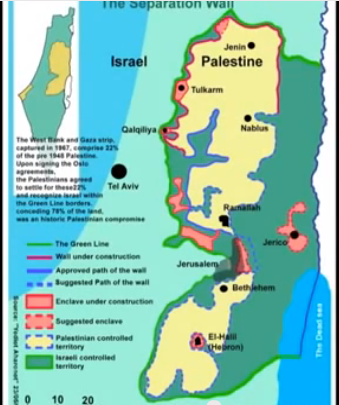
(No.62)In this map you can see the border around the West Bank and then you can see those red lines that indicate where Israel is constructing this wall. As you can see, over 80% of it doesn’t even touch the green line, that border of the West bank, but actually snakes in, in effect annexing all of that land on the western side onto the Israeli side.
(No.62)の地図を見るとウェストバンクの周囲に国境があるのがわかります。そして、イスラエルがこの壁を建設している場所を示す赤い線があるのがわかりますね。見てお分かりの通り、その80%以上がウェストバンクの国境の緑の線に触れさえもしませんが、実はウェストバンク側に入り込んでいて、その結果、西側の土地を全てイスラエル側に併合しています。

(No.63)In particular, take a look at the Jerusalem area where most of the land is being taken. Remember that, of course, Jerusalem is a holy city not only for Jewish people but also for Muslims and for Christians. 20% of the Palestinian population is Christian and they, along with their Muslim counterparts, are being separated from the religious center of their land, as well as the economic center of their land and the geographic center of their land.
(No.63)に、殆どの領土が取られているイェルサレム地区を見てください。もちろん、イェルサレムはユダヤ人だけではなく、イスラム教徒やキリスト教徒にとっても新製な場所であることを覚えておいてください。パレスチナ人の人口の20%がキリスト教徒であり、イスラム教徒の人々と一緒になって、彼らの宗教的中心地であり、経済的中心地、そして、地理的中心地から切り離されています。

(No.64)The entire eastern third of the West Bank was going to be cut off with the wall and now, instead of building that wall, they’ve decided to line that eastern third with checkpoints so that Palestinians, for the most part, can’t even access that part of the West Bank. So, what’s happened is that it’s been chopped up. The West Bank has been chopped up into little sections.
(No.64)ェストバンクの東側3分の1全体がその壁により切り離される事になり、そして今、イスラエル政府は、その壁を建設するのではなく、その代わりに東側3分の1にチェックポイントを並べることにし、それによりパレスチナ人の大部分がそのウェストバンクの地域に行くことさえ出来なくしてしまいました。なので、この地域が細切れにされてしまったのです。ウェストバンクは小さい区域に細切れにされてしまいました。


No.65-2
No.65

(No.65)Here is a series of 4 maps that really show over time what has happened and I think that they really tell the story well.
  • The first map represents, with the green, the amount of land that was owned by the Palestinians in 1946, and that is 92% of the land, where as Jews owned only 8% of the land.
  • Then, in 1947, the UN Resolution 181 offered Jews 54% of the land and Palestinians 46% of the land. By the end of the 1948 war, when Israel was declared a state, the Jewish Zionist Forces actually acquired 78% of the land, leaving the Palestinians with 22% of the land in the West Bank and Gaza.
  • Finally, now in 2006 you can see what that land has come to, a series of smaller sort of enclaves and islands.

(No.65)この4つの地図がありますが、これらの地図は時間と共に何が起きたのかを示していますが、これらの地図を見ると本当になにが起きたのかが良くわかります。
  • 最初の地図は、緑色の地域がありますが、1946年にパレスチナ人により所有されていた領土の範囲を表しています。そして、それは92%であったのに対して、ユダヤ人はたったの8%しか所有していませんでした。
  • そして、1947年、国連決議181がユダヤ人にその土地の54%を提供し、パレスチナジに46%を提供しました。イスラエルが国家宣言をした1948年戦争の終わりまでに、ユダヤ系のシオニスト主義者の軍隊が実はその領土の78%を獲得し、パレスチナ人にはウェストバンクとガザ地区の領土の22%を残しただけでした。
  • 最終的に、2006にこの土地がどうなったか見てください。より小さく散りばめられた土地と幾つかの小さな島の集まりになってしまいました。


to be continued...

・・・続く


Yoga & Meditation can Reshape Your Brain
ヨガと瞑想が貴方の脳を再形成する

http://thespiritscience.net/2014/11/05/yoga-meditation-can-reshape-your-brain/


How Meditation Can Reshape Our Brains:
Sara Lazar at TEDxCambridge 2011
瞑想がどのようにして私達の脳を再形成するか:
サラ・レイザー(TEDxキャンブリッジ、2011年)


You can physically change your brain through Yoga and Meditation. Science has found Neurobiological evidence to support what meditation experts have been claiming for years; That people are healthier and happier when they meditate.
達はヨガと瞑想を通して自分の脳を物理的に変える事が出来ます。科学は、瞑想の専門家が何年にも渡り主張し続けてきた事を支持する神経生物学的な証拠を発見しました。それは、人は瞑想をする時、より健康になり幸せになるということです。

“Neuroscientist Sara Lazar’s amazing brain scans show meditation can actually change the size of key regions of our brain, improving our memory and making us more empathetic, compassionate, and resilient under stress.”
「神経科学者のサラ・レイザーの驚くべき脳のスキャンは、瞑想をすることで、実際に人の脳の最も重要な領域のサイズが変化し、私達の記憶が高められ、より共感出来るようになり、思いやりが深くなり、ストレスの元でも回復力が早くなります。

As we age our brains loose grey matter. However, if you meditate by age 50 you will have the same amount of gray matter as a 25 year old. Meditation literally keeps your mind healthy and young!
達は年をとるとともに、私達の脳は灰白質の容積が少なくなります。しかし、50才になるまでに瞑想をすると、25才と同じ灰白質の容積を持つようになります。瞑想は文字通り、貴方の心を健康で若く保つのです。

The area of the brain that controls emotions, empathy and compassion actually grows in the brain when you practice yoga and meditate. The region of the brain connected to our feelings becomes bigger and there are more connections there. That is why meditators are more able to connect with the world around them, love everyone and are more able to find happiness.
情や共感、そして、思いやりをコントロールする脳の領域は、実はヨガと瞑想をすると成長するのです。私達の感情に関係する脳の領域は、より大きくなり、より多くの神経の連結がそこに作られてきます。だから、瞑想家は彼らの周囲の世界とよりつながる事が出来て、全ての人を愛することができ、幸福を見つける事が出来るのです。

Also the parts of the brain that respond the most to stress gets smaller with meditation. This means that anxiety and depression naturally fade with a meditation practice.
た、最もストレスに反応する脳の部分は、瞑想をするとより小さくなります。これは心配や憂鬱が自然に瞑想の訓練と共に薄れて行く事を意味します。

Scientific evidence strongly supports meditation, with that in mind will you begin practicing yoga and meditation? If you do already let us know in the comments how it has influenced your life.
学的な証拠は瞑想を強く支持します。それを心にとめて、貴方はヨガと瞑想を実践しますか?もし貴方が既にそれを行っているのなら、どのようにあなたに影響を与えているのか、コメント欄にかいて私達に知らせてください。

Thank you for reading,
んでくれてありがとう。


管理人:

私は交通事故でムチ打ちになってから、自宅療養をしてきましたが、その生活で気持が塞ぐときがありました。

そんな時、瞑想の音楽を聞いて宇宙人エロヒムの事をふと思うと、なんとなくエロヒムと繋がった間隔になり、とっても気持ちよくなったんです。

それで、そうだ、自分は瞑想をすればエロヒムを感じる事が出来るんだとわかり、というか、以前からそういう経験はあったのですが、再認識して、瞑想を1日に何度もするようにしました。

すると、身体が固くなっていたのが柔らかくなったり、また、気持がとても楽になり、幸せな気持がとても増加し、そして、安定した感じが続いています。これ、不思議ですが、科学的に根拠のある効果なんですね。だから、瞑想をもっとしてみたいと思っています。

なんか、弥勒菩薩ラエルが瞑想を一日中教えてくれたあの日がとても懐かしい気がします。

時間とお金が許すのなら、もう少ししたら、ヨガも始めてみたいですね。

以前秋葉原で偶然話をした外国人の方がヨガを教える方で、その方の知り合いのコースを紹介してくれると話して頂き、それに行ってみたいと考えています。

ただ、無理な動きを急にすると身体を壊したりするかもしれませんので、そこは注意しなくてはいけないでしょう・・・


NOTICE;If you haven't yet read "Conflict between Israel & Palestine About Land, Water, & Resources No.1", please read it first.
※お知らせ:
イスラエルとパレスチナの紛争は土地と水と資源が原因No.1。弥勒菩薩ラエルは全戦争をやめるべきという』をお読みでない方は、こちらから先にお読みください。


英語と日本語[English & Japanese]日本語[Japanese])


イスラエルとパレスチナの紛争は土地と水と資源が原因(No.2)
弥勒菩薩ラエルは全戦争の廃止を主張


【YouTube】Why US and Israel wants to ban this video..

何故米国とイスラエルがこのビデオを禁止にしたいのか・・・

URL:http://youtu.be/Ch5XlEZoi1c


★ ★ ★ プレゼンテーション ★ ★ ★
by Anna


占領されたパレスチナでの生活:目撃者のストーリー&写真(No.2)


I. 占領の構造

  1-1. 制限された行動

    1-1(1) チェックポイント

"We're just following orders."
「私達はただ命令に従っています。」


cpt_DeirBallut02
No.21


れは殆ど毎日兵士たちから聞く言葉です、「私達はただ命令に従っているだけです」、そして、まさしくそれが、彼らがしていることなのです。その時点で、その妊娠した女性の夫は、1時間離れたラマラー市から救急車がチェックポイントに来るように電話をしました。そして、 彼女がすることは単に、彼女の車から5歩歩いてチェックポイントを超えた救急車まで行くことでした。救急車は1時間後に到着しましたが、兵士たちが彼らの頭を振りながら降りてきて、そして、こう言いました─「いいですか、貴方が歩いて行こうが車で行こうが関係ないのです。貴方はどちらにしろ、パレスチナ人ですから。まだ夜中ですし、貴方はここを通過することは出来ません」。この時点で彼らは取り乱しており、夫は彼の友人たち全員に電話することにしました。彼は、多くのパレスチナ人と同じように、イスラエル国内で実は働いた経験があり、ヘブライ語が話せましたので、この女性が病院に行くためにこのチェックポイントを通過する許可を女性に与えることが出来るようにするために、イスラエルの軍隊の上層部にコネがあるイスラエル人の友人に連絡することが出来ました。兵士たちは女性を通過させましたが、彼女の夫が妻と一緒に行くのは許可しませんでした。彼女は救急車に着くやいなや双子の赤ちゃんを出産したのです。双子の赤ちゃんは生まれ両方共生きていました。基本的には健康でしたが、ただ、もちろんその状況のため、その赤ちゃんらは2ヶ月の未熟児で生まれてしまいしたので、そのため病院の対応が必要な深刻な状態でした。病院までは1時間離れていましたので、でこぼこ道を夜中走り、チェックポイントでおよそ2時間近く待たされてしまいましたので、病院に時間までに間に合わせず、この双子の赤ちゃんは二人とも亡くなりました。
はこの話が悲痛な思いにさせるから話しているのではなく、また、これらの兵士たちを悪者扱いにしようとしているので話しているのでもありません。いいですか、私はヌーレンバーグ原則を信じています。それは、たとえ人が命令に従っているにせよ、人は自分の行動に責任があるということです。とは言うものの、私が全ての中で最も重い犯罪だと考えるものは、より感じが良いか、より意地悪な兵士たちがとる行動のようなものではなく、そのシステム自体が最大の犯罪であり、つまり、ある人が病院に行けるかどうかをコントロールするために兵士たちさえもそこに配置されているというように、物事がシステム化されている事実が最大の罪なのです。それが私にとって最大の罪です。

無限君:兵士たちに市民を殺すように命令した人は、誰も殺していないので、犯罪は犯さなかったというのは完全に間違っています。彼もまた罪を犯しているのです。

また、兵士たちが単に命令を受けたから、そして、それに背けば殺すぞと脅されたので、その兵士たちは罪を犯していないというのは完全に間違っています。兵士たちも罪を犯しています。

また、このシステムの全てを作った人は、誰も殺していないので、犯罪を犯していないというのも間違いです。彼もまた罪を犯しています。

そして、この戦争により巨額の冨を得ている人は、誰も一度も殺していないので犯罪は犯していないというのも完全に間違いです。彼も罪を犯しています。

そして、この最大の犯罪を傍観者として見て見ぬふりをする人は犯罪を犯していないというのも間違いです。何故なら、権力者達がすることに反対であることを示さないのは、彼らが犯罪を犯す事を許し同意するのと同じであり、それは人を殺す人と同じく同罪であるからです。

私達は人類として私達の意識を使い、これが完全に間違いであることに気が付かなくてはいけません!

1-1(2) Roadblocks/道路上の障害物


village Dair Ballut
No.22

Roadblocks
No.23
 
cannot_go
No.24
(No.22)いましたように、これはデア・バルート村の郊外にあるチェックポイントです。この村自体はこの写真の左側の奥の方にあり、その村からそのチェックポイントに直接行ける近道があります。

(No.23)しかし、村人達はその道を使用する事が許されていません。何故なら、その道路上にはロードブロックと呼ばれる障害物があるからです。この写真に写っているのがそのロードブロックです。パレスチナ人達が自動車で通行出来ないようにするために、しばしば立方体の形のコンクリートがパレスチナ人用の道路に置かれています。

(No.24)つまり、それにより何が起きるかというと、例えば、毎朝仕事や学校に行く途中のチェックポイントへ自分たちの村から800メートルの舗装道路を利用する代わりに、4.8キロの舗装されていない迂回道を通り田舎を通り抜けて同じ目的地に行かなくてはいけません。彼らにとってこれは何を意味するのでしょうか。より時間がかかり、更に大きなストレスとなり、そして、車にもっと多くの損傷ができ、ガソリン代も更にかかります。そして、ここでもまた、テロリズムを防ぐためのイスラエルの人達の治安と安全の質問が出てきます。
これらのロードブロックは一体誰を守っているのでしょうか?パレスチナ人達に強制的にこの長い回り道をさせる事がどれだけ治安のためになり、どれだけ管理に役立つのでしょうか?

dirt block
No.25
 
detour
No.26

(No.25/26)ードブロックの幾つかは泥で作られています。この写真の右側上のほうに仕事から帰ってくる村人たちが写っています。彼らはロードブロックの反対側に住んでいるので、彼らが毎朝しなくては行けないことは、ロードブロックまで車で運転してきて車をそこに駐車し、歩いてそこを迂回し、そして、タクシーに乗って残りの道のりを仕事場に向かうか、学校に向かいます。そして、帰宅するときにまた同じ事を繰り返します。ですので、これらのロードブロックはパレスチナ人が自宅から車で仕事場や学校に向かうのと同じくらい基本的な事をすることを防ぎます。

back
No.27
 
manually transport
No.28

(No.27)終的に、これらのロードブロックはパレスチナの経済を極度に無力なものにします。これらのチェックポイントとロードブロックの全てを考えると、想像できるかもしれませんが、商品をその土地の一方からもう一方に運ぶのは些細なことです。基本的に、パレスチナの商品を運ぶトラックがロードブックに到着した時、そこで向きを変えてロードブロックに向かいバックします、そして、今度は反対側からもう一台の車両に来てもらい向きを変えてバックしてもらいます。

(No.28)して、これらの写真からみてわかりますように、誰かが実際に商品をロードブロックの一方から他方へ手で運ばなくてはいけません。商品はいつもオフィス用備品とは限りません。農産物や傷みやすいもの、目的地につく時間には腐ってしまう物の場合もあり得ますし、心底必要な医療用品の場合もありえます。

い時間がかかる以上に、それらの商品を運ぶのに必要とされる余分な労働力と自動車動力のせいで、 この全ての行程がこれらのパレスチナの商品の多くの値段を釣り上げてしまいます。そして、何が起きるかというと、最後にはパレスチナの商品の多くの値段が、イスラエル人専用の道路でとても運送しやすいイスラエルの同等の商品の値段よりも更に高くなってしまいます。

Israeli products
No.29

(No.29)ると、もちろんパレスチナの市場はイスラエルの商品であふれてしまい、多くのパレスチナ人達が収入の範囲内でやりくりをしていますから、その彼らがイスラエル商品を最後には購入してしまい、パレスチナ人自身の経済を支える代わりに、まさに彼らを占領しているその国を支援する事になってしまうのです。
ヽ(^。^)ノ


1-2(1) 共同社会(定住)


No.30

(No.30)に、共同社会についてお話をします。共同社会は、基本的にパキスタン人の土地に住んでいるユダヤ系イスラエル人の地域社会です。そして、この共同社会は村や町、都市になります。

(No.31)ちらにあるのはベツレヘムとイェルサレムの近くにあるどちらかと言うと大きい共同社会です。そして、ここでも繰り返しますが、ウェストバンクの全ての土地はパレスチナの土地であり、パレスチナ人に属し、国際的にもパレスチナの土地として認められています。それにもかかわらず、そのパレスチナの土地の真上にユダヤ系イスラエル人専用に建設された都市があります。これは何を意味するのでしょうか。その都市に誰が住むようになるのでしょうか。そうですね、私はユダヤ人ですので、その都市に住むことが出来るでしょう。私は単に申請書に書き込むだけでいいのです。もし、そうしたければ、私は来週にでもそこに引っ越すことが出来るでしょう。しかし、その都市が作られた場所の土地を所有している農家の人達、パレスチナ人達はそこに住む事が許されていません。さて、この行程は全く新しいものではありません。歴史を通して世界中でそれは起き続けており、それには名前がります。それは植民地化と呼ばれます。英語やヘブライ語ではこの種の安全な言葉 ─ 「共同社会(※1参照)」と呼びますが ─ が使われているのは面白いです。それに対して、例えばフランス語のように他の多くの言語では、これらの共同社会は「コロニー(植民地)」と呼ばれ、つまり「共同社会」とはまさに植民地のことなのです。
「国際法は、占領している権力者が市民を権力者自身の領土から占領された領土に移動させる事を禁止する。」(第四回ジュネーブ条約、第49条)

そして、「共同社会」は国際法によると違法であり、それによると、占領する権力者が市民を権力者自身の領土から占領された領土に移動させるのを禁止していますが、イスラエルがしていることはまさにそれなのです。ヽ(^。^)ノ

【訳者注】

※1)Settlement:Settlement(=共同社会)の意味には、他に「植民地化」という意味がありますので、Settlementは、Colonizationと同義となるが、本来の意味は、「定住」である。定住した人達が結果として共同社会になるという意味で、「共同社会」という意味もある。紛らわしい表現でストレートに植民地と言うのは国際的に受けが良くないので、イスラエル政府は「Colony」の代わりに「Settelement」を使用しているのでしょう。

No.32
 
No.33
No.33
 
(No.32)スラエルはそのシステムに対して抵抗するのではなく、実際にはそれを促進しています。パキスタン人の領土内にあるイスラエル人専用道路にある広告用掲示板の写真からもお分かりのように、それには基本的にヘブライ語でこう書いてあります─「今、これまで以上に」、そしてその下に更に、「私達の地域社会…移住共同社会であるアリエルに貴方が来たら、もし、貴方がアリエルに住みに来たら、イスラエル通貨で10万シケルの報奨金が貰えます」と、書いてあります。

(No.33)れは米国ドルで2万ドル以上になります。言い換えると、イスラエル政府は実際には自国の市民にイスラエルから占領した領土に引っ越し、違法な占領をしている人々の一員になることに対してお金を支払っている事になります。この広告掲示板に関して特に私にとって面白いことは、誰を対象にしているかです。そうするのがより安いからと言って、誰が自分の家族を今住んでいるところから引き離し、この外国の土地に移住するでしょうか?それは裕福な有力なイスラエル人の家柄になるのでしょうか?いいえ、そういう人達はテルアビブに住みたいと思うでしょう。この政府からの提案を最終的に利用する家族は低所得のイスラエル人、貧しいイスラエル人やアフリカから最近移民してきたばかりの移民者、または、東ヨーロッパからの移民者たちです。

No.34
No.34
 
No.35
No.35
 
No.36
No.36
 
No.37
No.37
(No.34)際には、アリエルも含む多くの共同社会は、主に「この土地は私達のもので、他の誰のものでもない」と言って移住して来る人達ではなく、より高い生活水準を求め移住してくる移民者達により居住がなされています。

これらの経済的オファーは非常に魅力的であり得ます。それを利用する人達は素晴らしい住居が得られ、しばしばその住宅ローンも政府からの支援が得られ、


(No.35)子供達が遊べる公園もあり、


(No.36)小規模ショッピングセンターもあり、水がとても貴重な場所にスイミング・プールがあります。


(No.37)素敵なオファーですよね、違いませんか。ここでもう一度言いますが・・・


この全てはパレスチナ人の領土に違法に建てられたものです。この時点で、ウェストバンクの全域に共同社会があります

No.38
No.38

(No.38)の地図にある数々の赤い点はパレスチナ領土に建設された違法なユダヤ人専用の植民地がある場所を示しています。
No.39
No.39

(No.39)ちろん、移住と植民地に伴うのは道路網です。ここにあるのは一握りの道路網ですが、この複数の青いハイウェイがパレスチナ領土を実に細切れに分断し区分化している様を見てください。もちろん、これらの道路はパレスチナ領土に違法に建設され、その道路網が建設された土地を所有しているパレスチナ人は、分離された道路システムのために、大部分においてその道路網を利用する事さえ許されていないと言うことを覚えておいてください。
ヽ(^。^)ノ


1-2(2) 居住地区ヽ(^。^)ノ

    A. 経済的移住者─米国の対外援助

No.40

(No.40)に人里離れた場所に出来た居住地区について話します。彼らもユダヤ系イスラエル人が違法にパレスチナの土地に住んでいる事例であったという意味で共同社会と似ています。

No.41
(No.41)くの違いの一つは居住地区に住む事を選択する人達です。そこで、最初に私が「経済的移住者」と読んでいる経済的恩恵を求めてその領土に移住する人達について話したいと思います。彼らは共同社会のおよそ80%を占めていて、その圧倒的多数の人達は、世論調査によると、もし彼らが経済的報酬を提供されれば喜んで立ち去るだろうといいます。だから、イスラエルが何十万人もの人達全ての定住者達を立ち去らせるのは不可能だと言う時、覚えておいて欲しいのですが、圧倒的多数の人達は、単に政府が、彼らが立ち去るためにお金を支払うのを待っているわけです。


    B. 信条的移住者

No.42
(No.42)住人口の残りの20%は信条的移住者と呼ばれています。彼らはその領土にお金のためではなく、自分の信じている事のために移住するのです。彼らの多くはウェストバンクとガザの土地は、しばしば宗教的理由により、または、恐らく政治的理由によりユダヤ人に属していると信じています。そして、彼らの大半の人達によると、パレスチナ人達こそがこの土地「ユダヤ人の土地」を占領しているのです。
No.43
(No.43)から、実際には、彼らは夜中にトレーラーでやってきて他人の所有する土地の離れにある小区画に身を落ち着かせ、こう言います─「私達はここから立ち退きません。この土地は私達の所有物ですから。」


to be continued...

・・・続く


NOTICE;If you haven't yet read "Conflict between Israel & Palestine About Land, Water, & Resources No.1", please read it first.
※お知らせ:
イスラエルとパレスチナの紛争は土地と水と資源が原因No.1。弥勒菩薩ラエルは全戦争をやめるべきという』をお読みでない方は、こちらから先にお読みください。


英語と日本語[English & Japanese]日本語[Japanese]


Conflict between Israel & Palestine Is
About Land, Water, & Resources (No.2)
イスラエルとパレスチナの紛争は土地と水と資源が原因(No.2)
弥勒菩薩ラエルは全戦争の廃止を主張


【YouTube】Why US and Israel wants to ban this video..

何故米国とイスラエルがこのビデオを禁止にしたいのか・・・

URL:http://youtu.be/Ch5XlEZoi1c


★ ★ ★ PRESENTATION
プレゼンテーション ★ ★ ★

by Anna


Life in Occupied Palestine: Eyewitness Stories & Photos(No.2)
占領されたパレスチナでの生活:目撃者のストーリー&写真(No.2)


I. Structures of the Occuptation
I. 占領の構造


1-1. Restricted Movement/制限された行動

(1) Checkpoint/チェックポイント

"We're just following orders."
「私達はただ命令に従っています。」


cpt_DeirBallut02
No.21


This is something I hear from soldiers almost daily, “We’re just following orders,” and that is exactly what the soldiers were doing. At that point the husband decided to call an ambulance to come from Ramallah City, an hour away, to the checkpoint so that all it would take is for his wife to walk 5 foot from her own vehicle across the checkpoint to the ambulance. The ambulance arrives an hour later and the soldiers come down shaking their heads, and they said, “Look, it doesn't matter if you are going by foot or by car, you're still Palestinian, it's still the middle of the night, you still can't cross.” At that point they're sort of tearing their hair out and the husband decides to call all of his friends. He, like many Palestinians, had actually worked in Israel, speaks Hebrew, and was able to contact an Israeli friend that had a connection to the army that was high enough such that were able to get this woman permission to cross the checkpoint to get to the hospital. The soldiers allowed her through, they wouldn’t allow her husband to go with her. She got to the ambulance and immediately began to give birth to the twins. The twins were born, both of them alive, basically healthy, except, of course, that they were 2 months premature, and because they were premature they were in desperate need of hospital attention. Because they were an hour away, on a bumpy road in the middle of the night, having waited almost two hours at the checkpoint, they weren't able to reach the hospital on time and because of this both of this woman's babies died.
れは殆ど毎日兵士たちから聞く言葉です、「私達はただ命令に従っているだけです。
そして、まさしくそれが、彼らがしていることなのです。その時点で、その妊娠した女性の夫は、1時間離れたラマラー市にある病院に電話をして、救急車にチェックポイントに来させるように頼みました。そして、彼女がしてなくはいけなかったことは、単に彼女の車から5歩歩いてチェックポイントを超え、そこに停車した救急車まで歩くことでした。救急車は1時間後に到着しましたが、兵士たちが彼らの頭を振りながら降りてきて、そして、こう言いました。
 ─「いいですか、貴方が歩いて行こうが車で行こうが関係ないです。貴方はどちらにしろ、パレスチナ人ですから。まだ夜中ですし、貴方はここを通過することは出来ません。」

この時点で彼らは気が動転してしまい、夫は彼の友人たち全員に電話することにしました。彼は、多くのパレスチナ人がそうであるように、彼もイスラエル国内で実は働いた経験がありヘブライ語が話せましたので、この女性が病院に行くためにこのチェックポイントを通過する許可を女性に与えることが出来るような権限を持つイスラエル軍の上層部にコネがあるイスラエル人の友人に連絡することが出来ました。ついに、兵士たちは女性を通過させましたが、彼女の夫が妻と一緒に行くのは許可しませんでした。彼女は救急車に着くやいなや双子の赤ちゃんを出産したのです。双子の赤ちゃんは生まれ二人共生きていました。基本的には健康でしたが、ただ、もちろんその状況のため、その赤ちゃんらは2ヶ月の未熟児で生まれてしまいした。そのため病院の対応が必要な深刻な状態でした。病院までは1時間離れており、チェックポイントで既に2時間待たされ、夜中にでこぼこ道を一時間かけて走り、病院に到着した時には、この双子の赤ちゃんは二人とも亡くなってしまいました。
I tell this story not because it’s heartbreaking and not because I’m trying to demonize these soldiers. Look, I believe in the Nuremberg Principals, that people are responsible for their actions even if they are following orders. That said, what I think is the greatest crime of all is not so much the acts of the individual soldiers who might be nicer or meaner, but the system itself, the fact that things are structured this way such that there are even soldiers there to begin with, who control whether or not a person can go to the hospital. That to me is the greatest crime.
はこの話が悲痛な思いにさせるから話しているのではなく、また、これらの兵士たちを悪者扱いにしようとしているので話しているのでもありません。私はヌーレンバーグ原則を信じています。それは、たとえ人が命令に従っているにせよ、人は自分の行動に責任があるということです。とは言うものの、私が全ての中で最も重い犯罪だと考えるのは、より感じが良いか、より意地悪な兵士たちがとる行動ではなく、そのシステム自体が最大の犯罪であり、ある人が病院に行けるかどうかをコントロールするために兵士たちさえもそこに配置するように、物事が全てシステム化されている事が最大の罪なのです。それが私にとって最大の罪です。
Owner of this blog's comment: It is entirely wrong to say that the person, who ordered soldiers to kill civilians in a war, did not commit a crime, because he didn't kill anyone. He is guilty, too.

It is entirely wrong to say that, only because they were ordered to kill civilians in a war; otherwise, they were threatened that they would be killed, that the soldiers are not guilty. They are guilty, too.

It is entirely wrong to say that the person, who created the whole system, did not commit a crime, because he did not kill anyone. He is guilty, too.

It is entirely wrong to say that the person, who is making huge amount of profit from wars, did not commit a crime, because he never killed anyone. He is guilty, too.

It is also wrong to say that people, who ignore this biggest crime from the sidelines without saying anything against it, did not commit a crime at all. Actually, he or she is as guilty as those, who kill the civilians, because not showing his/her disagreement against what the people of power do is the same as allowing or agreeing with them to commit a crime: therefore which means that he/she is as guilty as the person, who killed civilians.

We must become aware as a whole humanity with our consciousness that this is ENTIRELY WRONG!
無限君:兵士たちに市民を殺すように命令した人は、誰も殺していないので、その命令した人は悪くないというのは間違いです。彼もまた罪を犯しています。

また、兵士たちが単に命令を受けたから、それに背けば殺すぞと脅されたからやっただけだというのも間違いです。兵士たちも罪を犯しています。

また、このシステムの全てを作った人は実際に誰も殺していないので罪はないというのも間違いです。彼もまた罪を犯しています。

そして、この戦争により巨額の冨を得ている人は、誰も一度も殺していないので犯罪は犯していないというのも間違いです。戦争により利益を得ている人も罪を犯しています。

そして、この最大の犯罪を見て見ぬふりをする市民は、自分は何も命令もしてないし、戦争で人も殺していないので、私には罪はない、何の関係もないというのも大間違いです。何故なら、権力者達がすることに反対であることを示さないのは、彼らが犯罪を犯す事を援助するか助長しているのと同じだと言う意味で、前者の人たちと同様に罪があると思います。

私達は人類として私達の意識を使い、これが完全に間違いであることに気が付き、それを主張し、反対しなくてはいけません!

(2) Roadblocks/道路上の障害物


village Dair Ballut
No.22

Roadblocks
No.23
 
cannot_go
No.24
(No.22)Like I said, this is the checkpoint outside of the village of Deir Ballut. The village itself is sort of over to the left of the photograph and there is a direct road from the village to the checkpoint, but the villagers are not allowed to use it.
(No.23)That is because there is something called roadblocks on it. Roadblocks are like what you see here, often concrete cubes placed on Palestinian roads to prevent Palestinians from being able to use their vehicles on these roads.
(No.24)So, what these roadblocks mean, for example, for the village to Deir Ballut is that instead of taking a half mile paved road from their village to the checkpoint every morning on their way to wok or to school, they have to take a 3 mile unpaved detour all the way around through the countryside to reach the exact same spot. What does this mean for them? More time, more stress, more wear & tear on their vehicles, more money for gas. And again, this question of security, right? These institutions, the checkpoints, the roadblocks are supposed to be there for the security and safety of Israeli population, to prevent terrorism.
In what way are these roadblocks securing anybody? You know, forcing Palestinians to take this long detour, how much of this is about security and how much of this is about control?
(No.22)に言いましたように、これはデア・バルート村の郊外のチェックポイントです。その村は、この写真の左側の奥の方にありますが、その村からそのチェックポイントに行ける近道があります。
(No.23)しかし、村人達はその道を使用する事が許されていません。何故なら、その道路上にはロードブロックと呼ばれる障害物が置いてあるからです。この写真に写っているのがそのロードブロックです。パレスチナ人達が自動車で通行出来ないように、しばしば立方体の形のコンクリートがパレスチナ人用の道路に置かれています。
(No.24)すると、例えば、毎朝仕事や学校に行く時、村からチェックポイントへ通ずる近道の800メートルの舗装道路を行く事は出来ないので、4.8キロの舗装されていない迂回道を通り田舎を通り抜けて同じ目的地に行かなくてはいけません。彼らにとってこれは何を意味するのでしょうか。より時間がかかり、更に大きなストレスとなり、車により多くの故障が発生してしまい、ガソリン代も更にかかります。そして、ここでもまた、テロリズムを防ぐためのイスラエルの人達の治安と安全の問題が出てきます。
これらのロードブロックは一体誰を守っているのでしょうか?パレスチナ人達に強制的にこの長い回り道をさせる事がどれだけ治安のためになり、どれだけ管理に役立つのでしょうか?

dirt block
No.25
 
detour
No.26
(No.25/26)Some roadblocks are made with dirt and you can see these villagers on the right here coming home from work. They live on the other side of the roadblock, so what they have to do every morning is that they drive their cars to the roadblocks, park them, walk around by foot, and take a taxi the rest of the way to work or to school, and repeat the process coming home. So, these roadblocks prevent something as basic as Palestinians taking their vehicles from their house, to their work, to their school.
(No.25/26)ードブロックの幾つかは泥で作られています。この写真の右側上のほうに仕事から帰ってくるパレスチナ人の村人たちが写っています。彼らはロードブロックの反対側に住んでいるので、毎朝、ロードブロックまで車で運転してきて車をそこに駐車し、歩いてそこを迂回し、そして、タクシーに乗って残りの道のりを仕事場や学校に向かいます。そして、帰宅するときにまた同じ事を繰り返します。ですので、これらのロードブロックは、パレスチナ人が自宅から車で仕事場や学校に行くような基本的な事が出来ないように仕向けているのです。

back
No.27
 
manually transport
No.28
(No.27)Finally, these roadblocks are extremely disabling to the Palestinian economy. As you can imagine, transporting goods from one end of the land to the other is not a trivial process given all of these checkpoints and roadblocks.
(No.27)終的に、これらのロードブロックはパレスチナの経済を極度に麻痺させてしまいます。想像できるかもしれませんが、これらのチェックポイントとロードブロックの全てを考えると、商品をその土地の一方からもう一方に運ぶのは些細なことではありません。

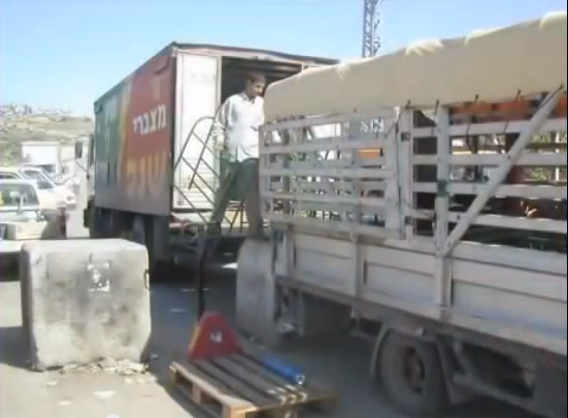
(No.28)So, basically, a truck that’s carrying Palestinian goods, when it reaches a roadblock, has to sort of turn around and back up against the roadblocks, get them another vehicle to come from the other end to turn around and back up from that end, and someone has to actually manually transport these goods from one end of the roadblock to the other, as you see from these photographs. Well, the products are not always office equipment. They could be produce, perishables, things that go bad by the time they reach their destination, they could be desperately needed medical supplies.
(No.28)本的に、パレスチナの商品を運ぶトラックがロードブックに到着した時、そこで向きを変えてロードブロックに向かいバックします、そして、今度は反対側からもう一台の車両に来てもらい向きを変えてバックしてもらいます。そして、これらの写真からもわかるように、誰かが実際に商品をロードブロックの一方から他方へ手で運ばなくてはいけません。商品はいつもオフィス用備品とは限りません。農産物や傷みやすいもの、目的地につく時間には腐ってしまう場合もありますし、心底必要な医療用品の場合もあります。

Beyond just taking a long time, this whole process renders a lot of these Palestinian products much more expensive than they otherwise would be because of the extra man power and vehicular power that is required to transport them. What happens then is that a lot of these Palestinian products end up being even more expensive than their Israeli counterparts, which are very easy to transport on Israeli only roads.
い時間がかかる以上に、それらの商品を運ぶのに必要とされる余分な労働力と自動車の利用のせいで、これらのパレスチナの商品の値段が釣り上がってしまうことがよくあります。そして、何が起きるかというと、最後にはパレスチナの多くの商品の値段がイスラエル人専用の道路でとても運送しやすいイスラエルの同等の商品の値段よりも更に高くなってしまいます。

Israeli products
No.29
(No.29)What happens then, of course, is that the Palestinian market is then flooded with Israeli products, which Palestinians, many of them struggling to make ends meet, end up purchasing them, and instead of supporting their own economy, supporting the very country that is occupying them.
(No.29)ると、もちろんパレスチナの市場はイスラエルの商品であふれてしまい、多くのパレスチナ人達が収入の範囲内でやりくりをしていますから、その彼らがイスラエル商品を最後には購入してしまい、パレスチナ人自身の経済を支える代わりに、まさに彼らを占領しているその国の経済を支援するはめになってしまうのです。
ヽ(^。^)ノ


1-2(1) SETTLEMENTS/イスラエル人の共同社会


No.30

(No.30)Settlements are the next part of my talk. Settlements in the territories are essentially communities of Jewish Israelis where living on Palestinian land. And, they may be sort of villages, towns, and cities.
(No.30)に、共同社会についてお話をします。共同社会は、基本的にパキスタン人の領土内に住んでいるユダヤ系イスラエル人の地域社会です。そして、この共同社会は村や町、又は、都市のような規模になります。

(No.31)Here is a rather large one near Bethlehem and Jerusalem. And, again, all of this land here is Palestinian land, belongs to the Palestinians, internationally recognized as Palestinian land. And, yet, there is this city that has been built on top of it that is exclusively for Jewish Israelis. Well, what does this mean, you know, who gets to live in that city? Well, I could live in that city, right, because I’m Jewish. I would just have to fill out an application; I could move there next week if I wanted to. Yet, the farmers, the Palestinians that own that land that that city was built on are not allowed to live in it. Now this process is nothing new, it’s happened throughout history all over the world and there’s a name for it, it’s called colonization. It’s interesting that in English and in Hebrew that we have this kind of benign word, you know, “settlements.” Whereas in many other languages, like French for example, these settlements are called “colonies,” and that’s exactly what they are.
“International law prohibits an occupying power from transferring citizens from its own territory to the occupied territory.” (Fourth Geneva Convention, Article 49)

And, they are illegal according to international law, which prohibits an occupying power from transferring citizens from its own territory to the occupied territory, which is exactly what Israel is doing.
(No.31)ちらの写真は、ベツレヘムとイェルサレムの近くにあるどちらかと言うと大きい共同社会です。そして、ここでも繰り返しますが、ウェストバンクの全ての土地はパレスチナ人の領土であり、パレスチナ人に属し、国際的にもパレスチナの領土として認められています。それにもかかわらず、そのパレスチナの土地に、ユダヤ系イスラエル人専用に建設された都市が存在します。これは何を意味するのでしょうか。その都市に誰が住むようになるのでしょうか。そうですね、私はユダヤ人ですので、その都市に住むことが出来ます。私は単に申請書に書き込むだけでいいのです。もし、そうしたければ、私は来週にでもそこに引っ越すことが出来ます。しかし、その都市がある場所の土地を本来所有しているパレスチナの農家の人達やその他のパレスチナ人達はそこに住む事が許されていません。さて、これは全く新しいものではありません。歴史を通して世界中でそれは起き続けており、それには呼び名があります。それは植民地化と呼ばれます。英語やヘブライ語では、また違うより安全な言葉 ─ 「共同社会(※1参照)」 ─ が使われているのは面白いことです。それに対して、例えばフランス語のように、他の多くの言語では、この共同社会は「コロニー(植民地)」と呼ばれています。つまり「共同社会」とは、まさに植民地のことなのです。
「国際法は、占領している権力者が(占領国側の)市民を権力者自身の領土から占領した領土に移動させる事を禁止する。」(第四回ジュネーブ条約、第49条)

このように、「共同社会」は国際法によると違法であり、それによると、占領する権力者が市民を権力者自身の領土から占領された領土に移動させるのを禁止していますが、イスラエルがしていることはまさにそれなのです。ヽ(^。^)ノ

※1)Settlement:(訳者注)Settlement(=共同社会)の意味には、他に「植民地化」という意味がありますので、Settlementは、Colonization(=植民地化)と同義ですが、本来の意味は「定住」です。定住した人達が結果として共同社会になるという意味で、「共同社会」という意味もあります。ストレートに「植民地」と言うのは国際的に受けが良くないので、イスラエル政府は「Colony」の代わりに紛らわしい表現である「Settelement」を使用しているのでしょう。
イスラエル政府がパレスチナを植民地化しているのは、彼らがパレスチナの領土に食い込みパレスチナの領土を自国のものに強引にしていることや、パレスチナの人たちの自由を奪い、パレスチナ人を刑務所に入れたり、それと同じような扱い方をしているのを見れば一目瞭然です。

No.32
 
No.33
No.33
 
(No.32)Instead of working against the system though, Israel actually promotes it. As you can see in this photograph, which shows a billboard on an Israeli only road in the Palestinian territories, and it basically says, and it’s in Hebrew, it says “Now more than ever,” and underneath it says basically if you come to our community, to Ariel, which is a settlement, if you come to live in Ariel you will be rewarded with 100,000 Israeli shekels.
(No.32)スラエルはそのシステムに反対するのではなく、実際にはそれを促進しています。パキスタン人の領土内にあるイスラエル人専用道路にある広告用掲示板の写真を見てみると、それには基本的にヘブライ語でこう書いてあります
 ─「今、これまで以上に」
そしてその下に更に、
 ─「私達の地域社会…共同社会であるアリエルに貴方が来たら、もし、貴方がアリエルに住みに来たら、イスラエル通貨で10万シケルの報奨金が貰えます
と、書いてあります。

(No.33)That’s more than $20,000 U.S. dollars. In other words, the Israeli government is actually paying its own citizens to move from Israel proper to the Occupied Territories to become part of the illegal occupying population. What is particularly interesting to me about this billboard is, who is it targeting? You know, who are going to be the Israelis who uproot their families to move on this foreign land because it’s cheaper to do so? Is it going to be well off, wealthy established Israeli families? No, they want to live in Tel Aviv. The families who end up of taking advantage of these offers are going to be low income Israelis, poor Israelis, recent immigrants from Africa, from Eastern Europe.
(No.33)れは米国ドルで2万ドル以上になります。言い換えると、イスラエル政府は実際には自国の市民にイスラエルから占領した領土に引っ越し、違法な占領をしている人々の一員になることに対してお金を支払っている事になります。この広告掲示板に関して特に私にとって面白いことは、誰を対象にしているかです。報奨金が出るからと言って、誰が自分の家族を今住んでいるところから引き離し、この外国の土地に移住させるでしょうか?そうすれば、裕福な有力なイスラエル人の家柄になるのでしょうか?いいえ、そういう裕福な人達はテルアビブに住みたいと思うでしょう。この政府からの提案を最終的に利用する家族は低所得のイスラエル人、貧しいイスラエル人やアフリカから最近移民してきたばかりの移民者、または、東ヨーロッパからの移民者たちです。

No.34
No.34
 
No.35
No.35
 
No.36
No.36
 
No.37
No.37
(No.34)In fact, a lot of these settlements, Ariel included, are populated primarily by immigrants who move to the territories not because they say, “This land is ours and nobody else’s,” but because they’re looking for a higher standard of living.
(No.34)際には、このようなアルエルを含む居住社会に移り住む人たちは、「この土地は私達のもので、他の誰のものでもない」と主張するような人たちではなく、主として、より高い生活水準を求め移住してくる移民者達になります。

These financial offers can be very appealing. People who take advantage of them will get nice housing, often times with mortgages subsidized by the government, there are parks for their kids to play(No.35)(No.36), strip malls, swimming pools in a place where water is so precious.
これらの経済的オファーは非常に魅力的であり得ます。それを利用する人達は素晴らしい住居が得られ、しばしばその住宅ローンも政府からの支援が得られ、(No.35)子供達が遊べる公園もあり、(No.36)小規模ショッピングセンターもあり、水がとても貴重な場所にスイミング・プールがあります。

(No.37)Uh, a nice offer, right?
Again, all of this was built illegally on Palestinian land. At this point there are settlements all over the West Bank.
(No.37)素敵なオファーですよね、違いませんか。ここでもう一度言いますが・・・
この全てはパレスチナ人の領土に違法に建てられたものです。この時点で、ウェストバンクの全域に共同社会があります

  違法なユダヤ人専用の植民地の地図
No.38
No.38
(No.38)The red dots on this map indicate where you have an illegal Jewish only colony built on Palestinian land.
(No.38)の地図にある数々の赤い点はパレスチナ領土に建設された違法なユダヤ人専用の植民地がある場所を示しています。


  違法に建設されたユダヤ人専用の道路網
No.39
No.39
(No.39)Of course, coming along with the settlements and colonies is the road network. Here you can see it’s just a handful of them, but the way those blue roads and highways really chop up and compartmentalize the Palestinian landscape. Remember of course these roads were built illegally on Palestinian land, and the Palestinians owning the lands, they were built on, for the most part, aren’t even allowed to use them because of the segregated road system.
(No.39)ちろん、移住と植民地に伴うのは道路網です。ここにあるのは一握りの道路網ですが、この複数の青いハイウェイがパレスチナ領土を実に細かく分断し区分化している様を見てください。もちろん、これらの道路はパレスチナ領土に違法に建設されたということ、そして、その道路網が建設された土地を所有しているパレスチナ人は、分離された道路システムのために、大部分においてその道路網を利用する事さえ許されていないと言うことを覚えておいてください。
ヽ(^。^)ノ


1-2(2) Outposts/居住地区ヽ(^。^)ノ

    A. Economic Settlers─US Foreign Aid/経済的移住者─米国の対外援助

No.40

(No.40)The next part of my talk is on Outposts which are similar to settlements in that they are incidents of Jewish Israelis living illegally on Palestinian land.
(No.40)にパレスチナ人の私有地の離れに突然住み着くイスラエル人達について話します。彼らもユダヤ系イスラエル人が違法にパレスチナの土地に住んでいる事例であったという意味で共同社会と似ています。

No.41
No.41
(No.41)One of the main differences are the people who choose to live in the outposts. So, I’ll talk before about what I call “economic settlers” moving to the territories for financial benefits, and they represent about 80% of the settler population, a vast majority that says, according to polls, that they would be willing to leave if they were offered financial compensation. So, when Israel says it’s impossible to make all these hundreds of thousands of settlers leave, remember that the vast majority are there simply because the government is paying them to do so.
(No.41)くの違いの一つは居住地区に自ら住む事を選択する人達です。そこで、最初に私が「経済的移住者」と読んでいる経済的恩恵を求めてその領土に移住する人達について話したいと思います。彼らは共同社会のおよそ80%を占めていて、その圧倒的多数の人達は、世論調査によると、もし彼らが経済的報酬を提供されれば、パレスチナ領土から喜んで立ち去るという統計結果が出ています。だから、イスラエルが何十万人もの人達全ての定住者達を立ち去らせるのは不可能だと言う時、覚えておいて欲しいのですが、パレスチナ領土のイスラエル人用居住社会に住む人達の圧倒的多数の人達は、単に政府が彼らが立ち去るためにお金を支払うのを待っているわけです。


    B. Ideological Settlers/信条的移住者

No.42
No.42
(No.42)The remaining 20% of the settler population are often called ideological settlers, moving to the territories not for money but because of their beliefs. Many of them believe that the land in the West Bank and Gaza belongs to the Jewish people for often times religious reasons or maybe political reasons. And, according to many of these people, the Palestinians are the ones who are occupying this land, “Jewish land.”
(No.42)住人口の残りの20%は信条的移住者と呼ばれています。彼らはその領土に報奨金のためではなく、自分の持つ信条のために移住してくるのです。彼らの多くはウェストバンクとガザの土地は、しばしば宗教的理由により、または、恐らく政治的理由によりユダヤ人に属していると固く信じています。そして、彼らの大半の人達によると、パレスチナ人達こそがこの土地「ユダヤ人の土地」を占領していると言うのです。
No.43
No.43
(No.43)So, they will actually come in the middle of the night with trailers and simply establish themselves on a plot of Palestinian land and say, "We’re not leaving, this land belongs to us."
(No.43)して、(信条的理由で住み着く)イスラエル人達は、実際には夜中にトレーラーでやってきてパレスチナ人の土地の小区画に無断で身を落ち着かせ、(その土地の所有者であるパレスチナ人達に)こう言います─「私達はここから立ち退きません。この土地は私達の所有するものですから。」


to be continued...

・・・続く


BLOG'S TITLE: Conflict between Israel & Palestine About Land, Water, & Resources No.1
日記タイトル:イスラエルとパレスチナの紛争は土地と水と資源が原因No.1。弥勒菩薩ラエルは全戦争の廃止を主張


英語と日本語[English & Japanese]日本語[Japanese])


【YouTube】
Why US and Israel wants to ban this video..

何故米国とイスラエルがこのビデオを禁止にしたいのか・・・

YOUTUBE:http://youtu.be/Ch5XlEZoi1c
無限君:このビデオの内容を文章におこし、翻訳をつけました。これにはAnnaさんのご理解とご協力があってのことです。この日本語訳を出来るだけ沢山の方々に読んで頂き、イスラエルが行っている非人道的な犯罪を皆さんの力で反対してやめる方向に持っていけるといいなと思っています。


★ ★ ★


プレゼンテーション
by アンナ


占領されたパレスチナでの生活:目撃者の話&写真

■イントロダクション
んにちは、私の名前はアンナです。インターナショナル女性平和サービスで活動した時の経験についてここでお話をしますこの活動の本拠地はウェストバンクで、基本的に2つの事をします。1つ目は、この地域での人権侵害を文書で記録することで、2つ目は、その占領に対する非暴力の抵抗を支援することです。このプレゼンでこの占領がどのようなものなのかを更にお話をさせて頂きたいと思います。


パレスチナの風景
れは春の季節のパレスチナの写真です。どんなに土地が肥沃で緑が有るかみてみましよう。(▽)
Palestine
No.1


イスラエルとパレスチナ紛争の真実


かし、この景色がどんなに美しいかという事以上に、この写真が映し出すものが、私が信じるに至った事が本当にイスラエルとパレスチナ紛争の核心だと言うことを示しているのだと思います。多くの人達がこのイスラエルとパレスチナの問題を長い年月を経た互いに競争しあうイスラエルとイスラム の間の問題であり、それは何千年も続いており、これからも更に何千年も続き、それは本質的なある種の深い宗教的な違いが原因となっているからであるという のが一般的な認識になっています。そして、私がパレスチナに来て初めて分かった事の一つは、大部分でこれは実は宗教に関する戦争なのではなく、土地と水と資源に関する戦争だということでした。そして、このプレゼンテーションで、私がこれらの結論に至った理由を明確にお伝えしたいと思います。

あ、まず導入部分として、ここに中東の地図があります。イスラエルとパレスチナは中東に位置しています。その小さい紫色と白銀色です。
(▽)中東の地図

No.2


拡大図


No.3

(△No.3)ちらが拡大されたバージョンの地図です。この地図のベージュ色の部分は、イスラエルの事実上国際的に認められた国境を示しています。右側と左側のピンク色の部分は1967年に占領されたパレスチナ領域を示す2つの土地になります。そして、左側がガザ地区で、右側がウェストバンクです。ウェストバンクの中の町に私は住んでいました。このプレゼンテーションでお見せする写真や話はこのウェストバンクからのものです。ですから、私が言いました通り、占領されたパレスチナ領域として知られています。「占領された」というのは、一体何を意味するのでしょうか。このプレゼンテーションの目的は、占領についてお話をすることです。


★ ★ ★ ★


■ □ 占 領 ■ □

(目次)
  1. The Structures
    1. 構 造
      1. 制限される行動: チェックポイント道路上の障害物
           命令に従う兵士たち2
      2. 共同社会 & 居住地区
         A. 経済的移住者─米国の対外援助
         B. 信条的移住者
      3. 投 獄
    2. 抵 抗
      1. 日々の非暴力の抵抗
      2. デモ抗議運動
      3. イスラエルの現状改革主義

して、私の話の最初の部分は、この占領の構造についてご説明します。占領はどんなことから構成されているのでしょうか。制限された行動…チェックポイントや道路封鎖について話していきます。移住や前哨基地についてお話します。壁についてお話します。そして、投獄についてお話します。

のシステムがどういうものなのか全体的に理解出来たところで、人々がどのように反応しているのか、人々がどのように抵抗しているのかについてお話をしていきます。そして、次に抵抗についてお話します。日々の非暴力の抵抗についてお話をしていきます。そして、特にデモ抗議運動についてお話をします。それから、イスラエルの現状回復主義に関するセクションももうけています。


I. 占領の構造

  1. 制限された行動


No.5

れでは、まず制限された行動からお話していきます。パレスチナ領域では、パレスチナ人とイスラエル人の両方が住んでいますが、彼らは違う道路を使用しています。パレスチナ人用の道路と、イスラエル人用の道路があります。例えば、この写真(△左)の道路のように、パレスチナ人用の道路は古く、しばしば使えないものさえもあります。 イスラエル人用の道路はもっと近代化されていて、この領土に住んでいるイスラエル市民のためにイスラエル政府が建設したものです。そして、この写真(△右)のように四車線になっているかもしれません。パレスチナ人は通常イスラエル人用の道路を使用することは許されていませんが、ある種の許可を取得出来る場合があります。しかし、取得出来た場合でも、ある道路のあるセクションだけしか使用できないかもしれません。それ以外では、道路は全て分けられています。


No.6
(△)レスチナ人とイスラエル人は違う色のナンバープレートを使用します。パレスチナ人の車には緑色か白色のプレートが付けてあり、イスラエル人の車は黄色のプレートが付けてあります。そして、これにより、どの車にパレスチナ人かイスラエル人のどちらが乗っているのかが遠くから見て区別しやすくなります。 又、誰が道路を使用しているのか監視するために地域に配置されている兵士たちにとっても、容易になります。ですので、例えば、この図(No.6)を見ると、軍隊のジープが全ての緑と白色のプレートの車両を道路の脇に停止させているのがわかります。その一方で、全ての黄色のプレートの車両は左側の妨げられていない方を通過することが許されます。


(a) チェックポイント


No.7


No.8


No.9
(No.7~9)そして、これがチェックポイントと呼ばれます。チェックポイントは占領の中で重要な公共施設です。これらのチェックポイントには原則的に障害物があり、兵隊か国境警備隊が常時いますが、彼らはパレスチナ人の通行人、または、車両の動きをコントロールしています。

ェックポイントと言うと、国境を超える時に経験すること……前へ進んで一列に並び、身分証明証を見せていくつかの質問に答え、必要なときはバッグをあけたりするような事かもしれないと考えるかもしれません。


ウェストバンクのチェックポイントの地図

No.10
(掲載元:http://www.annainthemiddleeast.com/photos/maps_media/2079/

関連サイト:http://www.annainthemiddleeast.com/

般に信じられている事とは反対に、ウェストバンクのチェックポイントの大半はウェストバンクと国際的に認められているイスラエルとの国境沿いに位置しているのではなく、パレスチナのウェストバンクの中にあります。殆どがパレスチナの町や村の中間地点にあります。道路の障害物(チェックポイント、道路上のバリケード、深い溝などを含む)は2009年以降、わずかに減少しましたが、(米国東部のデラウェア州のサイズの地域の)ウェストバンクの中に505のチェックポイントがあります。国連の報告によると、パレスチナ人の旅行は以前と殆ど変わらず、現在でも非常に困難な状況です。


No.11
 

No.12
 

No.13
 

No.14
(No.10)レスチナ領域のチェックポイントの主な違いの一つは、ウェストバンク内に設置された現在のチェックポイント の地図(小さい青いマーク)からもお分かりのように、大半のチェックポイントはウェストバンクの国境にあるのではなく、実は、圧倒的多数がパレスチナ領域の内部に存在していて、それらの殆どがパレスチナ人の町や村の間にあります。

(No.11/12)して、例えば、ウェストバンクの南に位置するヘブロンの南に住んでいて、イェルサレムの方角の方へ少し行ったところにあるベツレヘムの都市に北へ向かって30マイルぐらいの距離を旅したいパレスチナ人にとって、これは何を意味するのでしょうか。つまり、30マイルというと、通常では30分か40分、もしかすると最長で一時間ぐらいかかるでしょう。30マイルの道のりの途中でこれらのチェックポイントで停止させられる回数のせいで、パレスチナ人がその30マイルの旅をするのに、大抵2時間から4時間、8時間、もしかするとまる1日かかつてしまう場合もあります。明らかにこれは非常にもどかしいものです。パレスチナの人達は、どんな場所からでも、何時間も、何日もこれらのチェックポイントで時間を過ごして別の場所にたどり着くのですが、これは単に失望するだけではなく、これらのチェックポイントのせいで、パレスチナ人達の毎日の生活はあらゆる面において無力なものになっています。

(No.13)えば、これらのチェックポイントは、パレスチナ人が定職につくことを非常に難しくします。あなたの住む村から一番近い市まで通勤するのに10分かかるのか、3時間かかるのか、全くわからないのです。


(No.14)た例として、授業に定期的に出席するのもとても難しいです。あなたが住んでいる小さな村に大学がある場合を除いて、高等教育は基本的に問題外です。
すので、単に苛立たしいとか負担であるといった度合いではなく、これらのチェックポイントはパレスチナ人達が生活のために稼いだり、教育を受けたり出来ないようにしているのです。それだけではなく、結婚式や葬式、卒業式、または、家族に会いに行くなど、日々の生活の全ての面で影響を与えています。想像してみてください…、もし、あなたが仕事に行くときや学校に行くとき、または、協会に行くとき、または、その他どこへいくにしても、貴方を2~3時間引き止めてしまう一連のチェックポイントを通過しなくてはならないことを。それがあなたの生活にどんな影響を与えてしまうのか?このように想像してみると、これらのチェックポイントがパレスチナ人達にとって、日々の生活の上でどれだけ全く何も出来ない状態にさせられてしまうかを垣間見ることができるかもしれません。

No.15
 

No.16
 

No.17
(No.15)れがナブラス市の郊外にあるチェックポイントです。フワァラと呼ばれています。私達はそこで、チェックポイント観察をしていました。基本的にチェックポイントで何が起きているかを文書で記録するのです。 そして、この日のルールは次のようなものでした……女性はチェックポイントを通過することが許され、年老いた男性も許可され、若い少年もチェックポイントを通過するのを許可されますが、15才から40才までの男性は一切許可されませんでした。彼らがどこから来たのかは問題ではありませんでした。彼らがどこへ行くのかも関係ありませんでした。彼らがどこにいたのかも関係ありませんでした。誰が緊急事態にあるのかも関係ありませんでした。もし、貴方がパレスチナ人の男性で、15才から40才の年齢の場合には、家に、仕事に、学校に、病院に、また、その他のどんな場所に行くにしても、その場所に辿りつけなかったです。

(No.16)こで、彼らはここに集まり、数百人ものパレスチナ人男性達がチェックポイントに集まり、その規則がどこかの時点で変わるのを期待していました。

(No.17)ある時点で、その中の2人がゴミ袋を手にして横から外に出て気も狂わんばかりに必死になってそのゴミ袋をいっぱいにしようとしている男性2人を見かけました。私は彼らにこう聞いたのです ─「何故突然ゴミを拾っているのですか。」
そして、彼らは私に、実は兵士たちが彼らにゴミ袋を渡して、もし、それをゴミで一杯にすることができたら、チェックポイントの通過が許されると言われたと言いました。


健康への侵害を引き起こす問題


ambulance stopped
No.18


soldier checking the ambulance
No.19
(No.18)れらのチェックポイントで、そして、一般的に占領において、健康への侵害・暴力がもう一つの主要な問題です。この写真の中に写っているパレスチナの緑と白色のプレートの救急車が見えますが、それはその道路脇で停車して黄色のプレートのイスラエルの車に特権、優先権を与えています。そして、この救急車は時にはチェックポイントに自ら到着するまで数時間も待つことがあります。救急車がチェックポイントに到着した時には、しばしば急いでそこを通り過ぎず、

(NO.19)実際には、銃の矛先を突きつけられているのが、この写真からもわかりますが、もう一人の兵士が車両の後部に回って後ろのドア越しに中を検査します。そして、救急車を引き止める時間が他の通常の市民の車両よりもしばしば長くなる根拠は、明らかにこれらの救急車が武器やイスラエル政府に追われている逃亡者達を搬送する為に利用された事が過去にあったからです。そして、私はこの件について少し調べたのですが、実際には、パレスチナの救急車がこれらの目的のために悪用され書類になったケースが一件ありました。しかし、その時には、たとえそのような目的で救急車が使用されたとしても、たとえそれが理由だったにしても、このパレスチナの救急車はパレスチナの村からパレスチナ市に向かっているということを覚えておいてほしいです。これはウェストバンクからイスラエルへ入国しようとしているのではありません。つまり、パレスチナの市街地の間にこのチェックポイントが設置されているのです。 それなのに、一体何故この救急車を停止させ、その後部に乗っている人達の命を危険にさらすのでしょうか。一体何故、全てのパレスチナの人々は言うまでもなく、イスラエルの人々の安全と治安に貢献しているのでしょうか?


朝7時から夜7時まで開いてるチェックポイント

cpt_DeirBallut01
No.20
 
cpt_DeirBallut02
No.21
こは、私が暫く時間を過ごしたディア・バルー村の外れにあるチェックポイントです。このチェックポイントは朝の7時から夜の7時まで開いています。それが何を意味するのかというと、夜の7時から朝の7時までの間で何か緊急事態が起きてしまうと、そうですね、貴方は運が無いということになります。実際に何が起きたかというと、妊娠して7ヶ月で双子の赤ちゃんがまだお腹の中にいる村の女性が夜中の一時に陣痛を起こし初めました。彼女の夫は慌てて彼女を車に載せてチェックポイントまでやってきました。彼らはそこでそのチェックポイントを通過して車で1時間かかるラマラー市の最寄りの病院に行かなくてはいけませんでした。彼らはチェックポイントに到着し、そこで寝ていた兵士たちが降りてきて彼らに会いました。そして、彼らはとても丁寧でした。彼らはこう言いました ─「いいですか、規則はとてもはっきりとしていますよ、パレスチナ人は朝の7時まではチェックポイントの通過は許されていません。7時に戻ってきてください。」
その女性は明らかに彼女の赤ちゃんを出産するのに6時間も待てませんでした。そこで、彼らは少し口論をしました。兵士たちは、またもや、とても丁寧に、申し訳無さそうにさえしながら、ただ同じことを何度も続けて言いました。彼らは言いました─「いいですか、私達がこの規則を作ったのではありません。私達は彼らに同意さえしていないのです。私達は単に命令に従っているだけです。」「私達はただ命令に従っているだけなんです。


to be continued...

・・・続く


BLOG'S TITLE: Conflict between Israel & Palestine About Land, Water, & Resources No.1
日記タイトル:イスラエルとパレスチナの紛争は土地と水と資源が原因No.1。弥勒菩薩ラエルは全戦争の廃止を主張


(英語と日本語[English & Japanese]、日本語[Japanese]


【YouTube】
Why US and Israel wants to ban this video..

何故米国とイスラエルがこのビデオを禁止にしたいのか・・・

YOUTUBE:http://youtu.be/Ch5XlEZoi1c
無限君:このビデオの内容を文章におこし、翻訳をつけました。これにはAnnaさんのご理解とご協力があってのことです。この日本語訳を出来るだけ沢山の方々に読んで頂き、イスラエルが行っている非人道的な犯罪を皆さんの力で反対してやめる方向に持っていけるといいなと思っています。


★ ★ ★


PRESENTATION
プレゼンテーション

by Anna


Life in Occupied Palestine: Eyewitness Stories & Photos
占領されたパレスチナでの生活:目撃者のストーリー&写真


■INTRODUCTION/イントロダクション
Hi, my name is Anna and I’m here to tell you about my experiences working with a group called the International Women’s Peace Service, which is based in the West bank, and basically we do two things. First of all, we’re there to document human rights abuses in the region and second of all, we’re there to support nonviolent resistance to the occupation. I’ll be telling more about what this occupation looks like in the presentation,
んにちは、私の名前はアンナです。インターナショナル女性平和サービスで活動した時の経験についてお話をさせて頂きたいと思います。この活動の本拠地はウェストバンクで、基本的に2つの活動内容があります。1つ目は、この地域での人権侵害を文書で記録することで、2つ目は、イスラエルの占領に対する非暴力の抵抗を支援することです。このプレゼンでこの占領の詳細について、更にお話をさせて頂きたいと思います。


THE WAY PALESTINE LOOKS
パレスチナの風景
This is a picture showing Palestine in the spring time. Let’s see how fertile and green the land is.
れは春の季節のパレスチナの写真です。どんなに土地が肥沃で緑が有るかみてみましよう。(▽)
Palestine
No.1


THE TRUTH OF ISRAEL-PALESTINE CONFLICT
イスラエルとパレスチナ紛争の真実


But, beyond showing how beautiful it is, I actually think this photograph captures what I have come to believe is really at the heart of the Israel-Palestine conflict. A lot of people have sort of a perception of this issue as being age-old rivalry between Jews and muslims - something that's been going on for thousands of years, and that will continue for thousands more, because at its heart are these sort of deep religius differences. And, one of the first realizations that I came to, when I got to Palestine was that, for the most part, this really is not a war about religion, but this is a war about land, water, and resources. and I hope that my reasons for coming to those conclusions will be clear in this presentation.
かし、この景色の素晴らしい美しさ以上に、この写真が映し出すものが、私が信じるに至った事が本当にイスラエルとパレスチナ紛争の核心だと言うことを示しているのだと思います。多くの人達がこのイスラエルとパレスチナの問題を長い年月を経た互いに競争しあうイスラエルとイスラム 間の問題であり、それは何千年も続いてきて、これからも更に何千年も続き、それは本質的なある種の深い宗教的な違いが原因となっているからであるという のが一般的な認識になっています。そして、私がパレスチナに来て初めて分かった事の一つは、大部分で実は、これは宗教に関する戦争なのではなく、土地と水と資源に関する戦争なのだということでした。そして、このプレゼンテーションで、私がこの結論に至った理由をはっきりと説明したいと思います。

Now, to get you oriented, here is a map of the middle east. Israel and Palestine are located in the Middle East - that tiny little purple and white sliver there.
あ、まず導入部分として、ここに中東の地図があります。イスラエルとパレスチナは中東に位置しています。その小さい紫色と白銀色です。
(▽)中東の地図

No.2


ENLARGED MAP/拡大図


No.3

(△No.3)Here is a larger version of that map. And beige area in this map indicates the de facto internationally recognized borders of Israel. Pink areas on the right and left are the 2 land massess making up the Palestinian territories occupied in 1967. They are on the left Gaza strip, and on the right, the West Bank. And, I was living in the town in the village of the West Bank, and the photographs and the stories from this presentation are taken from the West Bank. So, as I said, these are known as occupied Palestinian territories. "Occupied", what does that word mean? The purpose of the presentation is to tell you about this occupation.
(△No.3)ちらが拡大地図です。この地図のベージュ色の部分は、事実上国際的に認められたイスラエルの国境を示しています。右側と左側のピンク色の部分は1967年に占領されたパレスチナ領域を示す2つの領土です。そして、左側がガザ地区で、右側がウェストバンクです。ウェストバンクの中の町に私は住んでいました。このプレゼンテーションでお見せする写真や話はこのウェストバンクからのものです。ですから、私が言いました通り、これらの土地は占領されたパレスチナ領域として知られています。「占領された」というのは、一体何を意味するのでしょうか。このプレゼンテーションでは、占領についてお話をしたいと思います。


★ ★ ★ ★


■ □ The Occupation/占 領 ■ □
 
(目次)
 
1The Structures
 (1)Restricted Movement: Checkpoints & Roadblocks: soldiers who are only following orders
 (2)Settlements & Outposts
  AEconomic Settlers─US Foreign Aid
  BIdeological Settlers
 (3)The Wall
 (4)Imprisonment
 
2Resistance
 (1)Everyday Nonviolent Resistance
 (2)Demonstrations
 (3)Israeli Activism
 
1構 造
 (1) 制限される行動: チェックポイントと道路上の障害物 : 命令に従う兵士たち2
 (2)共同社会 & 居住地区
  A経済的移住者─米国の対外援助
  B信条的移住者
 (3)
 (4)投 獄
 
2抵 抗
 (1)日々の非暴力の抵抗
 (2)デモ抗議運動
 (3)イスラエルの現状改革主義


And the 1st part of my talk : it's just explaining the structures of this occupation. What is that composed of? I'll be talking about restricted movements - checkpoints and roadblocks. I'll be talking about settlements and outposts. I'll be talking about the wall. And, I'll be talking about imprisonment.
して、まず最初は、この占領の構造についてご説明します。占領の内容はどのような構成になっているのでしょうか。制限された行動・・・チェックポイントや道路上の障壁について話しをし、そして、移住や前哨基地について、それから、壁について、そして、投獄についてお話します。

Once we have sort of a general understanding about what the system itself looks like, I’ll be talking about how are people reacting, how are people resisting. And, the next part of my talk then will be about resistance. I’ll be talking about everyday nonviolent resistance, I’ll be talking in particular about demonstrations, and I have a section as well on Israeli activism.
のシステム自体の概略が理解出来たところで、人々がどのようにこの占領に対して反応しているのか、どのように抵抗しているのかについてお話をしていきます。そして、次に抵抗について、日々の非暴力の抵抗についてお話をしていきます。そして、特にデモ抗議についてお話をします。それから、イスラエルの現状回復主義に関するセクションももうけています。


◆◆
I. Structures of the Occuptation
I. 占領の構造


1. Restricted Movement/制限された行動


No.5

So, to get started with restricted movement. In the Palestinian territories there are both Palestinians and Israelis living there, but they use different roads. There are Palestinian roads, there are Israeli roads. Palestinian roads tend to be older, often even unusable, like the one you see in this photograph. Israeli roads tend to be more modern, constructed by the Israeli government for Israeli citizens living in these territories, and they might be sort of four lane highways like the one you see in this photograph. Palestinians are not allowed to use the Israeli roads unless they’re able to obtain a kind of permit, in which case they might be able to use, say, a certain section of a certain road. But, in all other cases, the roads are segregated.
れでは、まず制限された行動から話をします。パレスチナ領域では、パレスチナ人とイスラエル人の両方が住んでいますが、彼らは違う道路を使用しています。パレスチナ人用の道路と、イスラエル人用の道路があります。例えば、この写真(No.5)の道路のように、パレスチナ人用の道路は古く、しばしば使えないものさえあります。 イスラエル人用の道路はもっと近代化されていて、これらの領土に住んでいるイスラエル市民のためにイスラエル政府が建設したものです。そして、この写真(△右)のように四車線になっている場合もあります。パレスチナ人は通常イスラエル人用の道路を使用することは許されていませんが、ある種の許可を取得出来る場合があります。しかし、取得出来た場合でも、ある道路の一部分だけしか使用できないかもしれません。それ以外では、全ての道路が分離されています。


No.6
Palestinians and Israelis use different colored license plates. Palestinian cars have green and white colored license plates, meanwhile Israeli cars have yellow colored plates. And, this is so easy to see from afar whether the vehicle is carrying Palestinians or Israelis. And, it also makes it easier for the soldiers who are manning the area to monitor who is using which roads. So, for example, here you can see an army jeep pulling over all green and white plated vehicles to the side of the road, meanwhile all yellow plated vehicles are allowed to pass by unhindered on the left.
(△)レスチナ人とイスラエル人は違う色のナンバープレートを使用します。パレスチナ人の車には緑色か白色のプレートが付けてあり、イスラエル人の車は黄色のプレートが付けてあります。そして、これにより、どの車にパレスチナ人、又は、イスラエル人が乗っているのかが遠くからでも区別しやすくなります。 又、誰が道路を使用しているのか監視するために地域に配置されている兵士たちにとっても、容易になります。ですので、例えば、この図(No.6)を見ると、軍隊のジープが緑と白色のプレートの車両の全てを道路の脇に停止させているのがわかります。その一方で、黄色のプレートの車両は全て左側の妨げられていない方を通過することが許されます。


(a) Checkpoint/チェックポイント


No.7


No.8


No.9
(No.7~9)And, this is called a checkpoint. Checkpoints are major institution in the occupation. They are essentially barriers manned by soldiers or border police that are used to control Palestinian pedestrian or vehicular movement.
(No.7~9)そして、これがチェックポイントです。チェックポイントは占領の中で重要な公共施設です。これらのチェックポイントには原則的に障害物があり、兵隊か国境警備隊が常時配備されていますが、彼らはパレスチナ人の通行人や車両の動きをコントロールしています。

And, the idea behind a checkpoint is more or less what you might experience at a border crossing, where you go, you stand in line, you show your id, you answer a couple of questions, maybe open up your bag.
ェックポイントと言うと、国境を超える時に通過する税関のようなもの……前へ進み一列に並び、身分証明証を見せて幾つかの質問に答え、必要なときはバッグをあけてその中に入っている荷物を見せたりするような事かもしれないと考えるかもしれません。


ウェストバンクのチェックポイントの地図


No.10
(掲載元:http://www.annainthemiddleeast.com/photos/maps_media/2079/

関連サイト:http://www.annainthemiddleeast.com/

Contrary to popular belief, the majority of the checkpoints in the West Bank are not between the West Bank and internationally recognized Israeli borders, but rather within the Palestinian West Bank, most of them between Palestinian towns and villages. (Source: MIFTAH). Road obstacles (including checkpoints, roadblocks, trenches, etc) have slightly decreased since 2009, totaling about 505 today (down from 626) in the West Bank (an area the size of Delaware). Palestinian travel remains almost as difficult as before according to the United Nations.
般に信じられている事とは反対に、ウェストバンクのチェックポイントの大半はウェストバンクとイスラエルの国際的に認められている国境沿いに位置しているのではなく、パレスチナのウェストバンクの領土の中にあります。殆どがパレスチナの町村と町村の中間地点にあります。道路上のバリケード、深い溝などを含むチェックポイントと呼ばれる道路の障害物は、2009年以降、わずかに減少しましたが、(米国東部のデラウェア州と同じ広さがある)ウェストバンクの中の505箇所にチェックポイントがあります。国連の報告によると、パレスチナ人の旅行は以前と殆ど変わらず、現在でも非常に困難な状況です。

One of the main differences with checkpoints in the Palestinian territories, as you can see from this map of the permanent checkpoints installed in the West Bank, those little blue things, is that the majority of these checkpoints are not located around the border of the West Bank, but actually the vast majority of them are located internally, within the Palestinian territories, mainly most of them between Palestinian towns and villages.
レスチナ領域のチェックポイントの主な違いの一つは、ウェストバンク内に設置された現在のチェックポイントの地図(小さい青いマークの印のあるところ)からもお分かりのように、大半のチェックポイントはウェストバンクの国境にあるのではなく、実は、圧倒的多数がパレスチナ領域内に存在していて、それらの殆どがパレスチナの町村と町村の中間にあります。

No.11
 

No.12
And, what this means for a Palestinians person who is living, let’s say, just south of Hebron, in the south of the West Bank, who wants to travel, I don’t know, 30 miles north to the city of Bethlehem, which is a little bit more towards Jerusalem, so, 30 miles, that should take a person under normal circumstances like 30-40 minutes, maybe an hour tops. Well, it’s very likely to take that Palestinian person anywhere from 2 hours, to 4 hours, to 8 hours, to maybe even an entire day to travel just those 30 miles just because of the number of times that he or she would be stopped along the way at these check points. Well, this is obviously very frustrating, you know, people are spending hour after hour, day after day at theses checkpoints to get from any one place to another. But, beyond being just sort of a frustration, these checkpoints are extremely disabling to Palestinian daily life, to all aspects of Palestinian daily life. (7:17)
(◀ No.11/12)して、例えば、ウェストバンクの南に位置するヘブロンの南に住んでいている場合を例として考えると、ヘブロンからイェルサレムの方角の方へ少し行ったところにあるベツレヘムの都市に、北方に向かって30マイル(48km)ぐらいの距離を旅したいパレスチナ人がいたとします。これは何を意味するのでしょうか。つまり、48kmというと、通常は30分か40分から最長で一時間ぐらいかかるでしょう。48kmの道のりの途中でこのような数多くのチェックポイントで停止させられるせいで、パレスチナ人がその48kmの旅をするのに、大抵2時間から4時間、8時間、もしかするとまる1日かかってしまう場合もあります。明らかに、これは気の遠くなるような旅になります。パレスチナの人達は、どんな場所からでも、何時間も、何日もこれらのチェックポイントで足止めされてしまい、ようやく別の場所にたどり着くのですが、これは単に失望するだけではなく、これらのチェックポイントのせいで、パレスチナ人達の毎日の生活はあらゆる面において機能しなくなってしまいます。

No.13
(◀ No.13)For example, these checkpoints make it very difficult for a Palestinian person to hold a steady job. It’s never clear if it’s going to take you 10 min or 3 hours to commute from your little village to the nearest city.
(◀ No.13)えば、これらのチェックポイントは、パレスチナ人が定職につくことを非常に難しくします。あなたの住む村から一番近い市まで通勤するのに10分かかるのか、3時間かかるのか全く検討がつかないのです。

No.14
(◀ No.14)Uh, similarly, attending classes on a regular basis is pretty much impossible. Unless you happen to have a university in your little village, higher education is basically out of the question.
(◀ No.14)た例として、授業に定期的に出席するのも非常に難しいです。あなたが住んでいる小さな村に大学がある場合を除いて、高等教育は基本的に問題外です。
So beyond just being sort of annoyance or burden, these checkpoints prevent Palestinians from earning for living, and from getting education. Beyond that, getting to a marriage, funeral, graduation, going to visit your family, you know, all aspects of daily life are affected. I don't know imagine if you, everytime you wanted to go to work, or to school, or to church, or where else you're going, that you have to go through these series of checkpoints that held you up for 2, 3 hours. How that affect your life? Maybe that gives you sort of a glimpse of how disabling these checkpoints have become to Palestinians just sort of on a daily basis.
すので、単に苛立たしいとか負担であるといった度合いではなく、これらのチェックポイントはパレスチナ人達が生活のために仕事で稼いだり、学校で教育を受けたり出来ないようにしているのです。それだけではなく、結婚式や葬式、卒業式、家族に会いに行くなど、日々の生活の全ての面に影響を与えています。
さあ、想像してみてください…、もし、あなたが仕事に行くときや学校に行くときに、または、協会に行くとき、その他どこへいくにしても、貴方を2~3時間引き止めてしまう一連のチェックポイントが、そこを通過しなくてはならないことを。それがあなたの生活にどんな影響を与えてしまうのか?このように想像してみると、これらのチェックポイントがパレスチナ人達にとって、日々の生活の上でどれだけ全く無力な状態にさせられてしまうかを垣間見ることができるかもしれません。

No.15
 

No.16
 

No.17
(No.15/16)This is the checkpoint outside of the city of Nablus, it's called Huwwara. We were there doing checkpoint watch, where we basically document what's happening at these checkpoints. On this day, the rule was the following: women were allowed through the checkpoint, older men were allowed through the checkpoint, younger boys were also allowed through the checkpoint, but any men between the ages of 15 and 40 weren't, period. It didn't matter where you were coming from, it didn’t matter where you were going, it didn’t matter who you were, it didn’t matter who was on an an emergency, if you were a Palestinian male 15 to 40 years of age you couldn't get home, or to work, or to school, or to the hospital, or where ever you were going.
れがナブラス市の郊外にあるチェックポイントです。フワァラと呼ばれています。私達はそこで、チェックポイントを観察していました。基本的にチェックポイントで何が起きているかを文書で記録していました。 そして、この日のルールは次のようなものでした……女性はチェックポイントを通過することが許され、年老いた男性も許可され、若い少年もチェックポイントを通過するのを許されますが、15才~40才までの男性は一切許されませんでした。彼らがどこから来たのか、彼らがどこへ行くのか、彼らがどこにいたのかなどは全く関係ありませんでした。誰が緊急事態にあるのかも関係ありませんでした。もし、貴方がパレスチナ人の男性で、15才~40才の場合には、家に、仕事に、学校に、病院に、また、その他のどんな場所に行くにしても、その場所に辿り着く事ができなかったのです。

So gathered here are literally hundreds of Palestinian men gathered at the checkpoint in hopes that the rules would change at some point.
こで、数百人ものパレスチナ人男性達がチェックポイントに、その規則がいつか変わるのを期待しながら集まって待っていました。

(△No.17)At one point, I saw 2 of them go after the side with trash bags, frantically trying to fill them up. And, I asked them, "Why are you suddenly picking up trash?" And, they told me that the soldiers had actually given them trash bags, and told them that they were able to fill up their trash bags with trash. Then, they would be allowed through the checkpoint.
ある時点で、私は、ゴミ袋を手にして横から外に急に走り出し、気も狂わんばかりに必死になってそのゴミ袋を一杯にしようとしている男性2人を見かけました。私は彼らにこう聞いたのです。
  ─「何故突然ゴミを拾っているのですか。」

そして、彼らは私に、実は兵士たちが彼らにゴミ袋を渡して、もし、それをゴミで一杯にすることができたら、チェックポイントを通過して良いと言われたと言いました。

ambulance stopped
No.18


soldier checking the ambulance
No.19
Health violations are another major issue at these checkpoints and in the occupation in general. Here you can see a Palestinian green and white plated ambulance that's pulling over to the side of the road to allow a yellow plated Israeli vehicle privilege, priority on that road. And, these ambulances will sometimes wait for hours before reaching the checkpoints themselves, and when they get there they're often times not sort of rushed through quickly, but actually held at gunpoint, as you can see in this photograph, and another soldier will go around the back to sort of screen through the back of the ambulance. And, the reasoning given for holding up ambulances often times even longer than average civilian vehicles, is that apparently in the past these ambulances have been used to transport weapons or people wanted by the Israeli government. Well, I've done a little research on the subject and discovered, actually, that there is one documented case of a Palestinian ambulance being abused for these purposes. But even if they were being used for these purposes, even if that was the case, remember that this Palestinian ambulance is traveling from a Palestinian village to a Palestinian city. It's not travelling from the West Bank into Israel. And that is where these checkpoints are located, between Palestinian built up areas, such that in what way is it holding up this ambulance, endangering the lives of the people in the back of it, in what way is it contributing to the safety or the security of the Israeli population, let alone the entire Palestinian population? (11:01)
れらのチェックポイントで、そして、一般的に占領において、健康への侵害・暴力がもう一つの大きな問題となっています。この写真(No.17)の中に写っているパレスチナの緑と白色のプレートの救急車が見えますでしょうか。それは道路脇に停車して黄色のプレートのイスラエルの車両に特権、優先権を与えています。そして、この救急車は時にはチェックポイントに自ら到着するまで数時間も待たなくてはいけません。救急車がチェックポイントに到着した時には、しばしば急いでそこを通り過ぎず、実際には、銃の矛先を突きつけられているのが、この写真(No.18)からもわかりますが、もう一人の兵士が車両の後部に回って後ろのドア越しに中を検査します。そして、救急車を引き止める時間が他の通常の市民の車両よりも長くなってしまうことが頻繁に起きてしまう理由は、明らかにこれらの救急車が武器やイスラエル政府に追われている逃亡者達を搬送する為に利用された事が過去にあったからです。そして、私はこの件について少し調べたのですが、実際には、パレスチナの救急車がこれらの目的のために悪用され書類になったケースが一件だけありました。しかし、その時には、たとえそのような目的で救急車が使用されたとしても、たとえそれが理由だったにしても、この写真に写っているパレスチナの救急車はパレスチナの村からパレスチナ市に向かっているということを覚えておいてほしいです。これはウェストバンクからイスラエルへ入国しようとしているのではありません。つまり、パレスチナの市街地と市街地の間にこのチェックポイントが設置されているのです。 それなのに、一体何故この救急車を停止させ、その後部に乗っている人達の命を危険にさらす必要があるのでしょうか。一体何故、これが全てのパレスチナの人々は言うまでもなく、イスラエルの人々の安全と治安に貢献していると言えるのでしょうか?

cpt_DeirBallut01
No.20
 
cpt_DeirBallut02
No.21
This is the checkpoint outside of the village of Deir Ballut, where I spent some time. This checkpoint is open from 7 in the morning till 7 at night. What that means is that if you have any kind of emergency between the hours of 7PM and 7AM, well, you're kind of out of luck. In fact, what happened was that a woman from the village who was 7 months pregnant with twins began to have contractions at 1 o'clock in the morning. Her husband drove her frantically to the checkpoint, which they needed to cross to reach the nearest hospital in the city of Ramallah, one hour away. They got to the checkpoint and the soldiers, who sleep above it came down to meet them, and they were very polite. They said, "Look, the rule is very clear, the Palestinians are not allowed through until 7 in the morning. Please come back at 7." Well, the woman obviously could not wait 6 hours to have her babies, so they argued a bit more. The soldiers, again they were very polite and even apologetic, and they just kept saying the same thing over and over again, they said, “Look, we didn't make the rules, we don't even agree with them, we're just following orders." "We're just following orders.” (12:08)
こは、私が暫く時間を過ごしたディア・バルー村の外れにあるチェックポイントです。このチェックポイントは朝の7時から夜の7時まで開いています。それが何を意味するのでしょうか。夜の7時から朝の7時までの間で何か緊急事態が起きてしまうと、そうですね、貴方は運が悪かったということになります。
 実際に何が起きたかというと、妊娠して7ヶ月で双子の赤ちゃんがまだお腹の中にいる村の女性が夜中の一時に陣痛を起こし初めました。彼女の夫は慌てて彼女を車に載せてチェックポイントまでやってきました。彼らはそこでそのチェックポイントを通過して車で1時間かかるラマラー市の最寄りの病院に行かなくてはいけませんでした。彼らはチェックポイントに到着し、そこで寝ていた兵士たちが降りてきました。その兵士たちはとても丁寧にその夫婦にこう言いました ─「いいですか、規則はとてもはっきりとしていますよ、パレスチナ人は朝の7時まではチェックポイントの通過は許されていません。7時に戻ってきてください。」
その女性は明らかに赤ちゃんを出産するのに6時間も待てませんでした。そこで、彼らは少し口論をしました。兵士たちは、またもや、とても丁寧に、申し訳無さそうにさえしながら、ただ同じことを何度も続けて言うだけでした 

 ─「いいですか、私達がこの規則を作ったのではありません。私達は彼らに同意さえしていないのです。私達は単に命令に従っているだけです。
 ─「私達はただ命令に従っているだけなんです。


to be continued...

・・・続く