[1] Hodges PW, Richardson CA. Inefficient muscular stabilization of the lumbar spine associated with low back pain: a motor control evaluation of transversus abdominis. Spine. 1996;21(22):2640-2650. (PubMed)
[2] Hides JA, Richardson CA, Jull GA. Multifidus muscle recovery is not automatic after resolution of acute, first-episode low back pain. Spine. 1996;21(23):2763-2769. (PubMed)
[3] Hides JA, Jull GA, Richardson CA. Long-term effects of specific stabilizing exercises for first-episode low back pain. Spine. 2001;26(11):E243-E248. (PubMed)
[4] Saragiotto BT, Maher CG, Yamato TP, et al. Motor control exercise for chronic non-specific low-back pain. Cochrane Database Syst Rev. 2016;1:CD012004. (コクラン)
[5] McGill SM, Grenier S, Kavcic N, Cholewicki J. Coordination of muscle activity to assure stability of the lumbar spine. J Electromyogr Kinesiol. 2003;13(4):353-359. (PubMed)
[6] Cholewicki J, McGill SM. Mechanical stability of the in vivo lumbar spine: implications for injury and chronic low back pain. Clin Biomech. 1996;11(1):1-15. (PubMed)
[7] McGill SM. Low back stability: from formal description to issues for performance and rehabilitation. Exerc Sport Sci Rev. 2001;29(1):26-31. (PubMed)
[8] Vleeming A, Pool-Goudzwaard AL, Stoeckart R, van Wingerden JP, Snijders CJ. The posterior layer of the thoracolumbar fascia: its function in load transfer from spine to legs. Spine. 1995;20(7):753-758. (PubMed)
[9] Guimarães AN, Ugrinowitsch H, Dascal JB, Porto AB, Okazaki VHA. Freezing Degrees of Freedom During Motor Learning: A Systematic Review. Motor Control. 2020;24(3):457-471. (PubMed)
[10]Do Bernstein’s Stages of Learning Apply after Stroke? A Scoping Review on the Development of Whole-Body Coordination after Cerebrovascular Accidents.Brain Sci. 2023;13(12):1713. (MDPI)
[1] Junghanns H, Schmorl G. The Human Spine in Health and Disease. Grune & Stratton, New York, 1971.
[2] Pope MH, Panjabi M. Biomechanical definitions of spinal instability. Spine. 1985;10:255-256.
[3] Bartelink DL. The role of abdominal pressure in relieving the pressure on the lumbar intervertebral discs. J Bone Joint Surg Br. 1957;39-B:718-725.
[4] Kumar S. Physiological responses to weight lifting in different planes. Ergonomics. 1980;23:987-993.
[5] Wedin S, Leanderson R, Knutsson E. The effect of voluntary diaphragmatic activation on back lifting. Scand J Rehabil Med. 1988;20:129-132.
[6] Marras WS, Joynt RL, King AI. The force-velocity relation and intra-abdominal pressure during lifting activities. Ergonomics. 1985;28:603-613.
[7] McGill SM, Norman RW. Reassessment of the role of intra-abdominal pressure in spinal compression. Ergonomics. 1987;30:1565-1588.
[8] Hemborg B, Moritz U, Lowing H. Intra-abdominal pressure and trunk muscle activity during lifting. IV. The causal factors of the intra-abdominal pressure rise. Scand J Rehabil Med. 1985.
[9] Nachemson AL, Andersson BJ, Schultz AB. Valsalva maneuver biomechanics. Effects on lumbar trunk loads of elevated intraabdominal pressures. Spine. 1986;11:476-479.
[10] Gracovetsky S. The Spinal Engine. Springer, New York, 1988.
[11] Macintosh JE, Pearcy MJ, Bogduk N. The axial torque of the lumbar back muscles: torsion strength of the back muscles. Aust N Z J Surg. 1993;63:205-212.
[12] Mirka GA, Marras WS. A stochastic model of trunk muscle coactivation during trunk bending. Spine. 1993;18:1396-1409.
[13] Kaigle AM, Holm SH, Hansson TH. Experimental instability in the lumbar spine. Spine. 1995;20:421-430.
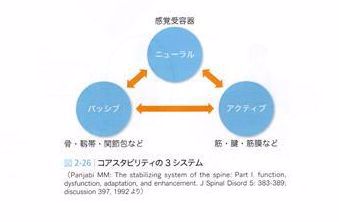
[14] Panjabi MM. The stabilizing system of the spine. Part I. Function, dysfunction, adaptation, and enhancement. J Spinal Disord. 1992;5:383-389.