
Musical Overture May Help N. Korea Talks
By THE ASSOCIATED PRESS
Published: December 10, 2007
Filed at 7:11 p.m. ET
WASHINGTON (AP) -- China had its pingpong players, the Soviet Union its ballet dancers, Iran its soccer players. Now the New York Philharmonic is making a musical overture to North Korea.
Arts and sports can open doors abroad that diplomatic jawboning might not, although the record is mixed. The Philharmonic will perform Feb. 26 in one of the most closed societies in the world, a Stalinist nation whose leader rules by decree and is accused of starving and torturing his people.
Like the pingpong diplomacy that helped lay the path for President Richard Nixon's historic 1972 trip to China, cultural outreach to a nation that President Bush has labeled part of an ''axis of evil'' is meant to put a human face on a relationship defined by suspicion and mistrust.
The U.S. Table Tennis team accepted a surprise invitation from China in 1971, making the group the first Americans allowed into China since the Communist takeover in 1949. The story captivated Americans and Chinese in a way that seems quaint in today's era of direct flights between Washington and Beijing.
Treasury Secretary Henry Paulson and other U.S. officials are in China this week for the kind of trade-and-business talks that have been commonplace.
Sports exchanges and cultural diplomacy haven't gotten as far with Iran, whose soccer team charmed Americans by giving the U.S. players flowers before defeating them 2-1 at the 1998 World Cup. A brief blossoming of academic, cultural and other outreach followed, but dried up amid political shifts in Iran and the United States.
The United States and Iran have been estranged since the 1979 storming of the U.S. Embassy in Tehran, and neither side appears close to standing down. Although the Bush administration insists it wants to resolve a nuclear conflict with Iran through diplomacy, even some U.S. allies fear a second U.S.-led war in the Middle East.
The Bush administration has been trying to increase cultural and other nonofficial ties to Iran, but it's sometimes a tough sell. Ten of 14 Iranian artists who got special visas to show their work in the U.S. last spring refused to be photographed with Secretary of State Condoleezza Rice when she toured the exhibit.
Such exercises have value, however, in building individual bonds and trust, said Karim Sadjadpour, a scholar at the Carnegie Endowment for International Peace.
''You are less sanguine about advocating war against a country when you've visited it and had positive interaction with its citizens,'' Sadjadpour said.
''Ideally these cultural exchanges would lead to diplomat exchanges, but so far they haven't. Alas, musicians, artists, and athletes do not devise policy.''
Iran may also host a U.S. orchestra tour similar to the one scheduled for North Korea, although there are no firm plans.
The New York orchestra visit carries a risk that North Korean leader Kim Jong-Il will use it as propaganda, and some of Bush's advisers worry that such niceties dull U.S. leverage over a brutal regime.
There were similar critiques of U.S. and Soviet cultural swaps in the 1970s, but defections of Soviet stars turned the tables in the propaganda wars.
North Korea's Ministry of Culture sent the orchestra an invitation in August. In October, orchestra president Zarin Mehta spent six days in North Korea exploring venues and making other arrangements for a potential concert in Pyongyang.
That makes Mehta one of only a small number of Americans who have visited North Korea, which last year shocked the world by successfully tested a nuclear bomb.
Another recent visitor is Assistant Secretary of State Christopher Hill, Bush's chief envoy in nuclear disarmament talks with North Korea, who played mailman last week to deliver a personal letter from Bush to Kim.
Bush once called the short leader a ''pygmy,'' and Kim regularly claimed that the United States wanted him dead.
The unprecedented letter, offering the promise of normal relations with the United States if North Korea gets rid of its weapons and explains its covert program, was the clearest sign yet that the Bush administration hopes to leave the insults and threats behind.
Rice used to snort or roll her eyes when asked if she, like predecessor Madeleine Albright, might make a dramatic visit to Pyongyang. Although no one is packing yet, such a trip is no longer out of the question.
Asked Monday whether the United States might normalize relations with the North before Bush leaves office, Rice said she does not know.
''But I think we're on a path that if North Korea is prepared to verifiably denuclearize, that this is a country that could finally break out of its isolation,'' Rice said during a Women's Foreign Police Group luncheon. ''And yes, indeed, break out of its isolation with the United States, too.''
More Articles in National »
Musical Overture May Help N. Korea Talks - New York Times
Philharmonic Agrees to Play in North Korea
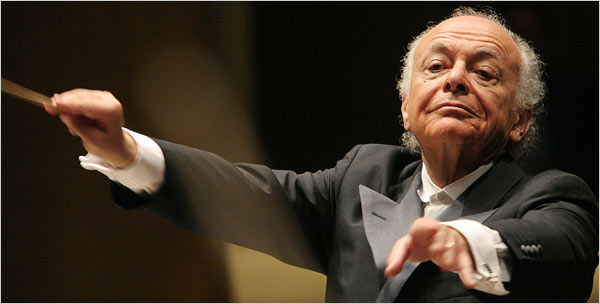
Adding a cultural wrinkle to the diplomatic engagement between the United States and North Korea, the New York Philharmonic plans to visit Pyongyang, the North Korean capital, in February, taking the legacy of Beethoven, Bach and Bernstein to one of the world’s most isolated nations.
The trip, at the invitation of North Korea, will be the first significant cultural visit by Americans to that country, and it comes as the United States is offering the possibility of warmer ties with a country that President Bush once consigned to the “axis of evil.”
“We haven’t even had Ping-Pong diplomacy with these people,” said Ambassador Christopher R. Hill, the Bush administration’s main diplomat for negotiations with North Korea and the assistant secretary of state for East Asian and Pacific affairs.
Just last week Mr. Bush sent a letter to Kim Jong-il, North Korea’s leader, suggesting that ties would improve if North Korea fully disclosed all nuclear programs and got rid of its nuclear weapons. Conservatives have criticized the Bush administration for engaging with North Korea when it has violated nuclear promises, and in the face of recent intelligence indicating its possible assistance to Syria in beginning work on a reactor.
State Department officials said the orchestra’s invitation from North Korea and its acceptance represented a potential opening in that Communist nation’s relationship with the outside world, and a softening of its unrelenting anti-United States propaganda.
“It would signal that North Korea is beginning to come out of its shell, which everyone understands is a long-term process,” Mr. Hill said. “It does represent a shift in how they view us, and it’s the sort of shift that can be helpful as we go forward in nuclear weapons negotiations.”
The Philharmonic’s trip, which has generated some controversy among orchestra musicians and commentators, will follow a venerable line of groundbreaking orchestra tours that have played a role in diplomacy, the most famous one, perhaps, taking place in 1973, when the Philadelphia Orchestra traveled to China soon after President Nixon’s historic visit and amid what came to be known as Ping-Pong diplomacy. In 1956 the Boston Symphony was the first major American orchestra to travel to the Soviet Union. The New York Philharmonic, under Leonard Bernstein, went three years later.
Of the Philharmonic’s excursion, Mr. Hill said, “I hope it will be looked back upon as an event that helped bring that country back into the world.”
The Philharmonic, led by its music director, Lorin Maazel, has been considering the visit since an invitation arrived by fax in August. It was a typed letter from the North Korean culture ministry, in English, accompanied by a cover letter from a private individual in California who said he was acting as an intermediary. The orchestra had the invitation authenticated by the State Department, which has provided advice and help in negotiating the terms of the visit. Mr. Hill said that he did not know how the invitation had come about. But its timing was significant, after a series of breakthroughs in a decade-long effort to have North Korea halt its nuclear program.
In February North Korea agreed to shut down its main reactor in exchange for economic aid and other inducements. The reactor was switched off in July, a month before the invitation. And in September the Bush administration said that North Korea had agreed to disable its main nuclear fuel plant and give an accounting of its nuclear facilities, fuel and weapons by the end of the year. Progress toward the Philharmonic’s visit accelerated when orchestra executives and a State Department official visited Pyongyang in October.
The final major logistical pieces of the concert fell into place late last week, after a visit to Seoul, the capital of South Korea, by Zarin Mehta, the orchestra’s president. The Philharmonic’s spokesman, Eric Latzky, confirmed that the trip was on, but he declined to discuss details publicly until a news conference at Avery Fisher Hall tomorrow, when it is to be formally announced.
Mr. Hill, who was in Pyongyang last week delivering Mr. Bush’s letter and inspecting nuclear facilities, said he planned to attend the news conference. He has spoken privately to the orchestra members. Even more surprising, the Philharmonic said that Pak Kil-yon, North Korea’s representative to the United Nations, would also attend, a rare public appearance by a North Korean diplomat. Mr. Hill said he believed that the conditions sought by the Philharmonic had been met. They included the presence of foreign journalists; a nationwide broadcast to ensure that not just a small elite would hear the concert; acoustical adjustments to the East Pyongyang Grand Theater; an assurance that the eight Philharmonic members of Korean origin would not encounter difficulties; and that the orchestra could play “The Star-Spangled Banner.”
Once the orchestra members had given their approval, the major stumbling block became transportation. The orchestra, staff members and journalists are expected to number about 250. A plane that can also carry the many large instruments had to be found. Asiana Airlines, a South Korean carrier, offered such a plane, provided that financing could be secured, said Evans Revere, a former senior United States diplomat who is president of the Korea Society, which helped plan the visit.
MBC, one of three main broadcasters in South Korea, offered to pay for the charter in exchange for the rights to broadcast an extra concert by the Philharmonic in Seoul on its return from Pyongyang, Mr. Revere said.
“The balance that’s being achieved here is pretty nifty,” he said. “It’s a nice message being sent to the peninsula that the premier American orchestra is performing in both capitals within hours of each other.”
One of the remaining loose ends is the procurement of climate-controlled trucks to transport instruments to and from the airport. One possibility is arranging for South Korean trucks to be driven across the border. The North Korean government can be unpredictable, and there is always the possibility that the visit could be derailed.
The concert is planned for Feb. 26 at the end of a previously planned tour in China. The orchestra is expected to stay in Pyongyang for two nights, with some teaching and a ceremonial dinner thrown in.
Some questions have been raised about the appropriateness of visiting a country run by one of the world’s most repressive governments. North Korea’s policies have been blamed in part for the famine-related starvation of perhaps two million people and it confines hundreds of thousands of people in labor camps.
If the orchestra goes to Pyongyang, “it will be doing little more than participating in a puppet show whose purpose is to lend legitimacy to a despicable regime,” Terry Teachout, an arts critic and blogger, wrote on the online opinion pages of The Wall Street Journal in late October.
Richard V. Allen, a national security adviser to President Ronald Reagan, and Chuck Downs ― both board members of the United States Committee for Human Rights in North Korea ― made a similar point on Oct. 28 on the Op-Ed page of The New York Times. “It would be a mistake to hand Kim Jong-il a propaganda coup,” they wrote.
Mr. Hill acknowledged that “in a very theoretical way” any kind of opening lends legitimacy to the North Korean government. “But not opening up has not had any positive effect in bringing North Korea out of its shell,” he said.
Mr. Latzky declined to discuss the concert program, but orchestra officials have said from the beginning that it would probably include American music.
New York Philharmonic - North Korea - Music - International Relations - New York Times
北拉致家族、思い共有 秋田の10人集い心境語る
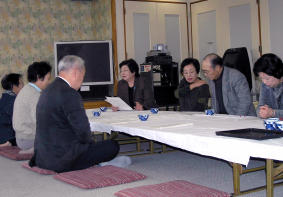
「北朝鮮に拉致された日本人を救出する秋田の会」(救う会秋田、松村譲裕代表)は10日、秋田市内で「第1回秋田県内特定失踪(しっそう)者家族の集い」を開いた。特定失踪者リストに載る北秋田市(旧合川町)の松橋恵美子さん=当時(26)=ら3人の家族や関係者約10人が出席し、当時の状況や現在の心境などを語り合った。
恵美子さんは1992年1月、車で自宅を出たまま行方が分からなくなった。母チヤさん(65)は同年春、車が見つかった能代市の海岸を捜索したことを振り返り、「手掛かりを求め、ごみをあさっていたら(悲しくて)涙が出てきた」と話した。
秋田市出身の佐藤正行さん=当時(27)=は86年10月、勤務地の名古屋市で失踪した。母ヨネさん(81)によると、正行さんは住んでいたマンションの管理人に「ちょっと出てくる」と言い残し、姿を消したという。
救う会秋田の福岡雅子副代表は「ざっくばらんに語り合い、思いを共有できた。断片的な情報が一つの線で結ばれることもある。より多くの人に拉致問題に関心を持ってほしい」と話した。
2007年12月10日月曜日
河北新報ニュース 北拉致家族、思い共有 秋田の10人集い心境語る