
今日の英語表現:特になし。英語版は後半にあり。
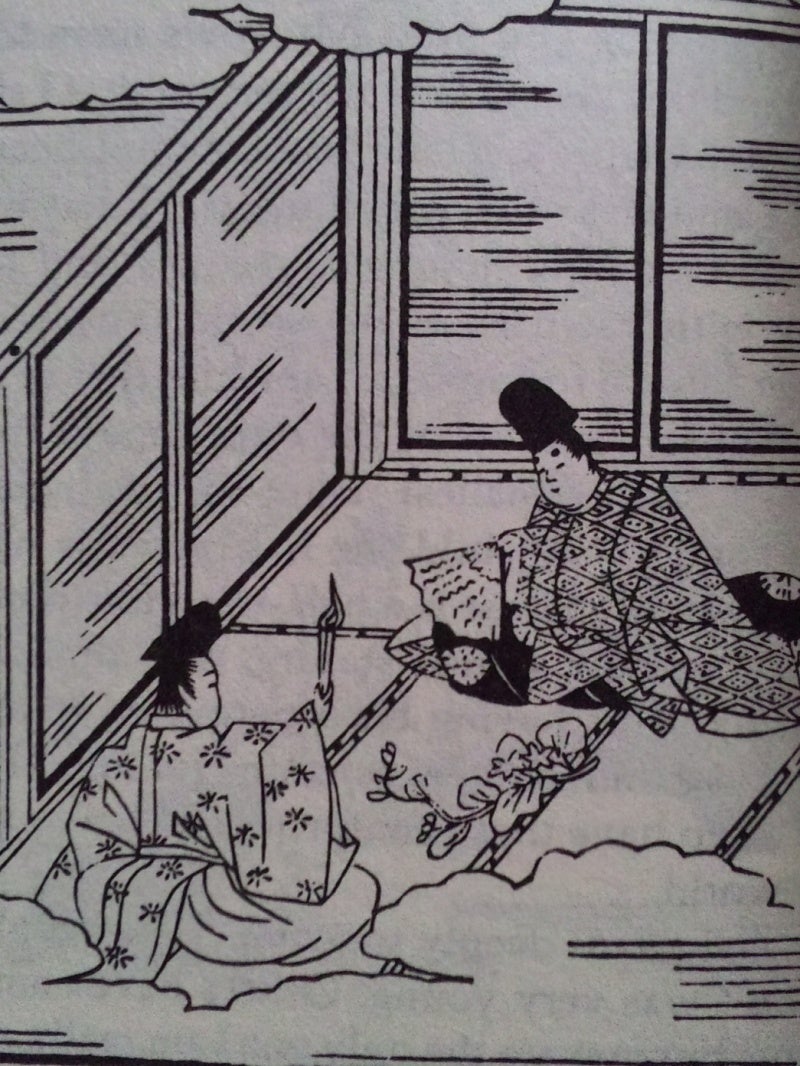
左の人が持っているのが紙燭。
右は絶世の美男子:光源氏。
The thing the man on the left is holding is Shisoku.
The other man is the most ever good looking man: Hikaru Genji.
源氏物語が好きで、これまでにいろいろな人の
現代語訳で読んできた。
大和和紀のマンガもよんだし、原語にも挑戦した。
原語はギブアップしたが。
最近、知人が英語訳をプレゼントして下さったので
今は英語版を読んでいる。
もう筋は知っているし、どんどん読めるかと思ったら
現代ではあまり登場しない単語や文体が
じゃんじゃん使ってあってそうでもなかった。
他にも読むものがあるので、これは朝ごはんのときに
読むことにして、いつも食卓に置いてある。
英語の人たちはこれを読んで、はたして平安文化の
雅さをわかるだろうか?
英語では無理ではないか、というのが今の感想だ。
例えば「紙燭」(↑図参照)だが、これは紙を固くねじって棒状にしたものに
油を染みこませたもので、点火して明かりとする。
御供の者が掲げる場合もあるし、燭台付きのものもある。
これがなんと英訳されているかというと・・・
light
なのだ。ライト。
ダメかなって。
記 ネット翻訳サービス ちょっと訳して.com
運営者
I like the Tale of Genji, and have read many versions of
modern Japanese translation including comic books by
Waki Yamato.
I have also tried the original version, which was so
foreign that I gave up.
Someone I know gave me English translation recently,
so I'm reading it now.
Since I am already very familiar with the story,
I thought it would be easy to read it.
However, there are many words and styles of sentence
that are not used very often these days, making it hard
for me to read in a normal speed.
I have other books to read, so this one is always on the
dining table, and I read it only during breakfast.
Can English speaking people understand and feel the
grace and elegance the story holds when they read it in
English?
I would say, No way.
For example, there is a word "Shisoku" used in the story.
Shisoku(see the picture↑ on top) is a tightly twisted paper stick,
whose one end is soaked in oil so as to be used like a candle.
An attendant would hold it for a noble person, or
it sometimes comes on a stand.
This word is translated into..."light."
Light!!
―No way.
written by the representative of translatethis.jp