
A mini jewelry spot welder may look like a simple piece of equipment, but its internal precision determines how well a piece of jewelry survives assembly, repair, and finishing. In a workshop where rings are resized, prongs are rebuilt, and delicate chains are restored, the choice of welder directly influences both workflow and final quality. Selecting the right machine requires attention to several technical and practical features rather than surface-level specifications.
One of the first aspects to examine is power stability. A reliable mini jewelry spot welder should deliver consistent energy output with minimal fluctuation. In jewelry work, even slight inconsistencies can lead to weak joints or surface damage, especially on thin gold or platinum components. Machines with adjustable power settings provide better control, allowing the user to match energy levels to different metals and thicknesses.
Pulse control is another critical feature. Fine jewelry work often demands short, precise bursts of energy rather than prolonged heat exposure. A well-designed pulse system reduces the risk of overheating gemstones or deforming nearby structures. The ability to fine-tune pulse duration gives the operator more control over micro-welds, particularly in intricate settings like pavé or filigree designs.
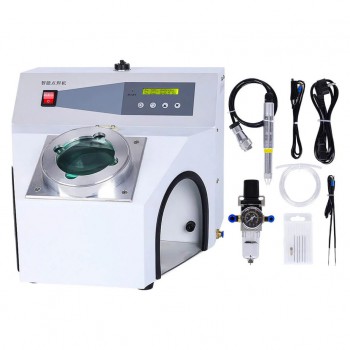
Electrode quality should not be overlooked. The durability and conductivity of the welding tips influence both precision and maintenance frequency. High-quality tungsten or specialized alloy electrodes maintain their shape longer, ensuring stable contact during repeated use. Easy replacement mechanisms also reduce downtime, which is important in busy repair environments.
Cooling efficiency plays a quiet but important role in long-term performance. Even mini spot welders generate heat during continuous operation. Machines equipped with effective internal cooling systems or external fan support maintain stable temperatures and protect sensitive components. Without proper cooling, performance drift and premature wear become more likely.
Another practical consideration is ergonomic design. A compact, well-balanced handpiece reduces fatigue during detailed work. Since jewelry welding often involves repetitive positioning and micro-adjustments, comfort directly affects accuracy. A clear display interface and intuitive controls also help reduce setup time, especially when switching between different materials or job types.
Compatibility with various metals adds further value. A capable mini spot welder should handle gold, silver, platinum, stainless steel, and even certain titanium applications without requiring extensive recalibration. This flexibility allows a workshop to expand its service range without investing in multiple specialized machines.
Safety features are equally essential. Stable grounding, overload protection, and insulated components help prevent accidental shocks or equipment damage. Some models also include automatic shutoff systems that activate during irregular voltage conditions, adding another layer of protection for both the operator and the device.
Finally, maintenance and service support can influence long-term satisfaction more than initial specifications. A machine that is easy to clean, with accessible internal parts and available replacement components, reduces operational interruptions. Reliable manufacturer support ensures that small technical issues do not escalate into costly downtime.
In the end, choosing a mini jewelry spot welder is less about finding the most powerful model and more about identifying a balanced tool that offers control, consistency, and durability. A well-chosen machine becomes an extension of the jeweler’s hand, quietly shaping the quality and reputation of every piece that leaves the bench.