
Jewelry micromotor work demands more than a steady hand and a capable machine. Engraving, stone setting, carving, polishing, and surface preparation often involve small movements repeated for hours. When the workstation is poorly arranged, even an experienced jeweler may begin compensating with awkward wrist angles, raised shoulders, excessive grip pressure, or a forward-leaning posture. Over time, these habits can affect both comfort and precision. Ergonomics therefore has a direct connection with the quality of bench work.
One of the most important factors is the height of the work surface. The bench should allow the jeweler to keep the shoulders relaxed while bringing the workpiece into a comfortable viewing position. If the bench is too low, the operator may bend the neck and upper back excessively. If it is too high, the shoulders remain elevated and the forearms lose natural support. A properly positioned bench lets the hands work close to the body without forcing the operator into a rigid posture.
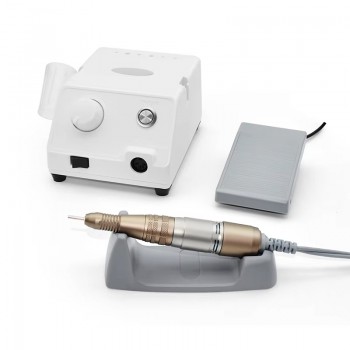
Handpiece position also deserves careful consideration. A micromotor handpiece should sit naturally in the hand rather than being squeezed tightly. Excessive gripping reduces fine motor control and can make delicate cuts more difficult. For detailed engraving or stone setting, a lighter grip combined with controlled finger movement often provides better accuracy than relying on force.
The position of the jewelry itself can make an equally significant difference. Instead of twisting the wrist to reach different areas of a piece, the work should be rotated whenever practical. A bench pin, positioning vise, or adjustable fixture can provide stable support while allowing the operator to change the working angle. This is particularly useful when working on rings, curved surfaces, and small components with multiple orientations.
Lighting is another part of ergonomic design that is sometimes underestimated. Shadows cast by the handpiece can make a tiny cutting area harder to see, encouraging the jeweler to lean closer to the work. A well-positioned task light or magnifying lamp can reduce this tendency. Even illumination is especially valuable when inspecting polished surfaces, stone seats, or engraved lines.
Vibration and noise should also influence workstation design. A worn bur, unbalanced accessory, or poorly maintained handpiece can transmit unnecessary vibration into the hand and arm. Replacing damaged tools and maintaining the jewelry micromotor properly can make long sessions considerably more comfortable. A stable bench further prevents unwanted movement while cutting.
Breaks are part of ergonomic technique rather than wasted production time. Short pauses allow the operator to release the handpiece, change posture, stretch the fingers, and rest the eyes. Alternating between demanding precision work and less intensive bench tasks can also reduce repetitive strain.
Good ergonomics ultimately supports craftsmanship. A comfortable jeweler can maintain steadier pressure, clearer visual focus, and more consistent hand movement. In professional micromotor work, workstation design is therefore not merely about comfort; it is another tool for achieving cleaner cuts, fewer mistakes, and more dependable results.