
Decorative engraving has long been one of the most respected skills in jewelry making. A single engraved line can transform a plain surface into a piece that catches light, creates texture, and tells a visual story. While traditional hand gravers remain popular among artisans, pneumatic jewelry engravers have introduced a new level of control and efficiency, particularly for bright cutting and intricate decorative work.
A pneumatic engraver uses compressed air to generate rapid, controlled impacts on a graver tool. Instead of relying solely on hand pressure, the system assists the cutting action, allowing the engraver to guide the tool with greater precision. This assistance becomes especially valuable when working on hard metals or executing long, consistent cuts across a jewelry surface.
Bright cutting is one area where pneumatic systems truly shine. The technique involves creating highly polished cuts that reflect light like tiny mirrors. When executed correctly, bright-cut lines produce a sparkling effect that enhances rings, pendants, bracelets, and watch components. Because the cuts must be smooth and uniform, any hesitation or inconsistency can reduce the visual impact. Pneumatic engravers help maintain a steady cutting motion, making it easier to achieve clean reflective surfaces.
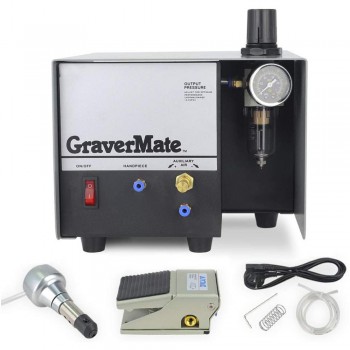
Another advantage is the ability to create detailed decorative patterns with less physical strain. Traditional engraving sessions can require hours of concentrated hand pressure, which may lead to fatigue. Pneumatic assistance reduces the effort needed to drive the tool through metal, allowing engravers to focus more on design execution and less on force generation. This can be particularly beneficial when working on complex scrollwork, floral motifs, geometric borders, or repeating ornamental patterns.
The versatility of pneumatic engravers also contributes to their popularity. By adjusting air pressure and stroke settings, users can tailor the tool's performance to different metals and engraving styles. Delicate shading on silver may require a softer touch, while deeper decorative cuts in gold alloys may benefit from more aggressive settings. The ability to fine-tune the tool helps achieve consistent results across a wide range of projects.
For custom jewelry makers, pneumatic engraving opens creative possibilities that would otherwise demand extensive manual effort. Personalized initials, family crests, decorative backgrounds, and hand-cut textures can be added with greater confidence and accuracy. As customers increasingly seek unique pieces, the capability to produce detailed custom engravings has become a valuable competitive advantage.
Proper tool preparation remains essential despite the advantages of pneumatic technology. Sharp gravers, correct geometry, and stable workholding are still critical factors. Even the most advanced engraving system cannot compensate for a poorly sharpened cutting tool. Successful engravers combine technical knowledge with careful equipment setup to achieve the finest results.
Maintenance requirements are generally straightforward. Keeping air lines clean, ensuring adequate lubrication where recommended, and inspecting connections regularly can help maintain smooth operation. Consistent maintenance not only extends equipment life but also preserves engraving quality.
Pneumatic jewelry engravers have become indispensable tools for many modern workshops. By combining traditional craftsmanship with mechanical assistance, they enable jewelers to produce brilliant bright-cut finishes and sophisticated decorative patterns with greater precision, efficiency, and artistic freedom. For engravers seeking to elevate both productivity and design quality, pneumatic technology offers a practical path forward.