
In jewelry manufacturing, every production step affects the final delivery schedule. Casting, in particular, can become a bottleneck when handled manually. Preparing molds, controlling temperatures, pouring molten metal, and monitoring cooling all demand precision and constant attention. As production volumes grow, these repetitive tasks consume valuable hours that could otherwise be spent on design, quality control, or customer service. This is why many workshops are turning to automatic jewelry casting machines to improve both efficiency and consistency.
An automatic jewelry casting machine simplifies several operations that once required experienced hands. After the mold and metal are properly prepared, the machine manages critical processes such as vacuum generation, pressure control, or centrifugal casting, depending on the system design. Because these functions are automated, operators no longer need to make continuous manual adjustments throughout each casting cycle. This allows a single technician to supervise multiple production tasks instead of focusing on only one machine.
Time savings become especially noticeable when producing batches of identical pieces. Jewelry collections often include dozens or even hundreds of matching rings, pendants, or earrings. Automatic casting equipment repeats the same process with reliable accuracy, reducing interruptions caused by operator fatigue or inconsistent technique. Faster cycle times also mean more completed castings during a normal workday, helping businesses meet customer deadlines without extending working hours.
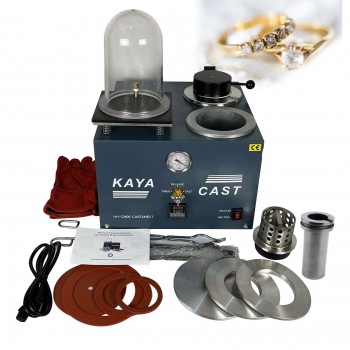
Another important advantage is the reduction in labor costs. Skilled jewelers remain essential for creative work, finishing, stone setting, and inspection, but they no longer need to spend large portions of the day managing repetitive casting operations. Routine production becomes easier to organize, allowing experienced employees to concentrate on tasks that require craftsmanship and decision-making. Even newer staff members can learn machine operation more quickly because automated controls reduce the complexity of the casting process.
Automation also contributes to higher production quality. Stable casting parameters improve metal flow and reduce common defects such as incomplete filling, excessive porosity, or inconsistent surface finish. Fewer defective castings mean less time spent on repairs, remelting scrap, and additional polishing. Material savings become significant over months of continuous production, particularly when working with precious metals such as gold, platinum, or silver.
Modern automatic jewelry casting machines frequently include digital interfaces that store casting programs for different alloys and mold types. Instead of resetting every parameter for each production run, operators can recall previously tested settings with a few simple commands. This shortens setup time and reduces the possibility of human error, especially when switching between different product lines.
For growing jewelry businesses, automation is more than a convenience—it is a practical investment in productivity. By reducing manual labor, shortening production cycles, and improving casting consistency, an automatic jewelry casting machine helps manufacturers deliver more products with the same workforce. The result is a smoother workflow, better resource utilization, and greater capacity to satisfy customer demand while maintaining the high standards expected in the jewelry industry.