1. Which of the following statements about lipids are correct?

I. Lipids consist of glycerol combined with alcohols.

II. Both oils and fats are triglycerides.

III. Oils are more saturated with hydrogen than are fats.

IV. Lipids are more highly reduced substances than are carbohydrates.


A. I, II and III

B. I and III only

C. II and IV only

D. I and IV only


2. Which of the following process is not involved in condensation?
A. Formation of glycosidic bond between glucose and fructose.
B. Esterification between glycerol and fatty acids to form a triglyceride.
C. Formation of two units of amino acids from a dipeptide.
D. Synthesis of cellulose.
 
3. Which is the properties of water?
A. Low viscosity with low surface tension.
B. High viscosity with low surface tension.
C. Low viscosity with high surface tension.
D. High viscosity with high surface tension.
 
4. Which of the following is made up of the condensation of β-glucose monomers?
A. Sucrose
B. Cellulose
C. Starch
D. Glycogen
 
5.The diagram shows a carbohydrate.What is the name of the bond that links the two units?
 
 
A. Saccharide bond
B. Glycosidic bond
C. Hydrogen bond
D. Peptide bond
 
6. Proteins can function as buffer because
A. Proteins contain peptide bonds
B. Proteins are non-polar molecules
C. Proteins are soluble in water
D. Proteins are amphoteric molecules
 
7. Saturated fatty acids differ from unsaturated fatty acids in
A. The presence of double covalent bonds in fatty acids
B. The physical condition of fatty acids at room temperature
C. The number of atoms in fatty acids
D. The branching of linear shape in fatty acids
 
8. Which of the following properties of water are important for regulation of temeprature in humans?
I.  High latent heat of vaporisation
II. Highest density at 4  °C
III. High heat capacity
IV. High surface tension
A. I and II
B. I and III
C. I and IV
D. II and IV
 
9. Hydrophobic interactions are exhibited by
A. ions
B. polar molecules
C. bipolar molecules
D. nonpolar molecules
 
10. What does a haemoglobin molecule contain?
A. Four iron (Fe2+) ions attached to each haem group
B. Four oxygen molecules attached to each haem group
C. Four polypeptide chains each with four attached haem groups
D. Four polypeptide chains each with one attached haem group


Answers
1. C     6. D
2. C     7. A
3. C     8. B
4. B     9. D
5. B    10. D


Classification of Proteins

Level of Organisation


i) Primary Structure

-the sequence of amino acids in the polypeptide chain

-linked by peptide bonds

Image result for primary structure of protein 


ii) Secondary Structure

-the folding of polypeptide chains into specific shape

- α -helix: coiled polypeptide chain

- β -pleated: folded polypeptide chain

-hydrogen bonds hold the peptide chains in place

-eg:keratin:present in hair and nails


Image result for primary structure of protein


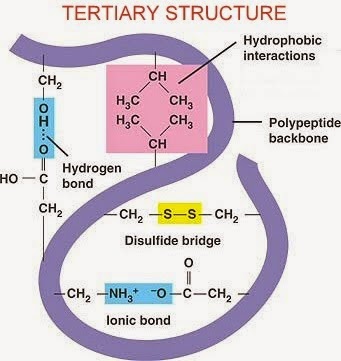
iii. Tertiary structure

-protein is folded into a three-dimensional shape

-shape is stabilized by hydrogen bonds,hydrophobic intereactions,disulphide bridges and ionic bonds

-eg:enzyme,myoglobin


Image result for tertiary structure of protein


iv. Quartenary Structure

-more than one polypeptide chain

-forms a three dimensional shape

-hydrogen bonding,ionic bonds,hydrophobic interactions holds maintains its shape

-eg:haemoglobin,an oxygen carrying molecule which is made up of 2 α -helix and 2 β -pleated polypeptides,consists of 4 iron haem group for oxygen binding.


Structure of haemoglobin


Image result for quaternary structure of a protein 


Fibrous vs Globular Protein

 
http://pediaa.com/wp-content/uploads/2018/09/Difference-Between-Fibrous-and-Globular-Protein-Comparison-Summary.jpg
 
Practice Essay Question
Discuss the importance of protein structure for determining enzyme specificity and its mode of action. (6)
 
Suggested Answer:
-enzyme is a globular protein
-each enzyme has precise amino acids sequence,tertiary structure
-hydrophilic R group outside the molecule-soluble in water
-active site of enzyme,catalyses chemical reactions has specific shape and functional groups to bind to substrate
-substrate can bind to active site of enzyme via non-covalent interactions;hydrogen bonding,hydrophobic interactions,Van der Waals interactions
-Changing the protein structure of enzyme will result in denaturation


Answers:

a. A: Lipid  B: Phospholipid

b: i. (on the diagram) Junction between 3 tails and head

   ii. Glycerol and fatty acids

c. (on diagram) label head with phosphate

d. i. Molecule B

   ii. Phosphate is a polar molecule which dissolves in water,the phospholipid head is hydrophilic.

e. A: Energy storage

   B: Structure of plasma membrane


The 3 groups of lipids that you will study in this chapter:

i. Triglyceride

ii. Phospholipid

iii. Steroid


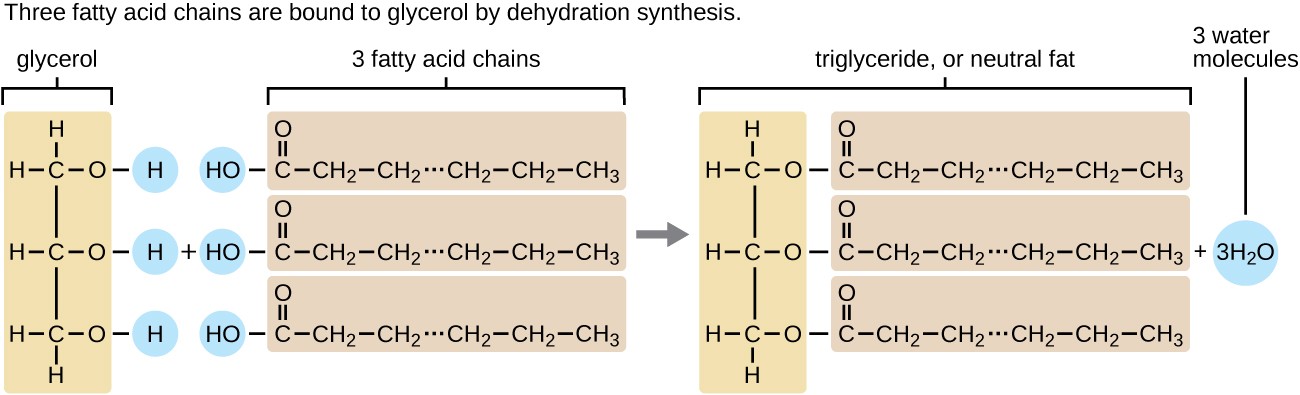
Triglyceride

1. Consists of one glycerol molecule and three fatty acids molecules.

2. Ester bond forms between these molecules through esterification.Image result for formation of triglyceride


There are 2 types of fatty acids.

i. Saturated fatty acid

-no double bonds between C atoms

-has higher melting point

-eg:stearic acid


ii. Unsaturated fatty acid

-has double bond between C atoms

-lower melting point because the kinks prevents the chain from packing tightly with each other

-eg:oleic acid,linoleic acid


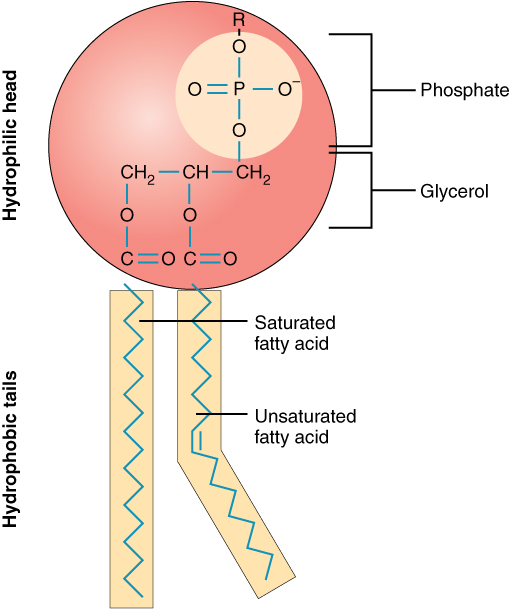
Phospholipid

1. Component of plasma membrane

2. Formed by condensation of one glycerol and 2 fatty acids

3. The hydroxyl group glycerol is atttached to a negatively-charged phosphate group.

4. Example of phospholipid is lecithin,which consists of a positively charged choline group attached to the phosphate group.


Image result for phospholipid


Phospholipid is amphipathic:

i. The polar,hydrophilic heads point outwards

ii. The non-polar,hydrophobic tails point inwards


Image result for phospholipid plasma membrane


Steroid

1. Has a four-ring hydrocarbon structure

2. Eg: cholesterol,testosterone and oestrogen

Image result for cholesterol

1. Cholesterol is a precursor of other hormones such as oestrogen and testosterone.

2. Component of plasma membrane, maintains its fludity.


Importance of lipids

1. Source of energy,more carbon-hydrogen atoms which released more energy when hydrolysed compared to carbohydrates

2. Acts as cushion and protect internal organs from injuries

3. Heat insulator,stored in adipose tissues to prevent heat loss

4. Cholesterol helps maintain fluidity of plasma membrane,precursor of other steroid hormones

5. Storing fat requires less space compared to carbohydrate


Practice Essay Question

STPM 2016

1.(a) (i)Draw and label the molecular structure of cholesterol with its hydrophilic and hydrophobic ends. Describe its properties. (6)

ii)Describe the roles of cholesterol in human metabolism. (4)


Polysaccharides

1. Formed by condensation of monosaccharides.

2. Linked by glycosidic bonds,can be branched or unbranched.

3. Examples are starch,glycogen and cellulose.


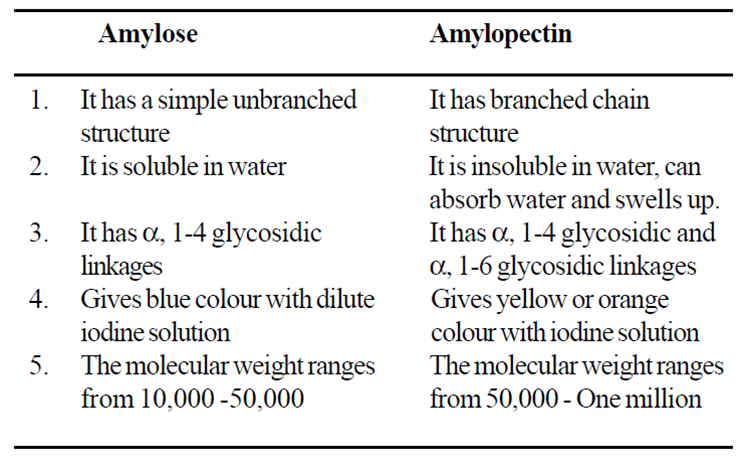
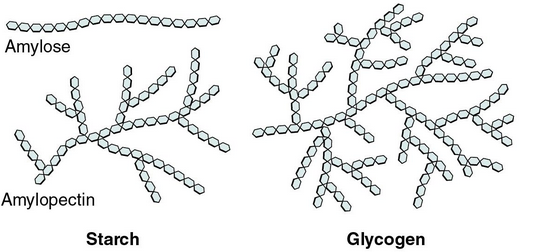
Starch

Major storage component in plants.

Consists of amylose and amylopectin.


Image result for compare amylose and amylopectin


Image result for glycogen vs amylopectin


Glycogen

Major storage component in animals.

Has more α -1,6-glycosidic bonds compared to starch (branches)

The branches can be rapidly hydrolyzed for energy requirements

Image result for glycogen vs amylopectin


Cellulose

Structural polysaccharide in plant cell walls

Consists of long unbranched ß glucose linked by ß -1,4-glycosidic bonds.

Insoluble in water,thus giving the cell wall its rigidity

Hydrogen bonds form between hydroxyl group of ß glucose molecules on adjacent chains.


Image result for hydrogen bond cellulose 

Chitin

Structural polysaccharide,component of cell wall in fungi and exoskeletons of arthropods.

A polymer of polymer of N-acetyl-D-glucosamine.


Essay Practice

1. (a)Starch and glycogen are storage components in living organisms. Describe how these components differ from each other.(10)

(b)The term 'insoluble fiber' can be found on some food packages. Explain the meaning of this term and the importances in our diet.(5)


Epithelial cells


Importance:

1. Protective layer, protects you skin from dehydration,damages and entry of pathogen.

2. Secretion of enzyme,hormones,mucus,sweat, when epithelial cells are modified into glandular tissues

3. Selectively permeable, allows only absorption of certain substances.


Types of epithelium:


Shape

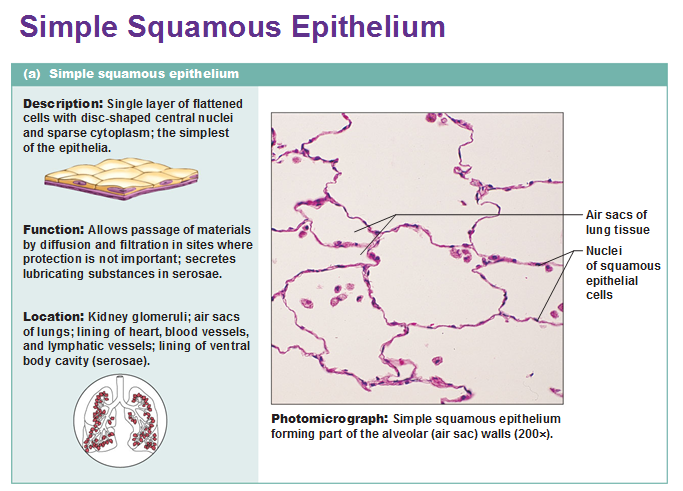
1. Squamous, flat and looks like fish scales,fast absorption and diffusion

2. Cuboidal,shapes like cube,wide, absorbs nutrients and produce secretions

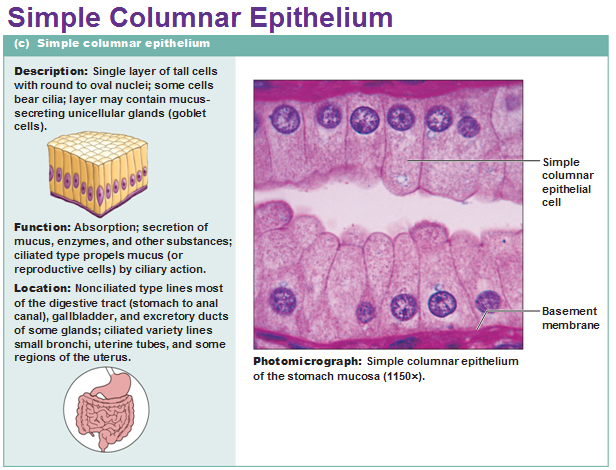
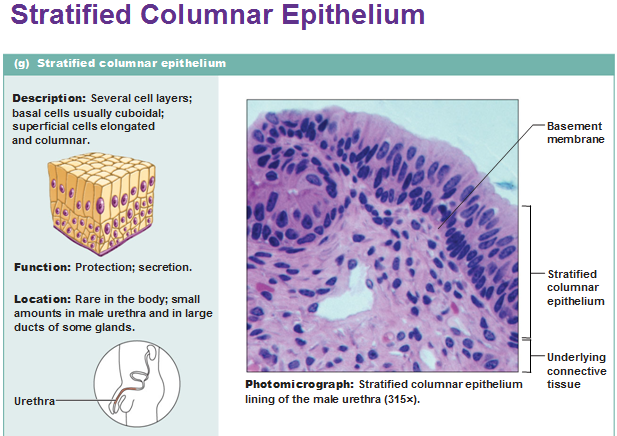
3. Columnar,tall and thick like column,cushions underlying tissues,absorbs nutrients and produce secretions


Layering

1. Simple,only one layer of cells

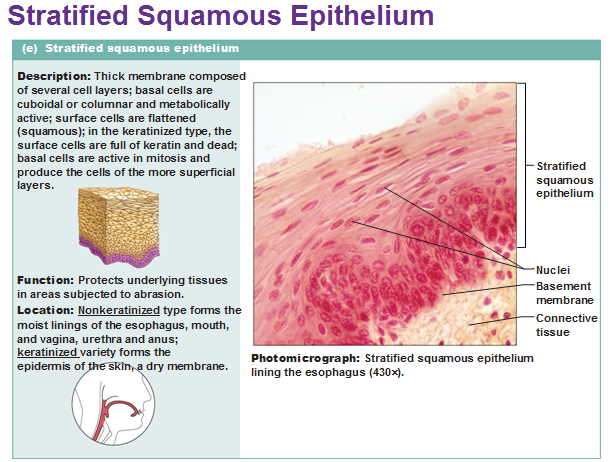
2. Stratified,many cells stack on each other

3. Pseudostratified,only one layer of cell but different sizes


The type of cells depend on the functions.


  Image result for simple squamous epithelium alveoli


  Image result for simple squamous epithelium alveoli 


Image result for simple squamous epithelium alveoli 


Image result for simple squamous epithelium alveoli 


Image result for simple squamous epithelium alveoli


  Image result for simple squamous epithelium alveoli 


Image result for pseudostratified columnar


Image result for transitional epithelium


As mentioned above,epithelial cells can be modified to form glands which consists of secretory cells.


There are 2 different types of glands,


i)Exocrine glands-release chemical substances through ducts to outside the body such as sweat,saliva

ii)Endocrine glands-release chemical substances into the boodstream and carry to target cells,they are the hormones!


  Image result for exocrine glands


PYQ STPM 2016

Describe the distribution and functions ot three types of simple epithelial tissues. (9)


Let's discuss about an essay question.


PYQ:STPM 2018

Describe the pathway of amylase secretion in pancreatic cells. (8)


The question asks us to explain about PATHWAY,which is a process,from where to where.


1.We know amylase is an enzyme(globular protein) which is secreted by pancreatic cells.

2.To synthesise a protein,first we must have genetic information from DNA.


Now your knowledge about organelles comes in.


1. In nucleus,transcription occurs to synthesise mRNA strand.

2. mRNA then moves out from the nucleus and attaches on the ribosomes on the rough endoplasmic reticulum.

3. Protein is synthesised .and carried to Golgi apparatus in the form of transporting vesicle.

4. The transporting vesicle fuses with the cis end of the Golgi body.

5. In Golgi body, the polypeptide chain is modified into glycoprotein by glycosylation.

6. A secretory vesicle containing amylase enzyme buds off the trans end of Golgi body.

7.The vesicle fuses with the plasma membrane and releases its content outside the pancreatic cell by exocytosis.


Why I differentiate the terms transporting and secretory vesicle?

Transporting vesicle is for transport within the cell itself.

Secretory vesicles is to transport proteins to be released from the cell.


Below is a diagram of what I have explained above.


This essay question integrates a few organelles that you have learnt in the form of a process,it requires you to think more besides only knowing the function of each organelles.


The very first chapter,you are more likely to find it in objective questions and very rarely in structured and essay questions.

Study the video below:


0:47 - Polarity
1:10 - Hydrogen Bonding
1:54 - Adhesion + Cohesion — movement up trees
2:30 - Surface Tension — Cohesion
2:54 - Solvent Properties — Polarity
3:57 - Density of Ice — Hydrogen Bonds
4:42 - Temperature Control — High Heat Capacity / High Specific Heat
5:28 - Temperature Control — Evaporation

Essay Practice
Q: State the property of water that allows each of the following to take place and, in each case, explain its importance:
a. the cooling of skin during sweating (3)
b. the transport of glucose and ions in a mammal (3)
c. much smaller temperature fluctuations in lake sand oceans than in terrestrial (land-based)habitats. (3)
Explain the physical properties of water. (6)

Hello guys.

Welcome to my blog. I'm Stephie and my blog will be mostly on Biology issues,especially STPM. Since working life is very busy, I will try to update the blog as frequent as I can.


The new STPM Biology is divided into 3 terms which I think is easier compared to the old format prior to STPM 2013 where you have to memorize your 1.5 years facts and go for the final exam. The good news is the new STPM Biology enables you to study for less than 10 chapters before your final exam in 0.5 years duration,so it's actually a bonus for you to study thoroughly and score better.


Term 1 focuses on biochemistry of cells.

Term 2 focuses on physiology.

Term 3 focuses on ecology and genetics.


Which term is the easiest and the hardest?

Term 1 is the easiest because the topics are lesser and more of what you have learnt in Form 4 and Form 5,basically an extension of some biological molecules,cell organelles,plasma membrane,enzymes,respiration and photosyntesis,so you should aim to score here.

Term 3 is the average paper,because there will be some calculations on population genetics and ecology where you can gain easy marks if you know the formulas well.

Term 2 can be said to be the hardest,many major and minor areas to focus,essay question can be from one of the minor area which you don't focus and you easily lose marks.So it's really time consuming to focus on this term.


What books do you need for STPM Biology?

I suggest you to use Sasbadi as your main reference for Term 1 and Term 2. For Term 3,you will need your teacher's help if he/she has the Longman 2012 VOL 1&2 you can photocopy some areas from these books. As there are new topics in the new STPM system,you will still need another book,either Oxford or Pelangi. Additional reference is the Campbell Biology if you're hardworking to read the facts and atttempt the questions on the CD,otherwise,it will be pointless to buy this book. Try searching for videos to facilitate your studying process,especially last 2 chapters in Term 1,first 6 chapters in Term 2 and some chapters on genetics in Term 3, as they are mainly complicated processes which you may not get the point at glance if you just study the facts blindly.


Scoring in Biology

Section A: This section consists of 15 multiple choice questions,1 mark each=15 marks. This is the No.1 helper,the questions are straight forward and I suggest you to practice the PYQ and from other sources you can find online or tuition. For an A,you will need to score at least 13/15 in this section.


Section B: This section consists of 2 structured questions which carry another 15 marks. The No.2 helper, Questions from this section are easy as well so the best score for this section is at least 13/15.


Section C: This section consists of 3 essay questions,15 marks each choose 2 out of 3 questions. This is the killer section. Many students do not study sufficiently for this section and lack application skills which make them lose plenty of marks. Don't study only the major areas of the chapter as many essay questions will include some marks from the minor part which you don't like to focus on.That way you will automatically lose marks if you cannot answer part of the question.Remember to read the question properly and don't misinterpret! If the question asks you to state differences, compare in a table form,this will ease the examiner to mark your paper because your points can be seen clearly.


Overall,STPM Biology is still considered easier compared to other papers such as Chemistry and Maths T. Don't look at the percentage of A's in the past,just focus and do more research on the topics that you have studied if it's your favourite subject. Pay attention to the learning outcomes,Practice more essay questions. Eventually your hard work will pay off. ニコニコ