
The 3 groups of lipids that you will study in this chapter:
i. Triglyceride
ii. Phospholipid
iii. Steroid
Triglyceride
1. Consists of one glycerol molecule and three fatty acids molecules.
2. Ester bond forms between these molecules through esterification.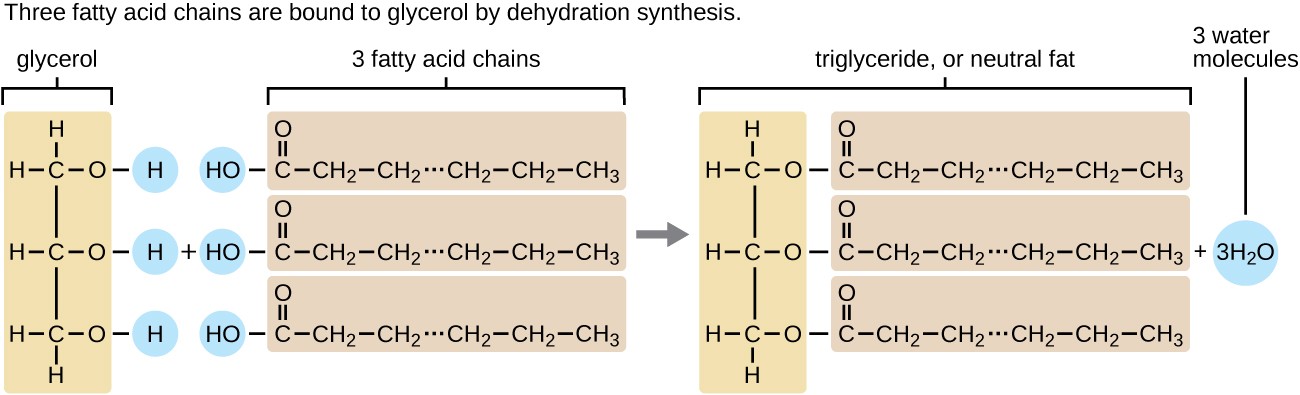
There are 2 types of fatty acids.
i. Saturated fatty acid
-no double bonds between C atoms
-has higher melting point
-eg:stearic acid
ii. Unsaturated fatty acid
-has double bond between C atoms
-lower melting point because the kinks prevents the chain from packing tightly with each other
-eg:oleic acid,linoleic acid
Phospholipid
1. Component of plasma membrane
2. Formed by condensation of one glycerol and 2 fatty acids
3. The hydroxyl group glycerol is atttached to a negatively-charged phosphate group.
4. Example of phospholipid is lecithin,which consists of a positively charged choline group attached to the phosphate group.
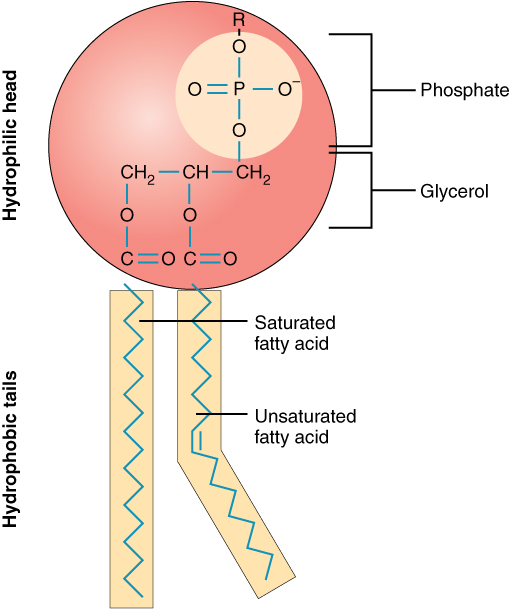
Phospholipid is amphipathic:
i. The polar,hydrophilic heads point outwards
ii. The non-polar,hydrophobic tails point inwards
Steroid
1. Has a four-ring hydrocarbon structure
2. Eg: cholesterol,testosterone and oestrogen

1. Cholesterol is a precursor of other hormones such as oestrogen and testosterone.
2. Component of plasma membrane, maintains its fludity.
Importance of lipids
1. Source of energy,more carbon-hydrogen atoms which released more energy when hydrolysed compared to carbohydrates
2. Acts as cushion and protect internal organs from injuries
3. Heat insulator,stored in adipose tissues to prevent heat loss
4. Cholesterol helps maintain fluidity of plasma membrane,precursor of other steroid hormones
5. Storing fat requires less space compared to carbohydrate
Practice Essay Question
STPM 2016
1.(a) (i)Draw and label the molecular structure of cholesterol with its hydrophilic and hydrophobic ends. Describe its properties. (6)
ii)Describe the roles of cholesterol in human metabolism. (4)