
If you have lived with the aftershocks of a painful event, you already know how the past can interrupt the present. A smell floods your body with fear, a tone of voice shuts you down, a crowded hallway makes your heart hammer as if danger lurks nearby. Many people come to therapy not because they cannot remember what happened, but because they cannot stop reacting to it. Eye Movement Desensitization and Reprocessing, or EMDR, is a structured way to help the brain file these memories where they belong, so they stop running the show.
I have used EMDR for single incident traumas like car crashes and medical emergencies, for attachment wounds that shaped how someone expects relationships to go, and for complicated grief where the loss keeps snagging on unfinished moments. It is not magic, and it is not hypnosis. It is a methodical protocol inside a real relationship, where your nervous system learns that what happened, happened, and that you are safe now.
What EMDR is, and what it is not
EMDR is a trauma therapy developed in the late 1980s by psychologist Francine Shapiro. The classic treatment involves recalling aspects of a distressing memory while engaging in bilateral stimulation, usually side to side eye movements, pulsers that tap left then right, or alternating sounds. That combination tends to reduce the vividness and emotional charge of the memory, then strengthen a more adaptive belief about the self.
The theory behind EMDR is not singular. Three ideas show up consistently in the research literature and in the therapy room. First, working memory is limited. When you track a therapist’s fingers while holding parts of a distressing image in mind, your brain multitasks. The memory loses intensity because it cannot hog all your processing power. Second, alternating stimulation can cue an orienting response, the same biological reflex that scans for safety in the environment. In therapy, that reflex seems to nudge the nervous system toward relaxation after each brief activation. Third, memory reconsolidation gives us a window. When a memory is activated, it becomes labile for a short time. If a corrective experience is introduced, the brain can store a modified version, one that carries less fear and more accurate meaning.
What EMDR is not: it is not a free form rehash of your worst moments, it is not a quick fix for complex trauma, and it is not the only effective trauma therapy. Cognitive processing therapy, prolonged exposure, and certain forms of somatic therapy are also well supported. EMDR often appeals to people who prefer less homework and fewer words, yet still want deep change.
The arc of treatment: preparation matters
TV clips sometimes show EMDR as a single session of finger waving and tears. In practice, the front end of the work matters as much as the processing itself.
We begin with a thorough history and a map. Traumas rarely occur in isolation. I ask about medical events, family relationships, cultural stressors, substance use patterns, spiritual beliefs, and what has helped you cope so far. We look for positive anchors, places your nervous system already knows safety. We also identify red flags that require careful pacing, for example, recent self harm, psychosis, severe dissociation with unreliable grounding, or unmanaged seizures. EMDR can still be possible with those conditions, but it demands collaboration with other providers and a slower ramp.
Next comes stabilization. Clients often expect to start processing past events immediately. I get why, especially if sleep is poor and nightmares relentless. Still, the brain needs a toolkit first. We build resources like a felt sense of calm or strength, not as a skill you perform in your head, but as a bodily experience you can recognize. This is where somatic therapy dovetails well with EMDR. If you have practiced orienting to the room, lengthening the exhale, or releasing a clenched jaw, you will tolerate the waves of activation that come during processing. Movement therapy can help here, too. Gentle pacing in the office, a short series of reaching and grounding motions, or a rhythm you can drum with your hands gives the body something to do that says I am here, I can move, I can come back.
We also talk consent and control. You do not have to tell me every detail of what happened for EMDR to work. Some clients speak almost the entire time, others hardly at all. You can stop at any point. You can decide which memory targets we touch and in what order. That control is not symbolic. It trains your nervous system to expect collaboration instead of helplessness.
What a typical EMDR session looks like
A common session length is 50 to 60 minutes in weekly therapy, though some clinicians offer longer intensives. The room is quiet. We face each other at a comfortable angle, not too close, feet on the floor. I check for stability, ask about the week, and note dreams or triggers that came up after the last session.

When we are ready to target a memory, I ask you to select the image or slice of the experience that still carries the most charge. Then I ask three short questions. What negative belief about yourself comes up with this memory, for example I am powerless, I am to blame, I am not safe. What belief would you rather hold that actually fits the present, such as I did the best I could, I can protect myself now, I am worthy of care. What sensations show up in your body right now when you hold the image and the negative belief together.
Two rating scales help track progress. The Subjective Units of Disturbance scale runs from 0 to 10. You tell me how upset you feel right now when you hold the target in mind. The Validity of Cognition scale runs from 1 to 7. You rate how true the preferred belief feels. No one passes or fails these scales. They help us see whether the needle moves.
We add bilateral stimulation. Here are the most common forms and why you might choose one over another:
- Eyes: following my fingers or a light bar left then right. Good for people who like a clear external focus, less helpful if eye strain or migraines arrive easily. Taps: holding buzzers that alternate or tapping your own knees. Useful if you dislike eye movements or want less visual intensity. Tones: wearing headphones with sounds that ping left then right. Helpful for some, distracting for others if audio sensitivity is high.
Sets are short, often 20 to 40 seconds. I ask you to notice whatever shows up without steering it. A memory fragment surfaces, a feeling swells in your chest, a thought interrupts with doubt, or nothing happens at first and boredom creeps in. All of that belongs. After each set we pause. I might ask, what are you getting now. Your job is to report a snapshot, not a polished narrative. We keep going. The brain learns to digest instead of brace. Over time the image loses its sharp edges. The sense of danger fades. When disturbance drops, we install the preferred belief with more sets. We finish with a body scan to catch lingering tightness or heat and process any residue.
Between sessions, vivid dreams are common. Fatigue is normal. So is an odd sense of space, as if the memory shrank and you can walk around it now. I usually suggest gentle structure after processing days: protein at meals, a walk, light social contact, and no major life decisions for 24 hours.
What it feels like on the inside
Clients describe a few different internal experiences when EMDR begins to work. One person told me, I can see the crash, but it is like I am watching from the curb instead of being in the driver’s seat again. Another said, The guilt voice got quieter, and the part that remembers I was 8 years old got louder. Someone working through medical trauma noticed that the beep of hospital monitors stopped sending them into a freeze. In list form, these accounts sound neat. In practice, they arrive in fits and starts. Expect plateaus and small spikes of distress. Often, an early session lowers your disturbance from a 9 to a 6. The next time, it holds at 6, then drops to a 3 after a left field association finally clears.
Your nervous system will not always choose the order you expect. You may start with a car crash, only to find your body wants to process the moment you saw your father’s face in the ER. That is not a detour. The brain grabs the thread that keeps the web in place.
Safety, pacing, and the window of tolerance
Therapists talk about the window of https://ameblo.jp/franciscoowhi898/entry-12964558395.html tolerance, the arousal range where you can feel feelings and still think. EMDR operates best inside that window. If you rocket into panic or plunge into shutdown, the brain does not process, it endures. My job is to track your breath, color, fidgeting, and words, and to slow or pause when the wave crests too high.
Grounding techniques are not one size fits all. Some people anchor with temperature, like a cold water sip or a palm on a warm mug. Others need movement, a slow stand and sit, or a gentle press of their feet into the floor. If you have a trauma history that involves restraint or suffocation, I do not cue you to take deep breaths until we find a version of that that does not echo the worst moments. This is where somatic therapy principles are protective. We follow the body. We do not bully it.
Dissociation needs particular attention. If you lose time, feel floaty, or cannot sense your hands without looking at them, we spend extra sessions on anti dissociation skills. You might learn to track three colors in the room while noticing your heels, or to narrate what you see as if speaking to a friend. Sometimes we process with briefer sets or with tactile tones only. Your sense of agency leads.
How long it takes, and what changes to expect
People often ask for a number. With a single traumatic incident in adulthood, and good preparation, the active processing may take 3 to 6 sessions after the initial assessment and resource building. Those numbers swing. Some move faster, some slower. With chronic childhood abuse or neglect, with complicated attachment injuries, or with ongoing stressors like custody conflict, EMDR takes longer. Think months to a year or more, with regular breaks for consolidation.
Change also tends to generalize. If we process a violent dog attack, you might notice not only that you can pass a barking yard without your heart jumping into your throat, but also that an old social anxiety softens. That happens because the brain does not store experiences in tidy folders. Once a belief like I cannot protect myself loosens, it loosens in more than one place.
The research base is solid for posttraumatic stress symptoms. Several randomized controlled trials have shown EMDR can reduce intrusion, avoidance, negative mood, and arousal. Outcomes are often comparable to trauma focused cognitive behavioral therapy. For grief, the evidence is smaller but promising, especially when death was sudden or traumatic. In dozens of cases I have treated, EMDR during grief counseling did not erase sadness or love, but it released the stuck pieces, for example the moment of receiving the phone call, or the image of a hospital room, so that mourning could move.
EMDR with attachment wounds
A surprising amount of distress traces back to how early relationships wired your expectations. If a parent alternated warmth with stonewalling, if comfort arrived only when you performed perfectly, you may hold a deep belief that closeness is precarious. EMDR can target hallmark moments from those patterns, a slammed door before prom, a cold look when you cried, a time you sought help and were punished. Here we tend to work slower. The goal is not to flip a switch from I am unlovable to I am lovable. It is to encode what your adult mind knows but your body doubts: that love is not earned by compliance alone, that you can say no and still belong.
This is also where attachment therapy principles blend in. We pay attention to the therapeutic relationship itself. If you feel ashamed when you cancel, if you imagine I am angry when I am quiet, we process those moments. EMDR is not a workaround for connection. It happens inside it.
Integrating somatic and movement work
Some clients find that EMDR unlocks energy but does not discharge it fully. Your legs might tremble after processing a near assault because your body wanted to run and could not. Movement therapy can complete that pattern safely. That could be as simple as walking a slow lap down the hallway after a heavy set, or pushing gently against the wall with your palms while you picture your body exiting the threatening room. These are not theatrical add ons. They tell your midbrain the story it missed.
Somatic therapy adds fine grained tools throughout. If your shoulders rise when we touch the image, we experiment with letting them drop a centimeter, then a breath, then another centimeter. If your voice thins, we encourage a low hum between sets. With medical trauma, we might practice orienting to the left and right and naming five flat, cool, vertical objects in the room, then we bring in a single hospital cue and track your spine. The bilateral stimulation layers onto these body skills, not instead of them.
Working through grief with EMDR
Grief is not a disorder to cure. Yet certain kinds of loss stick, especially when the end was sudden or there were images you cannot unsee. In grief counseling, EMDR aims at the hotspots that keep tugging you into reexperience, not at your bond with the person who died. A man who witnessed his partner’s final breaths could not enter their bedroom months later. The target we processed was the sound of the monitor flattening, the look on the nurse’s face, the way his own hands went numb. After several sessions, he could stand in the doorway without going white, then step to the dresser and breathe. His love and longing remained. What changed was the body panic that kept him locked out of daily life.
Anniversaries matter. I often schedule a session the week before a known date and review coping steps. Sometimes we process a moment that flared unexpectedly in the months prior. Sometimes we plan rituals, a visit to a place the person loved, or an action in their name, and we stabilize your system so you can be present for it.
Remote EMDR and the logistics that help
EMDR transitioned to telehealth more easily than many expected. There are apps and browser tools that provide alternating tones and onscreen targets. I have found that taps often work best over video, since they do not rely on screen refresh rates or internet lag. Preparation deserves extra time when working remotely. I ask clients to set up a private space, a glass of water nearby, a blanket within reach, and a plan for the 30 minutes after the session so they are not sprinting into a meeting with an open nervous system.
The basics of pacing and consent do not change. We still assess, stabilize, target, process, and close. The difference is that I may cue you more often to name three objects in your space or to stand and look out a window between sets, since the screen can narrow focus.
Who should not do EMDR right now
There are times when EMDR is not the next step. If you have recently sobered up and your days swing between cravings and withdrawal symptoms, stabilization and relapse prevention take priority. If you are in an actively violent relationship, focusing inward may reduce your ability to scan the present for real time danger. If you have uncontrolled seizures, you and your medical provider should weigh whether alternating audiovisual stimulation poses added risk. If major depressive symptoms include profound slowing, flat affect, and suicidal thoughts, we start with safety and activation before revisiting trauma.
Pregnancy is not a blanket contraindication. Still, I take special care during the first trimester and around birth trauma. With cardiac conditions, we avoid breath practices that alter carbon dioxide abruptly and track heart rate closely with your physician’s input.
Side effects and how to handle them
Most side effects are temporary and manageable with planning. Headaches and eye strain respond to shorter sets, taps instead of eye movements, and hydration. Emotional flooding between sessions calms with a no surprises routine, movement, and social support. Vivid dreams tell us the brain is consolidating. Fatigue is common. Plan one notch down on effort the afternoon after processing.
If you notice new memories surfacing that you do not recognize, pause and tell your therapist. The brain may be linking adjacent experiences. This is not a sign that therapy causes new trauma. It is a sign that the storage box is open and other items can be filed while we are here.

Cost, frequency, and how to choose a therapist
Access varies widely. In many cities, weekly EMDR sessions range from 120 to 225 dollars, with higher fees for longer intensives. Insurance coverage depends on your plan. If you can, ask whether the therapist is in network, and if not, whether they provide a superbill for out of network reimbursement. Some community clinics and hospital programs offer EMDR at lower cost.
Credentials help you screen. EMDR International Association lists clinicians as basic trained, certified, or consultant. Basic training means the therapist completed approved coursework and consultation. Certified indicates deeper experience and additional consultation. Consultant status means they can supervise others. Training level is not the same as fit. You want competence and a style that settles your nervous system.
Questions I suggest clients bring to a first call:
- How do you decide when someone is ready to process, and what does preparation look like in your practice How do you handle dissociation or panic during sessions What forms of bilateral stimulation do you use, and how do we choose among them How will you involve somatic therapy, movement, attachment work, or grief counseling if those are relevant What is your plan for between session support if distress spikes
Pay attention to pace. If someone pressures you to dive into the worst memory in session one, consider that a warning sign. The best EMDR work happens when your system trusts that it will not be pushed past its limits.
How EMDR fits with other therapies
Therapy is not a single lane road. Many clients use EMDR alongside skills based work or relational therapy. For example, someone with panic and a critical inner voice might do EMDR for the car accident that started the panic, then practice cognitive techniques between sessions to catch catastrophic thoughts during the week. A person healing from attachment trauma may pair EMDR with ongoing attachment therapy to test new beliefs in real relationships. In grief counseling, EMDR can release the trauma elements while a support group offers connection and meaning making. Somatic therapy stabilizes the body so EMDR rides on a steadier platform. Movement therapy helps complete the unfinished motor patterns that trauma froze.
Medication is not a mismatch with EMDR. Many find that a stable antidepressant or prazosin for nightmares provides enough relief to tolerate processing. If a benzodiazepine is used before sessions, it can blunt arousal too much. That is a discussion to have with your prescriber.
A brief vignette that shows the arc
A teacher in her thirties came to therapy after a student collapsed in her classroom. She performed CPR until medics arrived, and the student survived. Still, she could not enter her room without shaking, and any sudden sound spiked her pulse. After two sessions of assessment and three of stabilization, including breath pacing and gentle neck release work, we targeted the sound of a body hitting the floor and the image of her own hands pressing on the chest. Her starting disturbance was a 9. We used tactile buzzers because eye movements made her dizzy. Early sets brought fear and tingling in her forearms. Midway through the second processing session, a different memory surfaced, her father falling when she was 12. We followed that, then returned to the classroom. By the fifth processing session, her disturbance held at a 2. She walked into her classroom with a colleague, then alone. Fire drill week passed without a surge. She described feeling sad and grateful at once, then surprised that both could be true without knocking her over.
Final thoughts on readiness and choice
If you are considering EMDR, start by asking yourself what feels stuck rather than what label you carry. Do you avoid the street where the accident happened. Do you wake at 3 a.m. replaying a fight. Do you love someone you lost and feel ambushed by images that keep you from remembering them in color. Those are good reasons to seek a therapist who knows how to help your brain finish what it started. The work is structured, but not rigid. It requires courage, but not stoicism. When EMDR goes well, you get more than symptom relief. You get your time back, your breath back, your ability to choose what matters now.
Name: Spirals & Heartspace
Address: 534 W Gentile St, Layton, UT 84041, United States
Phone: 385-301-5252
Website: https://spiralsandheartspacehealing.com/
Hours:
Monday: 9:30 AM - 7:00 PM
Tuesday: 9:30 AM - 7:00 PM
Wednesday: 9:30 AM - 7:00 PM
Thursday: 9:30 AM - 7:00 PM
Friday: 9:30 AM - 7:00 PM
Saturday: Closed
Sunday: Closed
Open-location code (plus code): 326F+5G Layton, Utah, USA
Map/listing URL: https://maps.app.goo.gl/M1jmgkhNyaMPCCJ8A
Embed iframe:
"@context": "https://schema.org",
"@type": "ProfessionalService",
"name": "Spirals & Heartspace",
"url": "https://spiralsandheartspacehealing.com/",
"address":
"@type": "PostalAddress",
"addressLocality": "Layton",
"addressRegion": "UT",
"addressCountry": "US"
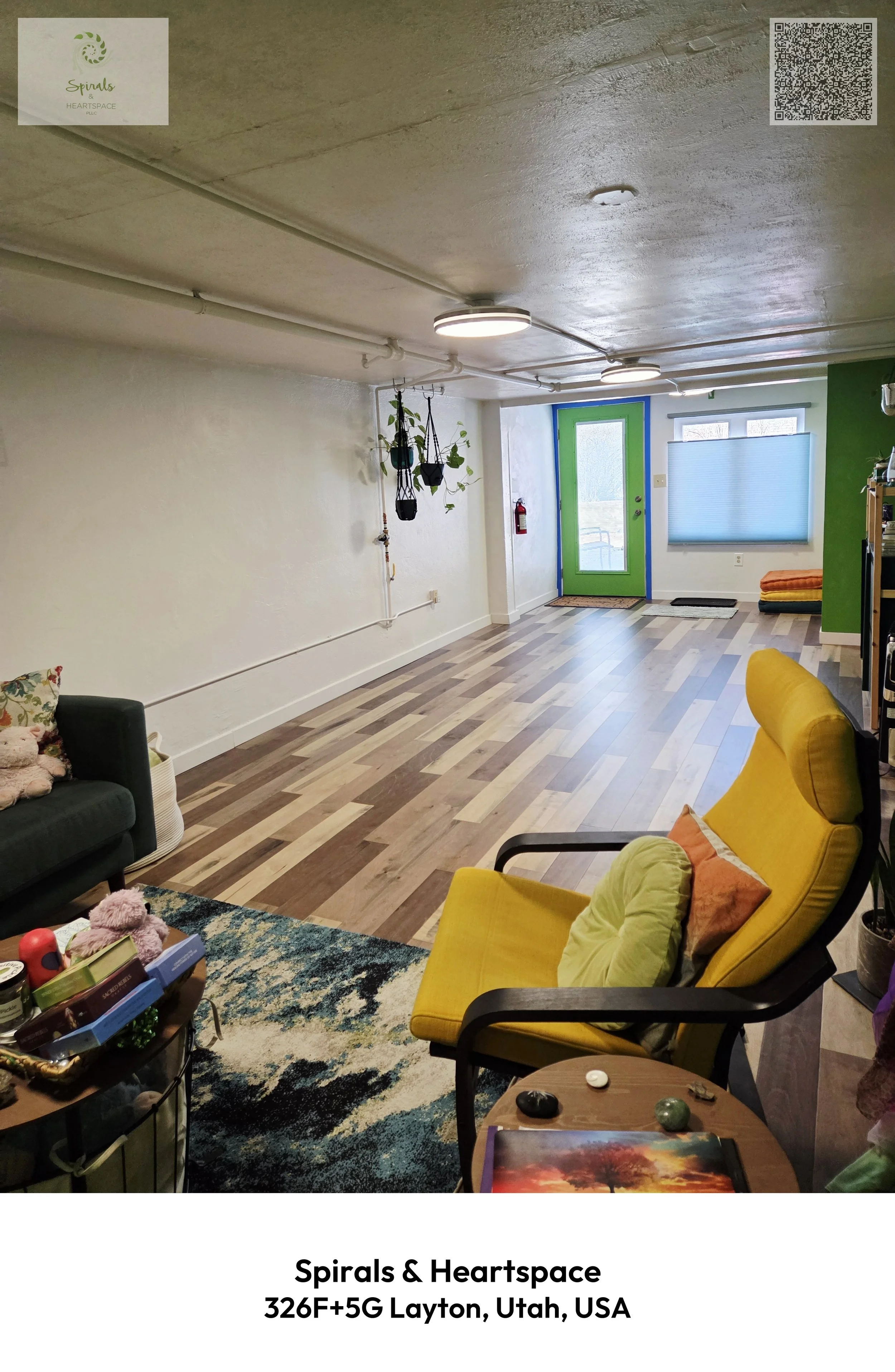
Spirals & Heartspace is a Layton therapy practice offering somatic, trauma-informed support for adults who feel stuck in survival mode.
The practice focuses on trauma therapy, somatic therapy, grief counseling, movement therapy, and attachment therapy for clients looking for deeper healing work.
Based in Layton, Utah, Spirals & Heartspace offers therapy for adults in the local area and notes that both in-person and online sessions are available.
Clients who feel exhausted, disconnected, or trapped in long-standing patterns can explore a body-based approach that goes beyond traditional talk therapy alone.
The practice also offers coaching, consultation, and authentic movement for people seeking personal growth or professional support in related healing work.
For people searching for a psychotherapist in Layton, Spirals & Heartspace provides a local Utah base with services centered on trauma recovery, nervous system awareness, and attachment healing.
The official website identifies Layton and the surrounding Davis County area as the local service region for in-person care.
A public map listing is also available as a reference point for business lookup connected to the Layton area.
Spirals & Heartspace emphasizes a warm, embodied, creative approach designed to help clients reconnect with truth, clarity, and a more grounded sense of self.
Popular Questions About Spirals & Heartspace
What does Spirals & Heartspace help with?
Spirals & Heartspace offers support for trauma, grief, attachment wounds, emotional overwhelm, and body-based healing through somatic and movement-oriented therapy.
Is Spirals & Heartspace located in Layton?
Yes. The official website has a dedicated Layton, Utah location page and describes the practice as serving Layton and surrounding communities.
What therapy services are offered?
The website highlights trauma therapy, somatic therapy, grief counseling, movement therapy, and attachment therapy. It also lists coaching, consultation, and authentic movement.
Does Spirals & Heartspace offer online sessions?
Yes. The Layton location page states that both in-person and online sessions are available.
Who leads Spirals & Heartspace?
The official site identifies Ande Welling as the therapist, coach, movement facilitator, and guide behind the practice.
Who is a good fit for this practice?
The site is geared toward adults who feel exhausted from old survival patterns, complicated family dynamics, grief, self-abandonment, or unresolved trauma and want a deeper, body-aware approach.
How do I contact Spirals & Heartspace?
You can visit https://spiralsandheartspacehealing.com/ and use the contact form to inquire about therapy, coaching, consultation, authentic movement, or speaking.
Phone: 385-301-5252
Landmarks Near Layton, UT
Layton – The practice explicitly identifies Layton as its local base, making the city itself the clearest location reference.Davis County – The Layton page says the practice serves individuals throughout Layton and Davis County, so this is an important regional service-area landmark.
Wasatch Mountains – The location page directly references Layton as sitting against the Wasatch Mountains, making this a natural local landmark for orientation.
Northern Utah – The site describes Layton within northern Utah, which is useful for people comparing nearby therapy options across the region.
Surrounding Layton communities – The official location page says the practice serves Layton and surrounding communities, which supports broader local relevance without overclaiming exact neighborhoods.
If you are looking for a psychotherapist in Layton, Spirals & Heartspace offers a local Utah therapy practice with in-person and online options for adults seeking trauma-informed support.