
Tension does not just live in the mind. It sits in the jaw that never unclenches, the breath that never sinks low into the belly, the shoulders that ride up an inch too high without permission. Over time, stress and trauma set these postures like concrete. People arrive in therapy talking about panic, exhaustion, a fuse that keeps blowing at work or at home. Then they tilt their head and quietly add, I also have a knot here that never goes away. The body is telling its version of the story.
Somatic therapy starts there. It listens closely to sensation, movement, and the nervous system. It treats symptoms like hyperarousal, shutdown, or chronic pain as signals to be translated rather than defects to be silenced. In my practice, I have watched people regain access to rest, to comfort with touch, to a steadier heartbeat in difficult conversations. None of that happens instantly. It happens by building a new relationship with the body.
What tension and trauma look like in a body
The nervous system is a creature of patterns. A car backfires in the alley, and your chest tightens before thought. A supervisor’s clipped tone lands like danger, even if the words are neutral. After acute trauma, and often after long periods of developmentally unsafe environments, the body keeps preparing for impact. Muscles brace. Joints lock. The digestive system goes off script. Sleep shortens or fills with restless alertness.
I ask clients to describe these experiences in blunt sensory terms. Where does it start. What is the shape of it. Hot or cold, tight or dull, pressure or emptiness. People are often surprised by the precision that emerges. One man in his fifties tracked his anger to a corkscrew sensation under his left rib. A young mother noticed her fear was not fast, it was syrupy and heavy behind her knees. Naming it is not a clever trick, it recruits parts of the brain that help regulate intensity and it offers traction for the work ahead.
Somatic therapy pays attention to the time course of these states. Hyperarousal typically rises within seconds after a cue. Shutdown or dissociation can arrive more slowly, with a spreading numbness, wavering focus, or a sense of floating two feet behind one’s life. The aim is never to pry someone out of a protective pattern with force. The aim is to widen their usable range, what many clinicians call the window of tolerance, so their body has more choices under stress.
How somatic therapy works without overpromising
Different somatic approaches use different maps. Some draw on polyvagal ideas about ventral vagal engagement, fight or flight, and freeze. Others emphasize sensorimotor learning, attachment repair, or movement repatterning. The overlap is straightforward: use present moment sensation to track the nervous system, then intervene gently enough that change sticks.
A useful session does not look like a cathartic outpouring every week. It looks like careful titration. We touch the edge of activation, back off, return when the body signals readiness. We may spend five minutes exploring how breath changes when a client imagines saying no to a minor request. If the breath shortens, we pause and practice lengthening the exhale, or we shift posture, planting feet and feeling the ground. These small experiments are not trivial. Over months, they recondition the system to pair challenge with regulation rather than with collapse or flood.
The interventions are simple on paper. Slowing someone’s speech so their body can keep up. Tracking micro-movements in the neck that relieve pressure. Inviting a protective gesture to complete itself rather than holding it rigid, for example, letting a half raised hand press against a wall for two or three breaths. Supporting a tremor that wants to move through the legs without pushing it to intensify.
Most sessions last 50 to 60 minutes. Early on, I usually see people weekly, sometimes twice a week if someone is in acute crisis and has support between sessions. The norms vary widely with trauma therapy, but I find a working block of 12 to 20 sessions gives enough time to test whether the approach is landing, to adjust pacing, and to set a realistic horizon for more complex work.
A session from the inside
Let me describe, with details changed for privacy, how this unfolds. A client in her thirties came in after a car crash that was not life threatening but left her panicky on highways and waking with clenched teeth. Talk therapy had helped her understand the guilt she felt about walking away unharmed while her friend needed surgery. The body piece remained.
We started with five minutes of mapping: where tension gathers while she talks about merging onto the highway. She noticed a ringing in her ears and a pressure along the right jaw. I asked her to rate the intensity silently to herself. Then we stepped back from the story and worked with an experiment. She pressed her palms against the sides of her head, not hard, just enough to feel contact. The ringing softened a notch. We stayed there, letting her adjust the pressure until the nervous system signaled a sigh. That sigh, a longer exhale with the belly softening, is a real-time marker of downshifting.
In week four, we introduced an imaginal rehearsal. Eyes open, feet planted, she named three objects in the room to orient to safety, then pictured herself three cars behind a semi truck. The jaw tensed. Instead of dropping the image, we layered in support, a folded blanket under her forearms to give her chest more room to move with breath, and a cue to look left and right while staying in the image so her neck did not lock. The session ended with 90 seconds of voluntary shaking through the legs, not performative, just small amplitude oscillations that discharged the bracing pattern. After about eight sessions, she drove a short stretch of highway on a clear morning and texted that her jaw did not lock once.
This is the tempo that works: one part education, two parts interoceptive practice, one part movement. It respects that the body’s fear responses are intelligent and that forcing change will provoke backlash.
Choosing among somatic methods and movement therapy
The field is crowded with modalities, each with its own acronyms. People ask which is best. The honest answer is that fit and skill matter more than brand. Still, there are practical differences.
Somatic Experiencing focuses on pendulation, the back and forth between activation and resource, and on completing thwarted defensive responses. It is often gentle and slow, which suits complex trauma or people prone to overwhelm. The trade off is that progress can feel subtle, and clients looking for a vigorous workout may get frustrated.
Sensorimotor Psychotherapy blends cognitive and somatic techniques, tracking movement patterns alongside beliefs. It is well suited to people who like frameworks and want to understand how posture and thought loop together.
Trauma Releasing Exercises use tremors elicited by specific positions to discharge tension. They can work quickly for some, especially when bracing shows up as leg or pelvic tightness. The caution here is dosage. Without guidance, people may overshoot and feel raw for a day or two.
Yoga therapy and other movement therapy approaches widen attention through breath, alignment, and mindful movement. In practice, I adapt yoga shapes to a client’s nervous system capacity, often using props to create containment. For people who live in hyperarousal, long holds in supported positions can be surprisingly regulating. For those inclined toward shutdown, dynamic sequences with short pauses keep them engaged without drifting away.
No method replaces good timing, clear consent, and a solid plan to stabilize. A polished technique used at the wrong moment is still the wrong intervention.
Grief counseling meets the body
Grief is not just sadness. It contracts the throat, reduces appetite, and distorts time. When grief counseling stays in language alone, some people manage, others feel like they are reciting facts about a storm while still standing in the rain. Somatic work gives grief a place to move.
I think of a father who lost his son and could not bear the pressure in his chest during quiet evenings. Talking helped for the first 20 minutes, then the pressure took over and he would ask to leave. We reframed the pressure as an anchor point to visit, not an enemy to defeat, and built a ritual around it. He placed his hand on his chest, leaned back into a firm cushion to share the load, and rocked an inch or two, timed to a slow count. It did not make the loss smaller. It made his body less alone with it. Over months, that ritual gave him longer stretches of bearable quiet, which in turn let him remember his son with less frantic avoidance.
There are caution flags here. Somatic interventions can stir strong waves of feeling. In fresh grief, the goal is not to push for catharsis. It is to build a repertoire of simple, repeatable actions that let someone ride those waves safely, then rest. That might be orienting to the room after a crying jag, washing the face with cool water, or taking a walk with a steady rhythm. Grief takes the time it takes. Comfort with sensation lets people stay present for more of it.

Attachment therapy and the body’s expectations of others
Attachment patterns are not just ideas from childhood. They sit in the tone of voice that calms you, the leaning in or angling away from closeness, the reflex to overperform and then resent it. When we work somatically with attachment therapy, we attend to how the body makes predictions about contact and care.
Co regulation is a concrete practice. Therapists help clients track what changes when someone else sits close enough to be felt, or mirrors a breath pattern, or holds a steady gaze for three seconds then looks away. Sessions become a lab for testing new micro experiences of safety. For example, a client who habitually folded her arms in sessions realized it was not defensiveness, it was a way to hold her own ribs so she did not feel empty. We experimented with a small weighted pillow against her sternum. After a few weeks, she noticed she could talk about conflict without the swirl that usually followed. That change matters more than any perfect origin story for the pattern.
Consent and touch require clarity. Some somatic therapies include light, non sexual touch with explicit permission, typically hands on shoulders, back, or forearms to provide containment or feedback. Others work entirely without touch. There is no virtue in pushing past a client’s discomfort just to use a technique. If touch is offered, it must be optional every time, with the expectation that permission can be withdrawn midstream.
Practical ways to support your nervous system between sessions
Between appointments, people need simple, portable practices that do not turn into homework burdens. I offer a short menu and encourage experimentation for two weeks before deciding what sticks.
- Orienting: name five neutral objects in your field of view, then listen for two quiet sounds. Notice any release in your breath. Hand bracing: press your palms against a wall at shoulder height for three slow exhales, feeling your feet take more weight. Micro shaking: lightly bounce your knees for 20 to 30 seconds, stop, then feel the after sensations without evaluation. Temperature shift: hold a cool pack or rinse wrists in cool water for 20 seconds, then notice the body’s rebound toward baseline.
Two to five minutes is enough. If a practice spikes distress, stop and choose something more neutral, like orienting or a slow walk while tracking footfall.
When somatic work is not the opening move
Somatic therapy is not a universal starting line. People with active psychosis, uncontrolled seizures, or certain cardiac conditions need medical evaluation and stabilization first. For someone deep in dissociation, eyes-on-body practices can increase detachment. In those cases, we start by strengthening attention to external anchors, like sound or sight, and build alliances with parts of the self that fear sensation.
Substance use adds complexity. Early sobriety already brings surges of sensation. Somatic work can support regulation, but I coordinate closely with medical providers and sometimes slow the pace to avoid stacking too many challenges at once.
Cultural context matters too. In some traditions, body practices feel familiar. In others, they feel suspect or intimate in a way that violates norms. A good therapist respects these boundaries and finds language and methods that fit the person in front of them.
Building a treatment plan you can live with
Assessment starts with a timeline of stressors, symptoms, and resources. I ask about sleep, digestion, pain, startle response, and how often they feel either sped up or cut off from feeling. I also ask who helps them feel more like themselves. That might be a person, a place, or an activity. Those resources become part of the plan.
We set goals in concrete terms, like riding in a car on the highway for 30 minutes without clenched jaw, attending a two hour family gathering without shutting down, or sleeping six hours without waking in a panic. Progress markers include reduced daily pain ratings by one or two points, fewer panic spikes per week, or a measurable increase in social engagement, such as more eye contact or initiating a short conversation in a store.
Frequency is a lever. Weekly sessions build momentum. Biweekly can work once someone has practices they can rely on. I often review and recalibrate at session six, then again around session twelve. Some people benefit from a maintenance rhythm after a focused period, like one session every three to four weeks for a quarter, to prevent backslide during new stressors.
Working directly with movement and stored activation
People sometimes notice spontaneous movements during sessions, small tremors in the legs or a desire to push with the arms. The nervous system is attempting to discharge activation or complete a defensive action that was interrupted. Supporting these movements can be powerful, but it requires finesse.
If a leg tremor starts, I may invite the client to feel the contact of the foot with the ground and to let the tremor be 10 percent bigger or 10 percent smaller, finding the dosage that feels safe. If there is a strong urge to push, we set up a clear boundary, like pressing into a cushion held by me or against a wall. We monitor breath and facial tension. Two minutes is often plenty. Afterward, we pause and feel the contrast: warmth in the limbs, a heavier feeling in the body, a drop in mental noise. The contrast teaches the body what regulation feels like.

Edge cases matter. For someone with Ehlers Danlos or hypermobility, tremor work needs extra joint support. For chronic lower back pain, lying on the floor may not be sustainable, so we adapt positions or use chairs and props. Movement therapy is not a test of willpower, it is a dialogue with the body’s protective reflexes.
Measuring change beyond symptom checklists
Change shows up in small behaviors before it delivers grand victories. A client who used to scan every room for exits realizes she forgot to do it at a friend’s https://andyccrv985.bearsfanteamshop.com/somatic-therapy-for-tension-and-trauma-release house. Another notices that the siren in the night no longer triggers a spike in heart rate. Sleep consolidates. Appetite normalizes. People begin to tolerate boredom, which sounds trivial but is a sign that the nervous system is not chasing constant stimulation to outrun discomfort.
I watch for flexibility. Can someone go from activation to calm and back without getting stuck. Can they recover faster after stress. Do they have more social bandwidth, laughing more easily or tolerating silence with others. Objective measures help too. Wearables can show reductions in resting heart rate over months, or increased heart rate variability, although these metrics are sensitive to many factors and should not be overinterpreted.
Pain deserves a note here. Many clients report a decrease in headaches, jaw tension, or lower back pain as somatic work progresses. Not all pain is trauma related, and I avoid promising pain relief. Still, when the body stops bracing as often, muscles overworked by constant guarding do tend to quiet down.
Finding a practitioner who fits
Training backgrounds vary. Some therapists are licensed mental health professionals who have added somatic therapy to their toolkit. Others come from bodywork, yoga therapy, or movement arts and collaborate with psychotherapists when psychological processing intensifies. Credentials are not guarantees, but they matter. Look for substantial training hours, supervised practice, and an ongoing commitment to consultation.
You can improve your odds of a good match by asking direct questions during a consult.
- How do you decide when to use somatic interventions versus talk based approaches. What does a typical first session look like, and how do you measure progress. How do you handle strong emotional releases during or after a session. What is your policy and practice around touch, and how do you ensure consent. How do you adapt for medical conditions, mobility limits, or cultural preferences.
Therapy works best when the relationship is sturdy. If you do not feel seen after a couple of sessions, or if the pacing consistently feels off, name it. A good therapist will adjust or help you transition to someone else without making it a failure.
Where grief, attachment, and trauma therapy meet embodiment
Somatic therapy is not an island. In complex cases, I weave it with evidence based trauma therapy methods like EMDR, with grief counseling that honors loss without rushing it, and with attachment therapy that repairs early relational patterns. The stitching is the art. A client who dissociates when facing conflict at home might do brief EMDR sets around the first memory of that shutdown, then switch to a sensorimotor exercise that stabilizes their chest and breath, then practice a short relational script while intentionally feeling their feet on the floor. Over time, the pieces reinforce each other.
I have seen this integrated approach help a veteran who startled at every loud noise regain enough ease to enjoy a baseball game, a nurse who carried grief from the pandemic cry without drowning and then sleep more than five hours for the first time in months, a software engineer whose attachment fear softened so he could ask for help without a shame spiral. None of these stories are heroic arcs. They are ordinary bodies learning to trust themselves again.
The work is patient and practical. It respects that symptoms make sense in context, even when they cause harm now. It teaches that a tremor can be a release, that a sigh can be a milestone, that the body is not the enemy. With careful pacing, clear boundaries, and the right mix of methods, somatic therapy gives people back choices they forgot they had. That is what relief looks like in practice, not a final cure, but a steadily growing capacity to meet life with steadier hands and a softer jaw.
Name: Spirals & Heartspace
Address: 534 W Gentile St, Layton, UT 84041, United States
Phone: 385-301-5252
Website: https://spiralsandheartspacehealing.com/
Hours:
Monday: 9:30 AM - 7:00 PM
Tuesday: 9:30 AM - 7:00 PM
Wednesday: 9:30 AM - 7:00 PM
Thursday: 9:30 AM - 7:00 PM
Friday: 9:30 AM - 7:00 PM
Saturday: Closed
Sunday: Closed
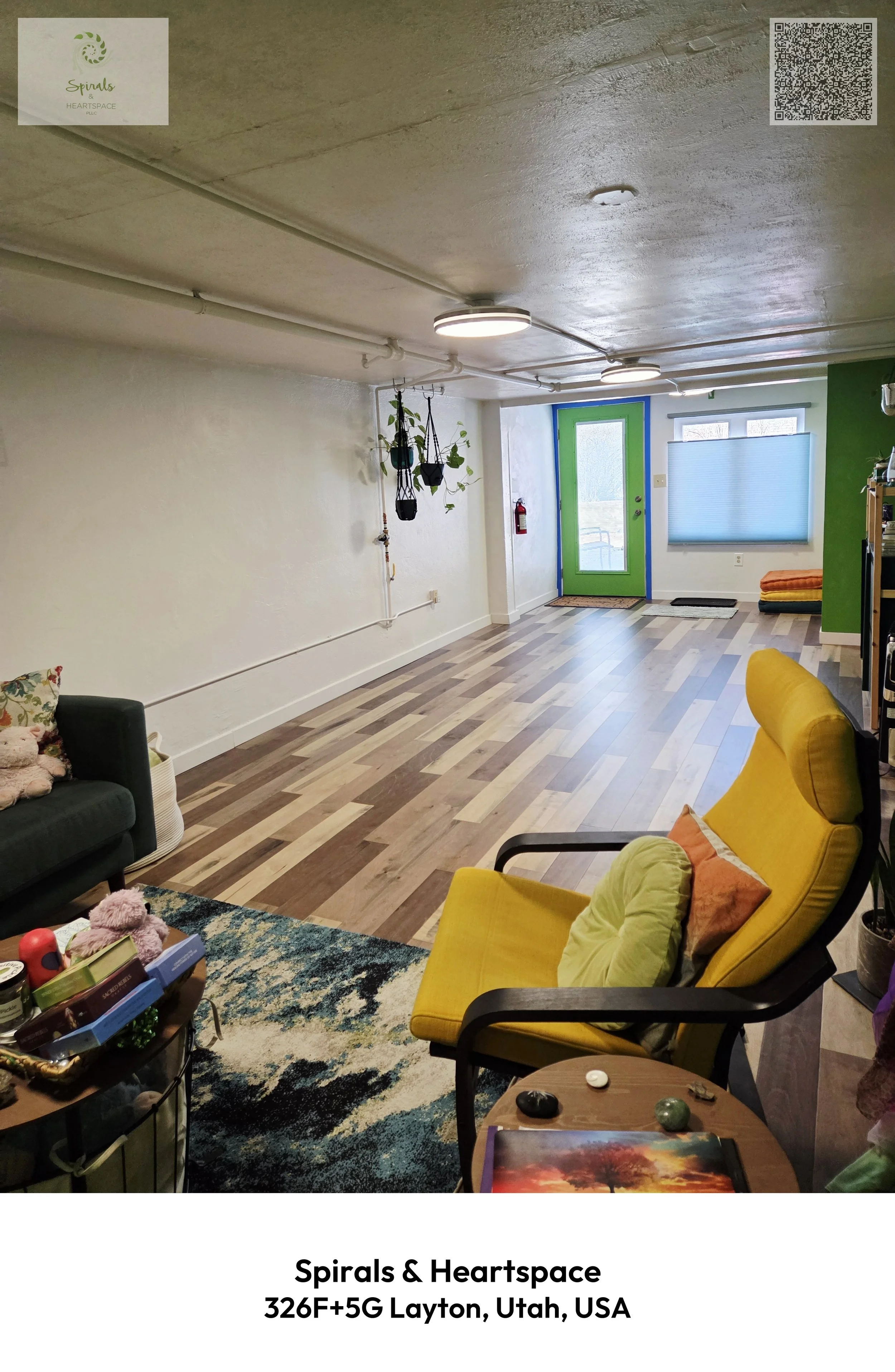
Open-location code (plus code): 326F+5G Layton, Utah, USA
Map/listing URL: https://maps.app.goo.gl/M1jmgkhNyaMPCCJ8A
Embed iframe:
"@context": "https://schema.org",
"@type": "ProfessionalService",
"name": "Spirals & Heartspace",
"url": "https://spiralsandheartspacehealing.com/",
"address":
"@type": "PostalAddress",
"addressLocality": "Layton",
"addressRegion": "UT",
"addressCountry": "US"
Spirals & Heartspace is a Layton therapy practice offering somatic, trauma-informed support for adults who feel stuck in survival mode.
The practice focuses on trauma therapy, somatic therapy, grief counseling, movement therapy, and attachment therapy for clients looking for deeper healing work.
Based in Layton, Utah, Spirals & Heartspace offers therapy for adults in the local area and notes that both in-person and online sessions are available.
Clients who feel exhausted, disconnected, or trapped in long-standing patterns can explore a body-based approach that goes beyond traditional talk therapy alone.
The practice also offers coaching, consultation, and authentic movement for people seeking personal growth or professional support in related healing work.
For people searching for a psychotherapist in Layton, Spirals & Heartspace provides a local Utah base with services centered on trauma recovery, nervous system awareness, and attachment healing.
The official website identifies Layton and the surrounding Davis County area as the local service region for in-person care.
A public map listing is also available as a reference point for business lookup connected to the Layton area.
Spirals & Heartspace emphasizes a warm, embodied, creative approach designed to help clients reconnect with truth, clarity, and a more grounded sense of self.
Popular Questions About Spirals & Heartspace
What does Spirals & Heartspace help with?
Spirals & Heartspace offers support for trauma, grief, attachment wounds, emotional overwhelm, and body-based healing through somatic and movement-oriented therapy.
Is Spirals & Heartspace located in Layton?
Yes. The official website has a dedicated Layton, Utah location page and describes the practice as serving Layton and surrounding communities.
What therapy services are offered?
The website highlights trauma therapy, somatic therapy, grief counseling, movement therapy, and attachment therapy. It also lists coaching, consultation, and authentic movement.
Does Spirals & Heartspace offer online sessions?
Yes. The Layton location page states that both in-person and online sessions are available.
Who leads Spirals & Heartspace?
The official site identifies Ande Welling as the therapist, coach, movement facilitator, and guide behind the practice.
Who is a good fit for this practice?
The site is geared toward adults who feel exhausted from old survival patterns, complicated family dynamics, grief, self-abandonment, or unresolved trauma and want a deeper, body-aware approach.
How do I contact Spirals & Heartspace?
You can visit https://spiralsandheartspacehealing.com/ and use the contact form to inquire about therapy, coaching, consultation, authentic movement, or speaking.
Phone: 385-301-5252
Landmarks Near Layton, UT
Layton – The practice explicitly identifies Layton as its local base, making the city itself the clearest location reference.Davis County – The Layton page says the practice serves individuals throughout Layton and Davis County, so this is an important regional service-area landmark.
Wasatch Mountains – The location page directly references Layton as sitting against the Wasatch Mountains, making this a natural local landmark for orientation.
Northern Utah – The site describes Layton within northern Utah, which is useful for people comparing nearby therapy options across the region.
Surrounding Layton communities – The official location page says the practice serves Layton and surrounding communities, which supports broader local relevance without overclaiming exact neighborhoods.
If you are looking for a psychotherapist in Layton, Spirals & Heartspace offers a local Utah therapy practice with in-person and online options for adults seeking trauma-informed support.