オンライン英会話講師のCurtis講師が提供する
ニュースの英語を解説する" In the News"シリーズ
第47回の本日は"Mojo"です。[


◆◇◆◇◆◇◆◇◆◇◆◇◆◇◆◇◆◇◆◇

In the News #47 - Mojo
On Nov. 26, the Daily Yomiuri had the following headline “Women's wrestling seeks to regain its mojo”.


Not all words used in English have clear origins. In the case of certain words associated with African-Americans, the words were brought to the U.S. and British colonies as part of the slave trade, and were used extensively by African-Americans for decades before entering more general usage. For this reason, it’s sometimes difficult to trace certain words back to specific parts of Africa, or to determine the original meaning of the word before it took on more regional usage in the U.S.


In the case of “mojo”, the current belief is that it was brought over from Africa, possibly Cameroon. It is clear that the popular definition of mojo now is that of a small cloth bag that holds certain objects that have magical properties for the owner. As slang, mojo also has the meaning of “confidence”, “energy” or “luck”. At one time, people in the U.S. would say something along the lines of “I’ve got my mojo working” and “I’ve got to get my mojo working” to talk about becoming more successful, or more energetic. But, this usage is not common these days.


Because mojo refers to magic, we can also say “I need to get my magic back” or “he’s lost that old magic”, interchangeably with “he’s lost that old mojo”. In the 1960’s, the rock band The Doors had a song entitled “L.A. Woman”, with the line “Mr. Mojo Risin’”, which helped make the word “mojo” more recognizable by musical audiences of the time. (Mr. Mojo Risin’ is an anagram for the name of the lead singer of The Doors – Jim Morrison.)


The story accompanying the above headline refers to the decreasing popularity of women’s professional wrestling in Japan. We could say that in becoming unpopular that women’s wrestling has “lost its mojo”. To turn around its declining popularity, the women’s wrestling association needs to promote itself and help attract new fans. In this way, regaining energy, women’s wrestling would be getting its mojo back, or getting its mojo working again.


Rewording the headline to use more regular English, we could use “Women’s wrestling trying to regain its popularity in Japan”.

As you read the newspapers this week, try to find more examples of “mojo”.


- Curtis Hoffmann


http://search.japantimes.co.jp/cgi-bin/nn20101126f3.html
http://en.wikipedia.org/wiki/Mojo_(African_American_culture )

◆◇◆◇◆◇◆◇◆◇◆◇◆◇◆◇◆◇◆◇

大前研一 特別リアル講義開催!

2月26日(土)、大前研一学長による特別リアルセミナーを行いました。
これはPEGL上級コース開講を記念したもので、第1期生限定の特別講座です。

このセミナーは、事前に受講生から大前学長への質問を募集して、
それらの質問に大前学長が答えていくという形式で行われ、英語の学習方法や
外国人との仕事の中で起こった問題の対処方法などについて、大前さん独自の
手法の極意を伝授した、大変貴重な講義です。


当日は上級コース受講生51人中45人参加(UStream参加も含む)の参加率が
なんと約90%となり、遠隔教育では異例の高参加率で、北海道、関西、そして
なんと香港からセミナーのために帰国された方もおり、日本全国から受講生が
六番町オフィスに集まりました。


ビジネスマンに捧ぐ~ 英語学習に役立つ!PEGL事務局ブログ


第1セッションと第2セッションは英語で行われ、BBTスタッフのLuke Harringtonと
Kate Gordon演ずる外国人スタッフとのロールプレーを交え、問題をかかえた日本人
上司を演ずる大前教授は、思わず「なるほど!」と思えるような、回答例を次々と
披露しつつ、いろいろな場面でのコミュニケーションタクトを紹介してくださりました。

第3セッションは日本語で、受講生からの質問に、大前教授が一つ一つ丁寧に
回答する形で進行しました。


ビジネスマンに捧ぐ~ 英語学習に役立つ!PEGL事務局ブログ


ビジネスマンに捧ぐ~ 英語学習に役立つ!PEGL事務局ブログ


こうして朝10時から17:30時まで、まる一日かけて収録した大前学長秘伝の
英語コミュニケーションの極意は、今後は、[PEGL 実践ビジネス英語講座上級コース ]
の新しいコンテンツとして4月以降、上級コースを学習開始いただく皆様にも
ご視聴いただけます。


初級・中級コースはこちらから:
===================================================

実践ビジネス英語講座(初級コース)

実践ビジネス英語講座(中級コース)

===================================================

事務局・外山 スマイルくん

オンライン英会話講師のCurtis講師が提供する
ニュースの英語を解説する" In the News"シリーズ
第46回の本日は"Greenback"です。


◆◇◆◇◆◇◆◇◆◇◆◇◆◇◆◇◆◇◆◇

In the News #46 - Greenback


On Nov. 20, the Daily Yomiuri had the following headline “Greenback maintains 83 yen mark”. Unfortunately, this article is not available from their online site.


The word “greenback” shows up very frequently in the western news media, and most readers probably already know that it is a slang word for “U.S. dollar”. The question I’ll be asking today is “what is the origin of the word ‘greenback’”?


写真素材 PIXTA
(c) クリスマス写真素材 PIXTA

When the U.S. first became an independent country towards the end of the 1700’s, there was no centralized bank, and no mint issuing U.S. currency. Many States started creating their own silver coins, and the Spanish Real was a popular form of money around areas where Spanish colonization had occurred. Most money-based transactions took place centered on the value of the metal used for the coinage – either silver or gold.


The newly-formed U.S. government was looking for models to base their own coin designs on, and one choice was the silver coin mined in Germany, called the Joachimstaller, named after Joachimstall, the mine where the silver ore was dug out. “Joachimstaller” was shortened by common usage to “thaller”, and in the U.S. the pronunciation was turned into “dollar”.


Paper money, called “bank notes”, first originated in China prior to the 6th century A.D. It cropped up worldwide periodically, but precious metal coinage remained more popular. In the early 1700’s, the individual U.S. colonies each issued their own bank notes. Finally, during the American Civil War, both the North and South sides issued paper “bank notes” as a form of bank loan to raise money for their war efforts. Most of this early paper money was printed on cheap, thin paper that generally fell apart with age. The few remaining bank notes from this time are very popular with collectors. Most of this paper was white. In the 1860’s, the U.S. government issued “demand notes”, with green ink. People receiving these demand notes derogatorily referred to them as “green backs”.


Over time, the U.S. mint refined its bank note design to turn them into what we know today as the modern paper currency. Because the currency is still predominantly green, we still call them “greenbacks”. Other slang terms for U.S. paper dollars are “bucks”, “bread”, “bill” and “dough”.


Examples:
“I’ve got 20 bucks – let’s go to a bar and get some beer.”
“Got any dough?” “A few bucks.” “Can you lend me a fiver until Friday?”
“Trading on the greenback is up for the day on news of stronger export orders for GM and IBM.”


As you read the newspapers this week, try to find more examples of “greenback”, or slang names for other countries’ currencies.


- Curtis Hoffmann

http://en.wikipedia.org/wiki/Dollar
http://en.wikipedia.org/wiki/Demand_Note
http://images.search.yahoo.com/search/images?_adv_prop=image&fr=yfp-t-311&va=u.s.+bank+note+collecting

◆◇◆◇◆◇◆◇◆◇◆◇◆◇◆◇◆◇◆◇

オンライン英会話講師のCurtis講師が提供する
ニュースの英語を解説する" In the News"シリーズ
第45回の本日は"litmus test"です。


◆◇◆◇◆◇◆◇◆◇◆◇◆◇◆◇◆◇◆◇


In the News #45 - litmus test


On Nov. 20, the Daily Yomiuri reprinted “General Motors' public offering may net $20 billion”, a story that first appeared in the Washington Post. The headline used by the Daily Yomiuri was “GM IPO seen as litmus test for U.S. economy”.


Litmus paper is a filter paper that has been specially treated with “litmus”, a mixture of dyes that are extracts from lichens (a kind of moss). Litmus was first developed around the year 1300 AD, in Spain, and became well-known from the 1500’s. Litmus paper is used to test the acidity, or pH level, of liquids. A “litmus test”, which consists of putting litmus paper in the liquid, is a quick way to tell if the liquid is acidic or alkaline.


写真素材 PIXTA
(c) まんまる写真素材 PIXTA

Because litmus paper only has 2 or three states (red, blue or purple), it has become synonymous with the concept that certain outcomes can only have two results – that something is “good” or “bad”, “black” or “white”, or “acceptable” or “unacceptable”. It became a common phrase some time around the 1990’s, when the American news media started using it to describe certain kinds of questions that could be asked to a political appointee to force them to disqualify themselves from the appointed office.


That is, if someone is a candidate for the Supreme Court, then a politician from a rival political party would want to find a weakness in the candidate’s background that would result in their being disqualified from the position. For conservative politicians, the subjects that are considered dangerous relate to sexual orientation, religion and illegal immigration. However, most candidates for public office try to remain “neutral”, which means they will remain inoffensive to the majority of U.S. citizens, and therefore they do not want to take actions that can appear overtly conservative or liberal. A typical “litmus test” question to undermine a conservative candidate would be “should illegal immigrants be given free health care?”, “should gay marriage be legalized?” and “should the law allowing abortions be allowed to stand?” If the candidate answers “yes” to any of these questions, conservative politicians will automatically oppose their appointment to the open job position.


In the above headline, “GM IPO seen as litmus test for U.S. economy” is a lazy way of saying “If the GM stock sale generates lots of money, then we’ll assume that the U.S. economy is recovering from the current recession”. We can see that the use of “litmus test” is not for a political situation, but for the status of the U.S. economy. Regardless, litmus tests are either “acidic”, “alkaline” or “neutral”. So, the GM IPO (initial public offering) can either generate more money than expected, about as much as expected, or much less than expected. “As much as” or “less than” supposedly mean that the economy is still weak. A strong IPO, generating huge amounts of money, should then mean that the economy is improving.


The real question is “who is making the decision?” Is the answer “the American public?”, “Wall Street investors?”, “the White House?” or “decision makers in foreign countries?” From the news article, there’s no clear answer. Presumably, if the economy is improving, more people would also be getting jobs, and more households would have enough spending money to buy products to help boost consumer spending and store sales. But, there’s no link between the GM IPO and the creation of new jobs. So, calling the IPO a litmus test is misleading. It may have been better if the Daily Yomiuri had stayed with the original Washington Post headline, “General Motors' public offering may net $20 billion”.


Examples using this phrase are:

“Past voting record on abortion cases seen as litmus test for Supreme Court appointee.”
“David is a good choice for the company’s CEO – if we take his handling of his last project as a kind of litmus test.”


As you read the newspapers this week, try to find more examples of “litmus test”.
http://www.washingtonpost.com/wp-dyn/content/article/2010/11/17/AR2010111707295.html?wprss=rss_business
http://en.wikipedia.org/wiki/Litmus
http://en.wikipedia.org/wiki/Litmus_test_(politics )


- Curtis Hoffmann


◆◇◆◇◆◇◆◇◆◇◆◇◆◇◆◇◆◇◆◇

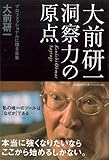
@ohmaebot ツイッターから生まれた名言集が本日2/24に発売されました。

大前研一 洞察力の原点 プロフェッショナルに贈る言葉/大前研一
¥1,575
Amazon.co.jp

------------------------------------------------------------
●「大前研一 洞察力の原点 プロフェッショナルに贈る言葉」
   日経BP ¥ 1,575

内容紹介
■本当に強くなりたい人に贈るメッセージ
大前研一氏の膨大な著作から選りすぐった名言を基にして、「プロフェッショナ
ルとは、いかにあるべきか」を定義するビジネスマンへのメッセージ 集。本当
に強くなりたいなら、ここから始めるしかない。

■答えのない時代を勝ち抜くすべてがある
今は苦しくても、これから始めることが失敗しても、自分の頭で考えて行動を起
こすという態度を貫いていれば、答えのない時代の生き方、道なき道の 歩き方
もわかってくる。ジャングルでもオフロードでも全力疾走できるようになる――。

■洞察力が発揮される条件とは何か
決してあきらめず検証を続けることによって、自分なりの結論を出す。そして自
分の立場で実行する方法を組み立て、執念深くやり遂げる。そうした一 連の動
作を絶え間なく続けることこそが「洞察力の原点」である。頭脳をフル回転させ
てロジカルに考え続けているときに、気づかなかった視点、見落 としていた事
実、不十分だった行動などを発見したときがチャンスなのである――。

【著者情報】大前研一(おおまえ・けんいち)
1943年、福岡県生まれ。早稲田大学理工学部卒業後、東京工業大学大学院原子核
工学科で修士号、マサチューセッツ工科大学大学院原子力工学科で 博士号を取
得。日立製作所原子力開発部技師を経て、1972年、マッキンゼー・アンド・カン
パニー・インク入社。日本支社長、本社ディレクター、 アジア太平洋地区会長
などを歴任。「ボーダレス経済学」と「地域国家論」を提唱し、世界の大企業や
アジア・太平洋における国家レベルのアドバイ ザーとして活躍。1994年にマッ
キンゼーを退職。1996年に起業家養成のための学校「アタッカーズ・ビジネス・
スクール」を開設、塾長に就 任。2005年に日本初の遠隔教育による経営大学院
「ビジネス・ブレークスルー(BBT)大学院大学」を設立し、学長に就任。
------------------------------------------------------------

是非お手に取ってみてください

事務局・山口スマイルくん

先日ブログでもご紹介させていただいた

「結果を出せるコミュニケーション力」を身につけるために必要な

「英語力」「マインド」「実践力」を診断できる


【実践ビジネス英語検定】

ビジネスマンに捧ぐ~ 英語学習に役立つ!PEGL事務局ブログ

皆様、チャレンジされましたか?


まだの方は▼こちらから是非診断してください!
実践ビジネス英語検定

えんぴつ☆勉強 えんぴつ☆勉強 えんぴつ☆勉強 えんぴつ☆勉強 えんぴつ☆勉強 


本日は、ビジネス・ブレークスルーの

問題解決力トレーニングプログラム・大前研一イノベーション講座から

「ビジネス脳力診断テスト」をご紹介いたします!


********


分析力、論理的思考力、発想力、情報収集力・・・。

これらの思考力を手軽にチェックできるサイトをオープンしました。
もちろんこれで全てを測れるわけではありませんが、短時間での思考力チェックや
頭の体操としてはかなり面白いサイトです。

また結果の表示方法も2種類あり、
一つは各思考力のレーダーチャート、そしてもう一つはテスト参加者全員による
ランキング表示です。

先週の金曜にオープンしたばかりのサイトでまだまだ参加者数は少ないですが、
今後その数が増えることによりランキングはどんどん変化していきます!!

新年の力試しとして是非受験してみてください。(受験時間15分程度)

→ http://www.lt-empower.com/biz_brain/

**************


英語コミュニケーション力の次は、

あなたのビジネス脳力、是非診断してみてください!


事務局・山口スマイルくん

実践ビジネス英語講座 初級コースでBusiness News in Brief
上級コースにてBusiness Book Clubを担当している狩野講師の記事が、
English Journal 2011年2月号に掲載されていますので、ご紹介いたします。

タイトルは、
めざせ、ステキ女子!あなたを変える美しい英会話術」です。

あなたの英語、きちんと相手に伝わっていますか? 
「言いたいことの半分も伝えられない」とか、
「気まずいことは言わない」なんてことはありませんか?

英語を武器にビジネスの現場で活躍中の女性たちが、
言いにくいことも知的に伝える、
ワンランク上の英会話術をレッスン形式で指南します。

会話力を磨いて、Super English Womanをめざしましょう

▼スペースアルクより抜粋▼
http://www.alc.co.jp/ej/feature01.html


内容は女性向けですが、男性ビジネスマンのみなさまも
英語の『女性的表現』のニュアンスを掴むヒントが沢山あるので
お役に立てるかと思います。

ご興味のある方は、ぜひお手に取ってみてください。

事務局・山口スマイルくん

オンライン英会話講師のCurtis講師が提供する
ニュースの英語を解説する" In the News"シリーズ
第44回の本日は"Off the Grid"です。

◆◇◆◇◆◇◆◇◆◇◆◇◆◇◆◇◆◇◆◇

In the News#44 - Off the Grid


On Nov. 16, the Daily Yomiuri reprinted “For paper peddler, a story etched in ink and dust”, a story that first appeared in the Los Angeles Times on Nov. 8.


One line in the story is “His clients relish their off-the-grid read”. The key phrase for today is “off the grid”, meaning “to have a low-profile”, “to not be very visible” or “to not be connected to the electronic world”.


During the 1960’s and 1970’s, many Americans moved out of the cities and tried creating their own farms or communes. At the time, these people referred to themselves as “hippies”. Most hippies were protesting the Vietnam War, or the increasing pressure by large corporations to eat processed fast foods, wear mass-produced clothing, and live in ever-smaller houses or apartments. In response, they wanted to live on large, open farms where they would grow their own organic foods and make their own clothing. Many of the hippies were college-educated, and had the skills to make their own alternative power generators, using wind or solar energy. Magazines like the Whole Earth Catalog and Mother Jones would print how-to articles for making these power generators, along with stories on how to grow your own food.


写真素材 PIXTA
(c) てっせい写真素材 PIXTA


These hippy communes wanted to be independent of the big coal-burning, and nuclear-powered plants, meaning that they would not be connected to those power grids. That is, they would be “off the power grids”. (A grid is a series of straight, crisscrossing lines. Most power cables follow the paths of major streets, so they have a rectangular, “grid” shape if you look at them on a map. Power companies refer to their cabling layout as “the grid”.) Initially “off the grid” meant “to be independent of the commercial power companies”.


As time passed, most communes shut down and the hippies returned to normal lives in the cities. But, there were still a few people that preferred to remain independent. Some of them became violent, or otherwise attacked specific targets, causing the news media to twist the original meaning of “off the grid” to be “under the radar”, or “unhinged”. (“Under the radar” means that someone is doing something in secret. “Unhinged” is used to talk about someone that is mentally unstable.)


In general, when someone is “off the grid”, they are “disconnected” from the rest of society. This can either mean that they do not use computers, e-mail or cell phones; or, it can mean that they are uncommunicative to their neighbors and have little social interaction.


Returning back to the original news story, the reporter wrote “His clients relish their off-the-grid read”. Here, “read” is used to refer to the act of reading stories in the newspaper. The story describes the work of Mahmoud Mohamed, a newspaper delivery man in Cairo, Egypt. And the reference to “off the grid” just means that the news printed in the newspapers is different from what people in Egypt can read from the internet. Specifically, the sentence means “Mahmoud’s customers like reading the news from a newspaper”. That is, “his clients don’t like reading the news from the internet or watching it on TV”.


Examples of these phrases are:
“I went camping last September, and I’ve been off the grid since then.”
“We tried tracing the criminal, but he seems to have dropped off the grid.”
“These extremists were off the grid, operating under the radar, until they decided to become more visible lately.”


As you read the newspapers this week, try to find more examples of “off the grid”.
http://articles.latimes.com/2010/nov/05/world/la-fg-egypt-newspaper-man-20101105


- Curtis Hoffmann

◆◇◆◇◆◇◆◇◆◇◆◇◆◇◆◇◆◇◆◇

オンライン英会話講師のCurtis講師が提供する
ニュースの英語を解説する" In the News"シリーズ
第43回の本日は"End of the Day"です。


◆◇◆◇◆◇◆◇◆◇◆◇◆◇◆◇◆◇◆◇

In the News#43 - End of the Day


On Nov. 16, the Daily Yomiuri reprinted “Making use of Jellyfish on dry land”, a story that first appeared in the Sacramento Bee on Nov. 8.


One line in the story is “At the end of the day, when you look at fluid flows, whether it's air or water or blood, they can all be described by the same equations”.


There are several similar phrases that mean “the point is”: “at the end of the day”, “the bottom line is”, “my point is” and “in summary”. The last two phrases are very straightforward. The second phrase, “the bottom line is” comes from accounting, where the “bottom line” is the last entry on a balance sheet that includes the final total profit or loss for a company. In this idiom, there are lots of details that are listed on the balance sheet, but all a CEO or an investor cares about is the size of the profit or loss for the year ? the number that is on the bottom line of the balance sheet. Therefore, “the bottom line is” can be paraphrased as “skipping all of the details, the really important point is…”


“At the end of the day” has the same meaning. We get up in the morning, take a shower, have breakfast, and then leave for work or school. During the day we have many tasks to complete and we may undergo some struggles. In the evening, we have dinner, relax in front of the TV, and talk to the rest of our family. When we go to bed “at the end of the day”, we can say that there were some good things that we accomplished, or some bad things that we learned from. Going to sleep that night is kind of a deadline for our day, so if we are going to accomplish great things, we have to do it before we go to sleep.


“At the end of the day, I made the world a better place.”
“At the end of the day, you have to ask yourself, what did I really accomplish this time?”
“We all have our troubles and difficulties, but at the end of the day, we can still say that we had fun, too.”


When we use this phrase figuratively, it takes on the meaning of, “the essence of the problem is…”, “the important point is…” or “if you compare two or more things…” This last meaning is the one the scientist in the story wants to use. This scientist is saying that the mathematic formulas that are used for modeling the flow of air, the flow of water and the flow of blood are all the same. So, it doesn’t matter what type of liquid it is that you are studying, you automatically know which formula to use.


As you read the newspapers this week, try to find more examples of “at the end of the day”.
http://www.sacbee.com/2010/11/08/3168093/making-use-of-jellyfish-on-dry.html


- Curtis Hoffmann

◆◇◆◇◆◇◆◇◆◇◆◇◆◇◆◇◆◇◆◇

オンライン英会話講師のCurtis講師が提供する
ニュースの英語を解説する" In the News"シリーズ
第42回の本日は"Tailspin"です。


◆◇◆◇◆◇◆◇◆◇◆◇◆◇◆◇◆◇◆◇

In the News#42 - Tailspin


On Nov. 10, 2010, the Japan Times ran the following story:
Skymark shares in tailspin over plan to buy A380s


The Japan Times article regards Skymark Airlines, Inc.’s, decision to buy four Airbus SAS A380 wide body super jumbo airliners as part of its plan to move from the domestic economy class market into the international travel market. Because of concerns that the company will need large amounts of investment capital to buy the planes, and that there’s a big risk that they won’t make the money back, investors decided to sell off their shares of Skymarket stock. The increase in people selling the stock in one day caused the price to drop 16%, the maximum allowable daily drop according to the Nikkei’s rules, from 943 yen to 793 yen per share.


写真素材 PIXTA
(c) taka写真素材 PIXTA

A 16% drop in the price of a company’s stock in one day is a huge change. While newspapers casually throw around words like “plunge”, “plummet” and “drop” when prices only change 1% or 2%, these words are really more applicable to a 16% decrease. So, normally, the headline would read “Skymark shares plunge over plan to buy A380s”. We have to ask “why doesn’t the Japan Times use “plunge” or “plummet” this time?”


Actually, “plummet” would be a good choice for a wordplay for an airlines company. “Plummet” means “to fall like a bird that is out of control”. If a bird hits a window at the top of a building, it will be knocked unconscious and will plummet to the ground. An airplane that loses its wings will plummet to the ground very quickly with no control, so we could say that an airlines company’s stock is plummeting downward.


But, if we look at smaller airplanes, like the Piper Cub, if there is not enough air movement under the wings, the plane can “stall”. This stall can result in the plane falling straight down, with a little bit of spin along the axis of the body of the plane. That is, the plane is following a corkscrew path around the tail. Tailspins are difficult to break out of, but it is possible for a pilot to recover and get the plane flying properly again. If the plane does not recover from the tailspin, it will crash.


Based on the definition of “tailspin” to mean “out of control and falling”, or “to fail to behave normally and crash into the ground”, it is clear that the Japan Times editors are using it as a wordplay for an airline company whose stock prices are plummeting.


Other examples:

“The company went into a tailspin after changing their President 3 times in one year.”
“If a country changes its Prime Minister 4 times in 6 months, they’re in a tailspin.”
“We’ve been in a tailspin since merging with our competitor, but I think we can pull out of it in the next few months.”


As you read the newspapers this week, try to find more examples of “plunge”, “plummet” and “tailspin”.

http://search.japantimes.co.jp/cgi-bin/nb20101110n2.html
http://en.wikipedia.org/wiki/Spin_(flight )


- Curtis Hoffmann

◆◇◆◇◆◇◆◇◆◇◆◇◆◇◆◇◆◇◆◇