
The Meaning of Everything:すべての意味は?
 by Robert McMillan
人生の目的とはなんでしょうか?
宇宙が存在する目的とは?
英語では答えは簡単:数字の42が答えです。
もちろん、それは冗談。
Douglas Adamsの陽気で滑稽、しかも影響力のすごい本、The Hitchhiker’s Guide to the Galaxy、から取ったものです。ストーリーの中では、スーパーコンピューターは「人生」と「宇宙」そして「すべて」の意味を見つけるのが仕事でした。そのスーパーコンピューターは750万年をかけて答えを導き出しました。そして、答えは42です。そんなの役に立たないよとコンピューターに言うと、質問がかなり曖昧だから仕方ないよと答えました。「42」よりももっと良い答えにたどりつける質問を探すためには、新しいスーパーコンピューターを作ることが必要でしょうね。

数字の42は色々な大衆文化に(例:スパイダーマンの映画)現れていますし、プログラミング言語のパイソンや、時にはおふざけ好きなオタクの間でジョークとして使われます。色んなところに蔓延しているようです。Googleに英語で聞いてみました。“What is the answer to everything?”と。AIの答えは「42」でした。
このような人気のある表現は、各言語の文化に深く滲み込んでおり、その言葉で育っていない人には「一体なんだ?」とわかりにくいです。 Social mediaでは、最近このような表現を多く使っています。昨年、子供たちがいきなり自分たちで “Six-seven!” と叫び始め、そのうち大笑いを始めました。
周りの大人は「は?」
これはただの「意味のない表現」で、ただ笑うために使うものなのだと判明しました。若者はこんな言葉の音におかしさを見出しているのです。しかもこの言葉はDictionary.comでは、 「2025年の言葉」にもなっているのです。
日本にも文化に深く滲み込んだ言葉や表現があるのは当たり前です。私が日本に住んでいた時には、言葉を縮めたり、合わせたりして、若い人たちが創った奇抜な新しい用語を楽しんだものです。「気持ち悪い」の代わりに「きもい」が出て来た頃です。日本でも若者がそんな言葉を使って面白がっていました。日本の人たちが自分たちを有名な芸能人と比べて冗談を言っている時には、見当もつかないことが多かったです。芸能人については余りよく知らなかったですから。
外国に行くとそんなことがよく起こります。周りの人が面白がって使っている言葉がチンプンカンプンな時が。でもそんなことで外国に行くのをためらわないで下さい。その言葉がどう使われているかで、意味の大部分は理解することが出来ますから。私も最初は「きもい」が「気持ち悪い」という意味だとは知りませんでした。でも、使う日本人が吐き捨てるように使う「きもい」は明らかに否定的な表現だとすぐわかりました。同様に、数字の42も、英語で“the meaning of everything”と使われた時には普通みんな、ニヤリとするか表情かクスッと笑うかです。
とても重要なこと:外国語を学ぶ時には、周りの人がその表現にどう反応しているかを観察すること。「ははぁ」こんなふうに使うんだなと学んだら、同じように試して見て下さい。そして周りの人の反応を見ること。私が日本で「美味じゃ」を学んだ時、それをレストランで使ってみました。ちょっと笑ってもらえましたよ。
失敗するのも恐れないこと。失敗は外国語を学ぶには最高の方法です。日本で知ったかぶりで「ろばた焼き」についての話をしたことをおぼえています。しかし、母音を間違えてしまいました。「ろばと焼き」と言ってしまったのです。そう言うと偶然私の名前になります。ちょっと困りますよね、焼かれても。その場にいた日本人と仲良くなれたのを覚えています。
最近、NHKドラマのKanbeをNetflixで、カナダ絡みています。そこで学んだ新しい表現を日本の古い友だちに試したくて仕方ありません。「お久しゅうございます。」と。そして「そろそろ謀反しよう!」とも言ってみたいです。
「お久しゅうございます。」が男性でも女性でも使えるかどうかは知りません、そして実はそんなことはどうでもいいのです。古い友だちの反応が見たいだけですから。
多分、Douglas Adamsが42に出会ったのはそんなことだったかも知れません。恐らく、「すべて」の意味とは単なる冗談か、私たちが自分で勝手に決める何かだったかも。もうそうなら、私たちはほんの短い時間の命をもらって、周りにもそんな人がいっぱいいるこの地球にいる今、よし!と。その短い時間、言葉で楽しむのもいいのでは。
カナダクラブの仲間入りしませんか?大切な英語表現を学んで、楽しいことしましょう。
カナダクラブでは「学ぶこと」が楽しいです。面白いな〜と思っている間に英語がわかるようになりますよ。
_____________________________
What is the purpose of life? The meaning of the universe?
In English, it’s simple: the number 42.
That is a joke, of course, from Douglas Adams’ hilarious, influential book The Hitchhiker’s Guide to the Galaxy. In the story, a supercomputer is tasked to find the meaning for “Life, the Universe and Everything,” and after 7.5 million years, comes up with the answer: 42. When the computer is told that this is not very helpful, it argues that the question was rather vague. To find a better question for the answer “42,” it will need to build a new supercomputer.
The number 42 pops up in popular culture (e.g. a Spider-Man movie), the Python programming language, and sometimes as a joke amongst playful geeks. It is pervasive. I just asked Google, “What is the answer to everything?” in English. The AI response: 42.
Popular expressions such as these are steeped in culture and can be confusing for non-native speakers. Social media drives a lot of these expressions lately. Last year, children began spontaneously shouting “Six-seven!” and breaking into laughter, confusing adults. Turns out this was just a nonsensical expression, used for a laugh. Young people having fun with the sound of words. Yet this became the word of the year for 2025 at Dictionary.com.
It’s no surprise that the Japanese language also has words and expressions steeped in culture. When I lived in Japan, I often enjoyed the wacky new terms young people created by shortening or combining words. I was there when kimoi popped up for kimochi warui (gross). Again, young people having fun with words. I was often clueless when people started comparing each other to famous celebrities though. I just do not know many of them.
Don’t let not knowing discourage you when you are abroad. You can learn a lot about a word by the way it is used. At first, I didn’t know kimoi meant kimochi warui. But it was obviously a negative expression by the way the user spit it out. Similarly, the number 42, used in English as “the meaning of everything,” is usually followed by a smile or a chuckle.
That is the important thing: when you learn a foreign language, watch the way people react to expressions. Try to use what you have learned and watch the reaction. I remember learning bimi ja for delicious and using it at a restaurant. That earned some laughter.
And don’t be afraid to fail. That can be a great way to learn. I recall telling a story about a robata yaki restaurant, but I made a vowel mistake and said roba-to yaki, which happens to be my name. That had an unintended consequence – it drew the people I was with closer to me.
Recently I have been watching the NHK drama Kanbei on Netflix here in Canada, and I can’t wait to try the new expressions I have learned when I meet my old Japanese acquaintances: Ohishashu gozaimasu (Long time no see) and then Soro soro muhon shiyou! (Let’s revolt!).
I have no idea whether ohishashu gozaimasu is gender-specific or not, and I really don’t care. I just want to see my old buddy’s reactions.
Maybe that is what Douglas Adams meant about 42. Perhaps the meaning of everything is just a joke, or something we decide by ourselves. In that case, while we are here on Earth for a short time surrounded by a whole bunch of people, many of whom we did not choose to be here with, we may as well try to have fun.
Join us at Canada Club to learn essential English and have fun.
Contact Robert and Machiko.
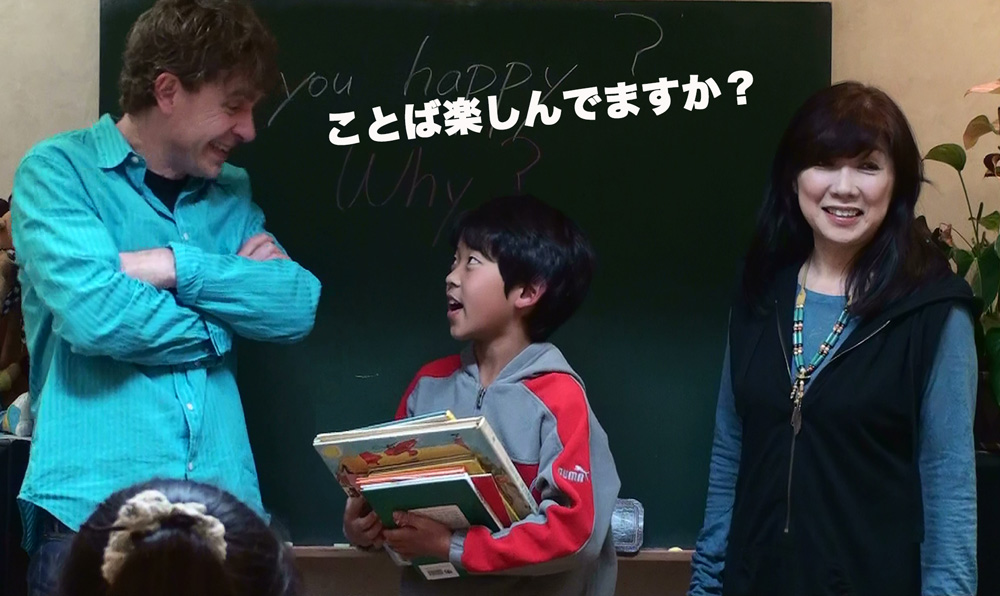
Learning is fun.
Robert McMillan
大澤眞知子
《カナダクラブ》

New! 「カナダ高校留学の実態と変遷1995-2026 」eBook
カナダクラブ カナダから日本の生徒に
Be Bilingual 日本で育つ子供へのBilingual 教育
日本の生徒のための本格的英語学習サイト UX English
Podcast [カナダにいらっしゃい!]