
In an era where individuality is prized above mass production, personalized jewelry has become one of the most meaningful ways people express identity, commemorate memories, and transform ordinary objects into treasured keepsakes. At the heart of this transformation lies a deceptively simple yet marvelously sophisticated piece of technology: the inside ring engraving machine. These devices have redefined how inscriptions, textures, and custom designs are applied to metal surfaces, turning jewelry into deeply personalized works of art.
Unlike traditional hand engraving—an artisanal practice requiring years of training and near-perfect precision—modern ring engraving machines blend mechanical accuracy with digital flexibility. At its core, an engraving machine is designed to precisely manipulate a tool bit over the surface of a ring to remove material in controlled patterns. But it is the convergence of software intelligence and hardware innovation that truly drives personalization.
The journey begins with the digital design phase. Users or jewelers input text, symbols, or even intricate graphics into specialized software. This might be a loved one’s name, a date, a phrase in a unique font, or a tiny illustrative motif. Design software translates these elements into a set of instructions the machine can interpret—often converting them into vector paths that define the exact trajectory the engraving tool will follow.
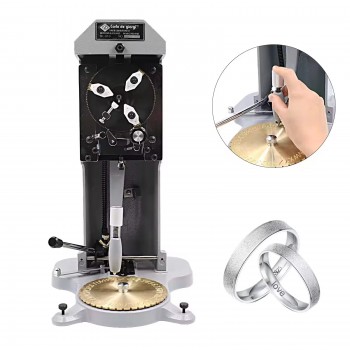
Once programmed, the ring engraving machine takes center stage. Two principal types dominate the field: laser engravers and CNC (Computer Numerical Control) machines. Laser engravers utilize high-intensity beams of light to vaporize surface material without physical contact. Their precision allows for ultra-fine details, making them ideal for delicate scripts or micro-designs. CNC machines, on the other hand, rely on physical cutting tools that move along X, Y, and sometimes Z axes, carving into the metal with mechanical force. CNC engraving is particularly well-suited for deeper inscriptions or textured finishes that create a tactile feel.
Irrespective of the technology, one defining strength of engraving machines is consistency. Where human hands might fatigue or wobble, machines repeat patterns with unwavering fidelity. This consistency makes it feasible to produce batches of personalized rings with identical quality or, conversely, to fulfill one-off bespoke orders without additional cost penalties.
Moreover, many modern engraving systems incorporate real-time feedback controls. Sensors monitor tool position, pressure, or laser intensity, automatically adjusting parameters to account for material hardness, surface irregularities, or design complexity. This intelligent feedback loop ensures each completed piece meets design expectations and reduces the likelihood of costly mistakes.
Perhaps most importantly, ring engraving machines have democratized personalization. What once required a master engraver’s touch can now be accomplished in minutes by a jeweler, boutique owner, or even an enterprising gift shop. Customers can preview designs on screen, tweak fonts or placement, and collaborate directly on the creative process.
In essence, ring engraving machines act as bridges between human sentiment and mechanical precision. They empower creators and consumers alike to infuse everyday jewelry with personal meaning, ensuring that every engraved ring carries not just metal and inscription—but a story.
