
A small lapidary cabbing machine is an essential tool for gemstone enthusiasts and jewelry makers who enjoy shaping and polishing stones. While most cabbing machines are designed to work well straight out of the box, many hobbyists and professionals discover that a few simple DIY modifications can significantly improve efficiency, comfort, and overall results. With a bit of creativity and basic workshop skills, you can customize your machine to better suit your workflow.
One of the most common modifications involves improving the water delivery system. Water plays a crucial role in cooling the grinding wheels and reducing dust during the cabbing process. Some small machines come with basic drip systems that do not distribute water evenly. By installing adjustable tubing, needle valves, or small flow regulators, you can better control how water reaches each wheel. This ensures consistent cooling and prevents unnecessary water waste, while also keeping your workspace cleaner.
Lighting is another area where a simple upgrade can make a big difference. Precision is vital when shaping gemstones, and poor lighting can lead to uneven surfaces or missed details. Adding an adjustable LED lamp near the cabbing wheels helps illuminate the stone clearly from different angles. Many lapidary artists mount flexible gooseneck lights directly onto the machine frame or workbench, allowing them to position the light exactly where it is needed.
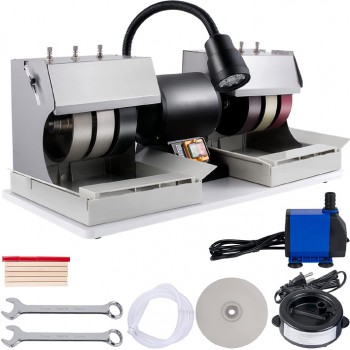
Another useful DIY improvement is upgrading the splash guard system. During grinding and polishing, water mixed with fine stone particles often splashes around the machine. By adding extended acrylic or plastic shields, you can contain most of the spray and keep surrounding surfaces dry. Some users even build simple removable panels that attach to the machine using magnets or brackets. This modification helps maintain a cleaner and more organized workspace.
Comfort is also important during long cabbing sessions. Many hobbyists modify the height or positioning of their machine to reduce strain on the back and shoulders. Placing the small lapidary cabbing machine on a custom-built stand or adjustable platform can greatly improve ergonomics. Adding a padded armrest or wrist support near the working area also helps stabilize your hands while shaping delicate stones, resulting in smoother and more accurate cabochons.
Another popular modification involves improving wheel organization and storage. Small lapidary workshops often have limited space, and grinding wheels or polishing pads can quickly become cluttered. Installing a simple rack or holder near the machine keeps spare wheels organized and within easy reach. Some users even label their wheels with grit sizes to avoid confusion during multi-step polishing processes.
Finally, consider adding a small debris filtration system to your water tray. Over time, stone particles accumulate in the reservoir and can clog pumps or reduce water flow. A simple mesh filter, sponge layer, or removable sediment tray can help capture debris and make cleaning much easier.
DIY modifications do not need to be complex or expensive to be effective. By improving water flow, lighting, splash control, comfort, and organization, you can transform a basic small lapidary cabbing machine into a highly efficient and personalized tool. These simple upgrades allow you to focus more on creativity and craftsmanship, making the cabbing process both more enjoyable and more productive.
