
A coating rarely fails for just one reason.
When paint blisters on structural steel, or a concrete floor starts peeling long before anyone expected it to, people often blame the product first. Sometimes that is fair. More often, the coating is only the final layer in a chain of decisions, conditions, and shortcuts. If something in that chain was off, the finish was already in trouble before the first coat cured.
That is especially true on steel and concrete, because both substrates are unforgiving in different ways. Steel may look solid and clean while still carrying rust, mill scale, salts, or old contamination that weakens adhesion. Concrete can look dry on the surface while still moving moisture from below. Add Florida heat, humidity, UV exposure, and storms, and you have an environment that exposes weak prep work fast.
Anyone involved in commercial painting Orlando FL or industrial painting Orlando FL projects has seen this play out. A surface looks acceptable from ten feet away, the coating goes on, the project turns over, and then months later you see bubbling, edge lift, chalking, rust bleed, or full sections peeling. It feels sudden, but the real problem started earlier.
Most failures begin before the coating is opened
The coating itself gets the attention because it is visible. Surface preparation is less visible, but it decides most of the outcome.
That sounds simple, yet it is where many jobs drift off course. Schedules tighten. Access gets difficult. Weather windows shrink. An owner wants a shutdown minimized. A crew is pushed to move from cleaning to priming faster than conditions really allow. None of that changes the physics of adhesion.
A paint film needs a suitable surface to bond to. On steel, that usually means removing rust, failing paint, scale, and buildup, then creating a clean profile the coating can grip. On concrete, it means dealing with laitance, dust, contaminants, and moisture conditions before any coating is applied. If that prep is incomplete, the finish might still look fine on day one. The failure simply gets delayed.
This is why surface preparation for coatings is not just a line item in a scope. It is the backbone of the whole system. A coating can only be as reliable as the surface beneath it.
Why blisters form
Blistering is one of the most misunderstood coating defects because the bubbles are obvious, but the cause is not always visible.
A blister forms when pressure builds under or within the coating film. That pressure can come from trapped moisture, vapor movement, heat, contamination, or poor intercoat bonding. Once pressure exceeds the strength of the bond, the film lifts.
On steel, blistering often shows up where corrosion was not fully removed, or where contaminants remained on the surface before priming. A steel member may look clean after hand cleaning, but still hold residues in pits, edges, or weld areas. If moisture gets to those points, corrosion starts under the film Southern Sandblasting and Painting and the coating begins to dome upward.
On concrete, moisture is the usual suspect. Concrete is not just a hard slab. It is porous and dynamic. Water vapor can move through it even when the top looks dry. If a coating blocks that movement, pressure can build below the film. In humid regions like Central Florida, that risk deserves respect. A beautiful finish can fail because the slab was not actually ready to accept a low-permeability coating.
Heat also plays a role. Dark coatings on sun-exposed surfaces can get hot. If a coating was applied over residual moisture, or over a substrate outside the proper window, thermal cycling can magnify the weakness. A blister that starts small in one hot season may spread noticeably after repeated exposure.
I have seen this pattern on exterior steel and on concrete service areas alike. The coating gets blamed for “not holding up,” but when you look close, the film is often telling you exactly what happened. It is saying something underneath it was still active.
Peeling is usually an adhesion story
Peeling feels different from blistering because it looks more dramatic. Sheets or flakes lift off, edges curl, and the separation line is easy to spot. But the same truth applies. The visible defect is only the final chapter.
Adhesion can fail in a few ways. The coating may not bond well to the substrate. One coat may not bond to the coat below it. Or an existing layer may have already lost integrity, causing every new layer above it to come loose with it. That last scenario is common on maintenance work, especially when an old system has uneven weathering or hidden incompatibilities.
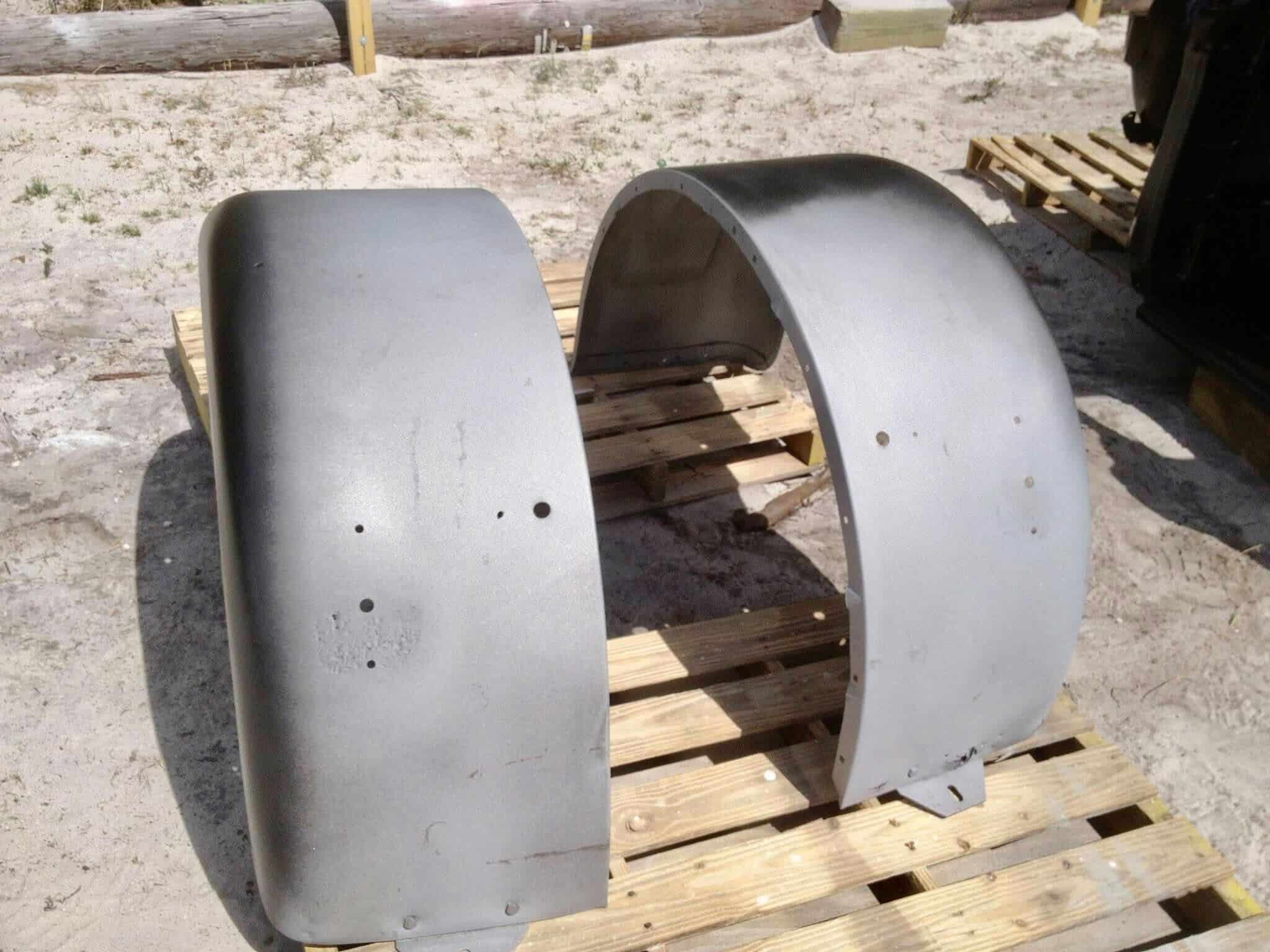
Steel is especially vulnerable where rust remains tight enough to stay attached through prep, yet unstable enough to keep reacting under the new coating. Old edges, corners, bolts, and welds are frequent trouble spots. Those are the areas where coatings go on thinner, where blasting or cleaning can be harder to execute uniformly, and where moisture intrusion likes to begin.
Concrete peeling often comes back to one of three conditions: dust left on the surface, contamination not fully removed, or moisture pressure from below. A slab in an active commercial or municipal environment can hold oils, residues, or embedded dirt even after it has been swept and washed. If those materials stay in place, the coating bonds to contamination rather than to sound concrete. It may look acceptable at first, then release under traffic, cleaning, temperature change, or moisture movement.
That is why a seasoned sandblasting and painting contractor Orlando property owners trust will spend so much time talking about prep. It is not sales language. It is self-defense against predictable failure.
Steel has its own traps
Steel gives a false sense of certainty because it appears straightforward. Clean it, prime it, paint it. In practice, steel surfaces vary wildly.
Some pieces carry old coatings with several maintenance cycles on top of one another. Some have rust creeping from seams and bolts. Others have mill scale, fabrication residues, or weathering patterns that are easy to miss until blasting begins. Industrial and commercial sites add another layer, because airborne contamination, process exposure, and service conditions can change from one area to the next.
Abrasive blasting Central Florida contractors perform is often what reveals the real condition. Once rust, loose paint, and buildup come off, you can finally see whether the substrate is sound, pitted, or still contaminated. That is one reason blasting matters so much. It does not just clean. It gives the project an honest starting point.
For steel, coating failure often traces back to these conditions:
- residual rust or scale left in pits, seams, or complex geometry surface contamination that remained after cleaning inadequate profile for the coating system being applied primer or topcoat applied outside suitable environmental conditions old layers beneath the new coating that were already unsound
None of these are exotic. They are common jobsite realities. The challenge is that they do not always show up right away. A steel beam near a door opening may stay intact for months, then begin failing at the lower flange where moisture lingers. A tank or railing may look excellent after turnover, then show localized blisters where prep could not fully reach inside tight crevices.
This is where steel coating maintenance becomes practical rather than theoretical. A good maintenance approach catches local breakdown early, before underfilm corrosion spreads and turns a manageable repair into full recoating.
Concrete fails differently, but just as predictably
Concrete is often treated as simpler than steel because it does not rust. That assumption causes expensive mistakes.
Concrete has pores, capillaries, and internal moisture behavior that coatings must respect. It can hold contaminants, release vapor, and change condition across the same slab. One section near an exterior opening may behave differently from a section in the middle of the building. A vertical wall can perform differently from a horizontal traffic surface, even with a similar coating system.
The most frustrating failures on concrete are the ones that look random but are not. A floor may peel in tire paths, around drains, near joints, or in sun-warmed areas. A wall coating may release in patches where moisture migration is greatest. These patterns are clues.
A common problem is assuming “dry enough” based on appearance. Concrete can look ready while still carrying enough moisture to affect adhesion. Another issue is weak or dusty surface material. If the coating sits on a weak top layer rather than sound concrete, it is only a matter of time before that layer lets go.
On commercial and municipal properties in Central Florida, exterior exposure adds another challenge. Heat, humidity, and storms do not create defects by themselves, but they punish bad prep quickly. If a coating system was selected or applied without respect for those conditions, the slab or wall usually exposes the mistake ahead of schedule.
Weather can turn a small mistake into an early failure
Florida conditions are hard on exposed finishes. That should not be controversial. Heat stresses films, UV degrades surfaces over time, humidity complicates drying and curing, and storms test weak edges and detailing.
The important nuance is that weather usually accelerates an existing weakness. It does not invent one out of nowhere.
A coating that bonded well to a well-prepared substrate can perform capably in tough conditions. A coating applied over marginal prep, trapped moisture, or unstable old material may fail quickly once weather cycles begin. The same surface that looks fine during a short calm period can start blistering after repeated wet-dry cycles, hot afternoons, and storm exposure.
That is one reason local judgment matters. Teams handling protective coatings Central Florida facilities rely on need to think beyond the label on the can. They need to read conditions on site, understand exposure, and know when a surface is not ready yet. Experience helps here, because many failures come from trying to make the schedule win an argument against the environment.
The environment wins.
Failure often starts at details, not broad open areas
If you want to predict where a coating will fail first, do not start by staring at the middle of a large flat surface. Look at the difficult details.
On steel, check edges, bolts, welds, cutouts, handrails, joints, and spots where water can sit. On concrete, look near cracks, joints, drains, transitions, and any place contamination or moisture might concentrate. Those zones are where prep is hardest to standardize and where coating thickness often varies.
This matters on real project types across Central Florida. Water tanks, airports, pipelines, city infrastructure, and high-traffic commercial properties all contain awkward geometry and service conditions. A wide open panel may blast and coat beautifully. A tight bracket, underside flange, or damp transition zone is where the weak link appears.
I remember one recurring pattern on maintenance work in humid climates: the owner notices the failure only when large visible areas start letting go, but the first signs had usually been present at details for a while. Slight rust staining at a bolt. Small lifting at a joint. Tiny bubbles in a low area. Those early signals are worth taking seriously because they often point to a broader system issue.
Recoating over a problem rarely solves the problem
There is a strong temptation to “freshen up” a failing surface with another coat. Sometimes that is appropriate. Often it is not.
A new coat cannot rescue an unstable substrate. If the old film has poor adhesion, the new material simply rides on top of weakness. If moisture is moving through concrete, another layer may trap pressure even more aggressively. If corrosion is active under a steel coating, covering it can delay visibility while allowing the problem to continue.
This is one of the harder conversations in commercial painting Orlando FL work, because the least disruptive option is not always the most durable one. Owners understandably want to limit downtime and cost. Contractors want to solve the problem without expanding scope unnecessarily. The right answer depends on honest condition assessment.
Sometimes the best value is localized repair and targeted recoating. Sometimes full removal and fresh prep is the only responsible path. A reliable contractor should be able to explain that distinction clearly, without overselling either direction.
The practical signs that point to root cause
When a coating starts failing, the pattern tells you more than the color of the paint ever will. A good inspection asks where the defect started, how it spreads, and what the substrate conditions suggest.
Here are a few field clues that often matter:
- isolated rust bleed on steel can indicate incomplete prep or early breakdown at a detail broad peeling between coats can suggest intercoat adhesion trouble or recoating over unsound layers circular or dome-shaped blisters often point toward trapped moisture or underfilm activity concrete coating release near joints or damp zones can indicate moisture movement repeated failure in the same location usually means the underlying condition was never corrected
These clues do not replace testing or deeper evaluation, but they help frame the conversation. Failure analysis is not guesswork when you read the surface carefully.
What better outcomes usually have in common
The best performing jobs are not always the most expensive ones. They are usually the most disciplined ones.
That means realistic scheduling. It means matching the prep method to the substrate and condition. It means accepting that abrasive blasting, cleaning, priming, sealing, and painting are connected operations, not separate boxes to check. It means not rushing a surface because access equipment is expensive or weather is closing in.
For a company handling sandblasting Orlando FL projects or industrial painting Orlando FL work, this discipline is what separates a finish that lasts from one that becomes a callback. The same principle applies whether the surface is structural steel, concrete infrastructure, or industrial material at a municipal or commercial site.
The projects that hold up tend to share a few habits. The scope deals honestly with existing coatings. Surface prep is treated as a skilled operation, not just labor. Environmental conditions are watched instead of ignored. And everyone involved understands that coating performance starts long before the topcoat gives the surface its final color.
Why owners should care before failure becomes visible
Once blistering or peeling is obvious, repair costs usually rise. On steel, corrosion may already be advancing under surrounding areas that still look intact. On concrete, moisture-related failure can continue beneath adjacent sections. What looks like a cosmetic issue may actually be a signal that the bond has been compromised over a larger footprint.
That is why periodic review matters, especially for exposed assets and hard-working facilities. City infrastructure, airport areas, industrial service zones, and commercial properties do not get gentler with age. If protective systems are expected to do their job, they need attention before widespread breakdown arrives.
This does not mean every blemish calls for panic. Coatings age. Touch-ups happen. But repeated localized failures, recurring moisture-related defects, or rust returning through recent work are signs worth investigating promptly.
A thoughtful maintenance plan is often cheaper than repeated reactive repairs. That is the practical side of steel coating maintenance. It is not just preserving appearance. It is limiting substrate damage, controlling future scope, and getting a fair return on the original coating investment.
The real lesson behind early coating failure
When coatings fail early, the story is usually not “bad paint.” The story is incomplete preparation, hidden moisture, incompatible layers, difficult details, or environmental conditions that were ignored or underestimated.
Steel and concrete each demand respect in different ways. Steel punishes weak prep and hidden corrosion. Concrete punishes assumptions about dryness and cleanliness. Central Florida weather speeds up the lesson.
That is why experienced contractors focus so hard on the unglamorous parts of the job. Surface preparation for coatings, proper removal of rust and failing material, honest assessment of existing conditions, and careful timing of application are what make protective coatings Central Florida owners depend on actually perform.
A good finish always looks smooth and simple after the fact. Getting there rarely is.
Southern Sandblasting & Painting LLC
430 Fairvilla Rd, Suite B
Orlando, FL 32808
Phone: (407) 409-1158
Website: https://southernsandblastingandpainting.com/
Southern Sandblasting & Painting LLC is a sandblasting and painting contractor in Orlando, Florida. The company provides sandblasting and abrasive blasting, commercial painting and industrial painting for Orlando and nearby Central Florida communities.