
Measuring Matter!!!
Matter = anything that has mass and takes up space (volume)
Volume
 measure of how much space an object takes up.
common measuments: cm³, m³, km³, mL, L
 cm³ = mL
How to find...
Regular Shaped Object (rectangle)
use a formula.

ex) v=lxwxh
v=3cmx5cmx4cm
v=60cm³
Liquids
use a glassware.

-graduated cylinder
Irregular Shaped Objects
use principal of displacement.
Vobject = Vobject + water - Vwater original
Mass
a measure of how much matter an object contains.
common measurements: mg, g, kg, ton
How to find
use scale.
Weight
a direct measurement of the force(pull) of gravity on an object.
common measurement: N (newton)
How to find
use a formula.
Fg = Mg
(Force of gravity = Mass×Gravity)
gravity of Earth = 9.81m/s²
Density
mass per unit volume.
(how much mass something as compared to its volume.)
common measurements: g/mL, kg/L, kg/m³, g/cm³
How to find
use a formula.
D=m/v
(Density = Mass/Volume)
Buoyancy
an upward force on an object in a fluid(liquid or gas).
common measurement: N
How to find
use Archimedes principle.
FB = DlVlg
(Force of buoyancy = Displaced liquid×Volume of liquid×Gravity)
Fg of displaced liquid = FB
floating of submersed objects
Positive Buoyancy
the tendency of an object to rise in a fluid becuase the object weighs less than the fluid it displaces
Negative Buoyancy
the tendency of an object to sink in a fluid becuase the object weighs more than the fluid it displaces
Neutral Buoyancy
the tendency of an object to remain level in a fluid becuase the object weighs the same as the fluid it displaces
Why things float
because things that are less dense float on things that are more dense
If solid is floating in liquid, we can calculate % of submersion.
%s = Ds/Dl×100
(% of sumersion = Density of solid/Density of liquid×100)
By the way, “Why does a lump of clay sink in water, but float when it is a different shape like a boat”
That's because the inside of a boat is filled with air which is less dense than water and it displaces water, and the average density of air and clay will be less than water.
Our Clay Boat

Other Groups' Clay Boats

Experiment "Liquids Can Be Thick or Thin"
On May 11th, we did an experiment about flow rate and viscosity
Question: Does temperature affect the viscosity of oil? If so, how?
To find out the answer for this question, we used oil, a plastic cup with a hole in the bottom, a beaker, a thin beaker, a retort stand with a ring clamp, a stopwatch, a thermometer, cold water, and a hot plate.

How did we do that experiment
 We poured more than 60ml oil in the thin beaker.
 We poured it into the cup by covering the hole in the cup with a finger, and removed the finger quickly so that oil can start timing.
 As we removed the finger, we timed how long does it take for oil to reach 50ml.
 We put the beaker with oil in cold water and waited for the temperature of oil to reach colder than 10℃.

 We repeated 2&3 with cold oil.
 We made warm oil and repeated 2&3 again.

Results: The temperature affects the viscosity of oil. As the temperature of oil increases, the viscosity of oil decreases. (As the temperature of oil increases, the flow rate of oil increases.)
FUN! FUN! Non-Newtonian Fluids!!!
Today, we'll write about the class on ~April.22nd~ 
Fluid- Substances that take up space (liquids and gases
 that flow).
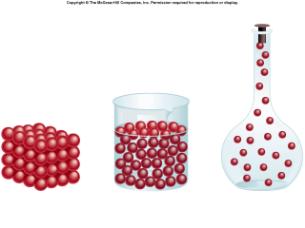
Particle Theory- A model to help us understand the differences between fluids and solids. Also it aids in understanding and predictiong fluid behavior.
 All matter is composed of particles.
Particles are in constant motion.
There are forces of attraction among particles.
Flow rate- The speed that a fluid moves in a given amount of time.
Viscosity- The physical property of a liquid that limits its ability to flow.
 low viscosity = fast-flowing (ex:water)
high viscosity = low-flowing (ex:honey)
Non-Newtonian- A fluid that is made up of two different phases and does not conform to the rules of proportionally of a Newtonian fluid. When we put pressure onto it, it will cause more noncrystalline structures to form solid. (The fluid we used was made up of potato starch, water, and food color.)
 AN EXPERIMENT IN LAB
