
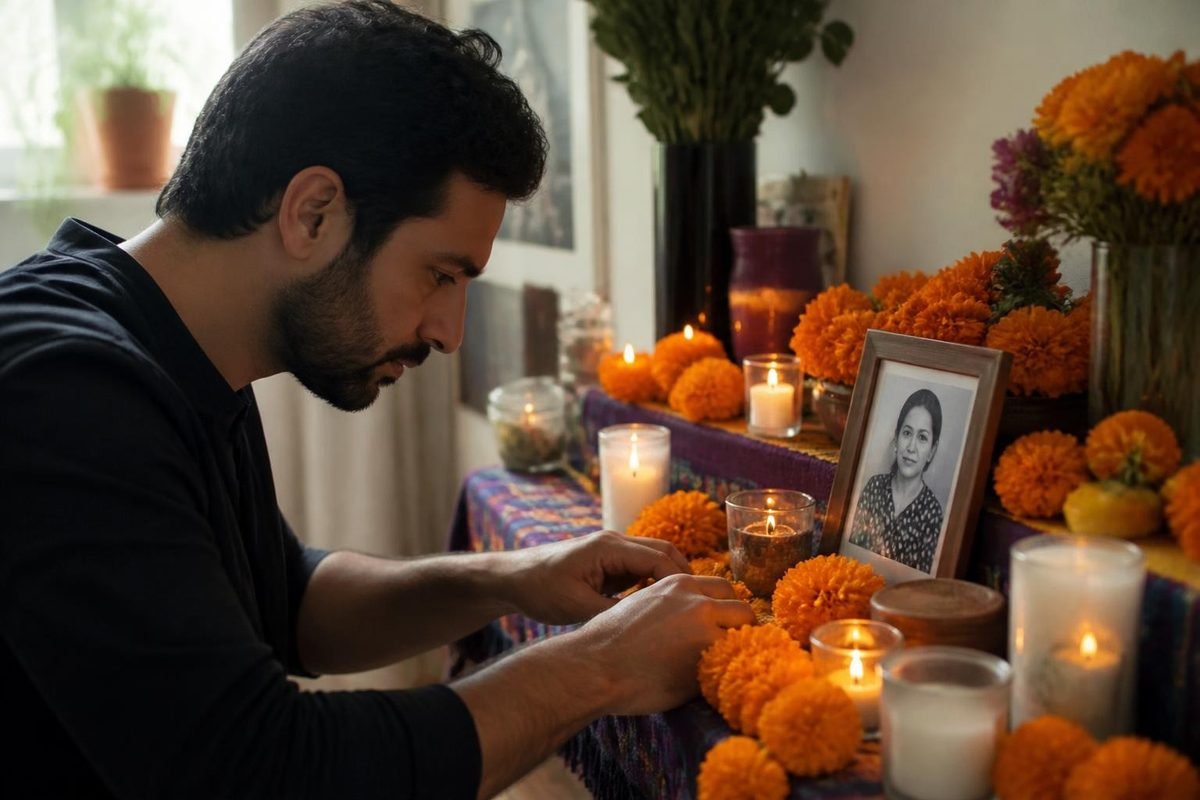
In paintings of remembrance rituals, marigolds can represent an offering to the dead and the continuing bond between the living and those they remember. Their meaning depends on the tradition and the scene, but their bright petals often make memory visible.
Flowers as a way to remember
A painted marigold can show more than a flower placed beside a photograph or grave. It can record an action: someone has chosen the blooms, carried them to a meaningful place, and arranged them with care. In a scene of remembrance, that work may be as important as the flower itself.
The color draws attention. Orange and yellow marigolds can stand out against a dark background, a white cloth, or the muted stone of a grave. A painter may use that contrast to lead the eye toward an offering or a portrait of someone who has died. The flower gives the viewer a place to pause.
It is worth looking at the whole painting before settling on a meaning. A loose bloom in a hand suggests a different moment from a garland hung above a shrine. The people, objects, and setting help explain what the flowers are doing there.
Marigolds in a Day of the Dead scene
In paintings of Mexican Day of the Dead observances, marigolds often appear on ofrendas, or altars, alongside photographs, candles, food, and other offerings. The flowers are associated with welcoming and honoring the dead. Their color and scent are traditionally understood to help guide spirits back to the places where they are remembered.
A painting may show petals scattered along a path, whole flowers gathered in vases, or garlands framing an altar. These details can suggest both welcome and preparation. They also show remembrance as something shared by a family or community, rather than a feeling held by one person alone.
Look for details that place the flowers within the ritual:
- A portrait: Flowers near a photograph can draw attention to the person being honored. A path of petals: The arrangement may refer to the welcome offered to returning spirits. Food and candles: These can show that the marigolds are part of a larger offering.
Marigolds also appear in other traditions and settings, so the presence of the flower alone does not establish that a painting depicts Day of the Dead. An inscription, the setting, or information from the artist may help identify the ritual.
Questions about marigolds in remembrance art
Do marigolds always represent death?
No. Marigolds are used in celebrations and ceremonies as well as in remembrance. Their meaning in a painting comes from the scene and its cultural context.
Why might an artist paint so many petals?
A carpet or trail of petals can show the scale of an offering and guide the viewer through the scene. In a Day of the Dead setting, it may also refer to guiding spirits.
Can a marigold represent more than grief?
Yes. Beside signs of loss, it may suggest affection, welcome, or the effort of keeping someone present in memory. The surrounding details help make that meaning clear.
A good companion read: check this out