
Wood chips are an important biomass raw material used in energy production, wood pellet manufacturing, animal bedding, briquetting, and various industrial applications. However, freshly produced wood chips often contain a considerable amount of moisture. If the moisture level is too high, it can reduce fuel efficiency, increase transportation costs, affect storage stability, and create difficulties in downstream processing.
For this reason, wood chip drying is an essential step for many biomass processing projects. A properly designed drying system can remove excess moisture efficiently while maintaining stable material flow and preparing the wood chips for their next application.
The choice of drying technology depends on several factors, including the initial moisture content, target moisture content, chip size, processing capacity, heat source, and final product requirements. For industrial applications, a wood chips dryer machine can be integrated with feeding, conveying, heating, dust collection, and control systems to create a continuous and efficient drying process.
Why Wood Chips Need to Be Dried
Wood chips naturally contain moisture because trees absorb water during growth. Even after harvesting and chipping, a substantial amount of water may remain in the material.
The moisture level of wood chips can vary significantly depending on the wood species, harvesting season, storage conditions, chip size, and whether the chips come from fresh logs, branches, sawmill residues, or recycled wood.
Excessive moisture can create several problems.
For biomass fuel applications, wet wood chips have a lower effective heating value because part of the combustion energy is consumed to evaporate the water. This means more fuel may be needed to produce the same useful amount of heat.
For pellet production, excessive moisture can interfere with grinding and pelletizing. Wet particles may cause unstable feeding, poor compression, and inconsistent pellet formation.
For storage, high moisture may increase the risk of biological degradation, mold, heating, and quality deterioration.
Drying is therefore not simply a preparation step. It can have a direct influence on the efficiency and economics of the entire biomass processing operation.

What Is a Wood Chips Dryer Machine
A wood chips dryer machine is industrial equipment designed to reduce the moisture content of wood chips through controlled heat and airflow.
The basic drying principle is simple. Wet wood chips enter the drying system, where they come into contact with heated air. Heat transfers from the air to the material, causing moisture to evaporate. The moisture-laden air is then removed from the system while the dried chips are discharged.
Industrial wood chip drying systems can be configured for continuous operation. Depending on the project requirements, the system may include:
-
Raw material feeding equipment
-
Conveyor systems
-
Heat source
-
Hot air furnace
-
Drying drum
-
Induced draft fan
-
Cyclone or dust collector
-
Discharge conveyor
-
Moisture monitoring system
-
Electrical control system
The complete configuration depends on production capacity and the characteristics of the raw material.
Learn more:

How Wood Chip Drying Works
A typical drying process begins with the feeding of wet wood chips into the dryer.
The material enters the drying chamber and is exposed to hot air. In a rotary drying system, the drum continuously rotates while internal lifting plates raise and drop the material.
This repeated movement helps spread the wood chips through the hot air stream.
As the chips move through the dryer, surface moisture evaporates first. Moisture from inside the wood particles then gradually moves toward the surface and evaporates.
At the end of the drying process, the material reaches the desired moisture range and is discharged for further processing or storage.
The key factors are heat transfer, airflow, material movement, and residence time.
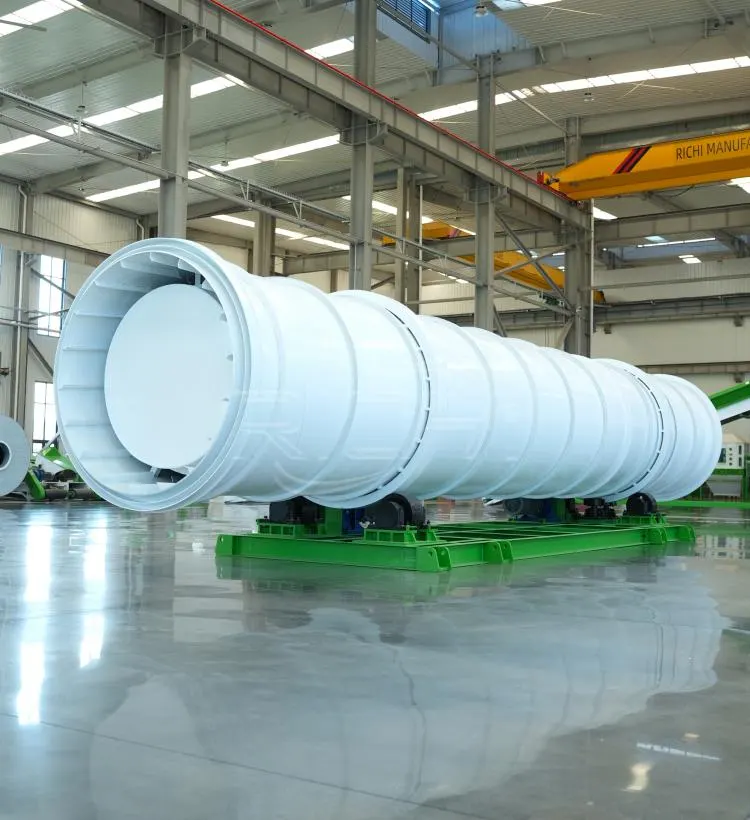
Rotary Dryers for Wood Chips
Rotary dryers are commonly used for large-scale wood chip drying because they can continuously process substantial quantities of biomass.
A rotary dryer typically consists of a long cylindrical drum installed at a slight angle. The drum rotates at a controlled speed.
Wood chips enter through one end and gradually move toward the discharge end.
Inside the drum, lifting flights help pick up and scatter the material. This increases the contact area between the chips and hot air.
The drying process can therefore be controlled by adjusting factors such as:
-
Drum rotation speed
-
Hot air temperature
-
Airflow rate
-
Material feed rate
-
Residence time
-
Initial moisture
-
Target moisture
This flexibility makes rotary drying suitable for many different wood chip processing projects.
Factors Affecting Wood Chip Drying
Not all wood chips dry at the same rate. Several variables influence the performance of the drying process.
Initial Moisture Content
Initial moisture is one of the most important factors.
Wood chips containing 50% moisture require substantially more drying energy than chips containing 30% moisture.
Before selecting a dryer, operators should measure or estimate the actual moisture content of the incoming material.
Target Moisture Content
The final moisture requirement depends on the application.
Fuel chips may have one target moisture range, while material intended for pellet production may require another.
It is not economical to dry the material more than necessary. Excessive drying can increase energy consumption without providing additional value.
Chip Size
Wood chips are usually irregular in size and shape.
Large chips may take longer to dry because moisture has a longer path to travel from the interior to the surface.
Smaller chips generally have a larger surface area relative to their mass and can dry more quickly.
However, excessively fine material can increase dust generation and create additional requirements for dust collection.
Wood Species
Different wood species have different structures and moisture characteristics.
Hardwood and softwood chips may respond differently to drying because of differences in density, fiber structure, and moisture distribution.
A drying system should therefore be evaluated using the actual raw material rather than relying solely on general assumptions.
Drying Wood Chips for Pellet Production
Wood chips are often used as an intermediate raw material for wood pellet production.
A typical processing route may be:
Wood → Chipping → Drying → Grinding → Pelletizing → Cooling → Screening → Packing
Large wood chips may first be reduced to a suitable particle size before or after drying, depending on the production line design.
Moisture control is particularly important before pelletizing.
If the material is too wet, the pellet mill may have difficulty producing stable pellets. Excess moisture can also affect pellet durability and downstream cooling.
On the other hand, excessively dry material may not behave optimally during compression.
Therefore, the objective is to achieve a suitable and consistent moisture level rather than simply removing as much water as possible.
Wood Chip Drying for Biomass Fuel
Wood chips are widely used as solid biomass fuel in boilers, heating systems, biomass power plants, and industrial furnaces.
Moisture has a major effect on fuel performance.
When wet chips are burned, water must first be heated and evaporated. This consumes part of the available energy.
Dryer operation can therefore increase the usable energy content of wood chips.
More consistent moisture can also help stabilize combustion.
For industrial users, this can make the fuel supply easier to manage and reduce variations in combustion performance.
Calculating the Amount of Water to Remove
Dryer sizing requires an understanding of how much water must actually be removed.
Consider a plant processing 10 tons of wet wood chips per hour at 45% moisture.
The material contains approximately:
-
4.5 tons of water
-
5.5 tons of dry matter
If the target moisture content is 15%, the dry matter remains approximately 5.5 tons.
The final material weight would be approximately 6.47 tons per hour.
Therefore, approximately 3.53 tons of water would need to be removed every hour.
This simplified example illustrates why initial and target moisture levels are essential when selecting a drying system.
A machine rated only by tons of wet feed per hour does not provide enough information to determine actual drying performance.
Heat Sources for Wood Chip Drying
Different projects may use different heat sources.
Common options include:
Biomass
Wood residues and other biomass materials can be burned to generate hot air.
For wood processing plants that already generate waste wood, biomass heating can potentially make use of available residues.
Natural Gas
Natural gas can provide controllable heat and is commonly available in many industrial regions.
Diesel
Diesel-fired systems can provide high-temperature heat but may have higher operating costs depending on local fuel prices.
Steam
Facilities with existing steam systems may integrate steam-based heat exchangers into their drying process.
Recovered Waste Heat
Some industrial facilities can use waste heat from boilers, furnaces, or other processes.
The appropriate heat source depends on fuel availability, operating costs, environmental requirements, and local infrastructure.
Improving Wood Chip Dryer Efficiency
Efficient drying is not only about increasing temperature.
In many cases, simply raising the temperature can increase fuel consumption without proportionally improving overall efficiency.
A better approach is to optimize the complete system.
Optimize Hot Air Temperature
The temperature should be selected according to the raw material and final application.
Control Material Feed
Stable feeding helps maintain consistent drying conditions.
If too much material enters the dryer at once, the available heat may be insufficient.
Improve Airflow
Hot air needs to contact the material effectively.
Proper airflow distribution can reduce wet areas and improve drying uniformity.
Control Residence Time
The material should remain inside the dryer long enough to reach the target moisture level.
Residence time can be influenced by drum speed, drum inclination, material feed rate, and airflow.
Reduce Heat Loss
Insulating hot-air pipes and other high-temperature components can reduce unnecessary energy loss.
Maintain the Heat Source
An inefficient combustion system can increase fuel consumption and reduce the amount of usable heat available to the dryer.
The Importance of Material Feeding
Stable feeding is essential for continuous wood chip drying.
If the feeding rate fluctuates significantly, the moisture content of the discharged material may also fluctuate.
A suitable feeding system should be capable of handling the actual characteristics of the wood chips.
Depending on the project, feeding equipment may include conveyors, screw feeders, belt conveyors, or other material handling systems.
For larger plants, automated feeding can help maintain stable throughput.
Dust Control During Wood Chip Drying
Wood chips generate dust during handling, movement, and drying.
Fine particles can be carried by the hot air stream and may leave the dryer with exhaust gases.
A complete system therefore often incorporates dust collection equipment.
Cyclones can separate larger particles from the air stream, while bag filters can provide additional filtration where required.
The appropriate dust collection configuration depends on the material characteristics and local environmental requirements.
Dust control is also an important part of industrial safety when processing combustible biomass materials.
How to Choose a Wood Chips Dryer Machine
Selecting the right equipment requires a systematic evaluation.
Determine the Processing Capacity
First establish how many tons of wet wood chips need to be processed per hour.
Test the Initial Moisture
Moisture content determines the water evaporation requirement.
Set the Final Moisture Target
The target should be based on the final application.
Check the Chip Size
Particle size affects drying speed and material movement.
Select the Heat Source
Consider available fuels and their operating costs.
Consider the Available Space
The dryer, furnace, fan, dust collector, conveyors, and maintenance areas all require adequate space.
Consider Future Expansion
If production is expected to increase, the drying system may need to be designed with future expansion in mind.
(investigate this site: RICHI Machinery )
Wood Chip Dryer Capacity
Drying capacity should always be discussed together with moisture reduction.
For example, saying that a machine can process 5 tons per hour does not necessarily mean it can reduce any wood chips from any moisture level to any target moisture.
Actual performance depends on the amount of water that must be evaporated.
When comparing different drying systems, users should ask suppliers for information about:
-
Feed capacity
-
Initial moisture
-
Final moisture
-
Water evaporation capacity
-
Heat consumption
-
Power consumption
-
Raw material characteristics
-
Recommended heat source
This creates a more meaningful basis for equipment comparison.
Continuous Drying vs Batch Drying
Wood chip processing projects can use either continuous or batch drying approaches.
Continuous drying is generally suitable for industrial production where material needs to move steadily through the system.
Batch drying may be suitable for smaller operations or applications where material is processed intermittently.
For high-volume biomass production, continuous drying can simplify material handling because feeding and discharge can be synchronized with other processing stages.
Integrating Drying Into a Complete Production Line
A dryer should not be considered separately from the rest of the production system.
For example, a wood pellet plant may include:
-
Raw material receiving
-
Wood chipping
-
Screening
-
Crushing
-
Drying
-
Fine grinding
-
Pelletizing
-
Cooling
-
Screening
-
Packing
The capacity of each stage needs to match the others.
If the dryer has insufficient capacity, it can become a bottleneck.
If the dryer is significantly oversized, the investment may be unnecessarily high.
The conveying system must also be able to transport the required amount of wet and dry material.
This is why complete process design is particularly important for medium- and large-scale biomass projects.
Moisture Measurement After Drying
The drying process should be monitored rather than controlled only by temperature.
The moisture content of the discharged wood chips provides important information about whether the process is achieving its target.
Moisture measurement can be performed manually or through automated monitoring systems, depending on the plant configuration.
If the final moisture is too high, operators may need to adjust the feed rate, hot air temperature, airflow, or residence time.
If the material is excessively dry, the process may be using more energy than necessary.
Maintaining a consistent moisture level is usually more valuable than simply achieving the lowest possible moisture content.
Common Wood Chip Drying Problems
Wood Chips Remain Too Wet
Possible causes include excessive feed rate, insufficient heat, insufficient residence time, high initial moisture, or inadequate airflow.
Uneven Drying
Uneven drying may be caused by inconsistent chip size, poor material distribution, unstable feeding, or inadequate air circulation.
Excessive Energy Consumption
High energy consumption may result from heat losses, inefficient combustion, excessive moisture, or inappropriate operating parameters.
Excessive Dust
Dust may increase when the material contains a large amount of fine particles or when airflow is too strong.
Material Overheating
Overheating can result from excessive temperature, insufficient material flow, or inappropriate control settings.
Each problem should be evaluated according to the entire drying system.
Maintenance of a Wood Chips Dryer Machine
Regular maintenance helps maintain stable performance.
Operators should regularly inspect the:
-
Drum
-
Bearings
-
Drive system
-
Gears or transmission components
-
Lifting flights
-
Feeding system
-
Discharge system
-
Hot air ducts
-
Fans
-
Dust collectors
-
Sealing components
-
Temperature sensors
Accumulated material should be removed when necessary.
Lubrication should follow the equipment manufacturer's recommendations.
Wear components should be checked periodically and replaced when required.
Good maintenance can help prevent unexpected downtime and maintain consistent drying performance.
Safety Considerations
Industrial wood drying involves heat, moving machinery, combustible biomass, and airborne dust.
Safety should therefore be considered from the beginning of the system design.
Important measures may include:
-
Proper temperature monitoring
-
Appropriate dust collection
-
Adequate ventilation
-
Reliable electrical protection
-
Fire prevention measures
-
Regular equipment inspection
-
Proper operator training
-
Emergency shutdown systems where required
Specific safety requirements depend on local regulations and the plant configuration.
Environmental Considerations
Energy efficiency and emissions are important factors in modern biomass processing.
An efficient drying system can reduce fuel consumption per ton of water removed.
When biomass is used as the heat source, the combustion system should be appropriately designed and operated.
Dust collection systems can help control particulate emissions from material handling and exhaust air.
The complete system should be designed according to applicable environmental requirements in the installation location.
Small Wood Chip Drying Projects
Small-scale users may have relatively low production requirements.
They may prioritize:
-
Compact design
-
Simple operation
-
Lower investment
-
Easy maintenance
-
Flexible operation
The drying system can be relatively simple when the production capacity and moisture reduction requirement are limited.
However, even small systems should consider the heat source, airflow, material feeding, and dust control.
Large Industrial Wood Chip Drying Projects
Large-scale projects have more complex requirements.
A high-capacity installation may require:
-
Automatic feeding
-
Large-capacity conveyors
-
Industrial heat generation
-
Rotary drying
-
Automated temperature control
-
Dust collection
-
Moisture monitoring
-
Centralized control
-
Automatic discharge
-
Integration with downstream equipment
At this scale, process engineering becomes especially important.
The objective is not merely to install a large dryer, but to create a coordinated production system in which each stage operates at a compatible capacity.
Economic Benefits of Proper Wood Chip Drying
The economic benefits of drying depend on the final application and local operating conditions.
For biomass fuel users, drying can increase the useful energy value of the material.
For pellet producers, appropriate moisture can improve the stability of the pelletizing process.
For storage operations, moisture control can help maintain material quality.
For transportation, removing excess water can reduce the amount of non-useful weight being transported.
However, drying itself consumes energy, so the system should be designed to remove only the moisture necessary for the intended application.
Why Customized Drying Solutions Are Important
There is no single drying configuration suitable for every wood chip processing project.
A plant processing fresh forestry chips may have very different requirements from a sawmill processing relatively dry residues.
Similarly, a 2-ton-per-hour biomass fuel project has different requirements from a 20-ton-per-hour wood pellet plant.
A customized solution should consider:
-
Raw material
-
Moisture content
-
Capacity
-
Target moisture
-
Chip size
-
Heat source
-
Local climate
-
Available space
-
Final application
-
Downstream equipment
This information can then be used to determine the appropriate dryer size and supporting equipment.
Future Development of Wood Chip Drying Technology
Wood drying technology continues to develop alongside the biomass industry.
Energy efficiency is becoming increasingly important as fuel prices and environmental requirements change.
Automation is also becoming more common.
Modern systems can monitor operating conditions and adjust equipment parameters according to changes in material flow and temperature.
Heat recovery is another area of interest. Waste heat that would otherwise be released may be reused where practical.
Integration with complete biomass processing lines can also improve overall efficiency by coordinating drying with crushing, pelletizing, cooling, and packing.
Conclusion
Efficient wood chip drying is an important part of modern biomass processing. Excessive moisture can reduce fuel value, increase transportation costs, complicate storage, and affect downstream production.
A properly selected wood chips dryer machine can help control moisture continuously and prepare wood chips for biomass fuel, pellet production, briquetting, animal bedding, and other applications.
However, dryer selection should not be based on capacity alone. Initial moisture, target moisture, chip size, heat source, residence time, airflow, and final application all influence the actual drying requirements.
For a complete industrial project, the dryer should also be integrated with feeding, conveying, heating, dust collection, moisture monitoring, and downstream processing equipment.
The most effective drying system is therefore one designed around the complete production process. By accurately defining the raw material characteristics and production requirements, manufacturers and biomass processors can select an appropriate drying configuration, control energy consumption, maintain consistent moisture, and create a more stable overall operation.