
The global agricultural industry is undergoing a major transformation as more farmers and agricultural enterprises focus on sustainable production methods, soil improvement, and environmentally friendly farming practices. Organic fertilizer has become an increasingly important agricultural input because it improves soil structure, enhances nutrient availability, and reduces dependence on chemical fertilizers. At the same time, the growing amount of agricultural waste, livestock manure, and organic residues has created a strong demand for efficient recycling solutions. Establishing a modern fertilizer manufacturing facility provides an effective way to convert these wastes into valuable fertilizer products while creating new business opportunities.
A fully automatic organic fertilizer plant represents the advanced development direction of the fertilizer industry. Unlike traditional fertilizer production facilities that rely heavily on manual operation, a fully automated plant integrates intelligent control systems, automatic conveying equipment, precision batching systems, and continuous processing machinery to achieve efficient and stable production. From raw material preparation to final fertilizer packaging, every stage can be optimized through automation technology, reducing labor requirements while improving production capacity and product consistency.
The increasing demand for high-quality organic fertilizer has encouraged many investors to upgrade from small-scale production workshops to professional industrial fertilizer plants. Modern projects require not only reliable machinery but also complete engineering solutions that consider raw material characteristics, production capacity, energy consumption, factory layout, and market requirements. By combining advanced equipment with scientific production processes, fertilizer manufacturers can achieve higher efficiency and stronger competitiveness.

Organic fertilizer production starts with the collection and preparation of suitable raw materials. The quality of raw materials directly affects the nutrient content and performance of the final fertilizer product. Common materials used in organic fertilizer manufacturing include chicken manure, cow manure, pig manure, sheep manure, agricultural straw, crop residues, food waste, compost materials, and other biodegradable organic resources.
Animal manure is one of the most common raw materials because it contains rich organic matter and essential nutrients such as nitrogen, phosphorus, and potassium. However, fresh manure usually has high moisture content and contains harmful microorganisms, parasites, and unpleasant odors. Therefore, it must undergo proper fermentation before becoming a safe and effective fertilizer product.
Fermentation is the foundation of organic fertilizer production. During this process, microorganisms decompose organic materials and transform unstable substances into stable organic compounds. Proper fermentation reduces odor, eliminates harmful pathogens, and improves fertilizer maturity. In a modern fertilizer factory, automatic fermentation systems can monitor temperature, oxygen levels, and moisture conditions to create an ideal environment for microbial activity.
Large-scale fertilizer plants often use compost turners or automatic fermentation equipment to accelerate the decomposition process. Compared with traditional natural composting methods, automated fermentation systems provide better control and shorter processing cycles. This allows fertilizer manufacturers to increase production efficiency and maintain consistent product quality throughout the year.
After fermentation, organic materials need to be crushed into smaller particles. Raw materials after composting may contain uneven structures, fiber materials, or large blocks that affect further processing. A high-efficiency organic fertilizer crusher is used to break these materials into uniform particles, improving mixing performance and ensuring smooth operation of the granulation process.
In a fully automated production environment, material transportation between different processing stages is completed through conveyors and automatic feeding systems. This reduces manual handling, minimizes production interruptions, and improves overall factory efficiency. Automated conveying systems also help maintain a cleaner production environment by reducing material leakage and dust generation.
The mixing process is another critical step in fertilizer manufacturing. Different crops and soil conditions require different fertilizer formulas. Therefore, organic materials may need to be combined with additional nutrients, minerals, microbial agents, or other additives to achieve the desired fertilizer composition.
Automatic batching and mixing systems provide precise ingredient measurement and uniform mixing results. Advanced control technology allows operators to set specific formulas according to customer requirements. This flexibility enables fertilizer manufacturers to produce different types of organic fertilizer products, including compost fertilizer, bio-organic fertilizer, compound organic fertilizer, and specialty fertilizers.
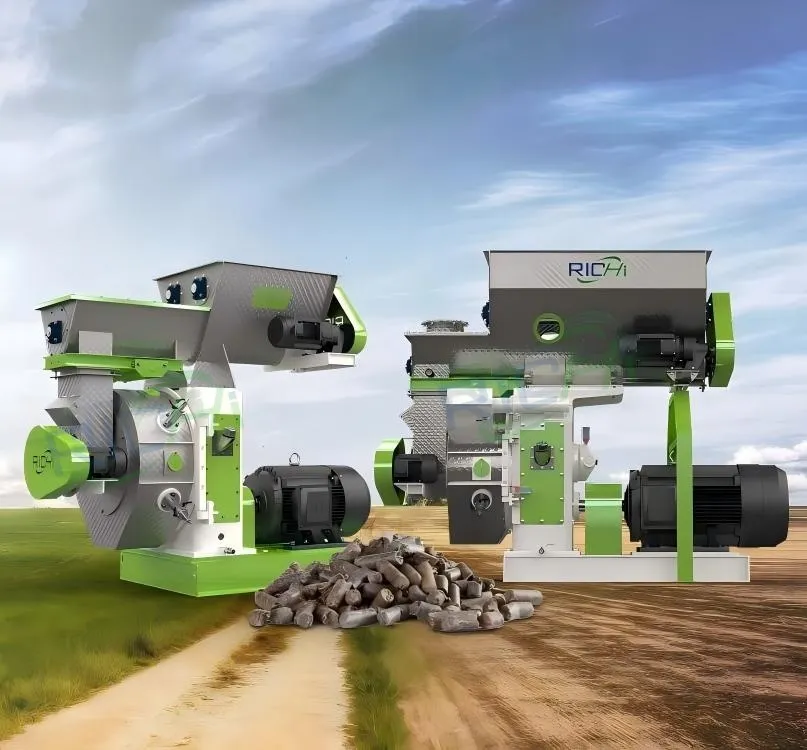
Granulation is the key process that transforms organic materials into commercial fertilizer products. Granular fertilizer has many advantages compared with powdered fertilizer, including easier transportation, better storage stability, improved application efficiency, and higher market value. For this reason, most commercial fertilizer plants include professional granulation systems.
(Learn more about industrial organic fertilizer pellet machine)
Different granulators can be selected depending on raw material properties and production goals. Disc granulators are suitable for flexible production with moderate capacity requirements. Rotary drum granulators are widely used in large-scale fertilizer factories because of their stable performance and high output. New organic fertilizer granulators are designed specifically for materials with high organic content and excellent pelletizing ability.
In a fully automated organic fertilizer plant, the granulation process is connected with other production units through intelligent control systems. The feeding rate, moisture content, and machine operation parameters can be automatically adjusted to maintain stable pellet formation. This reduces production fluctuations and improves fertilizer pellet quality.
After granulation, fertilizer pellets usually contain excess moisture and require drying treatment. The drying process improves product stability and prevents fertilizer pellets from becoming damaged during transportation and storage. Rotary dryers are commonly used in industrial fertilizer plants because they provide continuous operation and large processing capacity.
Energy efficiency is an important consideration in modern fertilizer plant design. Advanced drying systems optimize heat utilization and reduce unnecessary energy consumption. Some fertilizer projects also combine renewable energy sources or waste heat recovery technologies to further improve sustainability.
Cooling follows the drying process. Hot fertilizer pellets need to be cooled before screening and packaging. Cooling equipment reduces pellet temperature, improves hardness, and prevents moisture accumulation during storage. A properly designed cooling system helps maintain the appearance and quality of finished fertilizer products.
Screening is used to separate qualified fertilizer pellets from oversized and undersized particles. Uniform particle size is important because customers expect fertilizer products with consistent appearance and application performance. Automatic screening machines continuously classify fertilizer pellets and return unqualified materials to the production process for further treatment.
Packaging is the final stage of commercial fertilizer production. Automatic packaging systems complete weighing, filling, sealing, and labeling operations with high accuracy. Compared with manual packaging, automated systems provide faster production speed, lower labor costs, and more professional product presentation.
One of the biggest advantages of a fully automated fertilizer production system is improved production efficiency. Automation allows multiple processes to operate continuously with minimal human intervention. This means fertilizer manufacturers can achieve higher output while reducing operating expenses.
Another important advantage is stable fertilizer quality. Manual production methods may result in differences caused by operator experience or inconsistent processing conditions. Automated equipment maintains accurate control over every stage, ensuring that each batch of fertilizer meets quality standards.
Automation also improves workplace safety. Fertilizer production involves heavy machinery, large amounts of raw materials, and continuous operation. Automated feeding, conveying, and monitoring systems reduce direct worker involvement in potentially hazardous areas and create safer working conditions.
When planning a new fertilizer project, investors should consider several important factors. Raw material availability, target production capacity, fertilizer type, factory location, and market demand all influence equipment selection and plant design. A professional engineering team can analyze these factors and develop an optimized production solution.
For example, a livestock farm processing manure may require advanced fermentation and moisture control systems, while an agricultural waste recycling company may need stronger crushing and pretreatment equipment. A customized design ensures that the fertilizer plant can operate efficiently under specific production conditions.
The capacity of an organic fertilizer plant can vary widely depending on investment goals. Small-scale facilities may focus on local fertilizer supply, while large industrial plants may produce fertilizer for regional or international markets. Automated systems can be designed for different production scales, providing flexibility for various business models.
Intelligent control technology is becoming increasingly important in modern fertilizer manufacturing. PLC systems, sensors, and digital monitoring platforms allow operators to track production data, identify equipment conditions, and optimize manufacturing efficiency. These technologies help fertilizer companies achieve smarter management and better resource utilization.
Environmental protection is another major benefit of organic fertilizer plants. By recycling animal manure and agricultural waste, these facilities reduce pollution caused by improper waste disposal. At the same time, they produce environmentally friendly fertilizers that support sustainable farming practices.
As global agriculture continues to move toward sustainability, the demand for organic fertilizer will continue to grow. Farmers are increasingly aware of the importance of soil health, and governments are encouraging environmentally responsible agricultural production. This creates significant market potential for companies investing in modern fertilizer manufacturing facilities.
The future of fertilizer production will focus on higher automation, improved energy efficiency, and intelligent manufacturing. Advanced equipment will enable fertilizer manufacturers to produce better products with lower costs and greater environmental benefits. The integration of automation technology will continue to transform the fertilizer industry and create more efficient production models.
A fully automatic organic fertilizer pellet plant is not only a production facility but also a complete solution for resource recycling and sustainable agriculture development. By combining fermentation technology, precision processing equipment, and intelligent automation systems, these plants can convert organic waste into valuable fertilizer products efficiently and reliably.
For investors, choosing the right equipment supplier and engineering partner is essential for project success. A professional supplier can provide complete services, including process design, equipment manufacturing, installation guidance, commissioning, and technical support. With the right solution, fertilizer manufacturers can establish efficient production facilities that meet current market demands and remain competitive in the future.
In conclusion, the development of fully automated organic fertilizer plants represents an important step toward modern agricultural sustainability. Through advanced automation, efficient resource utilization, and reliable production processes, these plants help reduce environmental pressure while creating profitable fertilizer businesses. As the agricultural sector continues to evolve, automated organic fertilizer production will play an increasingly important role in building a greener and more sustainable future.