
As the global rabbit farming industry continues to expand, feed quality has become one of the most important factors affecting production efficiency and profitability. Whether rabbits are raised for meat, breeding, fur, or the pet market, proper nutrition directly influences growth rate, feed conversion, reproductive performance, and disease resistance.
Traditional feeding methods often rely on loose feed mixtures or forage materials, but these approaches can lead to nutrient segregation, feed waste, and inconsistent animal performance. For this reason, pelletized rabbit feed has become the preferred feeding solution for commercial rabbit farms worldwide. Modern pellet feed combines balanced nutrition with excellent physical characteristics, allowing farmers to achieve more predictable and profitable production results.
The development of advanced feed processing technology has made it possible to produce high-quality rabbit pellets on both small and industrial scales. Today, feed manufacturers and rabbit producers are increasingly investing in complete feed production systems to meet the growing demand for premium rabbit feed.
Why Pellet Feed Is Preferred
Pellet feed offers several important advantages over mash feed and traditional forage-based feeding systems.
First, pellet feed ensures nutritional uniformity. Every pellet contains the same proportion of protein, fiber, energy, vitamins, and minerals. This prevents selective feeding behavior and guarantees that rabbits consume a balanced diet.
Second, pellet feed reduces feed loss. Rabbits tend to scatter loose feed, resulting in significant waste. Pelletized feed minimizes this problem and improves feed utilization.
Third, pellets are easier to transport, store, and distribute. Their compact structure reduces storage space requirements and lowers transportation costs.
Additional benefits include:
- Improved digestibility
- Better feed conversion ratio
- Reduced dust generation
- Enhanced feed hygiene
- Faster growth performance
- More uniform production results
These advantages have made pellet feed the standard feeding method in modern rabbit farming operations.
Understanding Rabbit Nutritional Requirements
Producing high-quality rabbit feed begins with understanding rabbit nutritional needs.
Fiber
Fiber is critical for maintaining healthy digestion.
A proper rabbit diet generally contains:
- 12%–18% crude fiber
- Adequate digestible fiber levels
Fiber supports intestinal movement and helps prevent digestive disorders.
Protein
Protein contributes to muscle development, reproduction, and milk production.
Typical requirements include:
- Growing rabbits: 16%–18%
- Breeding rabbits: 17%–19%
- Lactating rabbits: 18%–20%
Energy
Energy is supplied through grains and carbohydrate-rich ingredients.
Common energy sources include:
- Corn
- Wheat
- Barley
- Sorghum
- Oats
Vitamins and Minerals
Essential nutrients include:
- Vitamin A
- Vitamin D
- Vitamin E
- Calcium
- Phosphorus
- Trace minerals
A balanced feed formula ensures optimal health and productivity.
Raw Materials for Rabbit Pellet Production
One advantage of rabbit feed manufacturing is the wide range of available raw materials.
Fiber Sources
Fiber-rich ingredients include:
- Alfalfa meal
- Timothy grass meal
- Ryegrass meal
- Hay powder
- Clover meal
Alfalfa remains one of the most popular ingredients because of its high nutritional value.
Protein Sources
Protein ingredients may include:
- Soybean meal
- Sunflower meal
- Rapeseed meal
- Peanut meal
- Cottonseed meal
Energy Ingredients
Energy-rich materials commonly include:
- Corn
- Wheat
- Barley
- Oats
Agricultural By-Products
Many feed producers utilize:
- Wheat bran
- Rice bran
- Beet pulp
- Distillers grains
These ingredients can lower production costs while maintaining feed quality.
Feed Additives
Modern formulations often contain:
- Vitamin premixes
- Mineral premixes
- Enzymes
- Probiotics
- Antioxidants
These additives help improve nutrient utilization and animal health.
Typical Rabbit Feed Formulas
Growing Rabbit Feed
- Alfalfa meal: 35%
- Corn: 25%
- Soybean meal: 20%
- Wheat bran: 15%
- Premix: 5%
Breeding Rabbit Feed
- Alfalfa meal: 40%
- Wheat bran: 20%
- Soybean meal: 20%
- Corn: 15%
- Premix: 5%
Lactation Feed
- Alfalfa meal: 35%
- Corn: 30%
- Soybean meal: 25%
- Wheat bran: 5%
- Premix: 5%
Formulations can be adjusted according to local ingredient availability and production objectives.
Rabbit Feed Production Process
The production of rabbit feed pellets involves multiple stages that work together to ensure product quality and consistency.
Raw Material Storage
Ingredients are stored in silos, bins, or warehouses before processing.
Proper storage prevents:
- Moisture absorption
- Mold development
- Nutrient degradation
Cleaning
Cleaning equipment removes contaminants such as:
- Stones
- Metal fragments
- Dust
- Foreign materials
This protects processing equipment and improves feed safety.
Grinding
Grinding is performed using a hammer mill.
The objectives of grinding include:
- Uniform particle size
- Improved mixing efficiency
- Better pellet quality
- Enhanced digestibility
Most rabbit feed ingredients are ground to 2–4 mm.
Batching
The batching system automatically weighs ingredients according to the selected formula.
Benefits include:
- Improved accuracy
- Reduced labor requirements
- Consistent product quality
Mixing
After batching, ingredients enter a horizontal mixer.
The mixing stage ensures that nutrients are distributed evenly throughout the feed mixture.
High-quality mixers typically achieve mixing uniformity greater than 95%.
Conditioning
Conditioning prepares the feed mixture for pellet formation.
Steam is added to increase:
- Moisture content
- Temperature
- Starch gelatinization
Conditioning also improves pellet durability and feed safety.
Pellet Formation
Pelletizing is the most important stage of the entire process.
During this stage, conditioned material is compressed through die holes under high pressure. The result is a dense and durable pellet suitable for rabbit feeding.
A modern rabbit pellet machine is engineered to maintain stable production while producing pellets with uniform size, density, and nutritional consistency.
Depending on customer requirements, pellet diameters typically range from 2 mm to 4 mm.
The pelleting process improves feed texture, density, and handling characteristics.

Cooling
Fresh pellets are hot and contain elevated moisture levels.
Counterflow coolers reduce pellet temperature and stabilize moisture content.
Proper cooling helps:
- Improve storage life
- Prevent mold growth
- Maintain pellet quality
Screening
The screening process removes:
- Fine particles
- Broken pellets
- Oversized materials
This ensures a high-quality finished product.
Packaging
Finished pellets are packaged using automatic weighing and bagging systems.
Common package sizes include:
- 10 kg
- 25 kg
- 50 kg
Packaging protects feed quality during storage and transportation.
Core Equipment in a Rabbit Feed Plant
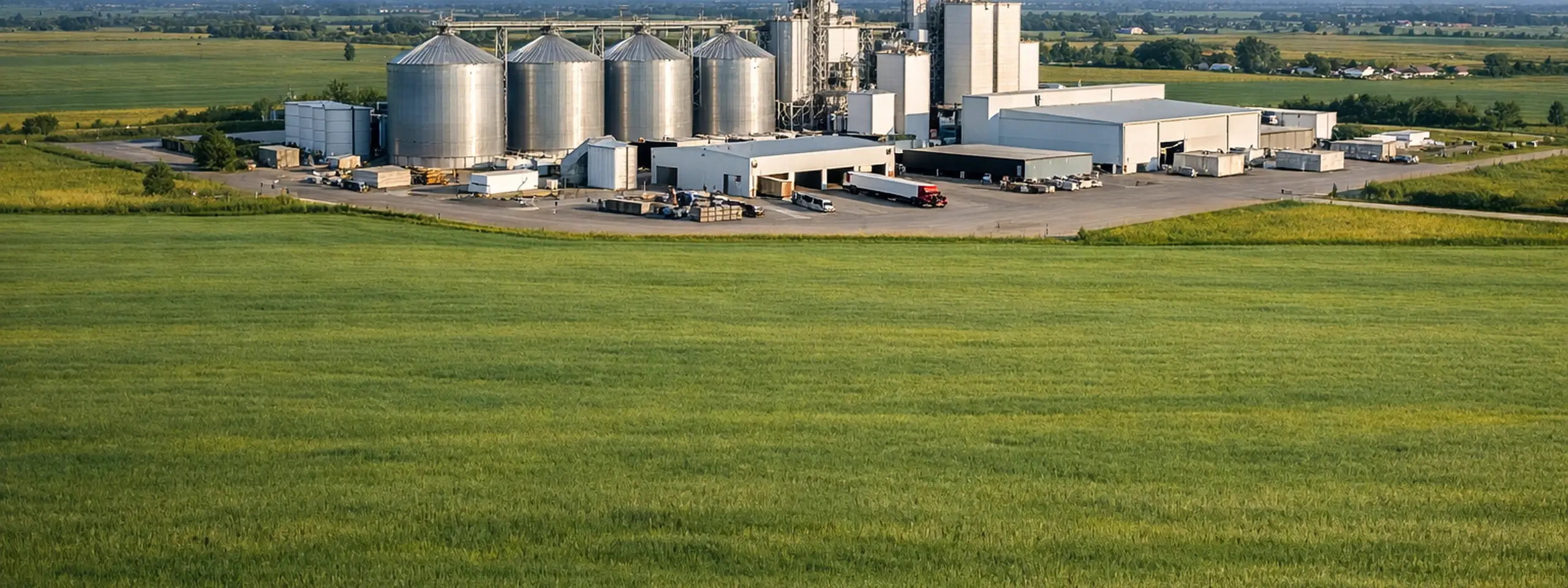
A complete production line typically consists of:
Hammer Mill
Used to grind raw materials into uniform particles.
Batching System
Provides accurate ingredient dosing.
Feed Mixer
Ensures consistent blending of ingredients.
Conditioner
Improves pelleting performance through steam treatment.
Pellet Mill
Converts mixed feed into pellets.
Cooler
Reduces pellet temperature and moisture.
Vibrating Screener
Removes fines and broken pellets.
Packaging Machine
Automates bagging operations.
Dust Collection System
Maintains a clean production environment.
PLC Control System
Allows centralized monitoring and control.

Factors Influencing Pellet Quality
Several factors determine pellet quality.
Raw Material Quality
Higher-quality ingredients produce stronger and more nutritious pellets.
Moisture Content
Excess moisture may cause pellet breakage and storage problems.
Insufficient moisture can reduce pellet durability.
Conditioning Performance
Proper conditioning improves:
- Pellet strength
- Feed digestibility
- Production efficiency
Die Configuration
Die diameter and compression ratio affect:
- Pellet density
- Capacity
- Energy consumption
Cooling Efficiency
Proper cooling preserves pellet integrity during storage. (go to website)
Economic Benefits of Rabbit Feed Production
Feed typically represents the largest operating expense in rabbit farming.
Producing quality pellets helps farms achieve:
- Lower feed waste
- Improved growth performance
- Better feed conversion
- Reduced mortality
- Higher profitability
For feed manufacturers, rabbit feed production offers:
- Stable demand
- Specialized market opportunities
- Strong customer retention
- Attractive investment returns
Investment Opportunities
The demand for commercial rabbit feed is increasing in many countries due to:
- Rising meat consumption
- Expansion of commercial rabbit farms
- Growth of the pet rabbit market
- Increased interest in sustainable livestock production
Investors can choose from different plant sizes:
Small Scale
Capacity: 1–2 T/H
Suitable for individual farms and local feed suppliers.
Medium Scale
Capacity: 3–10 T/H
Ideal for regional feed manufacturers.
Large Scale
Capacity: 10–40 T/H
Designed for industrial feed production and large commercial markets.
Production lines can be customized according to market requirements and investment budgets.
Future of Rabbit Feed Manufacturing
The rabbit feed industry continues to evolve through technological innovation.
Important trends include:
Automation
Fully automated production lines improve efficiency and reduce labor costs.
Smart Monitoring
Digital systems track:
- Temperature
- Moisture
- Equipment status
- Production efficiency
Sustainable Production
Manufacturers are increasingly utilizing agricultural residues and alternative ingredients.
Energy Efficiency
Modern equipment consumes less power while maintaining high output.
Precision Nutrition
Customized formulas are becoming increasingly common in commercial rabbit farming.
Conclusion
Rabbit feed pellet production is a rapidly growing sector within the global feed industry. By combining scientific nutrition with advanced processing technology, manufacturers can produce high-quality feed that supports rabbit health, growth, and productivity.
From raw material preparation and grinding to conditioning, pelleting, cooling, and packaging, every stage of the process contributes to the quality of the final product. At the center of this operation is the rabbit pellet machine, which transforms carefully formulated feed ingredients into durable, uniform pellets suitable for modern rabbit farming.
As commercial rabbit production continues to expand worldwide, efficient pellet manufacturing technology will remain essential for achieving sustainable growth, higher productivity, and long-term profitability.