
As global demand for renewable energy continues to increase, biomass pellets have become one of the most important alternatives to fossil fuels. Governments, energy companies, and industrial manufacturers are investing heavily in biomass fuel production to reduce carbon emissions and improve energy sustainability. At the center of this growing industry is the vertical ring die pellet mill, a highly efficient machine designed to convert biomass materials into dense, high-quality pellets.
From wood pellet plants and agricultural waste processing facilities to large-scale biomass fuel projects, the vertical ring die pellet mill has become a preferred solution due to its high productivity, stable performance, and ability to process a wide variety of raw materials. As technology continues to evolve, this machine is playing an increasingly important role in modern biomass manufacturing systems.
Understanding the Vertical Ring Die Pellet Mill
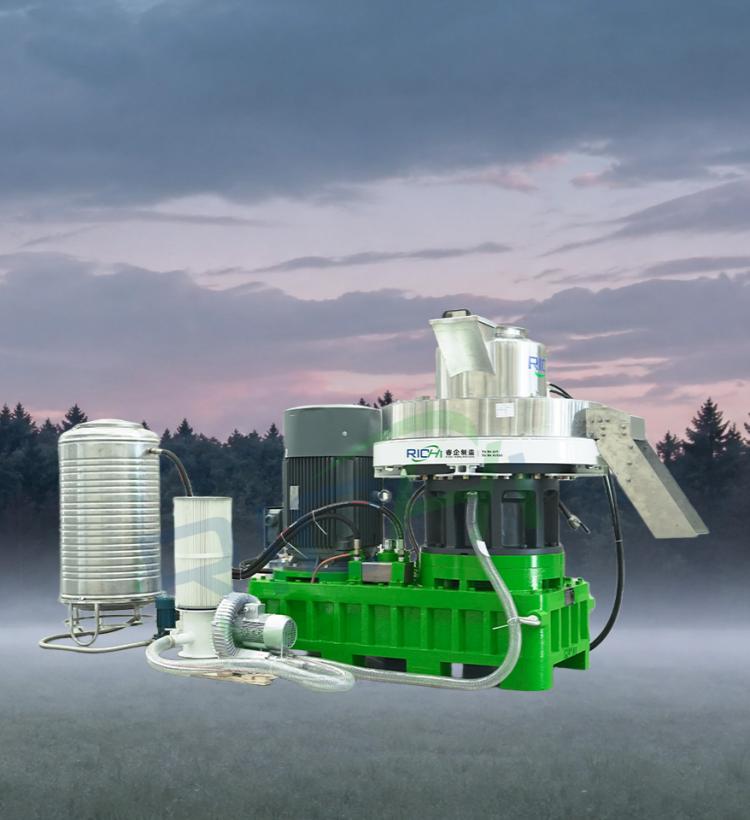
A vertical ring die pellet mill is a specialized pelletizing machine that uses a vertically positioned ring die and pressure rollers to compress biomass materials into cylindrical pellets. Unlike traditional flat die or horizontal ring die pellet mills, the vertical structure allows materials to enter the pelletizing chamber through gravity-assisted feeding.
The machine is designed to process materials such as:
- Sawdust
- Wood chips
- Wood shavings
- Rice husks
- Wheat straw
- Corn stalks
- Palm fiber
- Peanut shells
- Bamboo powder
- Forestry residues
These materials are compressed under high pressure and temperature to create dense pellets with excellent durability and energy value.
The unique design of the vertical ring die pellet mill improves material distribution, reduces machine wear, and enhances overall production efficiency.

The Evolution of Biomass Pellet Technology
The biomass pellet industry has undergone significant technological advancements over the past few decades. Early pellet mills often struggled with uneven feeding, excessive component wear, and limited production capacity.
As biomass demand increased, manufacturers sought more efficient solutions. This led to the development of ring die technology, which offered greater output and improved pellet quality. Eventually, engineers combined ring die technology with a vertical machine structure, creating the modern vertical ring die pellet mill.
This innovation solved many of the limitations associated with older pelletizing systems. Today, vertical ring die pellet mills are widely used in industrial biomass pellet production due to their reliability and performance.
How a Vertical Ring Die Pellet Mill Works
The working principle of a vertical ring die pellet mill is relatively straightforward but highly effective.
First, raw materials are prepared through crushing and drying processes. Biomass must typically be reduced to a specific particle size and moisture content before entering the pellet mill.
Once prepared, the material enters the machine from the top. Gravity helps distribute the biomass evenly across the die surface. Rollers then rotate and apply pressure against the inner surface of the ring die.
As the material is forced through small die holes, intense pressure and friction generate heat. This heat softens natural binders such as lignin found in wood fibers.
The softened lignin acts like glue, binding the particles together as they pass through the die. Continuous compression forms solid cylindrical pellets, which are cut to the desired length and discharged from the machine.
This process allows biomass waste to be transformed into high-density fuel without requiring chemical additives.
Advantages of the Vertical Design
One of the primary reasons for the popularity of the vertical ring die pellet mill is its unique structural design.
Gravity-Assisted Feeding
Unlike horizontal pellet mills that rely heavily on mechanical feeding systems, vertical machines benefit from natural gravity.
Materials fall directly into the pelletizing area, creating more uniform distribution and reducing the risk of feeding blockages.
Reduced Component Wear
The vertical configuration allows pressure to be distributed more evenly across the die and rollers.
This balanced load minimizes uneven wear, extending the service life of critical components and reducing maintenance costs.
Improved Heat Dissipation
The vertical structure promotes better airflow inside the machine.
Improved cooling helps prevent excessive heat buildup, protecting bearings, lubricants, and other mechanical components.
Greater Stability
Because material flows naturally through the machine, operational stability is improved.
This is particularly important for industrial facilities operating continuously for long periods.
Raw Materials Suitable for Processing
One of the most significant advantages of a vertical ring die pellet mill is its flexibility.
The machine can process a wide variety of biomass resources, including:
Wood Waste
Wood remains the most common raw material for pellet production.
Examples include:
- Sawdust
- Wood chips
- Furniture waste
- Wood shavings
- Forestry residues
Wood-based pellets are widely used for residential heating and industrial energy applications.
Agricultural Residues
Agricultural by-products can also be pelletized efficiently.
Examples include:
- Rice straw
- Wheat straw
- Corn stalks
- Cotton stalks
- Sugarcane bagasse
These materials provide an effective way to convert agricultural waste into valuable fuel.
Industrial Biomass By-Products
Many industrial sectors generate biomass residues suitable for pellet production.
Examples include:
- Palm fiber
- Coconut shell powder
- Peanut shells
- Sunflower husks
- Bamboo waste
The ability to process multiple feedstocks makes the vertical ring die pellet mill highly versatile. (click now)
Key Components of the Machine
A modern vertical ring die pellet mill consists of several important components working together.
Feeding System
The feeding system ensures continuous material supply to the pelletizing chamber.
Ring Die
The ring die is one of the most important parts of the machine.
Its hole diameter determines pellet size and influences production efficiency.
Compression Rollers
Rollers apply pressure to force biomass through the die holes.
Their design significantly affects pellet density and durability.
Main Drive System
Powerful electric motors provide the torque required for pellet formation.
Industrial machines often use high-efficiency gear transmission systems to maximize performance.
Lubrication System
Automatic lubrication systems help reduce friction and extend equipment life.
Cutting Device
After extrusion, pellets are cut into uniform lengths for improved handling and storage.
Pellet Quality and Production Efficiency
The quality of biomass pellets depends on multiple factors.
A vertical ring die pellet mill helps optimize several critical parameters:
Density
High compression force creates dense pellets with greater energy content.
Durability
Proper pressure distribution improves pellet strength and reduces breakage.
Uniformity
Consistent feeding and die performance ensure uniform pellet dimensions.
Combustion Performance
Dense pellets burn more efficiently and produce less ash compared to loose biomass.
These characteristics make pellets easier to transport, store, and use.
Applications Across Industries
The vertical ring die pellet mill serves numerous industries worldwide.
Biomass Fuel Production
The primary application is biomass fuel manufacturing.
Pellets are used in:
- Residential heating systems
- Commercial boilers
- Industrial furnaces
- Biomass power plants
Animal Bedding
Wood pellets are commonly used as bedding materials for livestock and poultry.
Their absorbent properties improve hygiene and reduce odors.
Organic Fertilizer Production
Some facilities use pellet mills to produce organic fertilizer pellets from agricultural waste and animal manure.
Waste Management
Pelletizing offers an effective method of recycling biomass residues that would otherwise be discarded.
Environmental Benefits
The environmental impact of biomass pellet production is one of the key reasons for its growing popularity.
A vertical ring die pellet mill contributes to sustainability by enabling efficient resource utilization.
Waste Reduction
Large quantities of agricultural and forestry residues can be converted into useful products.
Lower Carbon Emissions
Biomass pellets can replace fossil fuels in many applications.
Renewable Energy Production
Pellets are produced from renewable organic materials that can be replenished naturally.
Circular Economy Support
Biomass waste is transformed into valuable energy products rather than becoming landfill waste.
These benefits align with global efforts to promote cleaner energy systems.
Economic Advantages for Investors
Investing in biomass pellet production offers several financial opportunities.
A vertical ring die pellet mill helps maximize profitability through:
- High production efficiency
- Lower maintenance costs
- Flexible raw material utilization
- Long equipment lifespan
- Stable pellet quality
As demand for renewable fuels increases worldwide, many pellet producers are expanding capacity to serve domestic and export markets.
Technological Innovations
Modern pellet mill technology continues to evolve.
Manufacturers are incorporating advanced features such as:
Automated Control Systems
Operators can monitor production conditions in real time.
Intelligent Monitoring
Sensors track temperature, pressure, and motor performance.
Energy Optimization
New drive systems reduce electricity consumption while maintaining output.
Wear-Resistant Materials
Improved alloys extend the lifespan of dies and rollers.
These innovations help improve operational efficiency and reduce overall production costs.
Challenges in Biomass Pellet Production
Despite its advantages, biomass pellet production also faces challenges.
Raw Material Variability
Different feedstocks require different processing conditions.
Moisture Control
Maintaining proper moisture levels is critical for pellet quality.
Logistics Costs
Transporting biomass materials can be expensive in some regions.
Equipment Maintenance
Regular maintenance is necessary to ensure optimal machine performance.
Fortunately, modern vertical ring die pellet mill designs address many of these challenges through improved engineering and automation.
Future Market Outlook
The future of biomass energy remains promising.
Governments around the world continue to promote renewable energy development through environmental policies and carbon reduction targets.
As biomass power generation expands, demand for high-quality pellets is expected to increase significantly.
This growth will create additional opportunities for pellet producers and equipment manufacturers alike.
The vertical ring die pellet mill is expected to remain one of the most important technologies in this sector due to its proven efficiency, reliability, and adaptability.
Conclusion
The vertical ring die pellet mill has become a cornerstone of modern biomass pellet production. Its innovative vertical structure, efficient ring die design, and ability to process diverse raw materials make it an ideal solution for industrial pellet manufacturing.
By transforming forestry residues, agricultural waste, and other biomass materials into valuable fuel products, this technology supports renewable energy development, waste reduction, and environmental sustainability. As global demand for clean energy continues to grow, the vertical ring die pellet mill will play an increasingly important role in helping industries produce high-quality biomass pellets efficiently and economically.
With ongoing advancements in automation, energy efficiency, and machine durability, the future of vertical ring die pellet mill technology looks brighter than ever, ensuring its position as a key driver of the global biomass energy industry.