
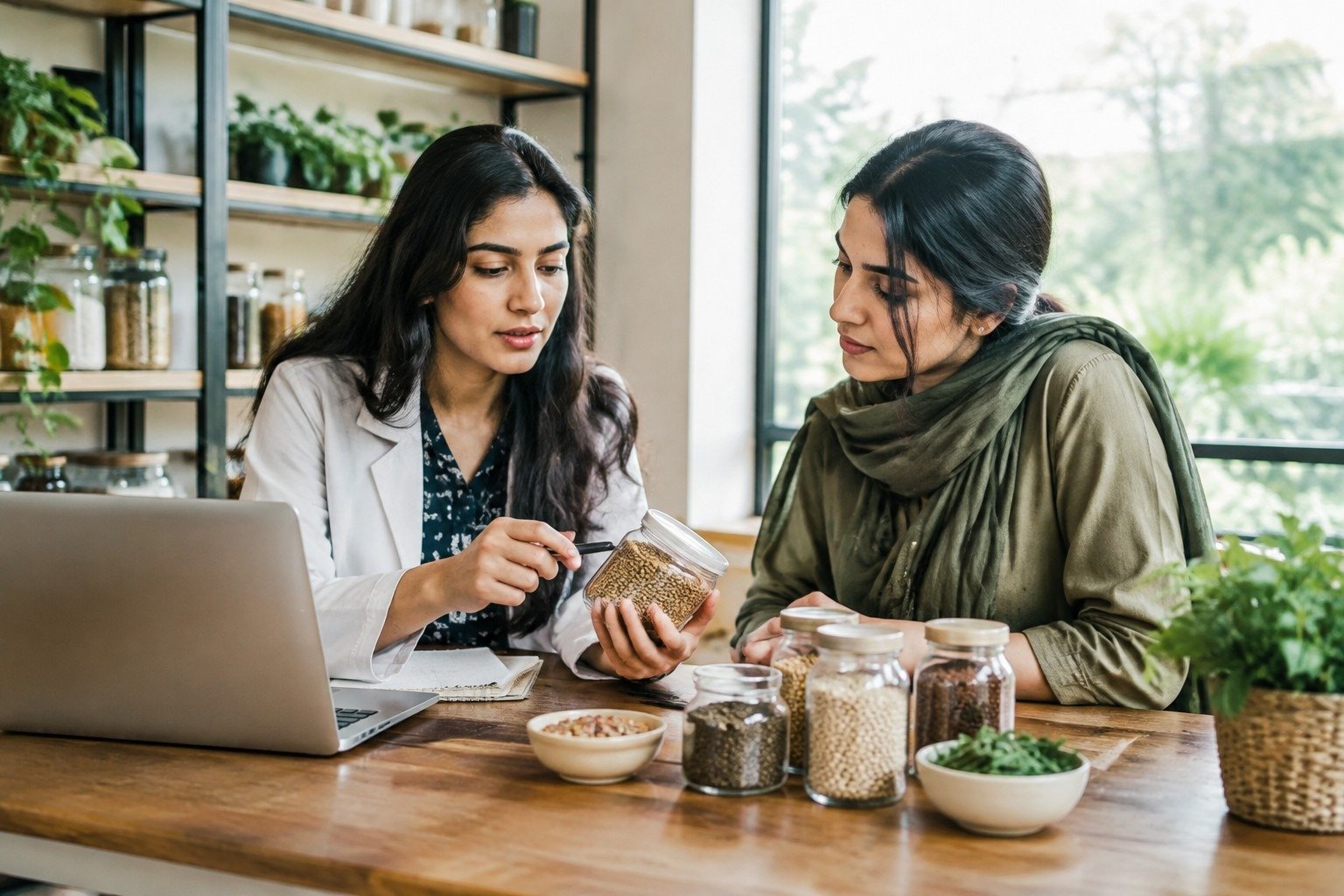
Polycystic Ovary Syndrome (PCOS) is a common hormonal condition that affects women during their reproductive years. It can influence menstrual cycles, skin health, hair growth, fertility, and the way the body processes insulin. For many women, managing PCOS is not just about periods or weight. It is also about understanding their hormones, improving everyday habits, and finding practical ways to support their overall well-being.
Alongside a balanced diet, regular physical activity, and appropriate medical care, some women explore food-based approaches to women's wellness. One option that has gained attention is seed cycling, a dietary practice that involves consuming different seeds during different phases of the menstrual cycle.
The PCOS Seed Cycling Women Wellness Kit (100g each five seeds, Pumpkin, Sunflower, Sesame, Chia and Flax Seeds) from Moringa Pure Pakistan offers a convenient way to incorporate commonly used nutritional seeds into a daily routine. Rather than buying and measuring several ingredients separately, women can use a dedicated kit to make this dietary practice easier to follow.
But what exactly is PCOS? How do hormones affect women's health, and can seed cycling help? Let's explore these questions and understand what a seed cycling kit can realistically offer.
What Is PCOS and Why Does It Affect Women's Hormones?
Polycystic Ovary Syndrome, commonly known as PCOS, is a hormonal and metabolic condition that can affect how the ovaries function. Its symptoms and severity vary from woman to woman.
Women with PCOS may experience one or more of the following:
- Irregular, delayed, or missed menstrual periods.
- Acne and oily skin.
- Excess facial or body hair.
- Thinning hair on the scalp.
- Difficulty managing weight.
- Problems with ovulation and fertility.
- Insulin resistance or an increased risk of developing type 2 diabetes.
- Emotional stress, anxiety, or concerns about body image.
Not every woman with PCOS experiences all these symptoms. Some women have relatively mild symptoms, while others find that the condition affects several aspects of their daily lives.
PCOS is also not simply a problem of having ovarian cysts. Despite its name, a woman can have PCOS without visible ovarian cysts on an ultrasound.
Understanding the Hormonal Changes Associated With PCOS
Hormones are chemical messengers that help regulate many important functions in the body, including menstruation, ovulation, metabolism, and reproductive health.
Several hormones and metabolic processes are relevant to PCOS.
1. Androgens
Androgens are hormones that are present in women as well as men. Some women with PCOS have higher-than-usual androgen levels or increased sensitivity to these hormones. This can contribute to acne, unwanted facial hair, and thinning scalp hair.
2. Insulin
Insulin helps the body move glucose from the bloodstream into cells. Some women with PCOS experience insulin resistance, meaning their bodies do not respond to insulin as effectively as they should.
The body may compensate by producing more insulin. Higher insulin levels can contribute to increased androgen production in some women, potentially worsening certain PCOS symptoms.
3. Estrogen and progesterone
Estrogen and progesterone play important roles in the menstrual cycle. When ovulation occurs, progesterone normally rises during the second half of the cycle.
Because ovulation may occur irregularly or not at all in women with PCOS, progesterone patterns can also be irregular. This is one reason menstrual cycles may become unpredictable.
4. Follicle-stimulating hormone and luteinizing hormone
Follicle-stimulating hormone (FSH) and luteinizing hormone (LH) help regulate ovarian function and ovulation. Their patterns can differ in some women with PCOS, although there is no single hormone pattern that applies to every patient.
Understanding these changes is important because PCOS management should address the individual woman's symptoms, metabolic health, menstrual pattern, and reproductive goals.
What Is Seed Cycling?
Seed cycling is a dietary practice in which women consume particular seeds during different phases of their menstrual cycle.
A commonly followed approach divides the cycle into two phases:
First phase: Menstrual bleeding through the follicular phase
In a typical cycle, this phase begins on the first day of menstruation and continues until ovulation.
The traditional seed cycling approach uses:
- Flaxseeds
- Pumpkin seeds
Second phase: After ovulation through the end of the cycle
This phase is known as the luteal phase and continues until the next menstrual period begins.
The traditional approach uses:
- Sesame seeds
- Sunflower seeds
These seeds provide nutrients such as fiber, healthy fats, plant protein, minerals, and other beneficial plant compounds. Including them in a balanced diet can contribute to overall nutritional health.
However, it is important to understand that seed cycling is not a proven treatment for PCOS. Scientific evidence that following this particular schedule reliably balances hormones, restores ovulation, or regulates menstrual cycles remains limited.
The nutritional value of the seeds is a reasonable basis for including them in a healthy diet, but claims about specific hormonal effects should be treated cautiously.
How Can the Seeds Support Women's Nutritional Health?
Each seed offers a different nutritional profile. Together, they provide variety in a woman's diet.
1. Flaxseeds: Fiber, Healthy Fats, and Lignans
Flaxseeds contain fiber, alpha-linolenic acid (ALA), a plant-based omega-3 fatty acid, and lignans, which are naturally occurring plant compounds.
Their fiber can support digestive regularity and contribute to a feeling of fullness. ALA is an essential fatty acid that the body needs from dietary sources.
Flaxseeds also contain lignans that have attracted scientific interest because of their interactions with hormone-related pathways. However, this does not establish that eating flaxseeds according to a menstrual calendar can correct hormonal imbalances caused by PCOS.
For easier digestion and nutrient availability, ground flaxseeds are generally more useful than whole seeds that may pass through the digestive tract largely intact.
2. Pumpkin Seeds: Zinc, Magnesium, and Plant Protein
Pumpkin seeds are a source of magnesium, zinc, healthy fats, and plant protein.
These nutrients contribute to normal physiological functions, including energy metabolism and the maintenance of healthy tissues. Zinc is involved in numerous enzymatic processes, while magnesium contributes to normal muscle and nerve function.
Pumpkin seeds can be a useful addition to a balanced diet, particularly when replacing less nutritious snack foods.
Nevertheless, pumpkin seeds should not be presented as a direct treatment for elevated androgens or other PCOS-related hormonal changes.
3. Sesame Seeds: Minerals and Beneficial Plant Compounds
Sesame seeds provide unsaturated fats, fiber, minerals, and plant compounds, including lignans.
They can add nutritional variety to meals and snacks. Their nutrient content makes them a useful food choice for women seeking to improve the overall quality of their diet.
Although sesame seeds are included in traditional seed cycling schedules, there is insufficient high-quality evidence to conclude that consuming them during the luteal phase reliably increases progesterone or corrects a hormonal imbalance.
4. Sunflower Seeds: Vitamin E and Healthy Fats
Sunflower seeds contain vitamin E, unsaturated fats, and other nutrients.
Vitamin E acts as an antioxidant and helps protect cells from oxidative damage. Sunflower seeds can also contribute to dietary variety and provide a convenient snack or meal ingredient.
As with the other seeds, their nutritional benefits should be distinguished from claims that a particular timing schedule can treat PCOS.
Can a PCOS Seed Cycling Kit Balance Hormones?
This is one of the most important questions women should ask before purchasing a seed cycling product.
The honest answer is that seed cycling has not been established as a reliable method for balancing hormones or treating PCOS.
The seeds used in these kits contain nutrients that support normal body functions. Some of their components have also been investigated for possible effects on metabolic or hormone-related health. However, research on individual nutrients does not automatically prove that the complete seed cycling practice is effective.
PCOS is a complex condition involving different hormonal and metabolic pathways. A dietary routine that helps one woman improve her overall eating habits may not produce the same results in another.
A seed cycling kit is therefore best viewed as a convenient food-based addition to a balanced lifestyle rather than a hormonal medicine.
Women with PCOS can benefit from discussing their symptoms with a qualified healthcare professional, especially if they experience prolonged gaps between periods, difficulty conceiving, significant acne, unwanted hair growth, or symptoms of high blood sugar.
Why Choose the PCOS Seed Cycling Kit from Moringa Pure Pakistan?
When following a dietary routine, convenience and consistency matter. Buying several seeds separately can mean visiting different shops, checking individual packages, measuring quantities, and keeping track of the ingredients needed for each phase.
The PCOS Seed Cycling Kit from Moringa Pure Pakistan is intended to make this process more convenient.
Here are several reasons why it may be worth considering.
1. Five Seeds in One Convenient Kit
The kit brings together the four seeds traditionally used in seed cycling:
- Flaxseeds
- Pumpkin seeds
- Sesame seeds
- Sunflower seeds
- Chia Seeds
Having the ingredients together can simplify shopping and make it easier to establish a regular dietary routine.
2. A Practical Addition to a Women's Wellness Routine
Women managing PCOS often explore different ways to improve their eating habits. Incorporating a variety of nutrient-containing seeds can be one practical step toward a more balanced diet.
The kit offers a straightforward way to include these foods without treating them as a replacement for meals, prescribed medicines, or professional medical advice.
3. Convenient for Home Use
A dedicated kit can help reduce the effort involved in sourcing the ingredients separately. Depending on the package quantities and preparation instructions, women can organize their daily seed intake more easily.
For best results, follow the serving guidance provided with the actual product and avoid assuming that more seeds will necessarily provide greater benefits.
4. Available from a Pakistan-Based Brand
Moringa Pure Pakistan provides an option for customers in Pakistan who want to purchase a dedicated seed cycling kit from a local brand.
Customers should check the product listing for the latest information about ingredient quantities, packaging, price, delivery charges, and availability before placing an order.
5. An Accessible Way to Explore Seed Cycling
For women interested in trying seed cycling as a food-based wellness practice, a ready-made kit can offer a simple starting point.
The value lies in convenience and access to the intended ingredients, rather than any guarantee of hormonal improvement or PCOS symptom relief.
Why consider Moringa Pure Pakistan? If you want the five traditional seed cycling ingredients together in one convenient package, the kit may help simplify your shopping and dietary routine.
Before purchasing, check the product details to confirm the quantities included and whether the kit matches your intended duration of use.