
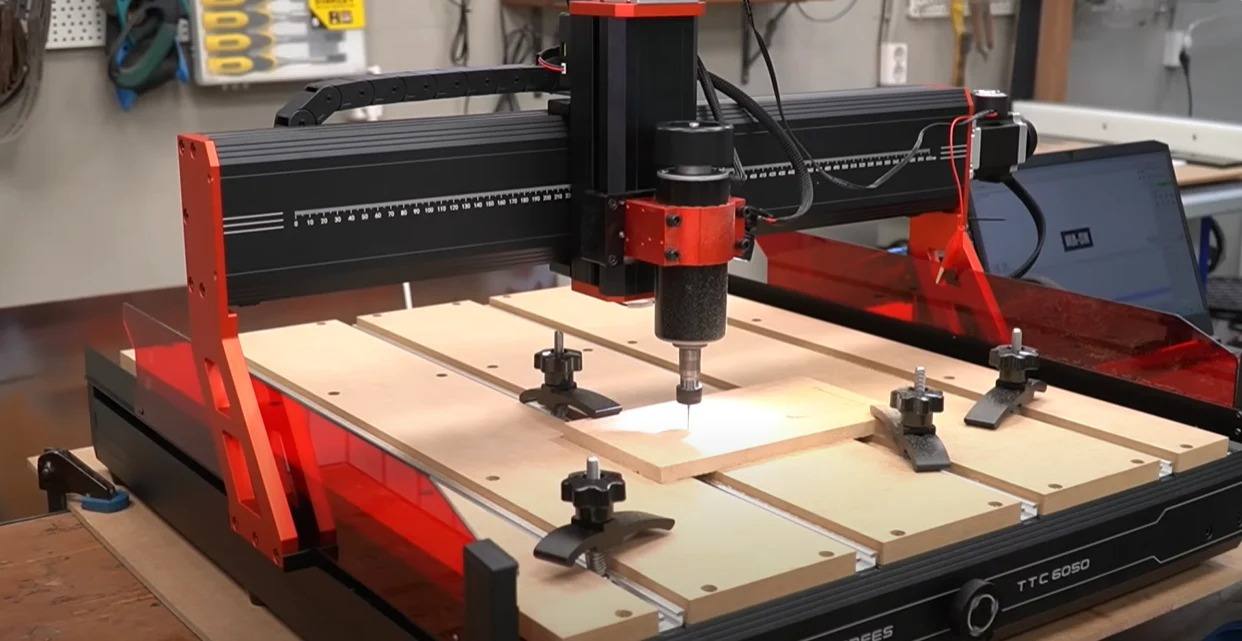
CNC router machines give makers precise control over material removal and shape creation that hand tools cannot match consistently. Desktop models bring this capability into smaller workshops and home studios, enabling everything from furniture components to detailed carvings and functional prototypes.
Working area size is one of the first specifications to examine. Smaller machines suit jewelry-scale or model work, while larger beds accommodate cabinet parts, signs, or multiple smaller pieces in a single setup. Vertical travel, or Z-height, determines the maximum material thickness and the ability to machine three-dimensional forms.
Spindle power and speed range influence material choices and cutting strategy. Higher-powered spindles handle denser hardwoods and light metals more effectively, while variable speed control helps match cutter recommendations. Collet size and available tool holders affect the range of bits that can be used without adapters.
Machine rigidity directly impacts surface finish and dimensional accuracy. Sturdy frames, quality linear motion components, and solid gantry designs reduce vibration and deflection during cuts. Users who plan to machine harder materials or take deeper passes benefit from more robust construction.
Controller electronics and software compatibility shape the daily experience. Systems that support popular open-source or free controller packages allow users to select interfaces they find intuitive. Reliable communication between computer and machine minimizes lost steps and unexpected stops.
Many collections include both standalone machines and equipment bundles. Bundles often package the router with essential accessories such as clamps, bits, or dust collection fittings, simplifying the initial purchase. Comparing individual models side by side clarifies differences in features and included items.
Accessory ecosystems extend usefulness over time. Dust shoes, spoilboards, vacuum tables, and rotary attachments adapt a machine to new project types. Checking compatibility before purchase avoids later disappointment when upgrades become desirable.
For woodworking specifically, dust management is critical. Effective collection systems keep the work area cleaner, protect the machine’s mechanical components, and improve visibility during cutting. Some machines integrate ports that connect easily to shop vacuums or dedicated collectors.
Prototyping workflows often prioritize quick iteration. Machines that home and set zero reliably, combined with software that supports rapid toolpath generation, shorten the cycle from design change to physical part. Users who iterate frequently value these practical features as much as raw specifications.
When evaluating options, real project examples and community feedback provide useful context. Looking at finished work produced on similar machines reveals practical strengths and limitations that specification sheets alone may not convey.
Purchase decisions benefit from clear priorities. Defining primary materials, typical part sizes, and available workspace helps narrow the field. practical buying tips for CNC routers can further refine the selection process by highlighting factors that matter most for long-term satisfaction.
Desktop CNC routers continue to expand what is possible in small workshops. Careful comparison of working area, rigidity, spindle capability, and accessory support leads to a machine that grows with the user’s skills rather than becoming a limitation.
FAQ
How much working area do most hobbyists need? Many start successfully with beds around 300 × 300 mm or slightly larger. Larger projects or batch production push users toward 400 × 400 mm and above.
Are bundled packages better than buying the machine alone? Bundles can offer better initial value and ensure compatible accessories. Experienced users sometimes prefer selecting individual components to match specific needs.
What role does the controller board play? The controller interprets G-code and drives the motors. Compatibility with common software and reliable performance under load are more important than brand name alone.
Can desktop CNC routers cut metal? Light aluminum and brass are possible on rigid machines with appropriate tooling and conservative parameters. Heavy steel cutting generally exceeds desktop capabilities.
How important is dust collection? Very important for both health and machine longevity. Fine wood dust accumulates quickly and can affect electronics and linear components if left unmanaged.