
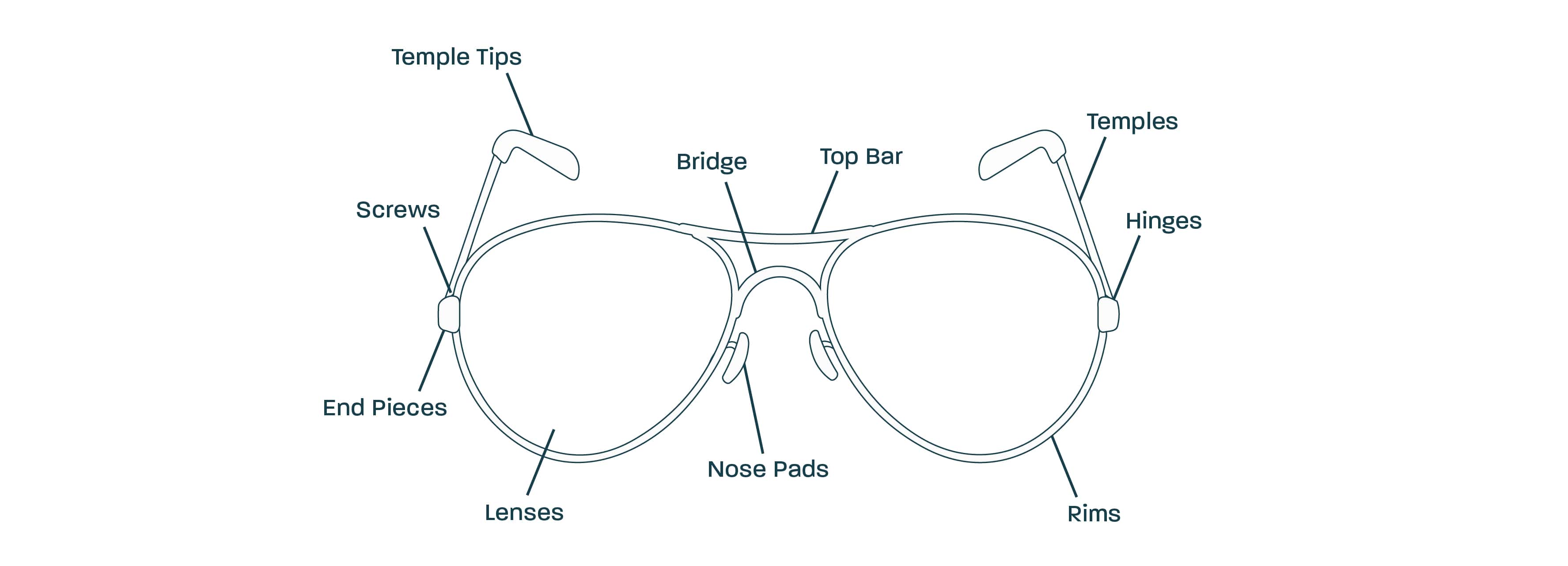
A pair of glasses can appear to be a single, simple object, but it is actually made from several carefully designed components that work together. The lenses provide the optical function, while the frame keeps them correctly positioned in front of the eyes. Small parts such as hinges, screws, nose pads, end pieces, and temple tips may seem insignificant, yet they can have a major effect on comfort, stability, and durability.
Learning about the parts of glasses is useful for more than simply knowing their names. It can help you choose better-fitting eyewear, recognize common problems, understand basic maintenance, and communicate more clearly with an optician when your glasses need adjustment or repair. This guide explores the complete glasses anatomy in straightforward language, including what each component does and why it matters.
What Are the Main Parts of Glasses?
Most conventional eyeglasses consist of a front frame, two lenses, side temples, and several smaller connecting components. The frame front generally includes the rims or eye wires, bridge, and end pieces, while the temples extend backward toward the ears. Hinges connect the front of the frame to the temples and allow them to fold for storage.
Depending on the frame design, you may also find nose pads, pad arms, temple tips, screws, rivets, or decorative elements. Not every pair includes exactly the same components because full-rim, semi-rimless, and rimless frames use different construction methods. However, understanding the standard eyewear components gives you a useful foundation for identifying almost any pair of glasses.
1. The Frame Front
The frame front is the part of the glasses that sits across the front of your face and supports the lenses. It determines much of the frame's overall shape, including whether the glasses appear round, rectangular, oval, square, or another style. The frame front also helps position the lenses correctly in relation to your eyes.
A well-designed frame front needs to provide both structural support and a comfortable fit. If it is too wide, the glasses may move excessively, while a frame that is too narrow can place unwanted pressure against the sides of the head. Frame size should therefore be considered alongside appearance when choosing eyewear.
2. Lenses
The lenses are the optical elements positioned directly in front of your eyes. Prescription lenses are manufactured according to an individual's vision requirements, while non-prescription lenses may be used for fashion, protection, or other purposes. Lens materials can vary, and different designs can affect weight, thickness, durability, and visual performance.
Because the lenses are responsible for the optical function of prescription glasses, keeping them clean and undamaged is essential. Scratches, incorrect cleaning methods, or unsuitable storage can reduce the quality of the wearing experience. Modern lenses may also have specialized treatments designed to provide features such as reduced reflections or easier cleaning.
3. Rims or Eye Wires
The rims, sometimes called eye wires, are the sections of the frame that hold the lenses. In a full-rim design, the rim completely surrounds each lens, creating a clearly defined outline. This structure also contributes significantly to the overall visual character of the glasses.
Some eyewear uses semi-rimless construction, where part of the lens edge is exposed, while rimless designs minimize the surrounding frame altogether. Each approach has a different appearance and construction method. When selecting glasses, the rim style can influence both aesthetics and how prominently the frame appears on the face.
4. The Bridge
The bridge is the section connecting the two sides of the frame across the nose. It helps support the glasses and influences how the frame sits on the face. Because it is positioned directly above the nose, its width and shape can have a noticeable effect on comfort.
Bridge design is particularly important when selecting glasses online because a frame can look attractive but still feel uncomfortable if the bridge does not suit the wearer. A suitable bridge helps keep the lenses properly positioned without creating excessive pressure. Different frame designs use different bridge shapes to accommodate a variety of fitting preferences.
5. Nose Pads
Nose pads are small cushions that sit directly on the nose and help support the glasses. They are particularly common on metal frames, although they can appear on other frame styles as well. Depending on the design, they may be made from materials such as silicone, plastic, or other materials selected for comfort and grip.
Nose pads are also important for frame adjustment. If they are positioned incorrectly, the glasses may slide, sit too high or low, or feel uneven. Since they regularly contact the skin, they can accumulate oils and dirt, making regular cleaning an important part of eyewear maintenance.
6. Pad Arms
The pad arms are small supporting pieces that connect separate nose pads to the frame. They are commonly found on frames with adjustable nose pads and allow an optician to make precise fitting changes. Their position can influence how the frame sits on the nose and how much pressure the pads apply.
Because pad arms are relatively delicate, attempting to bend them aggressively at home can cause damage. If your glasses feel uneven or one nose pad sits differently from the other, professional adjustment is usually the safer approach. Small changes to these components can make a significant difference in everyday comfort.
7. End Pieces
The end pieces are located at the outer corners of the frame front. They extend outward from the lens area and provide the connection point between the frame front and the temples. Hinges are typically positioned around this area.
Although end pieces may not receive much attention, they are important structural components. Their design can also include decorative details, especially on fashion-oriented frames. Damage around an end piece can affect the alignment of the temple and may require professional repair.
8. Temples or Arms
The temples, also known as the arms of glasses, are the long pieces extending from the frame toward the ears. Their main function is to keep the glasses securely positioned on the head. When the glasses are not being worn, the temples fold inward over the back of the frame.
Temple length and shape are important elements of proper fit. Temples that are too short can create uncomfortable pressure, while temples that are too long may not provide the expected stability. Their material and thickness can also affect the overall weight and feel of the frame.
9. Temple Tips
At the ends of many temples are temple tips, sometimes called earpieces. These sections are designed to rest around or behind the ears and can provide additional comfort. They may use a softer material than the main temple, particularly on frames intended for extended wear.
Worn temple tips can become uncomfortable and may sometimes be replaced without replacing the entire frame. If the material becomes cracked, rough, or loose, it is worth having the frame inspected. A small replacement can sometimes restore comfort and extend the useful life of the glasses.
10. Hinges
Hinges are mechanical joints that connect the temples to the frame front. Their primary purpose is to allow the temples to open and close. Without functioning hinges, glasses would be difficult to put on, remove, and store safely.
Traditional hinges typically use small connecting hardware, while some frames use flexible or spring-based hinge systems. A loose hinge can make one temple feel unstable or cause the glasses to sit unevenly. Avoid repeatedly forcing stiff hinges because unnecessary pressure can damage the mechanism or surrounding frame material.
11. Screws
Tiny screws are used to secure various parts of many eyeglass frames, especially around the hinges. Their small size makes them easy to overlook, but a loose or missing screw can quickly affect the stability of the frame.
If a hinge begins to feel loose, the problem may involve its screw rather than the entire hinge. Specialized eyeglass repair tools can be used for minor maintenance, but excessive tightening should be avoided. A professional optician can inspect the connection and determine whether the screw needs tightening or replacement.
12. Rivets and Decorative Details
Some frames contain rivets, which can help secure structural connections or serve primarily as decorative elements. Their appearance varies depending on the frame design, and they may be visible near the end pieces or other areas of the frame.
Decorative details can contribute to the personality of eyewear, but they should not compromise comfort or structural integrity. When inspecting a frame, look beyond its appearance and check whether the connections are secure. A stylish frame still needs reliable construction for everyday use.
How Glasses Components Work Together
One of the most important things to understand about glasses anatomy is that individual components do not work independently. The lenses need to remain correctly positioned, the frame must maintain its shape, and the temples must provide enough support to prevent unnecessary movement. Meanwhile, the bridge and nose pads distribute some of the frame's weight and help maintain a comfortable position.
This interaction explains why a small problem can sometimes make an entire pair of glasses feel uncomfortable. A loose hinge can change the position of a temple, while an incorrectly adjusted nose pad can cause the frame to tilt. Proper fitting therefore depends on the relationship between several parts of glasses, rather than on one component alone.
How Frame Components Influence Comfort
Comfort is influenced by frame dimensions, materials, weight, and individual facial features. The bridge determines how the frame rests around the nose, while the temples and temple tips help control pressure around the ears and sides of the head. Lenses also contribute to the total weight that the face must support.
A comfortable frame should feel secure without creating unnecessary pressure. If your glasses leave persistent marks, slide frequently, or feel unusually heavy, the issue may be related to fit rather than the prescription itself. An optician can evaluate the frame and make appropriate adjustments when necessary.
Common Problems With Eyewear Components
Different symptoms can provide clues about which component may need attention. Glasses that repeatedly slide down could involve the nose pads, bridge, or temple fit, while a loose side arm may point toward a hinge or screw issue. If one side sits higher than the other, the frame may need adjustment or inspection for bending.
Not every problem requires a new pair of glasses. Some components can be cleaned, adjusted, tightened, or replaced individually. However, attempting to repair delicate parts without the correct tools can make the problem worse, so professional assistance is advisable for complicated repairs.
How to Protect the Parts of Your Glasses
Good maintenance can help preserve both the frame and lenses. Clean the lenses with appropriate optical cleaning products and a clean microfiber cloth, and avoid using rough materials that could damage their surfaces. When you are not wearing your glasses, place them in a protective case rather than leaving them exposed on a desk, car seat, or other surface.
Handling also matters. When possible, remove your glasses using both hands instead of pulling from one side, which can place uneven stress on the temples and hinges. Avoid leaving glasses in extreme heat for prolonged periods, as certain frame materials and lens treatments can be affected by excessive temperatures.
When Should Glasses Parts Be Replaced?
A damaged component does not automatically mean that the entire pair needs replacement. Depending on the frame, nose pads, screws, temple tips, and some hinges can often be serviced or replaced. Replacing a small component may be a practical solution when the rest of the frame remains structurally sound.
However, a severely damaged frame may no longer provide reliable support for the lenses. Cracks, major bends, or damage around critical connection points should be assessed by an optical professional. This is especially important when the frame is being used with expensive prescription lenses.
Parts of Glasses and Frame Measurements
Understanding eyewear components also makes frame measurements easier to understand. Many frames are identified using measurements for lens width, bridge width, and temple length. These dimensions help describe the overall size of the frame and can be useful when selecting replacement eyewear.
Measurements alone do not guarantee a perfect fit because facial shape and frame construction also matter. Two frames with similar numbers can feel different because their bridges, temple shapes, materials, and curvature are not identical. Trying frames on or obtaining professional fitting advice can therefore be valuable.
Choosing Eyewear Based on Construction
When buying glasses, it is tempting to focus only on lens shape, color, or brand. However, paying attention to the construction of the parts of glasses can help you make a more practical decision. Consider the frame material, hinge construction, bridge design, nose support, temple length, and overall weight.
For everyday wear, comfort and durability should be considered alongside appearance. A frame that looks excellent but constantly slips or presses against your ears may become frustrating over time. The best eyewear combines suitable optical performance with a frame construction that matches your lifestyle and fit requirements.
Final Thoughts on Glasses Anatomy
Understanding glasses anatomy gives you a clearer view of how a seemingly simple pair of eyewear is actually engineered. The lenses, rims, bridge, nose pads, pad arms, end pieces, temples, temple tips, hinges, and screws each have a specific purpose. Together, these eyewear components provide the structure, positioning, stability, and comfort needed for everyday use.
Knowing the names and functions of the main parts of glasses can also make maintenance and repairs much easier. Instead of simply saying that your glasses feel wrong, you can identify whether the issue involves the bridge, nose pads, temples, hinge, or another component. With proper care, suitable fitting, and timely professional adjustments, a well-constructed pair of glasses can remain comfortable, functional, and reliable for a long time.