
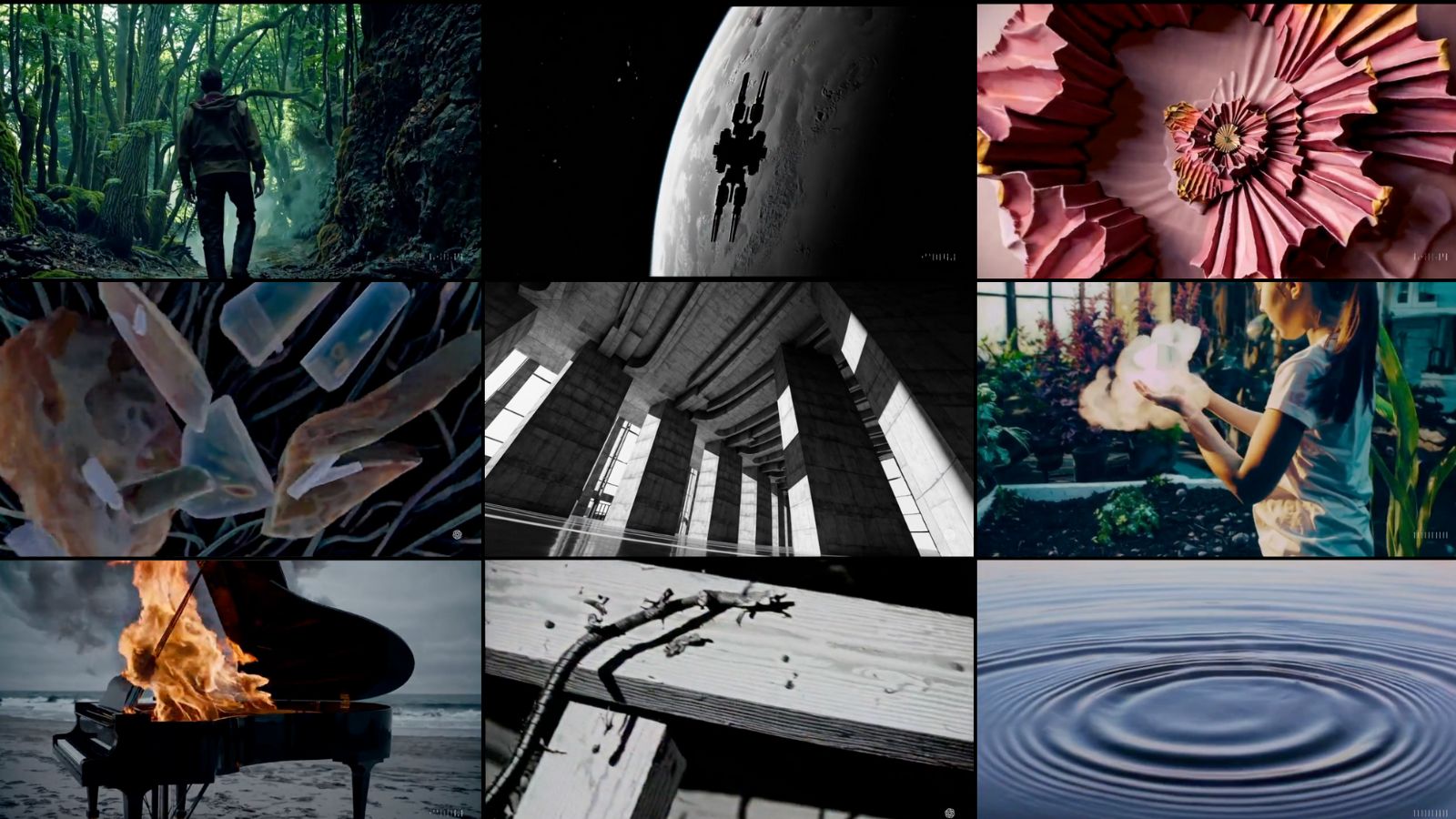
OpenAI shut down Sora. That's the short version. In late March 2026, the company announced it was winding down its AI video generation product web and app access cuts off on April 26, API access on September 24. If you have content stored there, the clock is ticking. After those dates, everything disappears.
The fallout caught at least one major partner off guard. Disney had publicly announced a Sora-powered collaboration not long before the shutdown news dropped and reportedly found out about the closure just 30 minutes before an internal project tied to the deal was set to kick off. The supposed $1 billion partnership never produced a single deliverable. Not a dollar changed hands.
The underlying reason for the shutdown comes down to unit economics. Running Sora was costing OpenAI an estimated $15 million per day. Total lifetime revenue sat at roughly $2.1 million. Video generation is extraordinarily compute-intensive, and OpenAI has made a deliberate choice to concentrate its resources on coding tools, enterprise services, robotics, and AGI work. Viewed through that lens, the decision is rational just not painless for the people who built workflows around it.
Here's the thing, though: the broader AI video landscape hadn't been steadily waiting around for Sora. Over the past year, a set of competitors from both China and the United States had been closing and then surpassing Sora on the metrics that matter. By the time the shutdown was announced, the field had already moved past it. Below are the five tools that have emerged as the most capable replacements.
Google Veo 3.1
Released January 13, 2026. If you're looking for the most direct successor to what Sora was trying to be, Veo 3.1 is the answer. It generates native 4K video at 3840×2160 Sora 2 never broke past 1080p. Both models support audio-video co-generation, but Veo 3.1 extends further in almost every other direction: object removal, keyframe selection, generation lengths that can exceed a full minute (versus Sora 2's 25-second ceiling), and a multi-reference image system that accepts up to four reference images per generation. That last feature directly addresses the character consistency problems that plagued earlier Veo versions. Access is available through Google Vids, Vertex AI, the Gemini API, and YouTube Shorts.
Best fit: commercial advertising, brand campaigns, and professional productions requiring true 4K output.
Kuaishou Kling 3.0
Released February 4, 2026. Kling 3.0 currently holds a distinction no other AI video model on the market can match: native 4K at 60 frames per second, with no post-production frame interpolation involved. Sora 2 was capped at 30fps and 1080p a meaningful gap in any production context where motion clarity matters.
The feature set goes beyond raw specs. Kling 3.0 includes a six-shot storyboard system that mirrors Sora 2's own Storyboard interface, giving creators multi-angle narrative control within a single generation. Director-style camera controls push, pull, pan, tilt, track, and others are built in, and native lip-sync covers Chinese, English, Japanese, Korean, and Spanish. There's a free tier. Paid pricing undercuts what Sora 2 charged. Sora had no free access at all.
Best fit: music videos, short films, and high-volume social media production.
ByteDance Seedance 1.5 Pro
Released December 16, 2025. Seedance 1.5 Pro is one of the few models that can genuinely match Sora 2 on integrated audio-video capabilities and it does so at roughly one-tenth the cost, sometimes lower.
The architecture is a dual-branch diffusion Transformer with 4.5 billion parameters, processing visual and audio signals through parallel branches synced via cross-attention layers. Conceptually, it mirrors Sora 2's design. Practically, it's far more accessible. Output goes up to 1080p at four to twelve seconds per generation. Multi-language lip-sync spans eight languages including English, Mandarin, Cantonese, Japanese, and Korean. ByteDance also claims its inference acceleration framework cuts generation time by a factor of ten or more.
Best fit: audio-synced content on constrained budgets, and teams running high volumes of material.
MiniMax Hailuo 2.3
Released October 2025. Hailuo 2.3 took a focused approach: rather than competing across every dimension, it concentrated on one specific problem — generating realistic human subjects — and built toward category leadership in that lane. For complex body movement, facial microexpressions, and dialogue lip-sync, it's the model to beat right now, and it's not a close race.
Output resolution is 768p and 1080p, with single generations running six to ten seconds. There are two versions: a standard edition and a Fast variant that cuts both cost and generation time roughly in half, making iterative work more practical. For interview footage, dramatic dialogue scenes, and lifestyle content, Hailuo 2.3 outperforms Sora 2 in this category by a noticeable margin.
Best fit: realistic human subjects, dialogue-heavy scenes, lifestyle content, and social media creators.
Alibaba Wan 2.6
Released December 16, 2025. Wan 2.6 scored 86.22% on VBench — the standard comprehensive video quality benchmark — placing it above Sora's 84.28% and at the top of the open and semi-open source category.
The model generates up to 15 seconds of 1080p video per run and supports multi-shot narrative, reference-video character extraction (R2V), and synchronized audio-video output. Pricing runs 30% to 70% below most competitors. Its predecessor, Wan 2.1, was fully open-sourced, which gives the Wan family a practical edge for engineers who want to run locally or build directly on top of the model — something no major US competitor currently offers.
Best fit: open-source developers, purely visual content pipelines, and productions where audio is handled in post.
Sora's departure isn't a setback for AI video — it's a sign that the market has matured past the era of impressive demos and unworkable economics. The teams that won are the ones that solved the cost problem early and focused on specific, defensible use cases. They weren't waiting for Sora to stumble. They were already ahead when it did.
stumble. They were already ahead when it did.