
CNC machining, the full name of which is Computer Numerical Control Machining, is an advanced manufacturing process based on digital information technology. By pre-compiling and inputting machining programs into the numerical control system, it precisely controls machining parameters such as the displacement of each coordinate axis of the machine tool, spindle speed, tool selection and change, and coolant supply, enabling the machine tool to perform cutting, drilling, milling, turning, and other machining operations on the workpiece according to preset paths and actions, thereby accurately transforming raw materials or blanks into parts with specific shapes, dimensions, and surface quality.
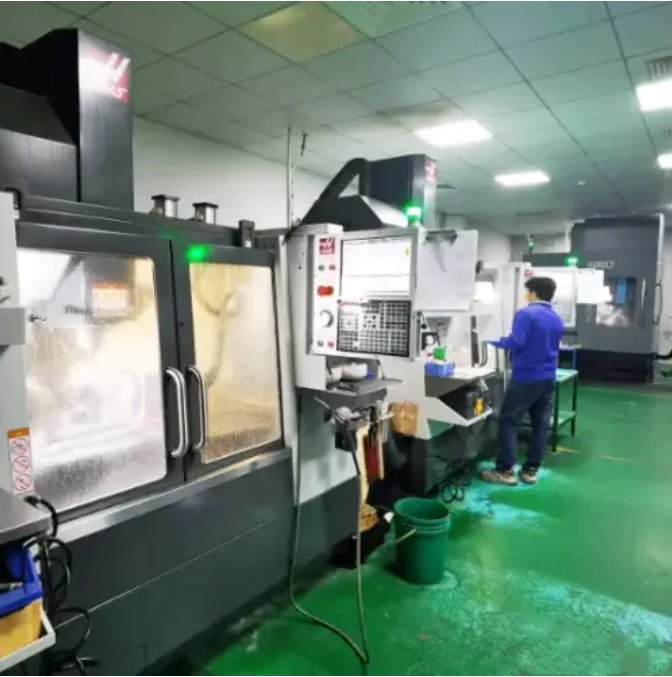
Basics of CNC Machining
Hardware Basics
The hardware basis of CNC machining is various advanced CNC machine tools, which are the physical carriers for executing machining tasks. Common types include CNC milling machines, which have multi-axis linkage capabilities and can machine complex flat and three-dimensional parts; CNC lathes, which focus on machining rotational parts and can achieve high-precision turning, drilling, and other operations. In addition, there are CNC machining centers, which integrate multiple functions such as milling, drilling, and boring, greatly improving machining flexibility and efficiency. These machine tools are all equipped with high-precision transmission systems, servo motors, and reliable mechanical structures, ensuring that they can accurately execute the instructions issued by the computer during machining and achieve precise displacement and cutting actions.
Software Basics
Software plays the key role of the “brain” in CNC machining. First is computer-aided design (CAD) software, which designers use to create three-dimensional models of parts and precisely define their shapes, dimensions, and geometric features, providing detailed design blueprints for subsequent machining. Next is computer-aided manufacturing (CAM) software, which generates tool paths based on the CAD model, that is, the movement trajectory of the tool during the machining process, while also determining cutting parameters such as cutting speed, feed rate, and depth of cut. Finally, through a post-processing program, the tool path generated by CAM is converted into machining program code that specific CNC machine tools can recognize, guiding the machine tool in actual machining.
Personnel Basics
CNC machining cannot function without professional personnel. Operators need to be familiar with the operation interface and basic functions of CNC machine tools, be able to correctly clamp workpieces, install tools, and carry out simple program debugging and machine maintenance. Programmers, on the other hand, must master the use of CAD/CAM software and possess extensive machining process knowledge, enabling them to reasonably plan machining schemes and write efficient and accurate machining programs according to the material, shape, and precision requirements of the parts. In addition, quality control personnel are also crucial. They are responsible for inspecting the dimensional accuracy and surface quality of machined parts, ensuring that products meet design requirements, and promptly identifying and solving problems that arise during the machining process.
Pros and Cons of CNC Machining
Advantages of CNC Machining
With advanced computer numerical control technology, CNC machining demonstrates outstanding machining capabilities. In terms of precision, it can achieve extremely high dimensional and shape accuracy. Through precise program control, machining errors can be kept within a very small range, meeting the stringent requirements for high precision parts in fields such as aerospace and precision instruments. In terms of flexibility, simply modifying the machining program allows rapid switching to the machining of parts with different shapes and specifications, without the need to replace a large number of molds and fixtures as in traditional machining, greatly shortening production preparation cycles and adapting to production modes involving multiple varieties and small batches. Moreover, CNC machining can realize the machining of complex curved surfaces and irregular structures, breaking through the shape limitations of traditional machining methods, providing strong support for innovative product design, and helping enterprises develop more competitive products.
Limitations of CNC Machining
Although CNC machining has significant advantages, it also has some limitations. From a cost perspective, CNC machine tools are expensive to purchase, especially high-end equipment with high precision and multi-axis linkage, which means a huge upfront investment for enterprises. At the same time, the costs of machine maintenance, tool replacement, and the training of professional operators are also not low, increasing overall production costs. For some small enterprises or projects with limited budgets, this may be difficult to bear. In terms of machining materials, certain special materials, such as extremely hard or extremely soft materials, may face problems such as severe tool wear and difficulty in controlling cutting forces during machining, affecting machining quality and efficiency. In addition, CNC machining requires a high level of skill from programmers and operators, who must possess professional CNC knowledge and rich practical experience. The cultivation and reserve of talent is also a major challenge faced by enterprises.
Materials That Can Be Machined by CNC Machining
Metal Materials
CNC machining is widely used in the field of metal materials, covering aluminum alloys, stainless steel, titanium alloys, carbon steel, and cemented carbide. Aluminum alloys, due to their light weight and high strength, are often used in aerospace components and automotive parts manufacturing; stainless steel, with its corrosion resistance, has become the material of choice for kitchenware and medical equipment; titanium alloys, due to their high strength and low density, are widely used in aerospace and high-end medical implants. Cemented carbide, as a tool material, can efficiently cut difficult-to-machine metals such as cast iron and stainless steel, significantly improving machining efficiency.
Plastic Materials
CNC machining can process a variety of engineering plastics, including ABS, PC, PMMA, PEEK, and nylon. ABS is often used in the manufacture of electronic equipment housings because of its good impact strength; the high toughness and transparency of PC make it an ideal choice for optical devices; PEEK is widely used in aerospace and medical fields due to its high-temperature resistance. Through precise control of tool paths, CNC machining can achieve high-precision molding of plastic parts and meet the requirements of complex structural designs.
Composite Materials
CNC machining demonstrates unique advantages in the field of composite materials and can process materials such as carbon fiber reinforced plastics and glass fiber reinforced aluminum. Carbon fiber composites, due to their high strength and lightweight properties, have become the preferred materials for drone frames and lightweight automotive components; glass fiber reinforced materials are widely used in the manufacture of architectural models and sports equipment by enhancing structural strength. By optimizing cutting parameters, CNC machining effectively solves problems such as delamination and burrs in composite material processing.
Ceramic Materials
Dedicated ceramic CNC machine tools can achieve precision machining of high-hardness ceramic materials such as zirconia and alumina. Through high-speed cutting with diamond tools and real-time cutting force monitoring, the machine tool can stably control the dimensional accuracy and surface roughness of ceramic parts, meeting the machining requirements of micro-hole arrays in ceramic substrates for the semiconductor industry and ceramic blades for aerospace. Although dedicated equipment requires a high initial investment, it can significantly reduce long-term production costs by extending tool life and improving machining efficiency.
Wood
CNC machining has realized multi-scenario applications in the field of wood, from furniture manufacturing to architectural models. Three-axis to five-axis CNC machine tools can efficiently complete the production of complex curved furniture components and customized decorative parts through processes such as milling, drilling, and engraving. The vacuum suction cup fixing system ensures the stability of the workpiece during machining, and the automatic tool changer supports the rapid switching of multiple types of tools such as saw blades, milling cutters, and drill bits, significantly improving machining efficiency and surface quality.
Materials That CNC Machining Cannot Process
- Extremely soft or easily adhesive materials: Materials such as pure lead and low-melting-point alloys have extremely low hardness and tend to adhere to the tool during cutting, resulting in chip accumulation, rough surfaces, and aggravated tool wear, making effective machining difficult to achieve.
- Highly brittle materials with extremely low toughness: Materials such as ordinary glass and unreinforced single-crystal silicon are prone to chipping and cracking under cutting force, making it impossible to obtain precision surfaces through conventional CNC machining. They require non-contact processes such as laser or waterjet.
- Ultra-hard and difficult-to-cut materials: Materials such as natural diamond have hardness far beyond the limits of cutting tools, making conventional cutting impossible. Special technologies such as laser cutting or electrical discharge machining (EDM) are required.
- Materials that easily decompose or react at high temperatures: Materials such as unstabilized PVC may decompose or release toxic gases under machining heat, corroding machine tools and endangering health. Cold processing or enclosed-environment processes should be used instead.
- Porous or loose-structure materials: Materials such as metal foam and uncompacted powder metallurgy products have loose structures and are prone to collapse during cutting, making it difficult to ensure precision. They usually need to be formed by compression molding or 3D printing.
- Materials with extreme dimensions or shapes: Ultra-thin-walled parts (<0.1 mm), micro/nano structures, or ultra-large workpieces are limited by machine rigidity, precision, and travel, requiring step-by-step machining or dedicated equipment, with significantly increased costs.
Alternative solutions: According to material characteristics, processes such as laser, EDM, waterjet, chemical etching, or 3D printing can be selected to overcome the physical limitations of CNC machining.
Alternative Machining Processes to CNC Machining and Their Advantages and Disadvantages
I. Alternative Processes and Their Limitations
Traditional machining (turning/milling/drilling): Equipment costs are low, making it suitable for small-batch production of parts with simple geometric shapes. Skilled technicians can flexibly adjust processes based on experience, but machining precision is affected by human factors (at the ±0.1 mm level), the ability to machine complex curved surfaces is weak, and repeatability is poor.
Electrical discharge machining (EDM): It breaks through material hardness limits and can process conductive materials such as cemented carbide and mold steel, achieving micron-level precision (±0.005 mm), making it suitable for complex structures such as deep cavities and narrow slots. It is limited to conductive materials only, has a slow machining speed, and a relatively high surface roughness (Ra above 3.2 μm), requiring subsequent polishing.
Laser/waterjet cutting: Non-contact machining with no mechanical stress, suitable for rapid cutting of sheet metal (laser) or non-metals (waterjet), with a small heat-affected zone (laser) or none (waterjet). Laser cutting thickness is limited (usually <30 mm), waterjet precision is relatively low (at the ±0.1 mm level), and the edges are prone to burrs.
3D printing (additive manufacturing): It breaks through the limitations of traditional subtractive machining and can manufacture complex internal structures (such as lattice structures) and lightweight parts. Material utilization is high (close to 100%), making it suitable for rapid prototyping and small-batch production, but the surface roughness is poor (Ra above 12.5 μm), the mechanical properties may be inferior to forged parts, and the range of materials is limited (mainly plastics and metal powders).
Stamping: Extremely efficient for mass production (unit cost as low as a few cents), with uniform material deformation, suitable for forming sheet metal parts (such as automotive sheet metal). It requires custom molds (high cost and long cycle), design changes are difficult, and it is only suitable for two-dimensional or simple three-dimensional shapes.
II. Selection Strategy for Alternative Processes
For high-precision complex parts (such as aero-engine turbine blades and artificial joints): CNC machining is preferred, and EDM can be combined when necessary for precision finishing of gear shapes.
For large-batch simple parts (such as electronic connectors and standard fasteners): Traditional machining or stamping is more economical.
For high-hardness conductive materials (such as cemented carbide molds): EDM is the main choice, with CNC machining as an auxiliary process (such as rough machining).
For rapid prototyping/micro-nano structures (such as concept models and biological scaffolds): 3D printing is the main choice, and CNC machining is used for post-processing (such as support structure removal).
For sheet cutting (such as sheet metal housings and advertising signs): Laser cutting (for metals) or waterjet cutting (for non-metals) is more cost-effective.
Summary: CNC machining has irreplaceable advantages in precision, complex-structure machining, and material adaptability, but cost and technical barriers must be weighed; the choice of alternative processes should be based on a comprehensive decision involving part characteristics (precision, material, batch size), cost budget, and delivery cycle.
How to Find a Reliable CNC Machining Service Provider
Technical Strength
Priority should be given to service providers equipped with five-axis machining centers and high-precision inspection equipment to ensure the ability to machine complex parts; their experience in processing multiple materials (such as titanium alloys and PEEK) should be verified to avoid deformation or surface defects; service providers should offer process optimization suggestions (such as adjusting R angles to reduce machining difficulty) to improve part performance.
Quality Control
Service providers should have certifications such as ISO 9001, and those in the automotive/medical industries should have IATF 16949/ISO 13485; inspection processes should cover the entire process (first article inspection, in-process inspection, final inspection), and each batch should be accompanied by a CMM report and material certification; the yield rate should reach above 99.5%, and defect rate clauses should be written into the contract.
Service Responsiveness
Service providers should have teams with engineering backgrounds and support video-based technical benchmarking; they should provide “starting from 1 piece” sampling, 24-hour urgent delivery, and one-stop surface treatment services; response speed should be improved.
Industry Reputation
The strength of the service provider should be verified through cases from well-known enterprises (such as in medical and aerospace fields); service attitude, problem-solving ability, and delivery stability should be verified through industry forums and social media.
If you want know more details or get a instant cnc machining manufacturer,you can contact with us Weldo now.