
3月23日、赤穂市の交通公園の路面清掃作業は、最も路面が傷んでいるロータリーエリアの清掃初日となりました。
On March 23rd, road cleaning work at Akaho City's traffic park began with the first day of cleaning the rotary area, which has the most severely damaged road surface.
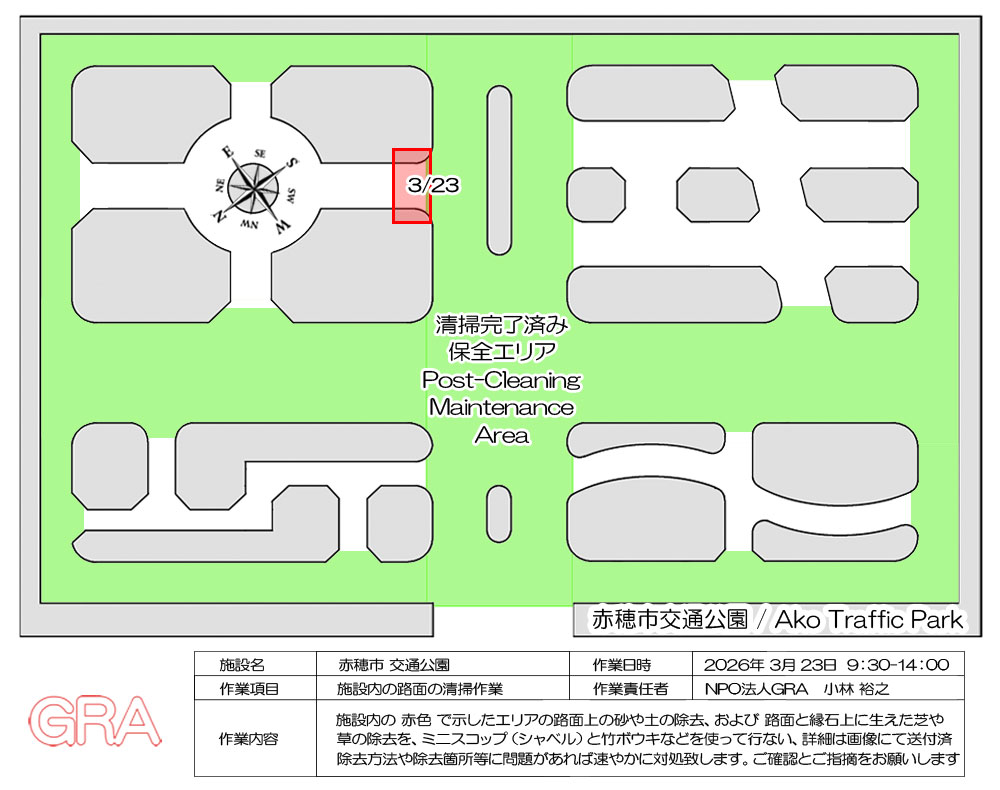
『 最も深刻なエリア/ Most Damaged Area 』
今回、初めて清掃を行なったエリアは、交通公園の中で最も路面破壊が深刻な「ロータリーエリア」です。それは、下の画像を観ればはっきりと伝わるでしょう。
The area cleaned for the first time was the rotary section, where pavement damage is most severe.
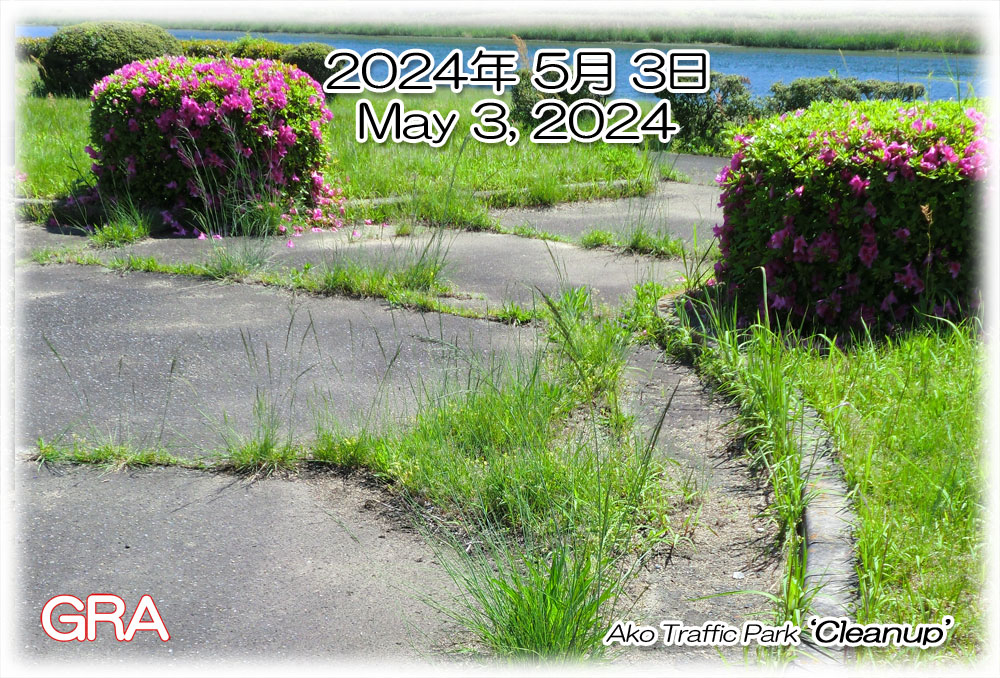
これは 2024年5月3日の 画像ですが、路面から草が生い茂っている通り、草たちが路面を割り、割れた舗装を浸食して、土砂を溜め込んで繁茂しているのが判るでしょう。恐らく、このロータリーエリアは利用される機会が少なく、路面清掃も行なわれず、伸びた草たちを刈り取る作業だけが繰り返されたのでしょう。その為、草の茎や根が残り、季節が巡る度に草の密度が増し、舗装が浸食されて土砂に変わってしまったのでしょう。
As shown in the photo taken on May 3, 2024, grass had broken through the pavement, eroding the surface and accumulating dirt and debris.It appears that this area has been used infrequently and has not been regularly cleaned, with only the overgrown grass being cut back. As a result, stems and roots remained, increasing in density each season and gradually turning the damaged pavement into packed soil and debris.
『 土砂の掘り出し / Excavation of Dirt and Debris 』
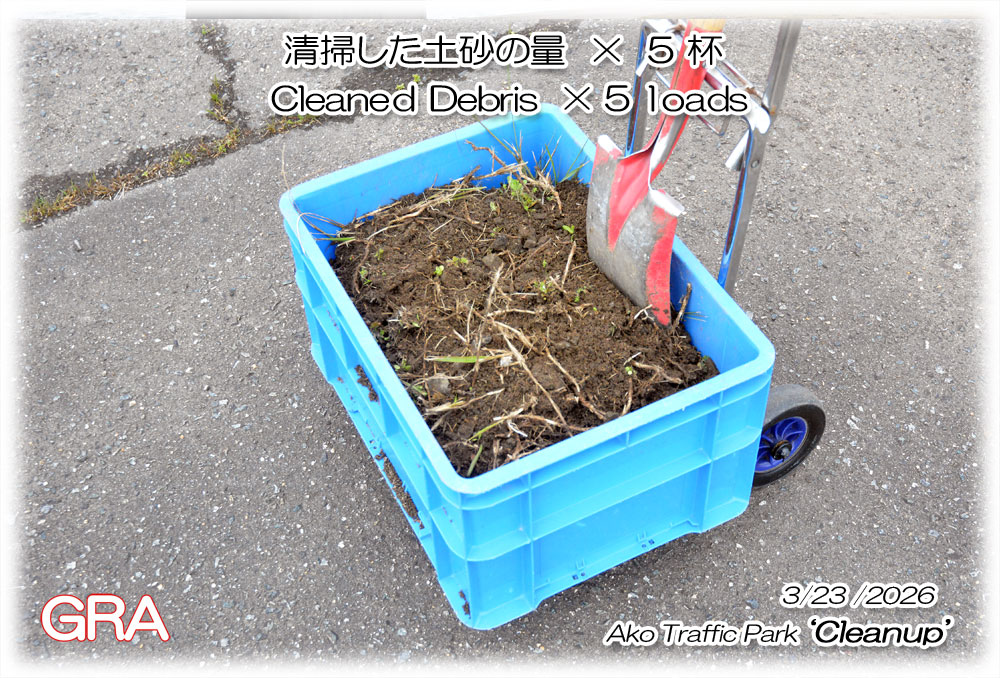
だから、草たちの繁茂を止め、再生を遅らせる為に、草たちを引き抜くのではなく、土の中の地下茎と土砂をまとめて掘り出すのが今回の作業になりました、お蔭で、たった 22㎡ ほどの作業エリアでしたが、40L コンテナ で 約 5杯分の土砂を除去して、廃棄する事になりました。予想していたよりも路面の破壊が深刻でしたから、「ロータリーエリア」全てを清掃するのに必要な期間は長くなりそうです。でも、きっと、完了すれば 見違える状態になる事は間違いないでしょう。
To stop further overgrowth and delay regrowth, the task focused not on simply pulling out the grass but on excavating the underground stems together with the accumulated dirt and debris. Although the work area was only about 22 m², approximately five 40‑liter containers of debris were removed and disposed of. The pavement damage was more severe than expected, and cleaning the entire rotary area will likely require a longer period. However, once completed, the area should look dramatically improved.
『 次回の清掃目標 / Next Target 』
次回の清掃も「ロータリーエリア」になります。恐らく、あと6~8日ほど掛かりそうですが、草たちが最も伸びる 6月までには完了させる予定です。なお、今回の清掃では、カメラの設定の誤りがあった為、報告用として掲載出来る画像はありませんが、次回はご期待下さい。きっと、浸食された路面の状態を伝えられると思います。
The next cleaning session will also focus on the rotary area. It is expected to take another six to eight days, with completion planned before June, when grass growth peaks. Due to incorrect camera settings, no usable photos are available for this report, but we expect to provide clear images next time to show the extent of the erosion.

 ページ中の画像は クリエイティブ・コモンズ 表示 - 非営利 - 改変禁止 4.0 国際 ライセンスの下に提供されています 文章等は許可無く転載することを禁じます / Copyright GRA All Rights Reserved. |