
For most people encountering Best Matcha today, it shows up as a latte, a smoothie ingredient, or a trendy café order — a far cry from its original context. But long before matcha became a global wellness and café staple, it held (and still holds) a deeply significant place at the center of one of Japan's most refined cultural traditions: the Japanese tea ceremony, known as chanoyu or sado. Understanding matcha's role within this ceremony reveals a completely different side of the drink, one rooted in mindfulness, precision, and centuries of cultural meaning rather than trend-driven consumption.
A Brief History of Matcha's Ceremonial Roots
Matcha's connection to Japanese tea culture traces back to the introduction of powdered tea from China, which Zen Buddhist monks brought to Japan in the 12th century. Over time, this practice evolved into something distinctly Japanese, eventually formalized into the structured, deliberate tea ceremony still practiced today. Historical figures like Sen no Rikyū played a major role in shaping the ceremony's philosophy during the 16th century, emphasizing simplicity, mindfulness, and respect as core principles rather than treating tea preparation as a purely functional task.
This history matters because it explains why matcha, specifically, became the tea of choice for this tradition. Unlike steeped teas, matcha involves consuming the entire ground leaf rather than an infusion, which was seen as a more complete, intentional way of experiencing the tea — fitting for a ceremony built entirely around presence and attention to detail.
The Philosophy Behind the Ceremony
The Japanese tea ceremony isn't really about the tea itself, at least not exclusively. It's built around four core principles: harmony, respect, purity, and tranquility. Every movement within the ceremony — from the precise way utensils are handled to the specific sequence of preparing and serving the tea — reflects these values, turning what might otherwise be a simple beverage preparation into a meditative, deeply intentional practice.
This is part of why ceremonial grade matcha specifically holds such importance within this tradition. Its smooth, naturally sweet flavor, free of the bitterness found in lower grades, is meant to be experienced fully and mindfully, without distraction or dilution, mirroring the ceremony's broader emphasis on presence and simplicity.
How Matcha Is Actually Prepared in the Ceremony
The preparation process itself follows a specific, practiced sequence, using dedicated tools that have remained largely unchanged for centuries:
- Chawan — the tea bowl, often chosen with specific aesthetic or seasonal significance in mind.
- Chasen — a bamboo whisk, used to blend the matcha powder with hot water into a smooth, frothy consistency.
- Chashaku — a bamboo scoop, used to measure the precise amount of matcha powder for each preparation.
The matcha is sifted into the bowl to remove any clumps, hot water (kept below boiling to avoid scorching the delicate powder) is added, and the tea is whisked briskly in a specific motion until a light layer of froth forms across the surface. This isn't a quick, casual stir — the whisking technique itself is practiced and refined, reflecting the same attention to detail present throughout the entire ceremony.
Two Styles: Usucha and Koicha
Traditional ceremonies typically involve one of two preparation styles, each using ceremonial grade matcha but producing a different final result.
Usucha, or "thin tea," is the more commonly encountered style, using a smaller amount of matcha whisked into a lighter, frothier consistency. This is generally what most people picture when imagining matcha prepared in the traditional style.
Koicha, or "thick tea," uses considerably more matcha powder with less water, producing a much thicker, more concentrated preparation without the same frothy top layer. Koicha is generally reserved for more formal ceremonial occasions and requires an even higher grade of matcha, since its concentrated preparation leaves nowhere for lower-quality flavor to hide.
Why Only the Highest Grade Matcha Belongs Here
Given the ceremony's emphasis on mindfulness and quality, only genuine ceremonial grade matcha is considered appropriate for traditional preparation. This isn't simply a stylistic preference — lower grades of matcha, whether standard beverage or culinary grade, carry a bolder, more bitter flavor profile specifically suited to being mixed with other ingredients. In a ceremony built around experiencing tea in its purest, most direct form, that boldness and bitterness would work directly against the ceremony's core intention.
This connects closely to the broader category of Green Tea that matcha belongs to, since the entire ceremonial tradition depends on starting with leaves grown, shaded, and processed with enough care to produce a smooth, genuinely enjoyable flavor when prepared simply, without sweeteners or milk to mask any shortcomings.
The Ceremony's Influence on How We Drink Matcha Today
Even outside formal ceremonial settings, the principles behind the tea ceremony continue to influence how many people approach drinking matcha at home — treating its preparation as a small, intentional ritual rather than something rushed through on the way out the door. This mindful approach doesn't require the full formal ceremony, but it does reflect the same underlying idea: that quality matcha, properly whisked and given a moment of genuine attention, offers something a hurried instant coffee replacement never quite can.
A Familiar Parallel in Daily Ritual
This idea of slowing down for a properly prepared beverage isn't unique to Japanese culture. Anyone who values the process of preparing a strong, well-brewed cup of Karak tea understands a similar principle at work — a daily ritual elevated by care and attention, rather than treated as an afterthought. Different traditions, different ingredients, but the same underlying respect for doing the preparation properly.
Why This History Matters for How We Source Matcha Today
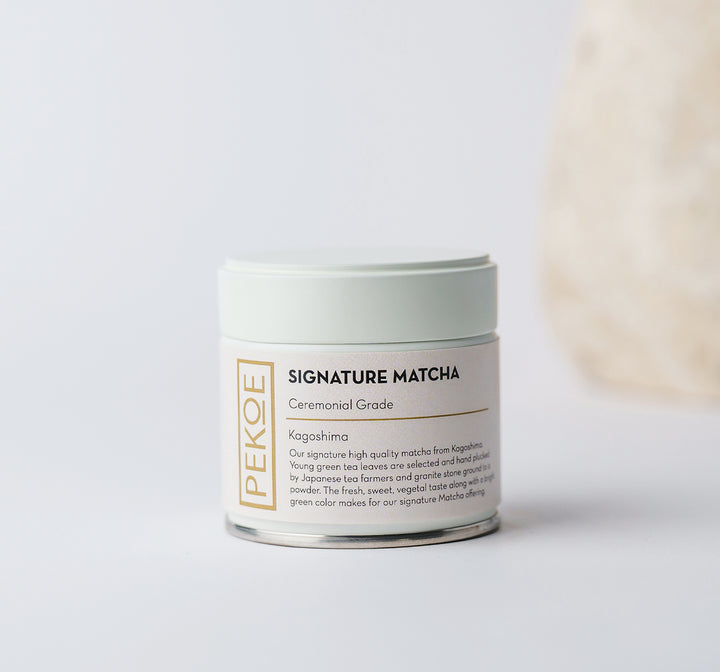
Understanding matcha's ceremonial roots reinforces why sourcing genuinely high-quality, properly processed matcha matters so much, even for those of us enjoying it in a far more casual, everyday context. This is part of why Pekoe sources its ceremonial-grade matcha specifically from established growing regions like Kagoshima and Shizuoka, honoring the same standards of quality that the tea ceremony has demanded for centuries, rather than treating "ceremonial grade" as just a label applied loosely to any tin on the shelf.
Final Thoughts
Matcha's role in the Japanese tea ceremony goes far beyond flavor — it represents centuries of philosophy built around mindfulness, precision, and genuine respect for the moment of preparation itself. Even for those of us who'll never perform the full traditional ceremony, understanding this history adds real depth to how we think about matcha, turning a quick daily ritual into something connected to a much older, more intentional tradition.
For more information
TikTok: mypekoe
Instagram: mypekoe
Facebook: mypekoe