
Saudi Arabia Finance Lease Market Outlook 2024-2030: Growth and Players
Executive Summary
Saudi Arabia's finance lease market is scaling on Vision 2030 diversification and SME asset finance. Infrastructure megaprojects, flexible funding demand, and Islamic leasing are pushing the market from USD 58.8 Billion in 2024 toward USD 102.67 Billion by 2030, with equipment and vehicle leasing leading.
Key Market Velocity Data
- Current Market Value: USD 58.8 Billion in 2024
- Projected Market Value: USD 102.67 Billion by 2030
- CAGR: 9.81% during 2025 to 2030
- Largest Segments: equipment and vehicle leasing, with Islamic Ijara prominent
- Primary Growth Catalyst: Vision 2030 diversification and SME asset finance
What Is Driving Demand in the Saudi Finance Lease Market?
Demand is SME and infrastructure led. About 1.23 million registered SMEs contribute close to 28% of GDP, and SME demand for alternative funding rose about 23%. The Kingdom's roughly USD 1 trillion infrastructure pipeline, including NEOM and the Red Sea Project, is driving leasing of machinery, fleets, and warehouse space. Asset finance lets firms preserve cash while scaling capacity for megaproject contracts.
- SME base: about 1.23 million SMEs contribute close to 28% of GDP.
- Funding shift: SME demand for alternative funding rose about 23%.
- Megaprojects: a roughly USD 1 trillion pipeline lifts equipment and fleet leasing.
- Vehicle growth: automotive leasing grows at about 11.1%, with commercial fastest at 12.2%.
- Diversification: non-oil construction, transport, and manufacturing drive lease demand under Vision 2030.
How Do SAMA and Vision 2030 Shape the Market?
Regulation is the structural floor. The Saudi Central Bank oversees leasing under the Finance Lease Law, issued by Royal Decree, and the Finance Companies Control Law of 2012, requiring licensed joint-stock lessors and registered contracts (SAMA). Vision 2030 actively promotes asset-based SME finance. Mandatory contract registration creates a transparent, enforceable lease register that lowers counterparty risk.
Compliance favors scaled, licensed players. Stringent capital norms, borrower assessment via the SIMAH credit bureau, and contract-registration rules raise the bar for new entrants. These frameworks reward banks and SAMA-licensed finance companies over informal lenders. Islamic-finance compliance adds a Sharia-board layer to product design and structuring.
Which Companies Are Shaping the Competitive Landscape?
Banks dominate the large-ticket tier. Al Rajhi Bank, Riyad Bank, Alinma Bank, Saudi National Bank, Arab National Bank, and Saudi Investment Bank lead equipment and real-estate leasing, often through Sharia-compliant Ijara structures. Their balance-sheet scale anchors infrastructure deals, and Sharia-compliant Ijara structures dominate large transactions, often bundled with broader corporate banking relationships.
Specialist financiers own the SME niche. Al Yusr Leasing, founded in 2004 and SAMA-licensed in 2014, serves over 500,000 customers through 14 branches, while Nayifat Finance, the first non-bank licensed in 2014 with about SAR 1 billion capital, focuses on consumer and SME finance. Advantage sits with licensed players combining capital and digital underwriting. Consolidation is likely as smaller lessors struggle with rising capital requirements.
What Does This Mean for B2B Decision-Makers?
For banks, lessors, and investors, leasing is a core Vision 2030 funding channel, and SAMA compliance plus asset expertise decide margin. With the market moving from USD 58.8 Billion toward USD 102.67 Billion by 2030 at 9.81% CAGR, the runway is large, but licensing and Ijara capability define winners. Asset-residual valuation and remarketing expertise are becoming core differentiators, and cross-selling leasing into existing SME books is the cheapest growth lever.
- For banks: scale Ijara-based equipment leasing for the USD 1 trillion project pipeline.
- For lessors: target SMEs, where alternative-funding demand rose about 23%.
- For investors: back commercial vehicle leasing, the fastest segment at 12.2% CAGR.
- For fintechs: digitize SIMAH-based underwriting to speed SME approvals.
Which Segments and Assets Lead the Saudi Finance Lease Market?
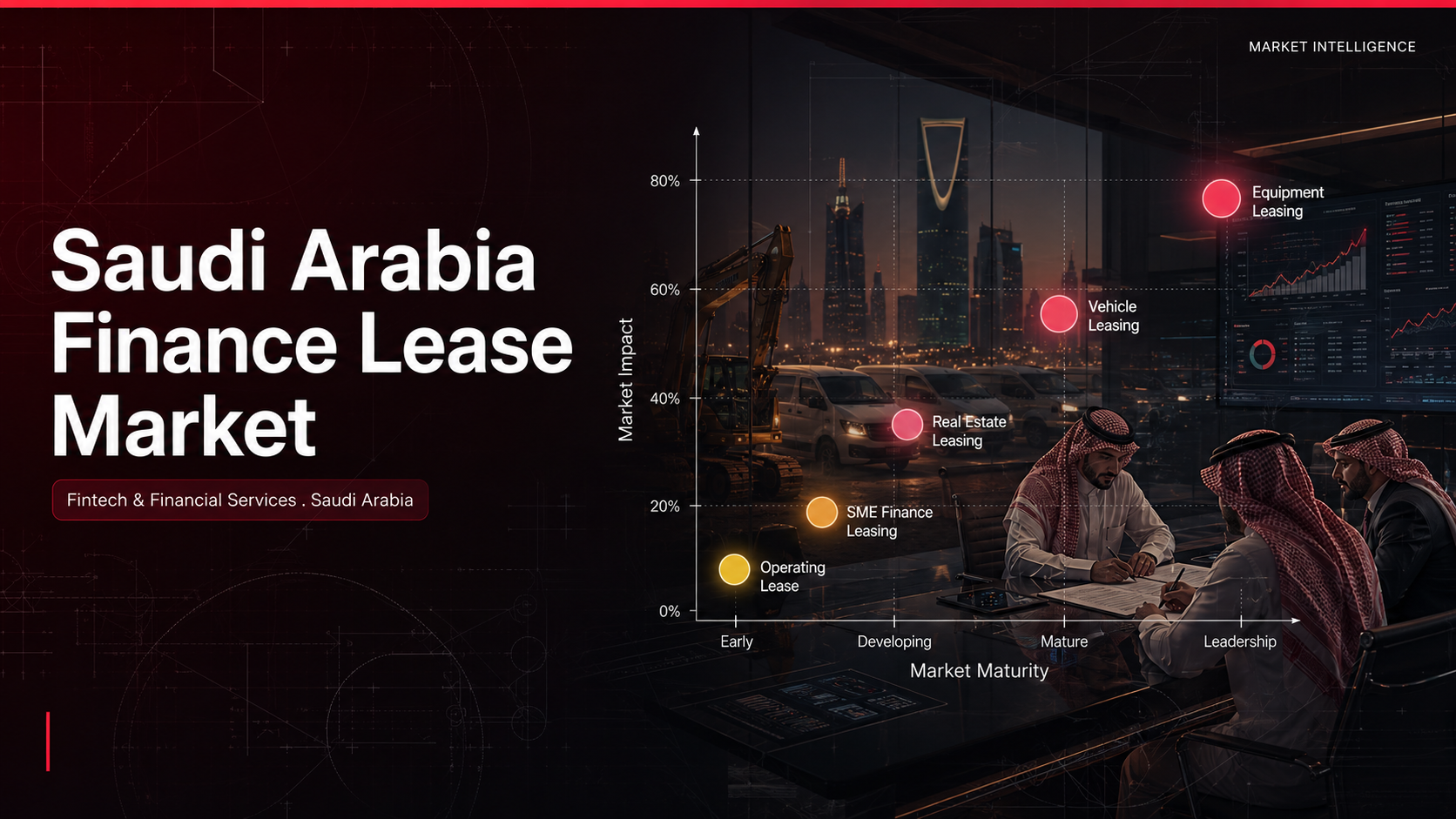
Segment economics favor equipment and vehicle leasing with Islamic structures. Equipment and machinery leasing leads on infrastructure demand, vehicle leasing grows fastest, and real estate and IT equipment leasing add depth. Islamic Ijara is prominent across asset classes, aligning with Sharia-compliant finance preferences. Operating leases are gaining share as firms prefer off-balance-sheet flexibility for fleets, while IT-equipment leasing rises with digital transformation budgets.
- Asset mix: equipment and vehicle leasing lead, with real estate and IT adding depth.
- Vehicle pace: automotive leasing grows about 11.1%, commercial fastest at 12.2%.
- Structure: Islamic Ijara is prominent, matching Sharia-compliant preferences.
Ken Research Strategic Outlook
The decisive lever in Saudi leasing is Vision 2030 asset finance plus SAMA compliance, not interest cycles. As megaprojects scale and SMEs formalize, margin will migrate toward licensed banks and finance companies with Ijara depth and digital underwriting. Expect Al Rajhi, Riyad Bank, and specialists like Al Yusr to lead, pushing the market toward USD 102.67 Billion by 2030. Digital lease origination will compress approval times and widen SME reach across the Kingdom.
Data Source and Full Analysis
For deeper segment-level analysis, access the full Ken Research report here: Saudi Arabia Finance Lease Market Report