
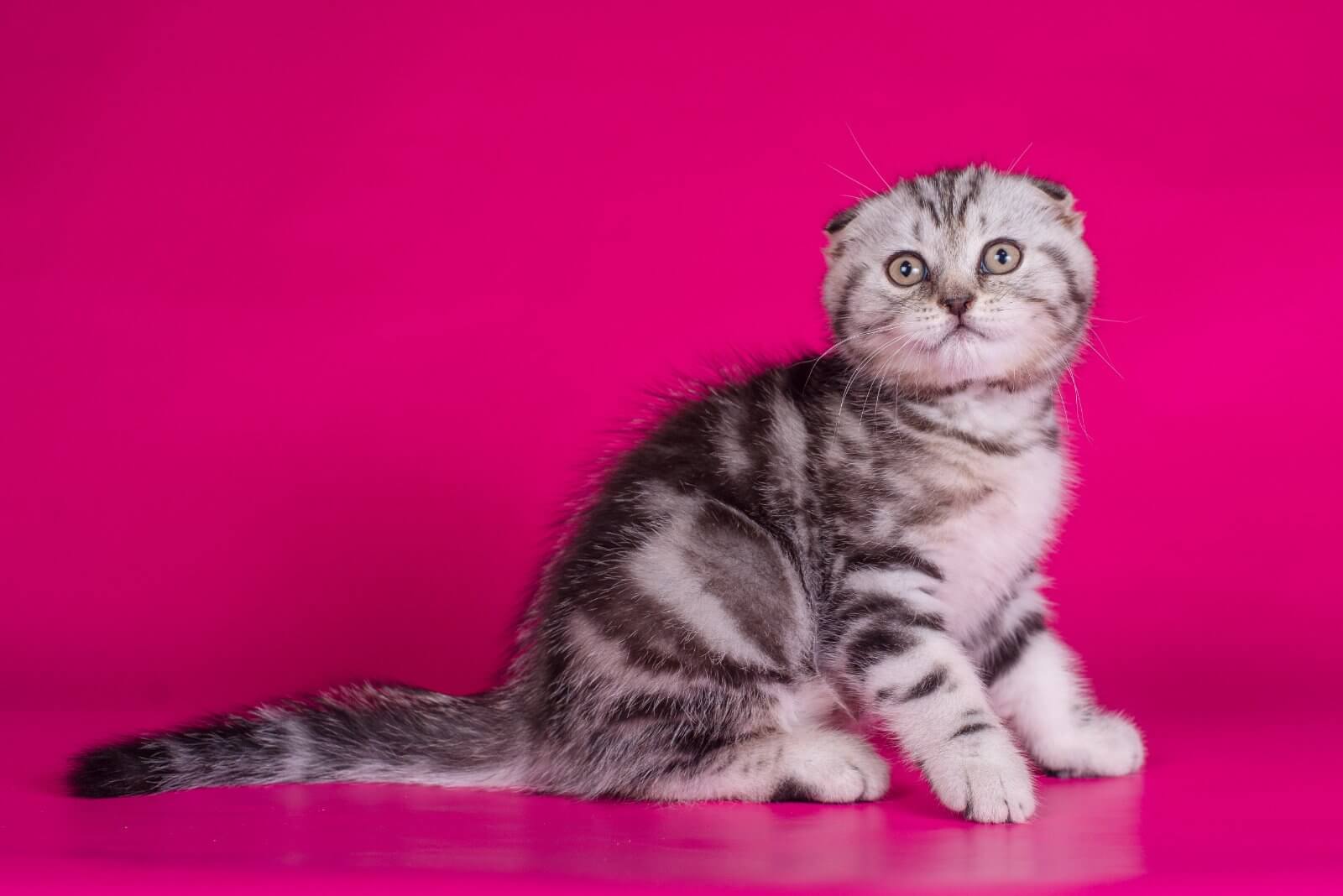
Scottish Fold cats are known for their rounded faces, compact bodies, plush coats, and distinctive folded ears. Although their appearance may make them look small and delicate, they are generally considered medium-sized cats with sturdy frames.
Understanding how a Scottish Fold grows can help owners choose suitable food portions, monitor body condition, prepare correctly sized supplies, and recognize changes that should be discussed with a veterinarian.
How Big Does a Scottish Fold Get?
Adult Scottish Folds commonly fall within a broad range of approximately 6 to 13 pounds, or about 2.7 to 6 kilograms. Their exact adult weight varies according to sex, genetics, bone structure, nutrition, activity level, and overall health.
Males are often heavier and more muscular than females, but this is only a general tendency. Some females may be larger than certain males, and a healthy adult does not need to reach the top of the typical weight range.
- Females: often smaller and more lightly built
- Males: often broader, heavier, and more muscular
- Longhaired cats: may look larger because of coat volume
- Overweight cats: may appear stockier without being naturally larger
Rather than aiming for a particular number, owners should focus on healthy body condition, steady development, comfortable movement, and veterinary guidance.
Scottish Fold Growth Stages
Birth to Three Months
During the first weeks of life, kittens grow rapidly and depend on appropriate nutrition and attentive care. Their bodies are developing quickly, and changes in appetite, energy, digestion, or weight may have a noticeable effect.
Young kittens should be weighed regularly when advised by a veterinarian or experienced caretaker. A kitten that stops gaining weight, loses weight, refuses food, or becomes unusually inactive should receive prompt veterinary attention.
Three to Six Months
This is often one of the most noticeable growth periods. Legs become longer, coordination improves, and the kitten begins to look less round and baby-like.
A nutritionally complete kitten food is important during this stage. Owners should follow feeding instructions carefully and adjust portions with veterinary guidance instead of assuming that a growing kitten should have unlimited food.
Six to Twelve Months
Growth usually continues, although the pace may begin to slow. Some Scottish Folds look nearly adult-sized before their relatively first birthday, while others remain slim and continue filling out afterward.
This stage is also a good time to establish consistent routines for:
- Measured meals
- Daily interactive play
- Regular weighing
- Grooming and nail care
- Dental-care discussions
- Routine veterinary visits
One Year and Beyond
After the first year, a Scottish Fold may continue developing muscle and body width even when its height changes very little. Individual cats mature at different rates, so a gradual change is usually more meaningful than comparison with another cat of the same age.
Sudden weight gain or loss should not be dismissed as normal maturity. It may reflect changes in diet, activity, stress, or health and should be discussed with a veterinarian.
Why Scottish Folds Can Look Heavier Than They Are
Several physical characteristics can make a Scottish Fold look larger or rounder than its actual weight suggests.
Rounded Body Shape
The breed is known for a rounded head, broad-looking face, and compact body. These proportions can create a solid appearance even when the cat is within a healthy weight range.
Dense Coat
A plush coat adds visual volume and may make it difficult to see the waist or body outline. Longhaired Scottish Folds can appear especially large despite weighing the same as a shorthaired cat.
Folded Ear Placement
Folded ears sit close to the head, emphasizing the cat's round facial shape. This can create a smaller, kitten-like appearance that continues into adulthood.
Because appearance can be misleading, owners should assess body condition through gentle observation and veterinary evaluation rather than relying only on photographs or coat shape.
How to Monitor Healthy Growth
A simple growth record can help identify gradual trends. Owners can weigh their cat at regular intervals using a pet scale or by weighing themselves while holding the cat and subtracting their own weight.
Record the result with the date, but avoid becoming focused on minor day-to-day changes. The same scale and similar measuring conditions provide more useful comparisons.
Healthy body condition generally involves:
- Ribs that can be felt without excessive pressure
- A visible or noticeable waist behind the ribs
- No large abdominal fat deposit
- Comfortable walking, jumping, and resting
- Stable appetite and energy appropriate for the individual cat
A veterinarian can provide a professional body-condition score and help determine whether the cat's weight is appropriate for its frame.
Why Weight Management Is Especially Important
The trait responsible for folded ears is also associated with cartilage and bone abnormalities. The severity and age of onset can vary, but owners should take stiffness, reduced mobility, reluctance to jump, an unusual gait, or sensitivity around genetic the limbs and tail seriously.
Excess body weight can add unnecessary pressure to joints. Maintaining an appropriate weight does not prevent an inherited disorder, but it can support mobility and reduce avoidable physical strain.
Consult a veterinarian when a Scottish Fold shows:
- Difficulty jumping onto familiar surfaces
- Stiff history after resting
- Limping or an unusual walking pattern
- Reduced TV in play
- A thick, stiff, or painful-looking tail
- Sudden weight gain or weight loss
- Changes in appetite or litter-box habits
These signs should not be diagnosed through an online article. A veterinarian may recommend an examination, weight-management plan, imaging, or other appropriate care.
Food and Exercise for Healthy Development
Kittens need food formulated for growth, while adults require nutrition appropriate for their age, body condition, activity, and health. The most expensive food is not automatically the best choice for every cat.
Helpful feeding habits include:
- Measuring portions rather than estimating
- Using treats in moderation
- Tracking changes in appetite
- Providing fresh water
- Making dietary changes gradually
- Discussing weight concerns with a veterinarian
Regular play also helps preserve muscle and maintain a healthy weight. Choose low-risk activities such as wand-toy games, rolling toys, puzzle feeders, and stable climbing furniture.
Exercise should suit the individual cat. Never force a Scottish Fold to jump, climb, or continue playing when it appears uncomfortable.
Choosing the Right Supplies
Because Scottish Folds are medium-sized and solidly built, supplies should be selected according to the cat’s actual dimensions rather than generic labels.
- Carrier: large enough for the cat to turn and lie down comfortably
- Litter box: roomy, accessible, and easy to enter
- Cat tree: stable, with broad platforms and a secure base
- Bed: supportive and easy to access
- Scratching post: tall and sturdy enough for a full-body stretch
- Food bowls: durable and easy to clean
Older cats or those experiencing mobility problems may benefit from lower-entry litter boxes, steps, ramps, soft bedding, and food or water stations that are easy to reach. Discuss significant mobility changes with a veterinarian.
Growth Charts Are Guides, Not Guarantees
Online charts can provide general context, but they cannot predict a kitten’s final size or determine whether an individual cat is healthy.
Genetics, sex, nutrition, medical history, activity level, and body structure all influence growth. Two healthy Scottish Folds of the same age may therefore have noticeably different weights.
For a detailed breakdown of expected size, male and female differences, growth influences, and comparisons with other breeds, review the Scottish Fold growth and weight guide.
Final Thoughts
Scottish Folds are generally medium-sized cats, but healthy weight cannot be determined from breed averages alone. Monitoring steady growth, feeding appropriate portions, encouraging comfortable activity, and arranging regular veterinary care are more important than trying to reach a particular number.
Pay attention to the complete picture: appetite, body condition, energy, movement, grooming habits, and changes over time. Early veterinary advice is especially important when growth slows unexpectedly, weight changes suddenly, or mobility becomes uncomfortable.
Every Scottish Fold is an individual. A responsible care plan should reflect the needs of the cat in front of you—not only a chart or breed description.