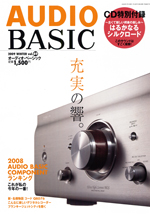
Teruhisa Onda (御田照久) is an audiophile celebrity in Osaka Japan. He writes for "Audio Basics" magazine and owns a pair of B&W Nautilus. He is one expert in audio with very deep knowledge in various of audio sources playback. He recently has added a music server with a Macbook Pro, Plextor Premium 2 and Weiss DAC2.
Two weeks ago, Teruhisa Onda and his audio friend visited DwS mastering studio and we had a great audio discussion. I played him various CDs, and high resolution high sampling rate recordings. I'm very glad that he likes our upcoming Audiophile Jazz Prologue - Part03 Limited Edition so much, and hope he can spread our news to japanese audiophiles.
He introduced me to Waon Records - an Osaka based audiophile records producer/owner, Mr. Kazuhiro Kobushi. Waon Records are made with purist in mind. Mr. Kazuhiro Kobushi uses one-point microphone technique with a space pair AB of Earthwords QTC-1 microphones. Shortest signal path with Grace Design micpre to Tascam DV-RA1000 DSD recorder. Teruhisa gave me a Kazuhiro Kobushi CD, which is an original music piece. The sound is as expected clear and high fidelity. Thank you very much Mr. Onda and Kobushi, I look forward to have more crossovers together. Maybe one day we can bring a group of musicians to record in your excellent Osaka recording hall. Mr. Kazuhiro makes his own monitors with Dynaudio tweeter and Eton Woofer.
I admire Teruhisa Onda enthusiasm in audio. He is a true audiophile.
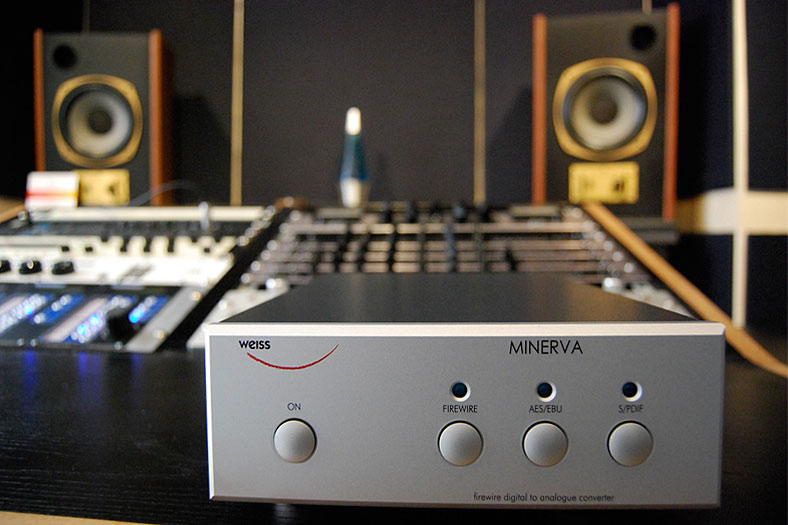
The DAC2/Minerva is the new product line from Switzerland manufacturer Weiss Engineering. Weiss hold a special position in produces ultra high quality products for both high end consumer and professional audio markets. Chief designer/owner Daniel Weiss joined Studer digital audio lab 5 years before he found Weiss Engineering in 1985. During the early stage of digital audio production, Daniel designed sampling frequency converter, and digital signal processing electronics for digital audio recorders ( JVC, Sony F1 and Sony 1630/1610). This was the day before the AES/EBU interface. As a personal friend and partner of mine, Daniel ideas are always ahead of its time. Some of his latest designs were rooted many years ago, but have been waited for the DSP processing power to reach the demand to execute.
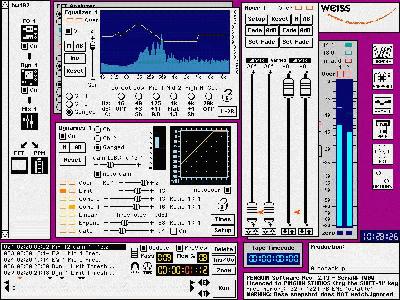
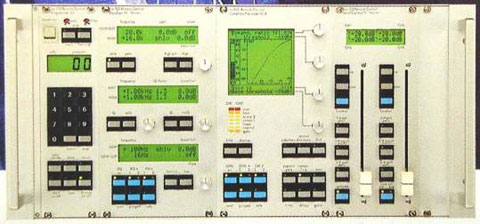
From the beginning, Weiss Engineering put its focuses on the highest quality demanding mastering studios. The legendary modular "102 Series" is milestone in mastering world. Up to date 24/96 processing, 102 Series is still being used in many CD/DVD/SACD productions today. It is proven that Weiss products are very long lasting even in the modern digital age. Modules such as Low cut filter, hardware control panel, software GUI on Mac, Level Control, 4 in 2 Mixer, Dynamic processors, Equalizers and many more were designed to fit in the 102 frame.
During my mastering life in Canada, I was one of the lucky owners of Weiss Gambit series, including the fabulous DAC1. Although I lived in North America, I have very close connections with Asia audiophile circles, provide consultancy for few HiFi manufacturers and distributors, plus audio senior contributing editor for Leo Fung's "Journey To Sound" magazine. Daniel showed me his interest to develop a high end consumer line, and I was involved since then.
It was 2001 that I brought the first Medea prototype DAC back to Hong Kong. In just a very short period, Medea becomes the best sounding DAC in high end consumer market all over the world. Reviews from Taiwan AudioArt,Hong Kong, The Absolute Sound 2003 Golden Ear Award, Stereophile and more. The Stereophile measurement has shown Medea a text book perfect design. In 2005, the matching Jason up-sampling CD Transport was launched. The Jason/Medea combo is still the digital front end to beat in HiFi market even with today standard. Daniel Weiss products are not fashionable gadgets, they are very long lasting tools for professional studios and audiophiles, to create and enjoy music.
Weiss DAC2/Minerva
DAC2/Minerva is an entirely new series from Weiss Engineering. There are many audiophiles who want to own a Weiss front end, but the Jason/Medea combo is not easy to afford. Moreover, computer audio storage/playback becomes popular, more high resolution playback sources materials are available. From a mastering engineer perspective, we know high resolution 24bit/96kHz or 192kHz recordings are so much better than the 16/44.1 CD resolution. DAC2/Minerva is designed toward this direction.
Computer as Source
Top 3 questions in computer as source.
(1) Which soundcard should be use?
(2) How can an internal soundcard sounds as good as the external high end DAC?
(3) Is it possible that a noisy computer can produce good sounding compare to my high end CD transport?
Today music productions are mostly created in DAW (Digital Audio Workstation), either PC or MAC. There is no reason why computer cannot produce good sounding playback while the original source is created at the same place. In technical perspective, data integrity is important. Jitter performance is another major issue.
Features
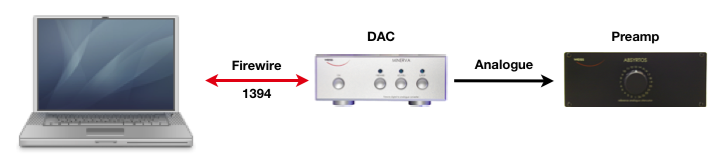
Weiss DAC2/Minerva features jitter free from AES, SPDIF or directly connected to PC/MAC via Firewire 1394. This is not just simplify the requirement of a good computer digital soundcard, which usually are expansive professional audio options like Lynx and RME. Weiss DAC2/Mienrva provides better de-jitter performances. In Mastering, we insert different digital processors to form a signal path. If the DAC cannot produce good de-jitter performance, the more processors in the chain, the worse sound we will get. The mastering job becomes more difficult. It is the reason legendary recording and mastering engineer Bob Katz named Weiss DAC as Holy DAC. It is one of the few DACs in the market that capable to completely eliminate jitter for perfect conversion.
Firewire VS. USB
Weiss picked Firewire connection but not the more popular USB connections for reasons. From professional studio perspective Firewire is widely used in audio and video transfer. It is worth to mention there are new Macbook & Macbook Pro just announced today. The new Macbook no longer equips with firewire connection. We think Apple is trying to push professional users towards Macbook Pro. For firewire control chipset, Oxford chipset provides the best performances in compatibility.
Connections
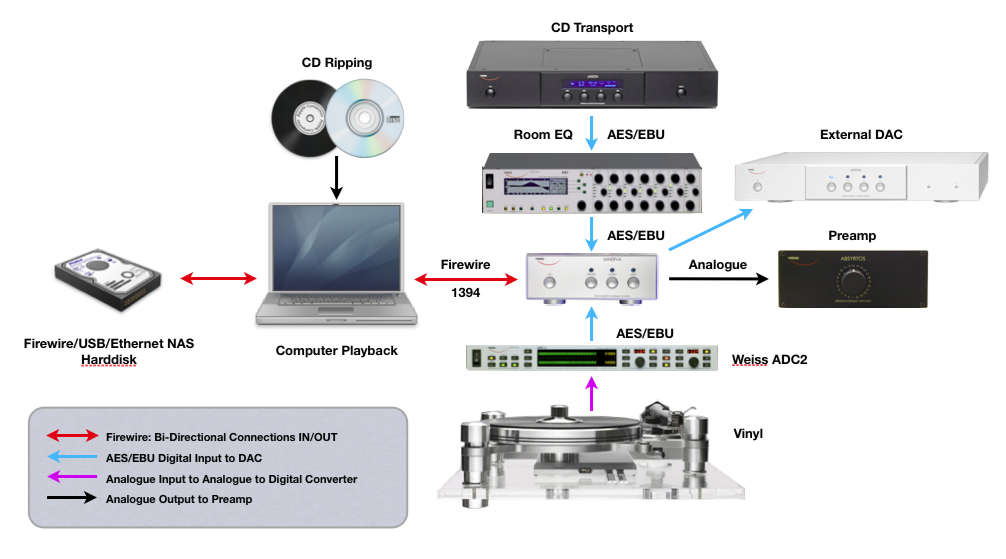
Weiss DAC2/Minerva is a full feature DAC. There are connection options to fit your need.
(1) CD Transport to DAC e.g. SPDIF and AES inputs are provided.
(2) PC/Mac computer as source. e.g. Firewire connection.
(3) PC/MAC computer as source with second external DAC
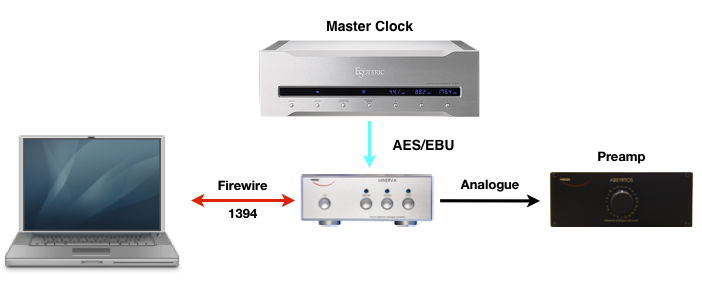
(4) DAC2/Minerva can sync to master clock via any digital input, even using the firewire 1394 connection for computer as source. (software setting on below)
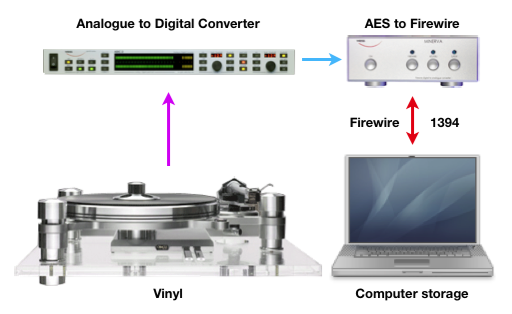
(5) Vinyl and analogue sources record on computer and playback
DAC2/Minerva can record AES input signal to computer. Combine the Weiss reference ADC2, audiophile can record their vinyl collection with up to 24bit/192kHz resolution on computer hard disk for further playback in full resolution.
Software: Drivers for Windows™ and OSX™ operating systems.
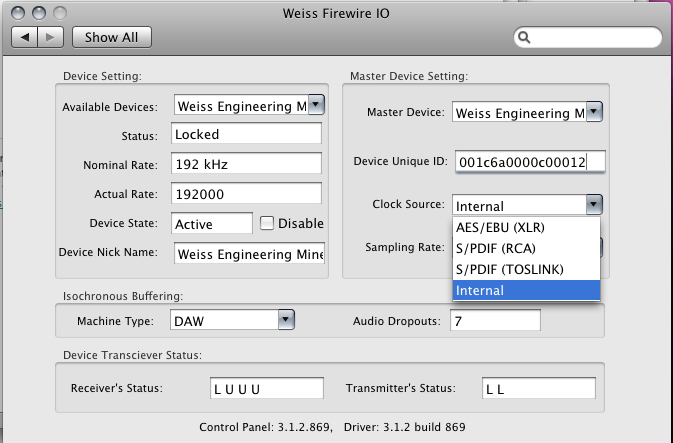
Available Devices: You can view a list of available device, if you have more than one DAC2/Minerva or AFI1
Master Device: You pick the Master Device, all other device will be sync to this Master Device Clock
Clock Source: You can select Internal, any pair of digital inputs or Wordclock input.
For studio (and few audiophile) situations, there are master clock to sync the whole system. DAC2/Minerva can sync to the master clock via any digital input, even using the firewire for playback. You just need to select under the PC/MAC Weiss software Panel -> "Clock Source"
Sampling Rate: DAC2/Minerva supports all major sampling rate from 44.1kHz, 48kHz, 88.2kHz, 96kHz, 176.4kHz and 192kHz
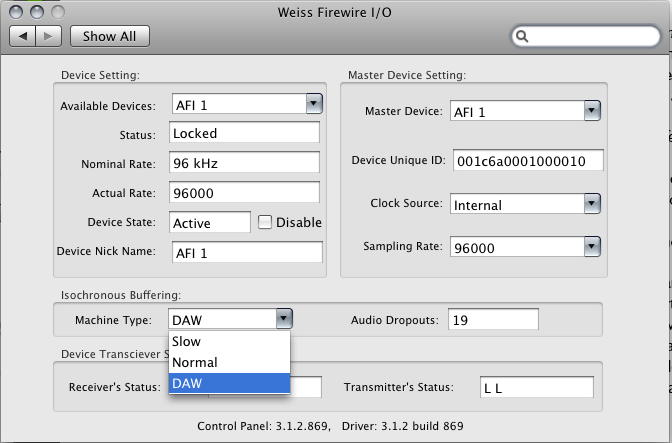
Isochronous Buffering - Machine Type:
This works only under MAC OS/X - There are 3 options here (1) Slow (2) Normal (3) DAW. This determines the latency/buffer in 3 separate settings. While DAW gives lowest latency, it demands the most from computer performance. The minimum roundtrip latency with an AFI1 was about 6.5ms, with the buffer delay in the application on the Mac which loops the audio minimized.
Windows:
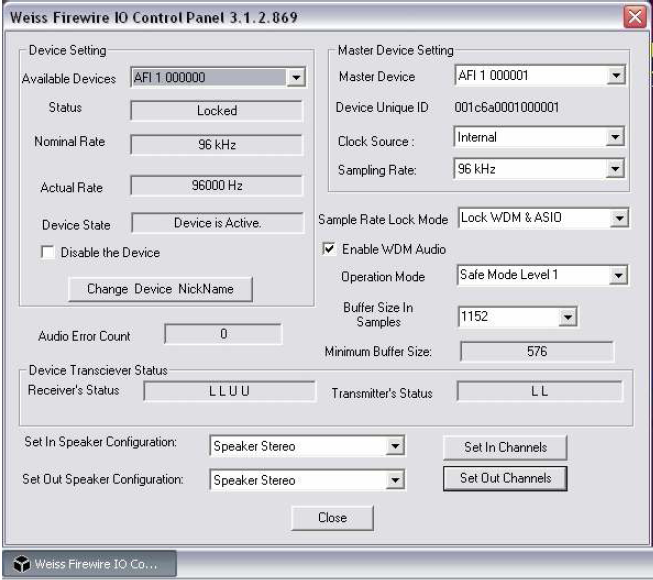
Sample Rate Lock Mode: Determines which parts of the driver are allowed to change the sample rate of the device.
Lock WDM/Windows: allows WDM/Windows applications to change the sample rate. Lock WDM/ASIO: allows WDM and ASIO applications to change the sample rate. Unlock: no application is allowed to change the sample rate. The sample rate must be changed manually. Enable WDM Audio: enables the WDM driver. Operation Mode: determines the stability of the system. For weak systems you should select Safe Mode Level 3. For lower latency Normal or Save Mode Level 1 can be selected. Buffer Size In Samples: Larger buffer sizes increase robustness against dropouts, lower buffer sizes provide low latency. Minimum Buffer Size: the minimum buffer size allowed to use.
Sound Quality
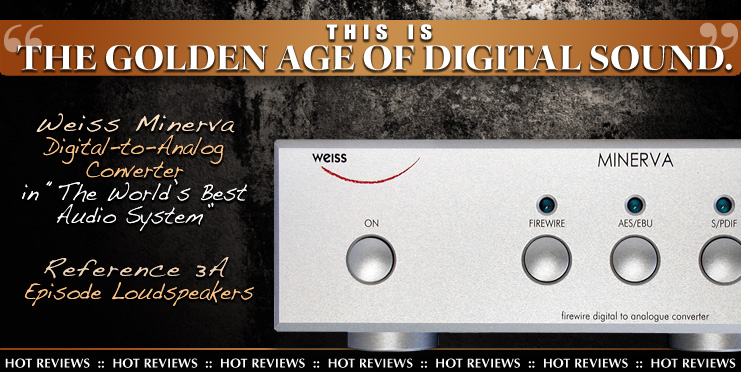
Weiss DAC2/Minerva just won Ultra Audio Jeff Fritz "The World Best Audio System" award, and indeed it sounds far better than I expected (sorry Daniel). It is NOT just a low pricing solution to fit the market demand. It has the most attractive mid-range that I heard from all DACs in similar pricing. The mid range is not colour like tube, but euphony and high resolution. This aspect is very important for high sampling playback. When I listen our up coming jazz records "Audiophile Jazz Prologue - Part 03" 24/192kHz master tape, the whole soundstage and timbre are remain warm and musical. I have test many mid range pricing DACs with high sampling sources, they usually sound thinner and lost density. No wonder both Ultra Audio Jeff Fritz and Chris Connake from computeraudiophile.com mentioned this point when playing Reference Recordings 24bit/176kHz HRx. The bass area range is very full and deep down. I have reasons to believe this is due to the DAC2/Minerva analogue output stage topology.
Compare to Weiss own reference DAC1-Mk2/Medea, the DAC2/Minerva mid range is warm and attractive. However the reference DAC still carry better authority on bass and high ends. Greater dynamics and powerful. The DAC2/Minerva maximum output is +12.2dBu which is 3.16VRMS (peak level) on XLR, and lower on RCA. Both XLR and RCA outputs can be used at the same time without interference. There are separate drivers for the two outputs. The low output impedance (50 ohm) is capable to drive passive preamp, but the reference Medea DACs has +27dBU plus almost 0 ohm in comparison. Remind you the Medea costs four times over Minerva.
It is interestingly that all Weiss DACs has a character as "California sunshine" "Healthy" "Creamy" in my book. All frequencies are presented in very good ratio in the soundstage. This is a big reason why Weiss DACs are used in mastering studios. Mastering engineers rely on what they heard to finalize the master sound and they demand the clarity and micro dynamic even in the deepest and widest soundstage. Some of consumer DACs produce slight blur resolution at the deepest/widest soundstage in order to create a sharper contrast images in the front. Weiss does not produce such effect.
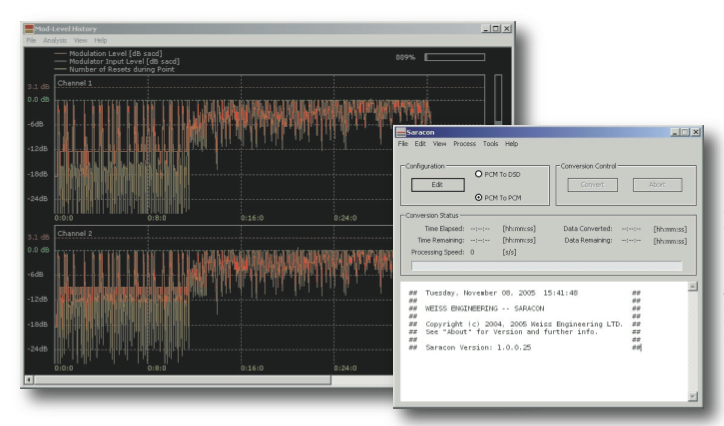
I tested up-sample ripped CD files using Weiss own professional computer program SARACON. It is the best quality sample rate conversion available in the market. How good? The THD+N is better than –180dB for 32 Bit fixed point I/O, unweighted. Audiophile can test with different up-sampling results and match with their own preferences. DAC2/Minerva supports all sampling rate from 44.1kHz to 192kHz. This can be a good upgrade for computer audio as source user. For a price tag HK$5800, SARACON represents the best SRC you can find, has much higher value than audiophile cables.
Measurements: A loop through with our reference ADC
We did these measurements in our mastering lab, it is not a manufacturer press. One can see how clean the spectrum is, even you have no technical background on measurements, you can see there is almost nothing but just the testing signal frequency. The measurements are constant in all sampling rates.
Conclusion:
As the reseller and partner of Weiss, my comments are surely biased. From mastering engineer and audiophile point of view, I am truly happy that Daniel can create such a good DAC in this price range. It doesn't need much more confidence to say that playing back high res materials with a computer can sound superior than any CD combo in the market. Technologies have gone forward. I met many Japan audiophiles during my last Tokyo trip, they are all looking into the NAS music storage. More and more records companies will release their high resolution music through different media.
Websites for uncompressed music downloads and/or hires carriers:
The International Audio Society of Japan (IASJ) is a voluntary association of importers and manufacturers of advanced audio products. Its objective is to promote the distribution and innovation of fine, world-class audio products and related devices. Its former name was the Society of Consumer Audio Equipment Distributors (SOCAD).
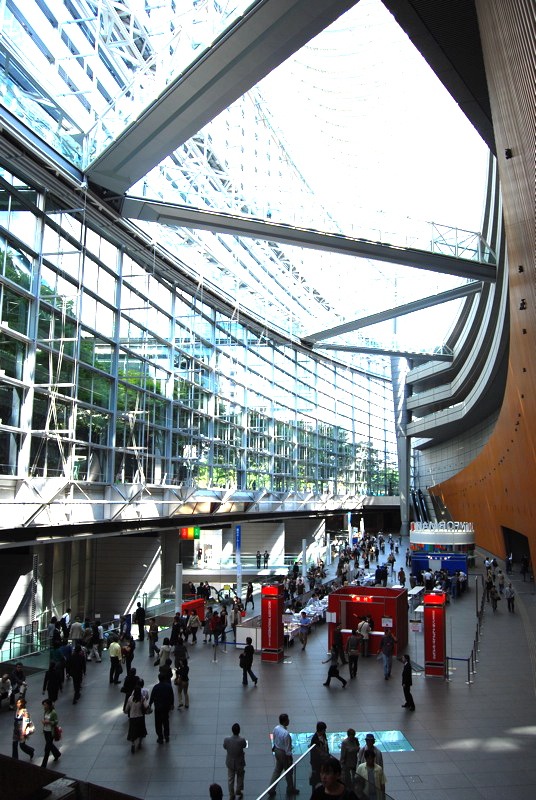
Tokyo International Audio Show (TIAS) held every year in the fall. Attendance is now more than 10,000 visitors each year. The Show brings together 28 corporate members under one roof and exhibits products representing about 170 brands from different parts of the world. The event began in 1983 under the name, Import Audio Show. In 1997, the 15th annual show was held for the first time at the prestigious Tokyo International Forum. Before then, the shows had highlighted imported audio products, but since 1997 they have also included Japan’s best audio brands.
Hard disk Music Sources
Japanese audiophiles adopt new hard disk music sources in high end system. It is no longer a HTPC world versus the traditional CD/SACD playback issue.
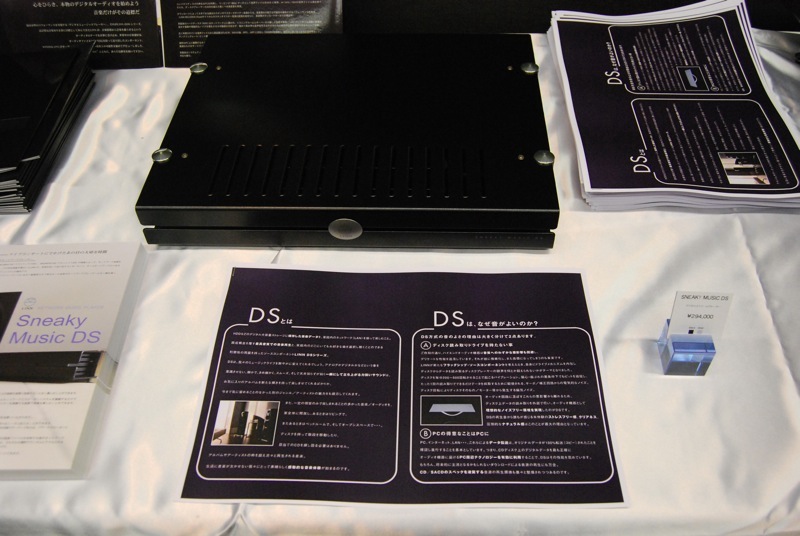
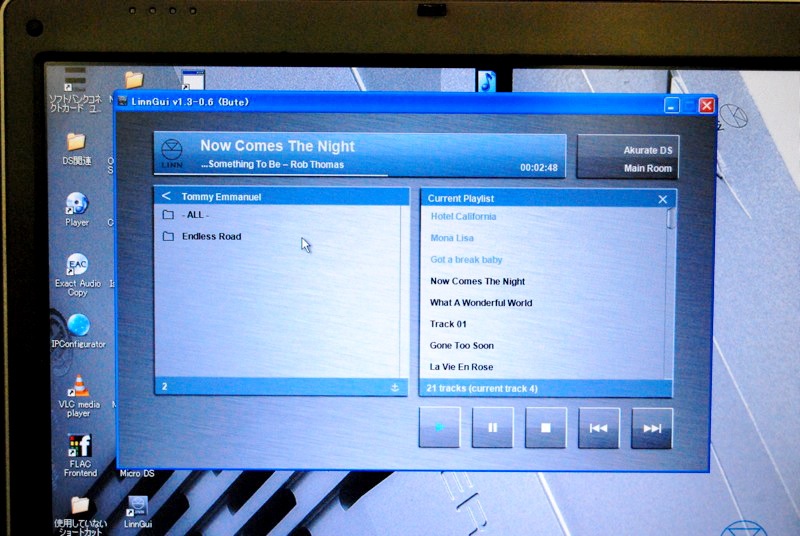
Linn DS system has 4 products (Klimax DS / Akurate DS / Majik DS / Sneaky DS), a strong line up targets hard disk sources. The Ethernet connection (100Base-t RJ45) with NAS (Network Attached Storage) provides high capacity storage, multi-room connection. A lot of japanese audiophiles are looking into this direction because the format itself is scalable and supports traditional CD resolution 16bit/44.1kHz to Hires 24bit/ 192khz. This idea matches perfectly with our Audiophile Jazz Prologue - Part3 Limited Edition release.
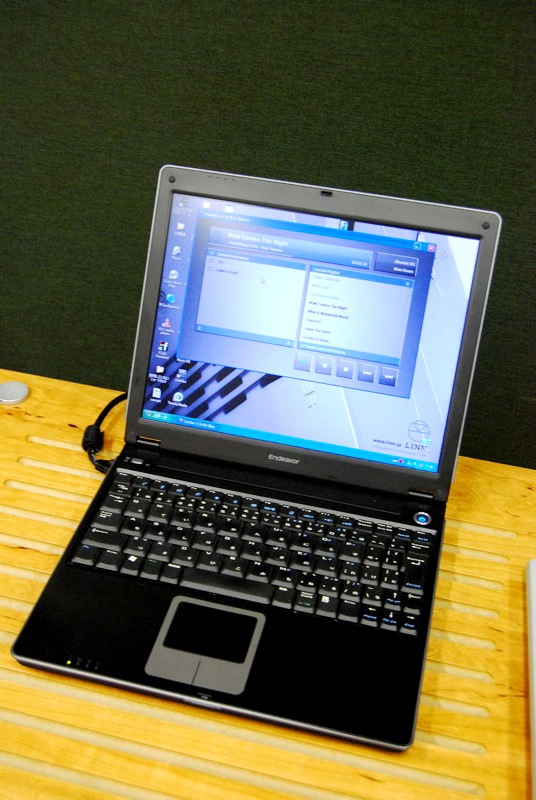
I like the Linn custom GUI that enhances the highend audio playback experience on computer screen. Although in our Rip test we found different playback softwares can output identical bit transparent data, the visual presentation gives impact also. Linn online website selling high resolution music is something you should check out. From our production perspective, the high resolution source in 24/96 or 24/192 is much superior than CD resolution 16/44.1.
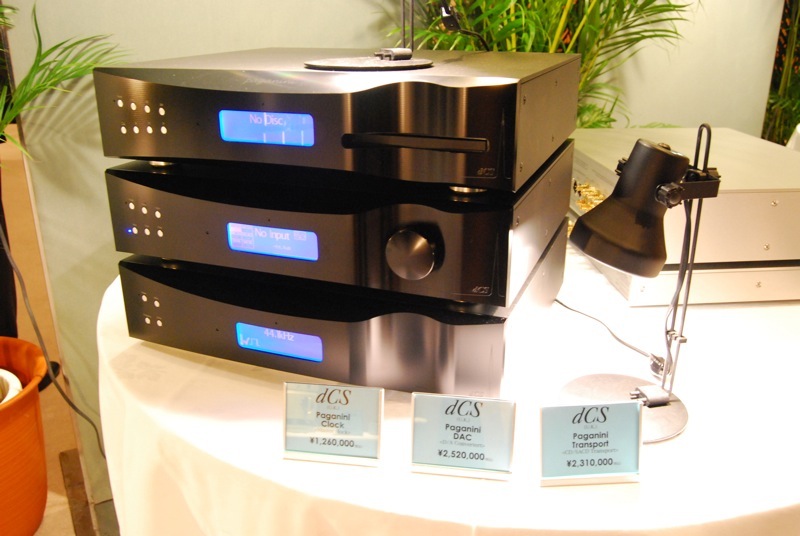
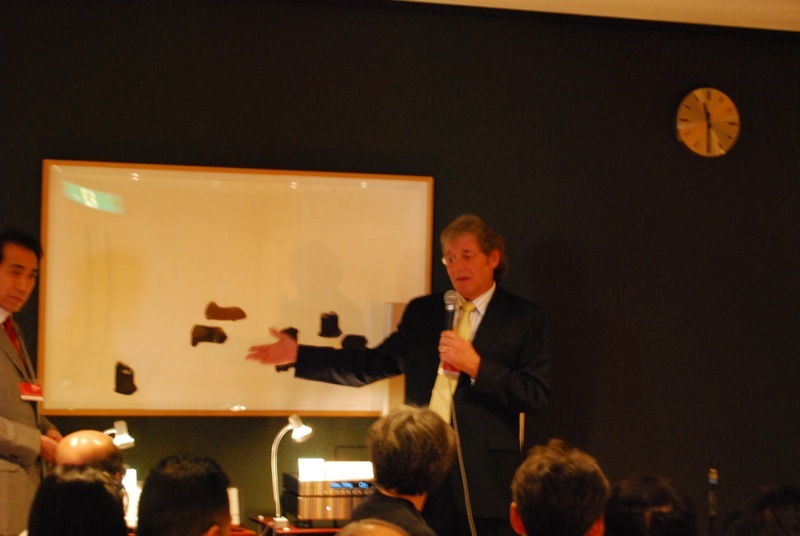
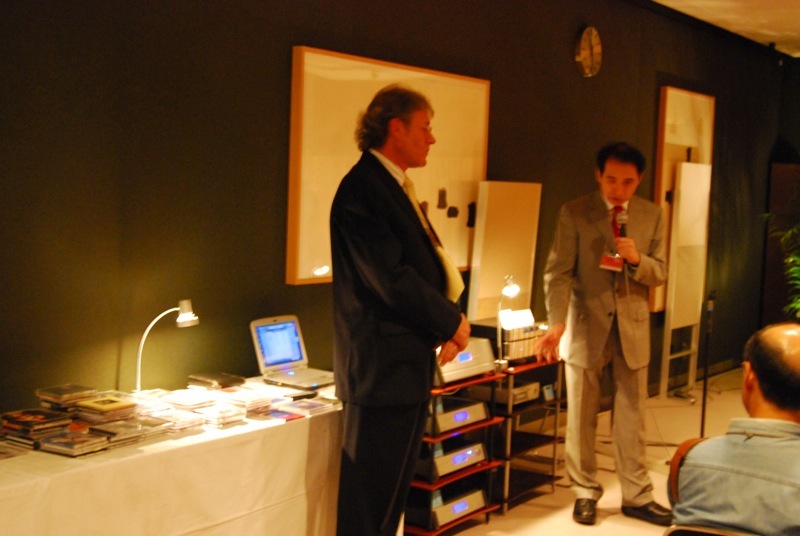
British manufacturer dCS offers a new Scarlatti upsampler featuring USB connection. My friend and dCS chairman David Steven hosts demo during the show with a small PC laptop and iTunes running on Windows. Traditional audiophiles who think iTunes are made for kids should learn something new, the Scarletti upsampler proves the digital theory that high quality playback can be achieved. David was very humble to say the good CD transport still performs better, and I guess it's truth otherwise no one will buy its great Scarlatti CD transport.
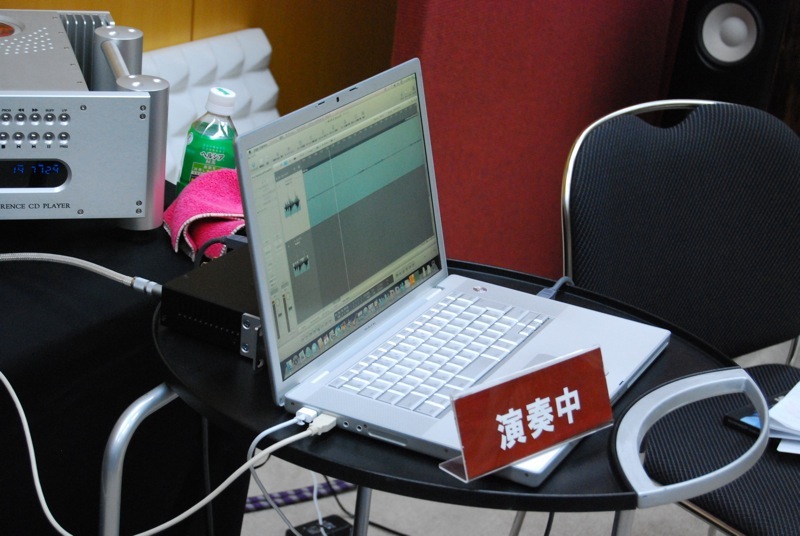
Chord demo system includes a Macbook Pro, playing audio via professional audio software logic. The loudspeaker is a new brand to me. It reproduces nice high end from its ribbon tweeter.
Optical Disc Sources
Another big discussion during the show, SACD is disappearing in Japan Market. It shouldn't be a big news to us, as we know the technical difficulties/limitations of SACD. But it is now in a complex period that hardware manufacturers are producing many better/newer SACD players (Luxman, Esoteric, Mark Levinson, Mclntosh), while the records companies are not producing softwares. There are few posts on our Audiophile Jazz Prologue- Part3 that some audiophiles would like to see a SACD version. However, the 2 Disc Limited Edition provides Hires files that clone to our masters. It will be the ultimate version to represent our recordings.
Besides SACD is disappearing, there are two new CD (16bit/44,1kHz) manufacturing technologies are introduced. I'm not talking about the ultra expansive Hard Glass CD, but SHM-CD and HQCD. Both of them offer new materials to replace the traditional aluminum reflective layer. They claim the sound is better because the reflectiveness of the disk is better. HQCD replaces the aluminum with silver alloy. HQCD is invented by Memory-Tech, which manufacture 20% of all CDs in Japan. SHM-CD is part of JVC invention, they have long history in K2, XRCD formats. Universal Music K.K. Japan, ECM (distributed by Universal in Japan) and Warners reissue their old catalogues in SHM-CD format. On the other hand, EMI/Blue Note are producing HQCD titles. It is obvious to see the format war becomes complex when such large records companies creating these niche market products. They are too hungry on sales and know audiophiles are people that still willing to buy optical disc recordings. It is the same case as you can see in Hong Kong/China every pop recording has a DSD logo on it, and I doubt if the producer ever know what's that logo means.
Our japan distributor is helping us to check how much it costs to have the AJP-Part03 HQCD. We are told that the CD pressing costs is 5 times higher than normal CD. I got some SHM-CDs and HQCDs sampler and will test/measure to hear any differences. It is worth to note that if you rip the CD to your harddisk, the disk physical condition will no longer affect the sound quality of the playback. 24k Gold CD, Silver Alloy, SHM-CD, HQCD, JVC K2, they don't have effect on your harddisk sources. If you are using CD transport, there is chance that a better quality disc produces better sounding. And, none of them can produce similar performances as our hand made Limited Edition Premium Made CD-R.
Giant Power Amplifiers
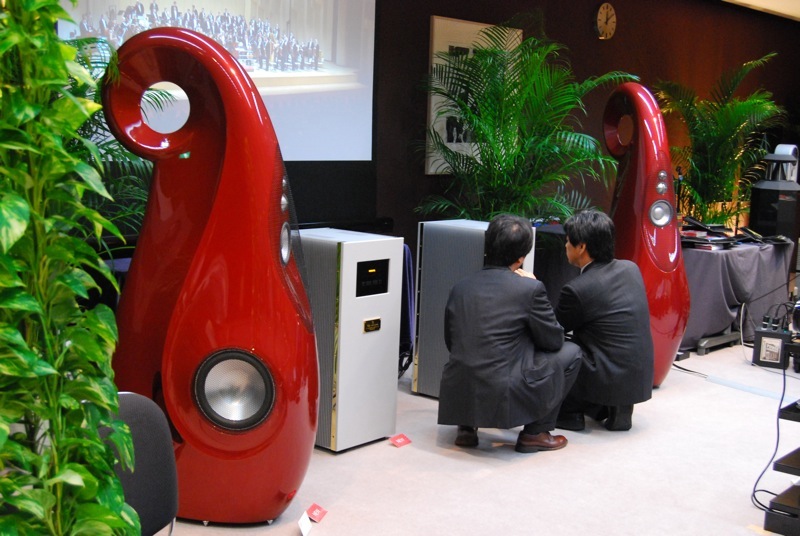
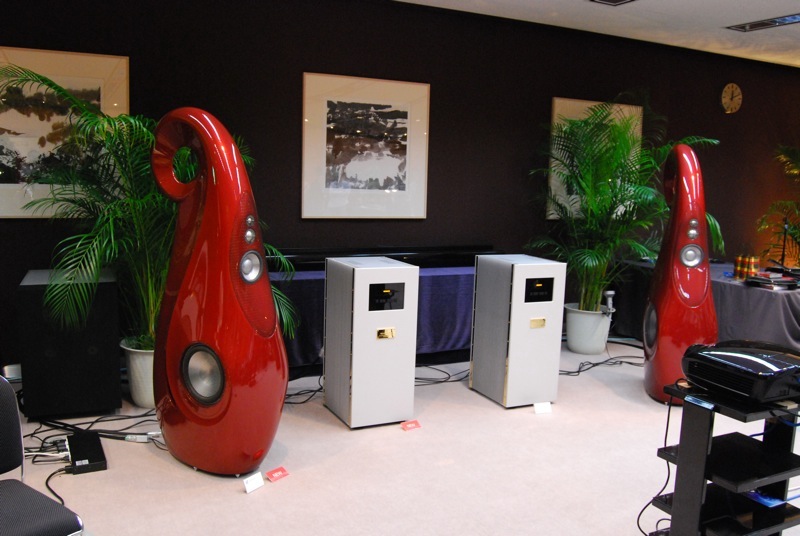
What is the new trend in high end audio market? Network computer sources and giant size power amplifiers. The most stunning setup in 2008 TIAS is definitely the Vivid Audio - Giya loudspeaker driven by the Goldmund Telos 5000. The Goldmund Telos 5000 height is almost 1 meter in height, weighted 260Kg giant size, and producing 5000w RMS into 2 Ohms. (1250w 8Ohm RMS). There are many discussions in Vivid Audio Giya speaker. The interesting outlook and sharp red colour gets draw huge attention. How about the sound performances? Excellent to my ears! i wish to have a more serious listening in the future.
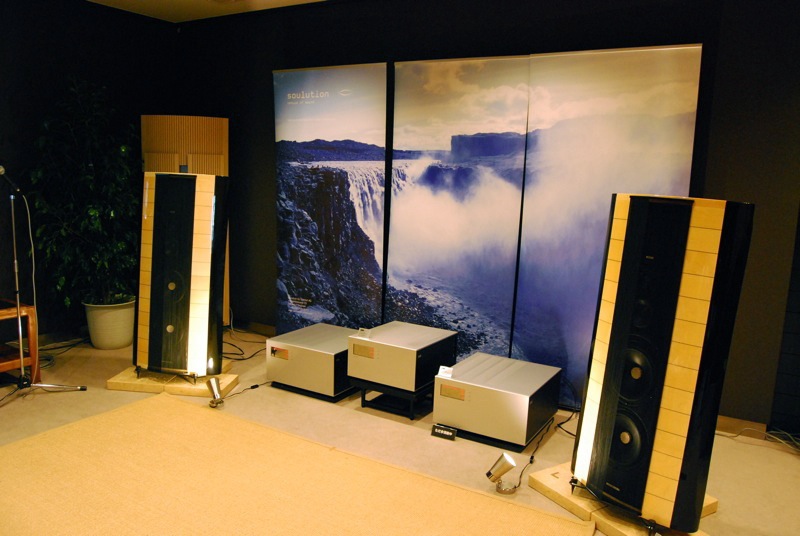
The Switzerland Soulution amplifiers are another giant size amp! It drives the Sonus Faber loudspeaker with wonderful sounding. The high signal to noise ratio produces a very deep soundstage with high dynamic. Westlake Tower 12 is not a new loudspeaker, but always one of the best loudspeakers I have ever listened. There is an interesting thing I found in this TIAS. It is the company CEO to give the speech during demo. Dynaudio room is well decorated with lifestyle products such as wine glass, plane model, to give a luxury home feeling.
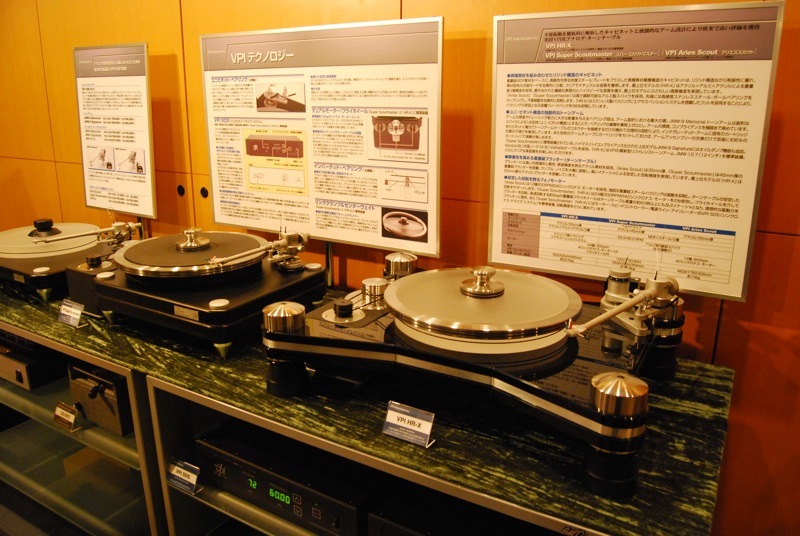
Analogue Vinyl
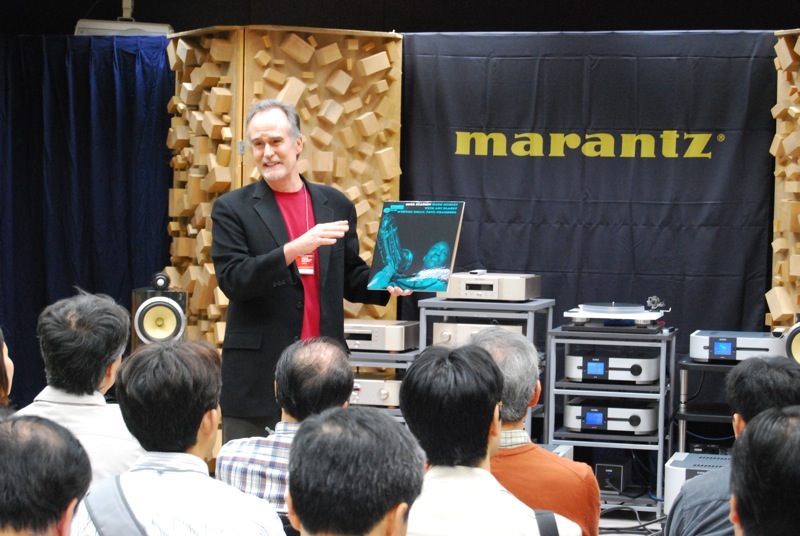
Besides the high resolution files base computer system, I also think the future high end audio industry will be the analogue vinyl. I agree completely that nothing beats the vinyl playback experience as a music enjoy package. First the large LP sleeve design is an art form, the LP setup involves mechanism is like an engineer art for end user. Before you actually hear the some from a LP, it already makes you focus on what you will be listened. During the show my very good friend and mentor Joe Harley, who did so many great Jazz and Blue records on AudioQuest music, demonstrates his BlueNote reissue LP. They have launched 12 titles and total of 55 titles will be released. I will wait for Weiss to release a reference phono preamp, and collect all these 55 BlueNote reissues as my first LP sets. By the way, LP fans finally getting the Famous Blue Rain Coat 20th Anniversary edition. Jennifer Warners Famous Blue Rain Coat is one of the most influence records in many audiophiles journey. To me, it is rated the highest with all time favorite "Ricky Lee Jones - Pop Pop" and "Duet".
Japanese Manufacturer Accuphase released the new DG-48 room equalizer and DF-45 digital crossover. This current issue of Stereo Sound has a long article on setup and measurement with these 2 units. It gets my interest that I believe a good room equalizing system can give very positive improvement on audio playback (well there are already Weiss EQ1 user enjoying this feautre), although not all room acoustic problems can be fixed by DSP. Accuphase vision is a digital room equalization follow by a digital crossover network. The problem here is you either use a digital volume to control, otherwise the insert of the analogue preamp will become a bottleneck - Using an extra AD/DA or 6-8 channels analogue preamp (3-4 ways)
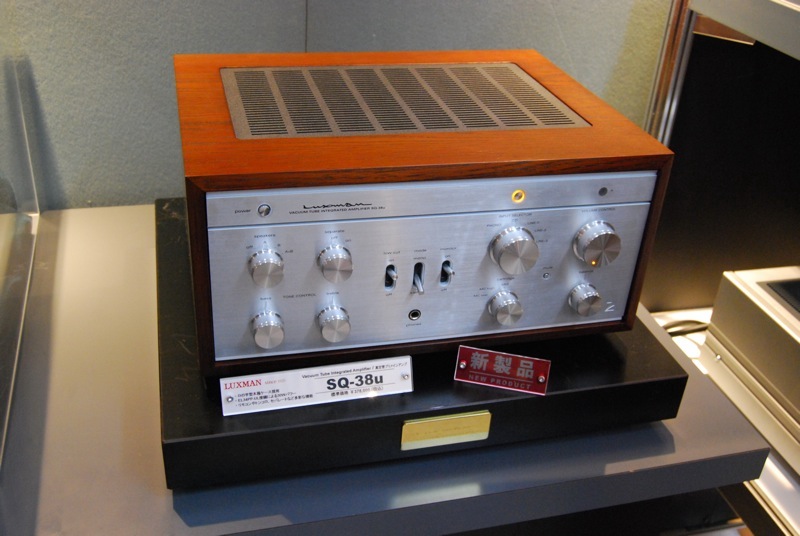
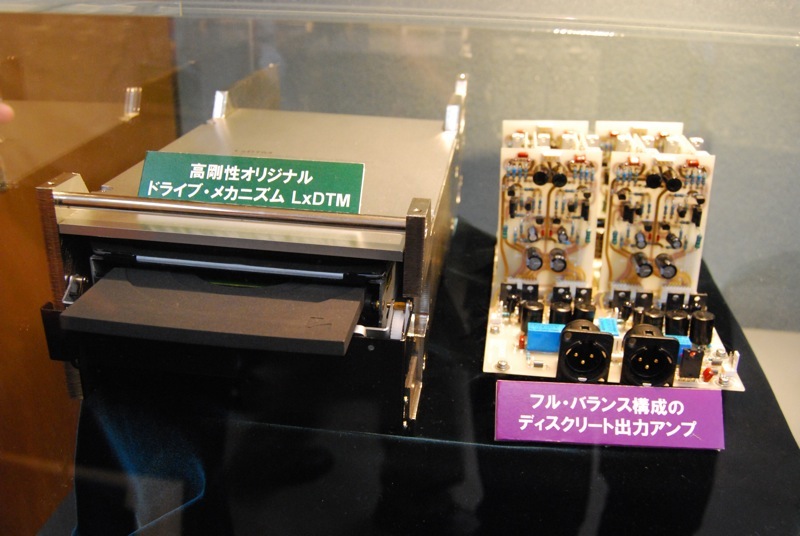
Luxman new amplifier has drawn high attention during the show with its retro outlook. I think combination of wood and metel, this design really shines. Luxman also developed new amp module and SACD transport. Esoteric has started licensed their transport designs to dCS, Mark Levinson etc. Remember the old Sony module that highly mis-read all SACD disc was a nightmare to many industry people. Glad to hear the SACD transport is getting mature in some status, unfortunately the software market is drying out.
I personally think this is the primary SACD problem. It is created for classical live recording productions, without any processing (BTW, do you know there are classical records that 1 minute can be combined more than 200 edits?) One can argue there are DSD processing in high precision PCM domain (for example DXD in 24bit/352kHz), but if this is the case why don't we use high precision PCM from start to end? From the beginning stage of SACD, Philips team suggested to keep high precision/sampling rate PCM during the whole production until at the end upsample to DSD for SACD release. This suggestion is very logical. Audiophile doesn't buy this concept as they want full DSD production. Then there are many DSD CD, DSD Mixing, DSD Mastering label on audiophile records, however those are all faults as after processing DSD data will become PCM and nothing different than normal PCM. Who can finish an album today without any editing & processing & mastering? I can just think of Alex from Waterlily, or Todd from MA. Sometimes the format and technical issue are only tools, it is the engineer/musician to create the sound they want. As an engineer, I always remember how I learnt Alan Parson did the long fade on Pink Floyd Dark Side Of The Moon with a long slice on analogue tape and echo return.
I'm writing this article while listening to Weiss latest DAC2, review will be up soon.