
The Smashing Pumpkins is an American alternative rock band from Chicago, Illinois, formed in 1988.[1] Formed by frontman Billy Corgan (lead vocals, lead guitar) and James Iha (rhythm guitar), the band has included Jimmy Chamberlin (drums), D'arcy Wretzky (bass guitar), Melissa Auf der Maur (bass guitar), and currently includes Mike Byrne (drums), Nicole Fiorentino (bass guitar, backing vocals), and Jeff Schroeder (rhythm guitar) among its membership.
Disavowing the punk rock roots of many of their alt-rock contemporaries,[2] the Pumpkins have a diverse, densely layered, and guitar-heavy sound, containing elements of gothic rock, heavy metal, dream pop, psychedelic rock, progressive rock, shoegazing-style production, and, in later recordings, electronica. Corgan is the group's primary songwriter—his grand musical ambitions and cathartic lyrics have shaped the band's albums and songs, which have been described as "anguished, bruised reports from Billy Corgan's nightmare-land".[3]
The Smashing Pumpkins broke into the musical mainstream with their second album, 1993's Siamese Dream. The group built its audience with extensive touring and their 1995 follow-up, the double album Mellon Collie and the Infinite Sadness, which debuted at number one on the Billboard 200 album chart. With 19.75 million albums sold in the United States,[4][5] The Smashing Pumpkins were one of the most commercially successful and critically acclaimed bands of the 1990s. However, internal fighting, drug use, and diminishing record sales led to a 2000 break-up.
In 2006, Billy Corgan and Jimmy Chamberlin reconvened to record a new Smashing Pumpkins album, Zeitgeist. The band toured with a rotating lineup of between five and nine musicians through much of 2007 and 2008 with new member Jeff Schroeder before Chamberlin left the band in early 2009. New drummer Mike Byrne and bassist Nicole Fiorentino solidified a new lineup with Corgan and Schroeder, toured through much of 2010 and 2011, and are currently recording the album Teargarden by Kaleidyscope, having just released the album-within-an-album Oceania.
Contents [hide]
1 History
1.1 Early years: 1988–1991
1.2 Mainstream success: 1992–1994
1.3 Mellon Collie and the Infinite Sadness: 1995–1997
1.4 Adore, Machina, and breakup: 1998–2000
1.5 Post-breakup: 2001–2004
1.6 Reformation and Zeitgeist: 2005–2008
1.7 Teargarden, Oceania and New Album: 2009–present
2 Musical style, influences, and legacy
3 Music videos
4 Band members
5 Discography
6 See also
7 Footnotes
8 References
9 External links
[edit]History
[edit]Early years: 1988–1991
The Smashing Pumpkins in a 1990 promotional photo. Left to right: James Iha, D'arcy Wretzky, Billy Corgan, Jimmy Chamberlin
After the breakup of his gothic rock band The Marked, singer and guitarist Billy Corgan left St. Petersburg, Florida, to return to his native city of Chicago, where he took a job in a record store and hatched the idea of a new band that would be called "The Smashing Pumpkins".[6] While working there, he met guitarist James Iha. Adorning themselves with paisley and other psychedelic trappings, the two began writing songs together (with the aid of a drum machine) that were heavily influenced by The Cure and New Order.[7] The duo performed live for the first time on July 9, 1988 at the Polish bar Chicago 21. This performance included only Corgan and Iha with a drum machine.[8] Shortly thereafter, Corgan met D'arcy Wretzky after a show by the Dan Reed Network where they argued the merits of the band. After finding out Wretzky played bass guitar, Corgan recruited her into the lineup and the now-trio played a show at the Avalon Nightclub.[9][10] After this show, Cabaret Metro owner Joe Shanahan agreed to book the band on the condition that they replace the drum machine with a live drummer.
Jazz drummer Jimmy Chamberlin was recommended by a friend of Corgan's.[10] Chamberlin knew little of alternative music and immediately changed the sound of the nascent band. As Corgan recalled of the period, "We were completely into the sad-rock, Cure kind of thing. It took about two or three practices before I realized that the power in his playing was something that enabled us to rock harder than we could ever have imagined."[7] On October 5, 1988, the complete band took the stage for the first time at the Cabaret Metro.[10]
Rhinoceros
MENU0:00
Sample of "Rhinoceros", taken from the band's debut album Gish (1991) and also featured on the Lull EP (1992). An early fan favorite, it has been described by a reviewer as "a bit of a microcosm of the entire Gish album: slow, heavy, dreamy, and psychedelic all at once".[11]
Problems listening to this file? See media help.
In 1989, The Smashing Pumpkins made their first appearance on record with the compilation album Light Into Dark, which featured several Chicago alternative bands. The group released its first single, "I Am One", in 1990 on local Chicago label Limited Potential. The single sold out and they released a follow-up, "Tristessa", on Sub Pop, after which they signed to Caroline Records.[12] The band recorded their 1991 debut studio album Gish with producer Butch Vig at his Smart Studios in Madison, Wisconsin for $20,000.[13] In order to gain the consistency he desired, Corgan often played all instruments save drums, which created tension in the band. The music fused heavy metal guitars, psychedelia, and dream pop, garnering them comparisons to Jane's Addiction.[14] Gish became a minor success, with the single "Rhinoceros" receiving some airplay on modern rock radio. After releasing the Lull EP in October 1991 on Caroline Records, the band formally signed with Virgin Records, which was affiliated with Caroline.[12] The band supported the album with a tour that included opening for bands such as the Red Hot Chili Peppers, Jane's Addiction, and Guns N' Roses. During the tour, Iha and Wretzky went through a messy breakup, Chamberlin became addicted to narcotics and alcohol, and Corgan entered a deep depression,[15] writing some songs for the upcoming album in the parking garage where he lived at the time.[16]
[edit]Mainstream success: 1992–1994
With the breakthrough of alternative rock into the American mainstream due to the popularity of grunge bands such as Nirvana and Pearl Jam, The Smashing Pumpkins were poised for major commercial success. At this time, the Pumpkins were routinely lumped in with the grunge movement, with Corgan protesting, "We've graduated now from [being called] 'the next Jane's Addiction' to 'the next Nirvana,' now we're 'the next Pearl Jam.'"[17]
"Today"
MENU0:00
A 20-second sample of "Today" from The Smashing Pumpkins' 1993 album, Siamese Dream. This sample illustrates the song's dynamic changes when it moves from the refrain to the first verse.
"Disarm"
MENU0:00
Corgan would sing about his depression throughout the album and "Disarm" would be the clearest example of this.
Problems listening to these files? See media help.
Amid this environment of intense internal pressure for the band to break through to widespread popularity, the band relocated to Marietta, Georgia in late 1992 to begin work on their second album, with Butch Vig returning as producer.[7] The decision to record so far away from their hometown was motivated partly by the band's desire to avoid friends and distractions during the recording, but largely as a desperate attempt to cut Chamberlin off from his known drug connections.[7] The recording environment for Siamese Dream was quickly marred by discord within the band. As was the case with Gish, Corgan and Vig decided that Corgan should play nearly all of the guitar and bass parts on the album, contributing to an air of resentment.[18][19] The contemporary music press began to portray Corgan as a tyrant.[20] Corgan's depression, meanwhile, had deepened to the point where he contemplated suicide, and he compensated by practically living in the studio.[21] Meanwhile, Chamberlin quickly managed to find new connections and was often absent without any contact for days at a time.[7] In all, it took over four months to complete the record, with the budget exceeding $250,000.[18]
Despite all the problems in its recording, Siamese Dream debuted at number ten on the Billboard 200 chart,[22] and sold over four million copies in the U.S. alone.[23] Alongside the band's mounting mainstream recognition, the band's reputation as careerists among their former peers in the independent music community was worsened.[8] Indie rock band Pavement's 1994 song "Range Life" directly mocks the band in its lyrics, although Stephen Malkmus, lead singer of Pavement, has stated, "I never dissed their music. I just dissed their status."[24] Former Hüsker Dü frontman Bob Mould called them "the grunge Monkees",[7] and fellow Chicago musician/producer Steve Albini wrote a scathing letter in response to an article praising the band, derisively comparing them to REO Speedwagon ("by, of and for the mainstream") and concluding their ultimate insignificance.[25] The opening track and lead single of Siamese Dream, "Cherub Rock", directly addresses Corgan's feud with the "indie-world".[26]
In 1994, Virgin released the B-sides/rarities compilation Pisces Iscariot which charted higher than Siamese Dream by reaching number four on the Billboard 200.[27] Also released was a VHS cassette titled Vieuphoria featuring a mix of live performances and behind-the-scenes footage. Following relentless touring to support the recordings, including headline slots on the 1994 Lollapalooza tour and at Reading Festival in 1995, the band took time off to write the follow-up album.
[edit]Mellon Collie and the Infinite Sadness: 1995–1997
Corgan worked nonstop over the next year and wrote about fifty-six songs for the next album.[28] Following this spell of concentrated creativity, the Pumpkins went back into the studio with producers Flood and Alan Moulder to work on what Corgan described as "The Wall for Generation X",[29] a comparison with the 1979 Pink Floyd two-LP concept album.
"Tonight, Tonight"
MENU0:00
The Smashing Pumpkins would use violins and cellos for some of their songs and Tonight, Tonight would be one of their most famous for using this style.
"Bullet with Butterfly Wings"
MENU0:00
Sample of "Bullet with Butterfly Wings", the first single from Mellon Collie and the Infinite Sadness (1995) and winner of the 1997 Grammy award for Best Hard Rock Performance.
"1979"
MENU0:00
Sample of "1979", the second single from Mellon Collie and the Infinite Sadness (1995). The band's biggest hit and a precursor to their change in style, featuring a drum machine accompaniment to Chamberlin's drums and sampled vocal effects.
Problems listening to these files? See media help.
The result was Mellon Collie and the Infinite Sadness, a double album featuring twenty-eight songs and lasting over two hours (the vinyl version of the album contained three records, two extra songs, and an alternate tracklisting). The songs were intended to hang together conceptually as a symbol of the cycle of life and death.[8] Praised by Time as "the group's most ambitious and accomplished work yet",[30] Mellon Collie debuted at number one on the Billboard 200 in October 1995.[31] Even more successful than Siamese Dream, it was certified ten times platinum in the United States[32] and became the best-selling double album of the decade to date.[33] It also garnered seven 1997 Grammy Award nominations, including Album of the Year. The band won only the Best Hard Rock Performance award, for the album's lead single "Bullet with Butterfly Wings". The album spawned five singles—"Bullet with Butterfly Wings", "1979", "Zero", "Tonight, Tonight", and "Thirty-Three"—of which the first three were certified gold and all but "Zero" entered the Top 40. Many of the remaining songs that did not make it onto Mellon Collie were released as B-sides to the singles, and were eventually compiled in The Aeroplane Flies High box set. As a testament to the band's popularity, Virgin Records originally intended to limit the set to 200,000 copies, but produced more after the original run sold out due to overwhelming demand.[34]
Billy Corgan onstage during the Mellon Collie tour, featuring a shaved head and his iconic "Zero" shirt
In 1996, the Pumpkins embarked on an extended world tour in support of Mellon Collie. Corgan's look during this period—a shaved head, a longsleeve black shirt with the word "Zero" printed on it, and silver pants—became iconic.[35] That year, the band also made a guest appearance in an episode of The Simpsons, "Homerpalooza". With considerable video rotation on MTV, major industry awards, and "Zero" shirts selling in many malls, the Pumpkins were considered one of the most popular bands of the time.[36][37] But the year was far from entirely positive for the band. In May, the Smashing Pumpkins played a gig at The Point Theatre in Dublin, Ireland. Despite the band's repeated requests for moshing to stop, a seventeen-year-old fan named Bernadette O'Brien was crushed to death. The concert ended early and the following night's performance in Belfast was cancelled out of respect for her.[38] However, while Corgan maintained that moshing's "time [had] come and gone", the band would continue to request open-floor concerts throughout the rest of the tour.[39]
The band suffered a personal tragedy on the night of July 11, 1996, when touring keyboardist Jonathan Melvoin and Chamberlin overdosed on heroin in a hotel room in New York City. Melvoin died, and Chamberlin was arrested for drug possession. A few days later, the band announced that Chamberlin had been fired as a result of the incident.[40] The Pumpkins chose to finish the tour, and hired drummer Matt Walker and keyboardist Dennis Flemion. Corgan later said the decision to continue touring was the worst decision the band had ever made, damaging both their music and their reputation.[7] Meanwhile the band had given interviews since the release of Mellon Collie stating that it would be the last conventional Pumpkins record,[41] and that rock was becoming stale. James Iha said at the end of 1996, "The future is in electronic music. It really seems boring just to play rock music."[42]
[edit]Adore, Machina, and breakup: 1998–2000
The Smashing Pumpkins as a trio in 1998. The band adopted a darker, more subdued look to accompany the release of their fourth album, Adore.
After the release of Mellon Collie, the Pumpkins contributed multiple songs to various compilations. Released in early 1997, the song "Eye", which appeared on the soundtrack to David Lynch's Lost Highway, relied almost exclusively on electronic instruments and signaled a drastic shift from the Pumpkins’ previous musical styles. At the time, Corgan stated his "idea [was] to reconfigure the focus and get away from the classic guitars-bass-drum rock format."[43] Later that year, the group contributed "The End Is the Beginning Is the End" to the soundtrack for the film Batman & Robin. With Matt Walker on drums, the song featured a heavy sound similar to "Bullet With Butterfly Wings" while still having strong electronic influences. The song later won the 1998 Grammy for Best Hard Rock Performance. Though Corgan announced that the song represented the sound people could expect from the band in the future,[44] the band’s next album would feature few guitar driven songs.
Recorded following the death of Corgan's mother and his divorce, 1998's Adore represented a significant change of style from the Pumpkins' previous guitar-based rock, veering into electronica. The record, cut with assistance from studio drummers and drum machines, was infused with a darker aesthetic than much of the band's earlier work. The group also modified its public image, shedding its alternative hipster look for a more subdued appearance. Although Adore received favorable reviews and was nominated for Best Alternative Performance at the Grammy Awards, the album had only sold about 830,000 copies in the United States by the end of the year, which led the music industry to consider it a failure.[45] The album nonetheless sold three times as many copies overseas.[7] The band embarked on a seventeen-date, fifteen-city charity North American tour in support of Adore. At each stop on the tour, the band donated 100 percent of tickets sales to a local charity organization. The tour's expenses were entirely funded out of the band's own pockets. All told, the band donated over $2.8 million to charity as a result of the tour.[46]
"Ava Adore"
MENU0:00
Sample of "Ava Adore", the first single from Adore (1998), which emphasizes the band's new electronic music-based sound via the use of drum machines and effects.
"The Everlasting Gaze"
MENU0:00
Sample of "The Everlasting Gaze" from Machina/The Machines of God (2000), the first single from the album. A return to the dense, guitar-heavy sound of previous records.
Problems listening to these files? See media help.
In 1999, the band surprised fans by reuniting with a rehabilitated Jimmy Chamberlin for a brief tour dubbed "The Arising", which showcased both new and classic material. The lineup was short-lived, however, the band announced the departure of Wretzky in September during work on the album Machina/The Machines of God.[47] Former Hole bassist Melissa Auf der Maur was recruited for the "Sacred and Profane" tour in support of the album and appeared in the videos accompanying its release. Released in 2000, Machina was initially promoted as the Pumpkins' return to a more traditional rock sound, after the more gothic, electronic-sounding Adore.[48] The album debuted at number three on the Billboard charts,[49] but quickly disappeared and as of 2007 had only been certified gold.[50][51] Music journalist Jim DeRogatis, who described the album as "one of the strongest of their career", noted that the stalled sales for Machina in comparison to teen pop ascendant at the time "seems like concrete proof that a new wave of young pop fans has turned a deaf ear toward alternative rock."[52]
The band's touring lineup in 2000 with Chamberlin back on drums and Melissa Auf der Maur replacing Wretzky on bass.
On May 23, 2000, in a live radio interview on KROQ-FM (Los Angeles), Billy Corgan announced the band's decision to break up at the end of that year following additional touring and recording.[48] The group's final album before the break-up, Machina II/The Friends & Enemies of Modern Music, was released in September 2000 in a limited pressing on vinyl with permission and instructions for free redistribution on the Internet by fans. Only twenty-five copies were cut, each of which was hand numbered and given to friends of the band along with band members themselves. The album, released under the Constantinople Records label created by Corgan, consisted of one double LP and three ten-inch EPs.[53] Originally, the band asked Virgin to offer Machina II as a free download to anyone who bought Machina. When the record label declined, Corgan opted to release the material independently.[54]
On December 2, 2000, Smashing Pumpkins played a farewell concert at The Metro, the same Chicago club where their career had effectively started twelve years earlier. The four-and-a-half-hour long show featured 35 songs spanning the group's career, and attendees were given a recording of the band’s first concert at The Metro, Live at Cabaret Metro 10-5-88.[54] The single "Untitled" was released commercially to coincide with the farewell show.
[edit]Post-breakup: 2001–2004
In 2001, the compilation Rotten Apples was released. The double-disc version of the album, released as a limited edition, included a B-sides/rarities collection called Judas O. The Greatest Hits Video Collection DVD was also released at the same time, which compiled all of the Pumpkins promo videos from Gish to Machina along with unreleased material.[55] Vieuphoria was released on DVD in 2002, as was the soundtrack album Earphoria, previously released solely to radio stations in 1994.
Billy Corgan and Jimmy Chamberlin reunited in 2001 as members of Corgan's next project, the short-lived supergroup Zwan. The group's only album, Mary Star of the Sea, was released in 2003. After cancelling a few festival appearances, Corgan announced the demise of the band in 2003. During 2001, Corgan also toured as part of New Order and provided vocals on their comeback album Get Ready. In October 2004, Corgan released his first book, Blinking with Fists, a collection of poetry. In June 2005, he released a solo album, TheFutureEmbrace, which he described as "(picking) up the thread of the as-of-yet-unfinished work of the Smashing Pumpkins".[56] Despite this, it was greeted with generally mixed reviews and lackluster sales. Only one single, "Walking Shade", was released in support of the album.
In addition to drumming with Zwan, Jimmy Chamberlin also formed an alternative rock/jazz fusion project band called The Jimmy Chamberlin Complex. The group released an album in 2005 titled Life Begins Again. Corgan provided guest vocals on the track "Lokicat". James Iha served as a guitarist in A Perfect Circle, appearing on their Thirteenth Step club tour and 2004 album, eMOTIVe. He has also been involved with other acts such as Chino Moreno's Team Sleep and Vanessa and the O's. He continues to work with his own record label as well, Scratchie Records. D'arcy Wretzky has, aside from one radio interview in 2009, not made any public statements or appearances nor given any interviews since leaving the band in 1999. On January 25, 2000, she was arrested after she allegedly purchased three bags of crack cocaine, but after successfully completing a court-ordered drug education program, the charges were dropped.[57]
Corgan insisted during this period that the band would not reform, although when Zwan broke up he announced, "I think my heart was in Smashing Pumpkins [...] I think it was naive of me to think that I could find something that would mean as much to me."[58] Corgan said in 2005, "I never wanted to leave the Smashing Pumpkins. That was never the plan."[59] On February 17, 2004, Corgan posted a message on his personal blog calling Wretzky a "mean-spirited drug addict" and blaming Iha for the breakup of The Smashing Pumpkins.[60] On June 3, 2004, he added that "the depth of my hurt [from Iha] is only matched with the depth of my gratitude".[61] Iha responded to Corgan's claims in 2005, saying, "No, I didn't break up the band. The only person who could have done that is Billy."[62]
[edit]Reformation and Zeitgeist: 2005–2008
The Smashing Pumpkins on May 24, 2007, at den Atelier, Luxembourg. Left to right: Ginger Reyes, Billy Corgan, Jimmy Chamberlin (back), Jeff Schroeder.
On June 21, 2005, the day of the release of his album TheFutureEmbrace, Corgan took out full-page advertisements in the Chicago Tribune and Chicago Sun-Times to announce that he planned to reunite the band. "For a year now", Corgan wrote, "I have walked around with a secret, a secret I chose to keep. But now I want you to be among the first to know that I have made plans to renew and revive the Smashing Pumpkins. I want my band back, and my songs, and my dreams".[56] Corgan and Chamberlin were verified as participants in the reunion, but there was question as to whether other former members of the band would participate.[63][64][65]
In April 2007, Iha and Auf der Maur separately confirmed that they were not taking part in the reunion.[66][67] Chamberlin would later state that Iha and Wretzky "didn't want to be a part of" the reunion.[68] The Smashing Pumpkins performed live for the first time since 2000 on May 22, 2007, in Paris, France. There, the band unveiled new touring members: guitarist Jeff Schroeder, bassist Ginger Reyes, and keyboardist Lisa Harriton.[69] That same month, "Tarantula" was released as the first single from the band's forthcoming album. On July 7, the band performed at the Live Earth concert in New Jersey.[70]
The band's new album, Zeitgeist, was released that same month on Reprise Records, entering the Billboard charts at number two and selling 145,000 copies in its first week.[71] Zeitgeist received mixed reviews, with much of the criticism targeted at the absence of half of the original lineup. The album divided the Pumpkins' fanbase. Corgan would later admit, "I know a lot of our fans are puzzled by Zeitgeist. I think they wanted this massive, grandiose work, but you don't just roll out of bed after seven years without a functioning band and go back to doing that".
Corgan and Chamberlin continued to record as a duo, releasing the four-song EP American Gothic in January 2008 and the singles "Superchrist" and "G.L.O.W." later that year.[72] That November, the group released the DVD If All Goes Wrong, which chronicled the group's 2007 concert residences in Asheville, North Carolina and San Francisco, California. In late 2008, the band embarked on a controversy-riddled 20th Anniversary Tour. Around this time, Corgan said the group will make no more full-length records in order to focus exclusively on singles, explaining, "The listening patterns have changed, so why are we killing ourselves to do albums, to create balance, and do the arty track to set up the single? It's done."[73]
[edit]Teargarden, Oceania and New Album: 2009–present
Corgan and Jeff Schroeder onstage with The Smashing Pumpkins
In March 2009, Corgan announced on the band website that Chamberlin had left the group and would be replaced.[74] Chamberlin subsequently stated that his departure from the band is "a positive move forward for me. I can no longer commit all of my energy into something that I don't fully possess."[75] Chamberlin stressed that the split was amicable, commenting, "I am glad [Corgan] has chosen to continue under the name. It is his right."[76] Corgan later stated that he fired Chamberlin.[77] Chamberlin soon formed the band Skysaw, which has released an album and toured in support of Minus the Bear.[78]
In July 2009, Billy Corgan formed a new group called Spirits in the Sky, initially as a tribute band to Sky Saxon of The Seeds, who had recently passed away. The following month Corgan confirmed on the band's website that 19-year-old Spirits in the Sky drummer Mike Byrne had replaced Chamberlin and that the pair was working on new Pumpkins recordings.[79]
The group soon thereafter announced plans to release a 44-track concept album, Teargarden by Kaleidyscope, for free over the Internet one track at a time.[80] The first track, "A Song for a Son", was released in December 2009 to moderate press acclaim.[81][82] In March 2010, Ginger Reyes officially left the band, prompting an open call for auditions for a new bassist.[83] In May, Nicole Fiorentino announced she had joined the band as bass player, and would be working on Teargarden by Kaleidyscope.[84] The new lineup went on a world tour through the end of 2010.[85] One of the first shows with the new lineup was a concert to benefit Matthew Leone, bassist for the rock band Madina Lake, at the Metro on July 27, 2010. In late 2010, all four members contributed to the sessions for the third volume of Teargarden.[86][87]
On April 26, 2011, Corgan announced that the Smashing Pumpkins would be releasing a new album titled Oceania, which he labeled as "an album within an album" in regards to the Teargarden by Kaleidyscope project, in the fall.[88][89] As with the previous recording sessions, all four band members will be contributing to the project.[90] Also, the entire album catalog will be remastered and reissued with bonus tracks, starting with Gish and Siamese Dream in November 2011.[88] The Pre-Gish Demos, Pisces Iscariot, Mellon Collie and the Infinite Sadness were released in 2012.[88] Finally, The Aeroplane Flies High, and Adore will be released in 2013 while Machina/The Machines of God and the yet commercially unreleased Machina II/Friends and Enemies of Modern Music are expected to be combined, remixed, and released in the same year.[88]
The band did a thirteen-city US tour in October 2011 followed by a European tour in November and December.[91]
Oceania was released on June 19, 2012 and received generally positive reviews. The album debuted at No. 4 on the Billboard 200 and at No. 1 on the Billboard Independent. The album spawned two singles, "The Celestials" and "Panopticon".
In the fall of 2012, the band played a US tour in support of Oceania playing the album in its entirety. On December 10, 2012 Smashing Pumpkins played a make-up show with Morning Parade at the Barclays Center in Brooklyn New York, USA. The show was shot in 3D. [92]
The band have already begun work on their next album, in which according to Corgan they are optimistic in aiming for a December 2013 release date.[93]
Makryham
Most Popular Song
Raymond Roussel: Dysphoria
On: Un Nuit Dystopia/Hommage Michel Foucault
Doppelganger
Release Date: 2008
This section of our site is dedicated to Makryham. Go to the 'Albums' tab to discover albums and songs for this particular artist or Search our vast library for others.
MNETID: 541467

Most Popular Song
Raymond Roussel: Dysphoria
On: Un Nuit Dystopia/Hommage Michel Foucault
Doppelganger
Release Date: 2008
This section of our site is dedicated to Makryham. Go to the 'Albums' tab to discover albums and songs for this particular artist or Search our vast library for others.
MNETID: 541467

ENTRANCE FREE. INQB8R is a free will foundation project having a goal to present innovative musicians and attract progressive listeners, merge different audiences and provide a new way of deep thinking through music. All music is free to download and listen for everybody, with no registration and membership fees. That means you may start browsing and listening to our presentations right now.
If You compose music not just giving Yourself a pleasure and discovering Your second nature that way, but because of money, You may be disapointed to know composers are not paid by us, because we release all music for free under Creative Commons License terms. However You as a musician definitely earn when releasing Your work with us, and only You define the measure of that earning. We ourselves do not earn a cent holding and developing this website. It's just our expensive and modern hobby, a very private gallery, carefully build and stored collection of the free music officially released over the web.
» What is INQB8R's targeting audience?
» Why musicians are interested to release with INQB8R?
» Is INQB8R similar to a (net) label?
» What benefits gives our release to You as the musician?
» What kind of music INQB8R prefers to release?
» What it means "to be released"?
» Where are INQB8R profits?
» Where is INQB8R geographically situated?
» Invite Your friends...
» Contact us...
» Get more...
If You compose music not just giving Yourself a pleasure and discovering Your second nature that way, but because of money, You may be disapointed to know composers are not paid by us, because we release all music for free under Creative Commons License terms. However You as a musician definitely earn when releasing Your work with us, and only You define the measure of that earning. We ourselves do not earn a cent holding and developing this website. It's just our expensive and modern hobby, a very private gallery, carefully build and stored collection of the free music officially released over the web.
» What is INQB8R's targeting audience?
» Why musicians are interested to release with INQB8R?
» Is INQB8R similar to a (net) label?
» What benefits gives our release to You as the musician?
» What kind of music INQB8R prefers to release?
» What it means "to be released"?
» Where are INQB8R profits?
» Where is INQB8R geographically situated?
» Invite Your friends...
» Contact us...
» Get more...
Talas - Talas - 1979
Dave Constantino - Guitar/Vocals
Billy Sheehan - Bass
Paul Vargo - Drums
Sink Your Teeth Into That/Talas
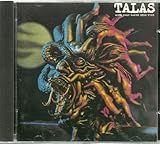
¥1,536
Amazon.co.jp
ライヴ・イン・バッファロー/タラス
¥2,548
Amazon.co.jp
Dave Constantino - Guitar/Vocals
Billy Sheehan - Bass
Paul Vargo - Drums
Sink Your Teeth Into That/Talas
¥1,536
Amazon.co.jp
ライヴ・イン・バッファロー/タラス
¥2,548
Amazon.co.jp
Overdose Kunst
"Was ist Overdose Kunst"
3"CD-R (ltd. 250)
ZHB-XII
1. Partizan
2. Ono Sendai [mp3]
3. Kurz-y-nuy [mp3]
4. Requia for Ethnic Cleansing [mp3]
total length: 18:16
release date: October 30, 2007
price: €5
The Japanese duet Overdose Kunst exists since 2001 and records a strange sort of music which they call "schizopoetry". Rejection of stylistic norms in the name of sound-craft freedom, deconstruction and irrational re-assemblage of musical material - that's what stands behind this term. This approach allows them to keep a child's purity and frankness in musical perception with the ability to send an emotional charge without using settled compositional forms. This disc includes the most song-like tracks of the band: crookedly recorded guitars, voices emotionally singing some nonsense in a mixture of several languages, and reversed melodies. Fine and lyrical post-rock from Japanese experimental underground.
Reviews
The previous two releases by Overdose Kunst, a Japanese duo of Takeshi F and Ryuta K, didn't do anything for me. Nothing at all. That was in Vital Weekly 594, so the positive thinker in me, was curious to see if things had progressed. Well, not entirely, but it sounds better. They play guitar here and sing, as opposed to having a few samples running. That's the good news. But in itself the four tracks could not really please at all. Mumbling voices, nonsense lyrics under the pretext of 'poetry'. It all seems to be made on a rather dull afternoon.
FdW, Vital Weekly.
A very unusual musical work has been published by St. Petersburg label Zhelezobeton - so unusual, that...
The size of 3"CD-R is small, good-looking and it almost diminishes in a palm. The audiovisual concept of ZHELEZOBETON label releases is exceptionally attractive namely because of high quality of ideas and correspondence between outer and inner content.
First, the sound of this 18-minute EP of the Japanese project is definitely not "ferric and betonic", more likely taken from glitch and folk directions of the contemporary so called electronic and experimental music.
Second, this proves one more time that "...nothing human is extraneous" - here are no abstract teeth-breaking and cold tunes, dark obscurity or anything like this. Here are even some resemblance of songs, at any rate the voices and the guitar are present. Surprised?
The stylistic of the label becomes wider.
I was surprised too, despite expecting something strange, because the Japanese duo Overdose Kunst records exactly strange music according to the press-release, which their authors call "schizopoetry", doing it quite actively since 2001. This term was invented by the authors of these sound constructions, born from various re-assemblages of acoustic recordings.
Overdose Kunst is the music with good emotions and charge, completely devoid of any classical forms: neither songs in the absolute understanding of an average man, nor abstract glitch constructions, nor Japanese pop to be found here. Not a banal sample-mixing, but tastefully and at the same time rather dirty decorated wonder-tapestry, which "overdose" will have a favourable effect on people of all nationalities.
The compositions-songs sound nicely crooked and hazily, the pieces are prepared on an unintelligible mixture of various languages, not only Japanese or English, god forbid. The Japanese underground shows one more of it's faces, pulled out either from post-rock, or from folk-glitch, or psych-folk born when night Japan was sleeping tight and only partisans (see track 1) were guarding it's ghostly boundaries.
Oleg Semyonovykh, TheSound.ru (translated from Russian).
Russian label ZHELEZOBETON, which is responsible for several great releases so far (check out Catalyst-monuments of a rubicund age, and Degeneral-After the world, both wonderful!) brings forth another release, this time by the japanese duo overdose kunst, who have several online releases behind them already. Playing what they describe as, and I quote - "Post sampling kinetic nonhierarchical nonlinear nonequilibrium forth world muziq" , Overdose kunst's (Takeshi F. And Ryuta K.) use of various samples, guitars and vocals , all manipulated, reversed or played at random gives the feeling of the dreamy and inconsistent argument they are preaching.
Does it work? Yes sir! The seemingly chaotic mixture of elements poured in by Overdose kunst is too interesting to be dismissed as random. "Was ist overdose kunst" opens with "Partizan" , is it a folk song? There are tormented vocals over an infinte loop of clean sounding guitar, almost as if this song is being played on a record player. You can later hear another female voice, and then some flutes. Everything appears and vanishes over the five minutes of "Partizan" Until the songs end and we are left with hisses similiar to those heard on the end of such vinyl.
Ono sendai is much more spacey and relaxed. The sounds of water going in and out the vibrating background, Which in turn keeps changing positions with the echoed guitar playing in the foreground. This is no meditation track, please be sure. This is more in the direction of the abstract parts of music that Ghost are into.
Any concrete sense of direction is completely lost on "Kurz-y-nuy" , being the most dreamy and structure-less (in the good way!) in the album. The vocals and the music are either reversed or sound like they are, all over enough low, yet feedbacked background static to be an interesting contrast to the quasi melodies played there "Requia for ethnic cleansing" actually reminds me, if it wasn't for the sudden low growls in the end, of old Sigur Ros songs, of all things. Like the previous track, this one is reversed as well, with backward singing that goes perfectly with the music.
The cover art and the names of the tracks (Those I understood, at least) made me expect some militant industrial act . what I found inside was much better. Very interesting and refreshing album!
~Oren ben Yosef, Heathen Harvest.
I was really surprising just because I just hope more a noise industrial act coming from Japan, and wow, a beautiful experience developed through very thin, fine harmonies and musicalisationship which surely will fill your expectatives from start to finish. this Japanese duo have a trajectory from almost 7 years, in which they have been developing its own identity as one of the most interesting experimental Japanese acts coming today.
They called their music as “Schizopoetry” as a way to explore the most in deep regions of human brain. Opening is “Partisan” with such melancholic, utile acoustic guitar tunes, adapting perfectly to the high quality vocalization developed here. The 2nd is “Ono Sendai” is still based through guitar, but this time vocals appear sporadically as whispers in darkness.also, some minimal effects can be found here. Coming next is “Kurz-y-nuy” is just a distorted based harmonies with some vocals which in my opinion gives such strong character to the track, because it reveal through a poetry expressionism the sensations and reflections of both creative artists working in the experimental paths of music, with effects, acoustic and vocals all of them floating together to generate a very twisted track. Closing its “Requia For Ethnic Cleansing” a very melodic composition with excellent arrangements and perfect female vocals which fits perfectly with the whole structure of the track. This release was composed and recorded by Takeshi F and Ryuta ,and offer us a clear idea that Japan could generates not only noise-industrial projects but, experimental acts with the beauty and seductive feeling of OVERDOSE KUNST.this comes in a small package with colorful cover, a nice option for all of you.
KERVAL 210, PAN.O.RA.MA.
A Japanese duo active since 2001, Overdose Kunst identify their work as “schizopoetry”. In my ears, that results in an appealing enough merging of semi-detuned guitars, drunk-ish voices singing in inexplicable idioms and fertilized fields of reasonably unsullied imagination, spelled out by pretty undersized “songs” that at worst sound a little raw and, in the most interesting sections, make good use of the knobs of a digital delay, rendering the accelerando and rallentando representative of those tracks a feverish trip through several moments of perplexing pleasure. The initiation to this music comes easy - there's actually nothing truly innovative, including the employment of backward vocals - but everything remains well isolated both from mawkish new folk and radical-yet-obtuse experimentation. The catchword here might be “misshapen”. Even the alleged regularities appear as slanted, yet the feel is not one of excoriation. In the right conditions, an intriguing company.
Massimo Ricci, Touching Extremes.
Seeing the track title "Requia for Ethnic Cleansing" on a release on Russian post-industrial label/distributor Zhelozebeton could lead you to imagine something very different to what this actually is. Rather than a dystopian and even slightly suspect post-Soviet soundscape, what you get here is a real oddity - a Japanese act producing what they call "schizopoetry" in a jumbled mixture of various languages.
What this amounts to is a truly strange and esoteric brew which may intoxicate some but will drive away others on first exposure. It will appeal to those seeking something truly strange and hard to imagine. With four tracks and lasting little more than 20 minutes this is a very concentrated dose of 'whatever this is.' The music is proudly irrational and even childlike, deliberately nonsensical and (mostly) terminally obscure.
"Partizan" features desultory acoustic guitar and mumbled, painful, vaguely Tom Waits-like vocals, which is fine if you like that sort of thing. "Ono Sendai" is the best produced and most interesting track. It's a sorted of haunted indietronica that slowly builds into an ambient piece on the lines of Steve Reich's guitar pieces and has a strange charm. "Kurz-y-nuy" returns to a Tom Waits style vocal underpinned by what sounds like a reverse tape loop. "Requia for ethnic cleansing" itself is equally charming and irritating, the falsetto vocal is mournful and evocative. This is offset by muzak elements and what again seems to be a reverse effect. For me this triggers a strange reminder of (and desire to listen to) the dystopian reverse funk of the Bunker Records project Shitcluster, masters of this technique. Eventually gunfire sounds intrude towards the end of the track but in a curiously polite and modest way.
In its own terms and for whatever target audience (if any) that it may have, this brief collection is probably a brilliant success, but its appeal will definitely be limited - this one is only for true connoisseurs of weirdness.
Alexei Monroe, Connexion Bizarre.
Was ist Overdose Kunst - S.../作


¥300
iTunes
※モバイル非対応
"Was ist Overdose Kunst"
3"CD-R (ltd. 250)
ZHB-XII
1. Partizan
2. Ono Sendai [mp3]
3. Kurz-y-nuy [mp3]
4. Requia for Ethnic Cleansing [mp3]
total length: 18:16
release date: October 30, 2007
price: €5
The Japanese duet Overdose Kunst exists since 2001 and records a strange sort of music which they call "schizopoetry". Rejection of stylistic norms in the name of sound-craft freedom, deconstruction and irrational re-assemblage of musical material - that's what stands behind this term. This approach allows them to keep a child's purity and frankness in musical perception with the ability to send an emotional charge without using settled compositional forms. This disc includes the most song-like tracks of the band: crookedly recorded guitars, voices emotionally singing some nonsense in a mixture of several languages, and reversed melodies. Fine and lyrical post-rock from Japanese experimental underground.
Reviews
The previous two releases by Overdose Kunst, a Japanese duo of Takeshi F and Ryuta K, didn't do anything for me. Nothing at all. That was in Vital Weekly 594, so the positive thinker in me, was curious to see if things had progressed. Well, not entirely, but it sounds better. They play guitar here and sing, as opposed to having a few samples running. That's the good news. But in itself the four tracks could not really please at all. Mumbling voices, nonsense lyrics under the pretext of 'poetry'. It all seems to be made on a rather dull afternoon.
FdW, Vital Weekly.
A very unusual musical work has been published by St. Petersburg label Zhelezobeton - so unusual, that...
The size of 3"CD-R is small, good-looking and it almost diminishes in a palm. The audiovisual concept of ZHELEZOBETON label releases is exceptionally attractive namely because of high quality of ideas and correspondence between outer and inner content.
First, the sound of this 18-minute EP of the Japanese project is definitely not "ferric and betonic", more likely taken from glitch and folk directions of the contemporary so called electronic and experimental music.
Second, this proves one more time that "...nothing human is extraneous" - here are no abstract teeth-breaking and cold tunes, dark obscurity or anything like this. Here are even some resemblance of songs, at any rate the voices and the guitar are present. Surprised?
The stylistic of the label becomes wider.
I was surprised too, despite expecting something strange, because the Japanese duo Overdose Kunst records exactly strange music according to the press-release, which their authors call "schizopoetry", doing it quite actively since 2001. This term was invented by the authors of these sound constructions, born from various re-assemblages of acoustic recordings.
Overdose Kunst is the music with good emotions and charge, completely devoid of any classical forms: neither songs in the absolute understanding of an average man, nor abstract glitch constructions, nor Japanese pop to be found here. Not a banal sample-mixing, but tastefully and at the same time rather dirty decorated wonder-tapestry, which "overdose" will have a favourable effect on people of all nationalities.
The compositions-songs sound nicely crooked and hazily, the pieces are prepared on an unintelligible mixture of various languages, not only Japanese or English, god forbid. The Japanese underground shows one more of it's faces, pulled out either from post-rock, or from folk-glitch, or psych-folk born when night Japan was sleeping tight and only partisans (see track 1) were guarding it's ghostly boundaries.
Oleg Semyonovykh, TheSound.ru (translated from Russian).
Russian label ZHELEZOBETON, which is responsible for several great releases so far (check out Catalyst-monuments of a rubicund age, and Degeneral-After the world, both wonderful!) brings forth another release, this time by the japanese duo overdose kunst, who have several online releases behind them already. Playing what they describe as, and I quote - "Post sampling kinetic nonhierarchical nonlinear nonequilibrium forth world muziq" , Overdose kunst's (Takeshi F. And Ryuta K.) use of various samples, guitars and vocals , all manipulated, reversed or played at random gives the feeling of the dreamy and inconsistent argument they are preaching.
Does it work? Yes sir! The seemingly chaotic mixture of elements poured in by Overdose kunst is too interesting to be dismissed as random. "Was ist overdose kunst" opens with "Partizan" , is it a folk song? There are tormented vocals over an infinte loop of clean sounding guitar, almost as if this song is being played on a record player. You can later hear another female voice, and then some flutes. Everything appears and vanishes over the five minutes of "Partizan" Until the songs end and we are left with hisses similiar to those heard on the end of such vinyl.
Ono sendai is much more spacey and relaxed. The sounds of water going in and out the vibrating background, Which in turn keeps changing positions with the echoed guitar playing in the foreground. This is no meditation track, please be sure. This is more in the direction of the abstract parts of music that Ghost are into.
Any concrete sense of direction is completely lost on "Kurz-y-nuy" , being the most dreamy and structure-less (in the good way!) in the album. The vocals and the music are either reversed or sound like they are, all over enough low, yet feedbacked background static to be an interesting contrast to the quasi melodies played there "Requia for ethnic cleansing" actually reminds me, if it wasn't for the sudden low growls in the end, of old Sigur Ros songs, of all things. Like the previous track, this one is reversed as well, with backward singing that goes perfectly with the music.
The cover art and the names of the tracks (Those I understood, at least) made me expect some militant industrial act . what I found inside was much better. Very interesting and refreshing album!
~Oren ben Yosef, Heathen Harvest.
I was really surprising just because I just hope more a noise industrial act coming from Japan, and wow, a beautiful experience developed through very thin, fine harmonies and musicalisationship which surely will fill your expectatives from start to finish. this Japanese duo have a trajectory from almost 7 years, in which they have been developing its own identity as one of the most interesting experimental Japanese acts coming today.
They called their music as “Schizopoetry” as a way to explore the most in deep regions of human brain. Opening is “Partisan” with such melancholic, utile acoustic guitar tunes, adapting perfectly to the high quality vocalization developed here. The 2nd is “Ono Sendai” is still based through guitar, but this time vocals appear sporadically as whispers in darkness.also, some minimal effects can be found here. Coming next is “Kurz-y-nuy” is just a distorted based harmonies with some vocals which in my opinion gives such strong character to the track, because it reveal through a poetry expressionism the sensations and reflections of both creative artists working in the experimental paths of music, with effects, acoustic and vocals all of them floating together to generate a very twisted track. Closing its “Requia For Ethnic Cleansing” a very melodic composition with excellent arrangements and perfect female vocals which fits perfectly with the whole structure of the track. This release was composed and recorded by Takeshi F and Ryuta ,and offer us a clear idea that Japan could generates not only noise-industrial projects but, experimental acts with the beauty and seductive feeling of OVERDOSE KUNST.this comes in a small package with colorful cover, a nice option for all of you.
KERVAL 210, PAN.O.RA.MA.
A Japanese duo active since 2001, Overdose Kunst identify their work as “schizopoetry”. In my ears, that results in an appealing enough merging of semi-detuned guitars, drunk-ish voices singing in inexplicable idioms and fertilized fields of reasonably unsullied imagination, spelled out by pretty undersized “songs” that at worst sound a little raw and, in the most interesting sections, make good use of the knobs of a digital delay, rendering the accelerando and rallentando representative of those tracks a feverish trip through several moments of perplexing pleasure. The initiation to this music comes easy - there's actually nothing truly innovative, including the employment of backward vocals - but everything remains well isolated both from mawkish new folk and radical-yet-obtuse experimentation. The catchword here might be “misshapen”. Even the alleged regularities appear as slanted, yet the feel is not one of excoriation. In the right conditions, an intriguing company.
Massimo Ricci, Touching Extremes.
Seeing the track title "Requia for Ethnic Cleansing" on a release on Russian post-industrial label/distributor Zhelozebeton could lead you to imagine something very different to what this actually is. Rather than a dystopian and even slightly suspect post-Soviet soundscape, what you get here is a real oddity - a Japanese act producing what they call "schizopoetry" in a jumbled mixture of various languages.
What this amounts to is a truly strange and esoteric brew which may intoxicate some but will drive away others on first exposure. It will appeal to those seeking something truly strange and hard to imagine. With four tracks and lasting little more than 20 minutes this is a very concentrated dose of 'whatever this is.' The music is proudly irrational and even childlike, deliberately nonsensical and (mostly) terminally obscure.
"Partizan" features desultory acoustic guitar and mumbled, painful, vaguely Tom Waits-like vocals, which is fine if you like that sort of thing. "Ono Sendai" is the best produced and most interesting track. It's a sorted of haunted indietronica that slowly builds into an ambient piece on the lines of Steve Reich's guitar pieces and has a strange charm. "Kurz-y-nuy" returns to a Tom Waits style vocal underpinned by what sounds like a reverse tape loop. "Requia for ethnic cleansing" itself is equally charming and irritating, the falsetto vocal is mournful and evocative. This is offset by muzak elements and what again seems to be a reverse effect. For me this triggers a strange reminder of (and desire to listen to) the dystopian reverse funk of the Bunker Records project Shitcluster, masters of this technique. Eventually gunfire sounds intrude towards the end of the track but in a curiously polite and modest way.
In its own terms and for whatever target audience (if any) that it may have, this brief collection is probably a brilliant success, but its appeal will definitely be limited - this one is only for true connoisseurs of weirdness.
Alexei Monroe, Connexion Bizarre.
Was ist Overdose Kunst - S.../作
¥300
iTunes
※モバイル非対応