
Bluechip Crypto Wallet Download: Secure, Free Mobile Access Guide
If you have ever typed bluechip apk into a search bar while sitting on a Jio or Airtel connection in Mumbai, Bengaluru, Delhi NCR or Hyderabad, you already know the query is less clear-cut than it looks. The same name can point to an official store listing, a raw installation file, or a page that has nothing to do with the developer at all. This guide treats the download as the single highest-risk step in the process, and it focuses on verifying the source before anything touches your device. For readers across India who manage a wallet on a budget Android phone or a current iPhone, the practical goal is simple: install the right build, confirm it is genuine, and set it up so that a lost phone or a phishing message does not become a lost balance. The reference point throughout is the product page at bluechip apk, where you can compare the current version against what you are about to install. Rupee-denominated on-ramps and off-ramps, prepaid data limits and Aadhaar-linked identity checks all shape the process, and each is addressed below.

Start by deciding which route you are actually taking. A store listing on the Google Play Store or Apple App Store is the default and the lowest-risk path, because the platform checks the developer account, signs the package and delivers updates through the same channel. A direct APK installation exists mainly for devices that cannot reach the store, for users who need an older or pre-release version, or for regions where a listing is restricted. Each reason is legitimate, but each also removes a safety layer. When you sideload, the signature check on Android becomes your responsibility, and an update that arrives from a different signing key is a signal to stop, not an error to dismiss. Readers who prefer a dedicated wallet over a general-purpose browser extension often start by searching for a bluechip casino app listing, since the official store page shows the publisher name, version history and user reviews that help confirm the download is genuine.
Follow the store listing when it is available, treat sideloading as a deliberate exception with its own checks, and keep the recovery phrase offline and out of every digital channel
What You Need Before Downloading
Check the device requirements first, because a failed installation halfway through a limited data plan is one of the most common frustrations reported by prepaid users. On Android, confirm the minimum version the app supports; most current builds target recent Android releases, and older budget phones still running Android 9 or 10 may be excluded. On iOS, check the minimum iOS version listed on the store page before assuming an older iPhone will work. Free storage matters as well. An installation needs room for the package and for the installed application, so on entry-level devices with 32 or 64 GB of storage, leaving at least twice the package size free avoids a failed install on the second attempt.
Data use deserves a concrete calculation. A user on a 1.5 GB daily plan from Airtel or Vi should treat the download as a deliberate spend and do it on home or office Wi-Fi where possible. Keep the device charged above half, and close background apps that consume bandwidth. If you are on Jio's network in a crowded railway station or a metro interchange, signal fluctuations can corrupt a partial download, which then fails hash verification. Retrying on a stable connection is cheaper than debugging a bad file later.
Prepare the account side before you open the app. Have a working email address or mobile number ready for registration, and make sure the number is one you control in the long term, since it may be the recovery channel for account access. Decide where you will physically record the recovery phrase before any funds are deposited. A notebook kept somewhere secure at home, not a phone note or a screenshot, is the standard practice, and it should be settled before the first install rather than improvised afterwards.
Indian users should also understand the regulatory context around money movement. Rupee on-ramps and off-ramps depend on the compliance status of the payment provider handling INR transfers, and that provider, not the wallet alone, determines which bank accounts, UPI handles or card types are accepted. Identity verification may involve PAN, and in some flows Aadhaar-linked details. Prepare these documents only if a specific feature you intend to use requires them. Never upload identity documents through a download link, a chat window that appeared unprompted, or a page that claims to be a verification step during installation.
Verifying the Official Download Source
Begin with the store listing, because it is the most checkable source you have. On either platform, confirm the developer name matches the company named on the official website, look at the publication date and the version history, and read the volume and recency of reviews rather than the star average alone. A listing with a few hundred reviews spread over years tells a different story from one with a thousand reviews all posted in the last week. Compare the developer name with the official site directly, not through a link inside the store page, and treat any mismatch as grounds to stop.
If you must sideload, the checks become technical. Every Android APK carries a signing certificate, and the SHA-256 fingerprint of that certificate should match the value the developer publishes or the value shown on a previous, trusted installation. Compare the package name character by character with the official one, since typosquatted names often add a word or change the top-level domain. Compute the SHA-256 hash of the downloaded file on a laptop or with a file manager tool, and compare it with the published hash. A matching hash confirms the file has not been altered since the publisher produced it. A file with no published hash is not automatically dangerous, but it removes your ability to verify it, which is a reason to prefer the store.
Search results are where most of the risk enters. Sponsored advertisements, lookalike domains that differ by one letter, and pages that mirror the official design while linking to a different download are common patterns. Be wary of any page that asks for a seed phrase or private key during the download step itself. No legitimate installer needs your recovery phrase to install software, and no support representative who contacts you first should be given it. If a page or message creates urgency about a locked account and asks you to re-enter secrets, close it and navigate to the official site by typing its address yourself.
Step-by-Step Installation and First Setup
Once the source is verified, install through the official store if available. If you are sideloading, grant the install permission narrowly. On Android 8 and later, the control is per app: go to Settings, open Apps or Special app access, select install unknown apps, choose the browser or file manager you downloaded through, and switch on Allow from this source. Revoke that permission as soon as the installation is complete. Leaving it open means any future file that app downloads can be installed without your separate review.
Run a security scan before first launch. Google Play Protect scans installed apps and can be triggered manually, and many Indian handsets from major manufacturers add their own scanning layer. Read the permission list at install time. A wallet has no legitimate need for contacts, SMS access or continuous microphone use, and a request for any of them should prompt a closer look at whether the build is genuine. Confirm that the version shown inside the app matches what you verified. Before installing anything, it is worth comparing the advertised features with what the app actually requests, and the Main points below summarise the checks that matter most when verifying a crypto wallet on a mobile device.
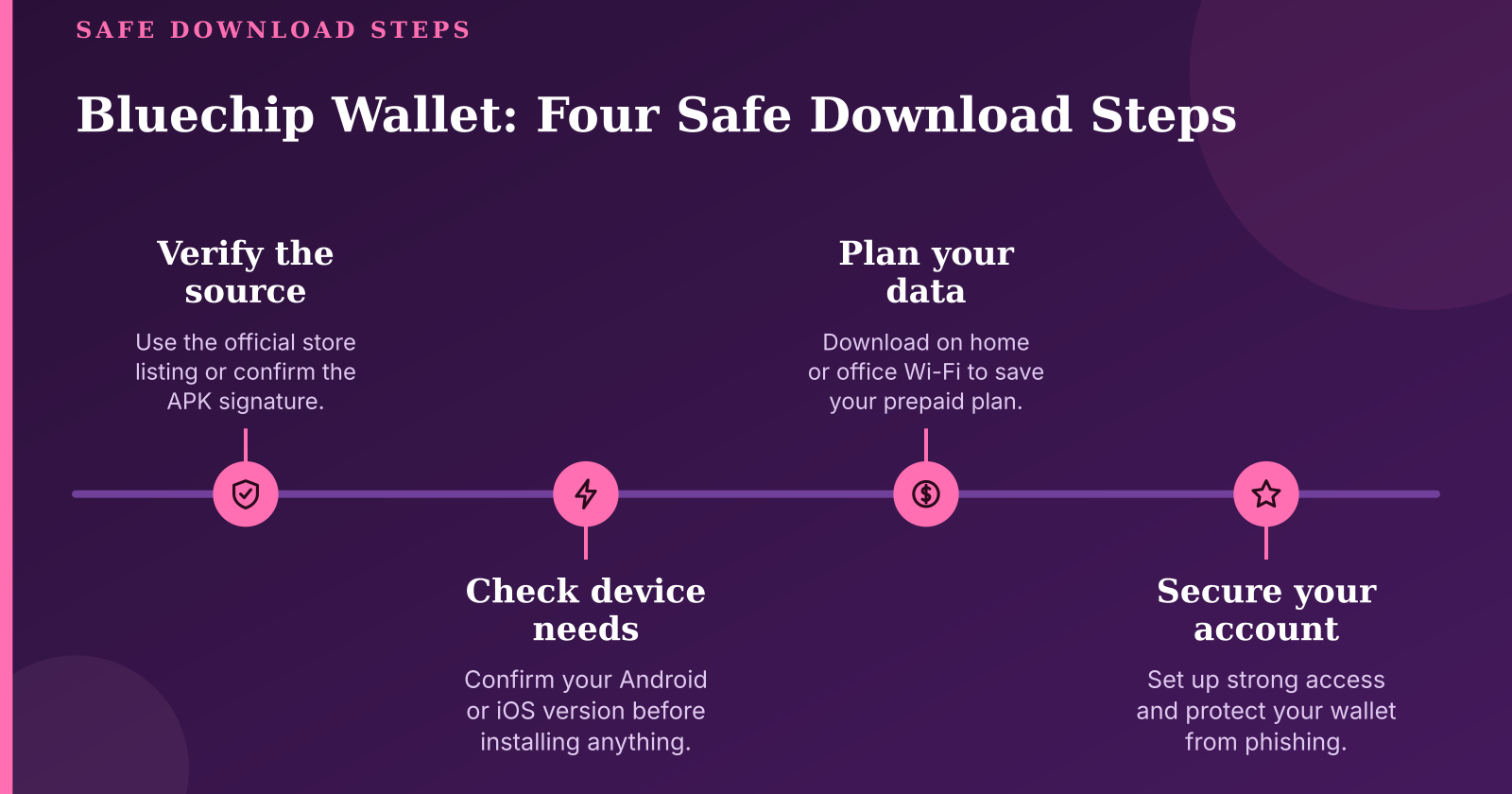
Creating the wallet is where the security decisions compound. Choose a PIN or password that is not reused from another service, and enable biometric unlock if the device supports it, keeping in mind that biometrics protect against casual access but do not replace the recovery phrase. Generate the recovery phrase offline, write it down by hand, and then re-enter it in the app's verification step to confirm you copied it correctly. A single transposed word will make the backup useless, and discovering that after a device loss is the worst time to learn it.
- Enable two-factor authentication on the account, preferably through an authenticator app rather than SMS.
- Set transaction confirmation limits so that a large transfer requires an additional step.
- Set auto-lock to a short interval, such as one to two minutes of inactivity.
- Turn off screenshots or clipboard access for the wallet where the operating system permits it.
- Send a small test transaction before moving any larger amount, and confirm it arrives where expected.
Security settings are only effective if they are actually on. Work through each one before depositing funds, and record the date you completed them. If an update later resets a setting, you will notice the change against your own record rather than discovering the gap after a suspicious transaction.
Where Users Commonly Make Mistakes
Mistakes cluster at three stages. During the download, the most frequent error is installing a modified APK after a failed store download, usually because the user was impatient or the store showed a temporary error. The fix is to retry the store, not to substitute a file from an unknown mirror. The second download-stage error is ignoring a signature mismatch warning from the operating system. Android refuses to update an installed app when the signing key differs, and that refusal exists precisely because the author appears to have changed. Overriding it, or uninstalling and reinstalling from an unverified copy, removes the protection the warning was designed to provide.
Setup-stage errors are more costly because they are harder to undo. Storing the recovery phrase in cloud notes, a photo gallery, an email draft or a messaging app puts it within reach of anyone who gains access to that account. Sharing the phrase with someone claiming to be support is the single most common route to losing funds, because no legitimate support team needs it. Treat any unsolicited contact asking for the phrase as a fraud attempt, regardless of how official the message looks or how well it references your account.
After installation, the mistakes shift to maintenance and environment. Failing to install updates leaves known vulnerabilities open, and a wallet that has not been updated for months is carrying every fix it missed. Using public Wi-Fi in a café, a hotel lobby or a railway station for first transactions exposes the session to networks you do not control. Mobile data on a trusted carrier such as Jio or Airtel, or a home connection, is a safer choice for signing transactions. Keep the sideload permission revoked, check for updates from the store rather than from prompts inside the app, and re-verify the hash of any new APK before replacing the current one.
Practical Checklist and Evaluation Criteria
Before downloading, confirm the official domain yourself, check that the developer name matches on the store listing and the website, and review the listing's version history and recent reviews. Confirm the device meets the minimum OS version, has enough free storage for twice the package size, and that the data plan or Wi-Fi connection will carry the download without interruption. If sideloading, have the expected SHA-256 hash and signing fingerprint ready before you start.
After installing, record the recovery phrase offline and verify it by re-entering it. Enable two-factor authentication, transaction limits and short auto-lock, and turn off screenshots or clipboard access where available. Revoke the unknown-source permission for the browser or file manager. Send a small test transaction through a known rupee on-ramp, confirm it arrives, and only then move larger amounts. Keep a dated note of the file name, version and hash so the next update can be compared before it replaces the current build.
As criteria for judging any download source, weigh four things: whether the publisher is transparent and verifiable, whether the signing certificate and version history are consistent, whether the source publishes an integrity hash you can check, and whether its support channels ever request secrets. A source that fails any one of these deserves a second look, and a source that fails two should be abandoned. The download is the step where most avoidable losses begin, so the discipline you apply there, verifying the signature, confirming the hash, and refusing to share the recovery phrase, is what protects the wallet afterwards. Do those things consistently and the installation itself becomes the least risky part of managing your wallet.