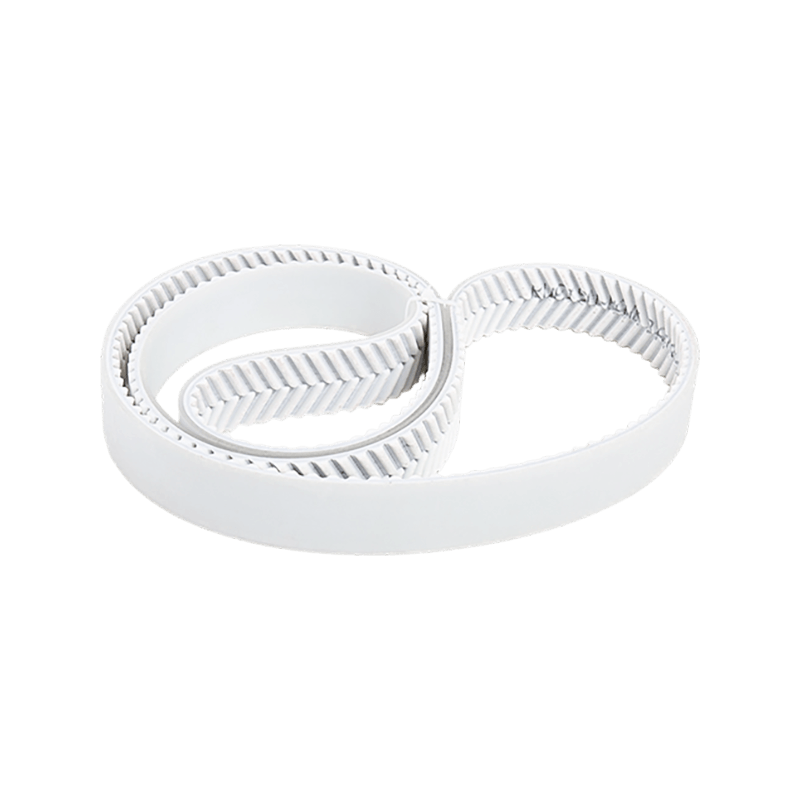
Selecting the right timing belt is a critical decision for equipment manufacturers and maintenance engineers. While both polyurethane (PU) and rubber timing belts are widely used in industrial power transmission systems, each material offers distinct advantages depending on the application environment.
Understanding the differences between these two belt types can help improve equipment performance, reduce maintenance costs, and extend service life.
Understanding Timing Belt Materials
Timing belts are designed to transmit power through precise tooth engagement with matching pulleys. However, the belt material directly affects durability, flexibility, chemical resistance, and positioning accuracy.
The two most common options are:
- Polyurethane (PU) Timing Belts
- Rubber Timing Belts
Both are available from professional timing belt manufacturers, but choosing the right material depends on your operational requirements.
Advantages of Polyurethane Timing Belts
Polyurethane timing belts are increasingly popular in modern automation equipment due to their excellent wear resistance and dimensional stability.
Superior Wear Resistance
PU belts typically offer outstanding abrasion resistance, making them suitable for high-cycle applications and continuous operation environments.
For automated production lines and conveying systems, polyurethane timing belts can maintain consistent performance even after extended use.
High Positioning Accuracy
Precision is essential in robotics, CNC equipment, and automated assembly systems.
Polyurethane belts exhibit minimal elongation, helping maintain accurate synchronization and repeatable positioning throughout the production process.
Excellent Chemical Resistance
Many manufacturing environments expose equipment to oils, cleaning agents, and industrial chemicals.
PU timing belts generally provide better resistance to these substances, making them suitable for food processing, pharmaceutical manufacturing, and packaging equipment.
Suitable Applications
Polyurethane timing belts are commonly used in:
- Robotics
- Linear motion systems
- Automated assembly equipment
- Packaging machinery
- Conveyor systems
- Medical equipment
Advantages of Rubber Timing Belts
Rubber timing belts remain one of the most widely used power transmission solutions in industrial machinery.
Cost-Effective Performance
For many general industrial applications, rubber timing belts offer an excellent balance between performance and cost.
Their lower initial investment makes them attractive for OEM equipment manufacturers and large-scale production systems.
Better Flexibility
Rubber belts generally provide greater flexibility when operating around smaller pulley diameters.
This characteristic allows engineers to design more compact transmission systems while maintaining reliable performance.
Strong Shock Absorption
Industrial equipment often experiences sudden load variations and vibration.
Rubber timing belts can absorb shock loads more effectively, helping reduce stress on other drivetrain components.
Suitable Applications
Rubber timing belts are frequently used in:
- Industrial machinery
- Agricultural equipment
- Textile machines
- Woodworking machinery
- General power transmission systems
The Importance of Timing Pulleys
Regardless of belt material, system performance also depends on pulley quality.
Poorly machined pulleys can increase belt wear, create vibration, and reduce transmission accuracy.
Using precision-engineered timing pulleys helps maximize belt life and ensures smooth operation.
Matching the correct pulley profile to the belt tooth design is essential for achieving optimal performance.
When to Consider Eagle Timing Belt Technology
Some applications require even higher stability, reduced vibration, and improved load distribution.
In these situations, advanced Eagle timing belt systems can provide significant advantages over conventional synchronous belt designs.
Their specialized tooth structure helps reduce noise and improve transmission stability in demanding automation environments.
How to Choose the Right Timing Belt
When selecting a timing belt, consider the following factors:
Choose Polyurethane Timing Belts If:
- High positioning accuracy is required
- The system operates continuously
- Chemical resistance is important
- The application involves precision automation
Choose Rubber Timing Belts If:
- Cost efficiency is a priority
- The system experiences shock loads
- Small pulley diameters are used
- General industrial transmission is required
For many manufacturers, consulting with an experienced timing belt supplier can help identify the most suitable solution based on operating conditions.
Conclusion
There is no universal answer when comparing polyurethane and rubber timing belts. The best choice depends on the specific requirements of your equipment, production environment, and performance goals.
Polyurethane timing belts excel in precision, wear resistance, and automation applications, while rubber timing belts provide excellent flexibility, shock absorption, and cost-effective performance.
By combining the right belt material with high-quality timing pulleys, manufacturers can improve reliability, reduce downtime, and achieve long-term operational efficiency.