
Attachment runs through every strand of trauma work. It shapes how clients predict safety, interpret cues, and risk intimacy. EMDR gives us a precise way to metabolize traumatic memory, yet without an attachment frame it can move too fast or land too thinly. The most reliable gains I have seen come from marrying attachment therapy with EMDR, while weaving in somatic therapy, grief counseling, and even small forms of movement therapy to engage the body that holds the story.
Why attachment belongs at the center of EMDR
EMDR was built to desensitize and reprocess unintegrated memories, and it does that well. But attachment injuries start early and diffuse across relationships, not just single events. A child who learns that crying brings ridicule or silence grows a network of predictions about closeness, power, and worth. Those predictions become procedural memory. When we try to reprocess later traumas without addressing that procedural layer, clients often oscillate between shutdown and overwhelm, or find their insights evaporate outside the therapy room.
Attachment therapy adds the missing context. It asks how the client learned to regulate emotion with another person, what proximity means to their nervous system, and how their internal working model responds when we approach hot material. Combining both approaches lets EMDR do what it does best while planting it in the soil of secure connection. In practice, that shifts the focus from erasing distress to expanding the client’s capacity to be with themselves and others, even when old alarms fire.
A working map: how EMDR adapts through an attachment lens
Standard EMDR follows eight phases. When we integrate attachment therapy, we keep the structure but change the emphasis.

- In history and case formulation, we map attachment patterns and relational injuries alongside index traumas. In preparation, we co-create relational resourcing and practice co-regulation before we touch memories. In assessment and desensitization, we target not only the event but the attachment thought-feeling loop, like I do not matter or closeness is dangerous. In installation and body scan, we anchor new experiences in sensation, voice, eye contact, and breath, because felt safety is the currency of attachment.
A useful shorthand is this: phase work becomes less about moving through steps and more about moving with a person. Timelines slow down. The therapeutic relationship becomes one of the primary sites of change, not a neutral platform on which change happens.
Assessment that sees the whole person
I start with two intertwined tracks. One is the event-level story: accidents, losses, betrayals, and their sensory imprints. The other is the attachment field that shaped how those events landed.
On the attachment track, I am listening for repeated patterns: pursuit and withdrawal, compliance and resentment, oscillation between idealization and devaluation, or a quiet absence of need. I ask what used to happen after tears, what affection looked like, and how conflict ended. When I hear phrases like I figured it out on my own or I learned early not to bother people, I flag those as targets in their own right.
On the trauma track, I chart the memory network with the client’s help. We note the worst image, the negative cognition, the emotions and their body location, and a units of disturbance rating from 0 to 10. Just as important, we map the window of tolerance. Can the client attend to distress and remain connected to me, their breath, and the room, or do they get yanked into old states so quickly that contact disappears?
I use brief measures sparingly and for calibration, not as a report card. PCL-5 or IES-R for trauma symptoms, ECR-R short form for attachment tendencies, and a dissociation screen if needed. The numbers anchor our clinical intuition, which should be constantly informed by the session itself: eye contact that tightens when I shift in my chair, a breath that vanishes when the father is mentioned, humor that spikes when tenderness arrives.
Building the ground: preparation through a body and relationship lens
Preparation is where the integration earns its keep. EMDR resourcing is more powerful when it grows from real relational experiences, however small. I rarely rely on purely imaginative calm places when a client’s early relationships were chaotic or neglectful. Instead, we practice co-regulation right there in the room: tracking breath together for three cycles, normalizing the jitters of being seen, and building tolerable moments of warmth that do not flood the client with shame.
Here is a simple, repeatable scaffold I use to prepare for reprocessing. It takes 10 to 20 minutes and adapts to most clients.
- Orient to the room with three senses, then locate a neutral or pleasant body signal and give it 15 seconds of attention. Practice a bilateral rhythm that fits the client’s body, like slow tapping on the thighs or a side to side eye gaze, and test for comfort. Install a relational resource drawn from lived experience, such as the felt sense of a teacher’s steady voice or a friend’s reliable hand squeeze. Rehearse a micro-boundary, like pausing the set or adjusting the chair, so the client experiences influence in the room. Agree on stop signals and an aftercare plan for the next 24 hours, including hydration, light movement, and one supportive contact.
Those steps borrow from somatic therapy and movement therapy. The aim is to let the body lead the mind into safety, rather than talk safety into a body that does not trust it yet. Two minutes of slow pacing after a difficult set can settle sympathetic arousal better than five minutes of verbal reassurance. Small, rhythmic movements like rocking, walking, or hand squeezing can bridge sessions and keep the nervous system from collapsing into immobility or racing toward hyperarousal.
Target selection in attachment-informed EMDR
Classic target selection scans for worst scenes or first scenes. With attachment in view, we widen the lens. Sometimes the most powerful target is not the car crash but the moment afterward when no one asked how the client was. Or the memory of being seven at a school recital, looking for a parent who never arrived, and deciding it was embarrassing to care.
I often pick a micro-moment to start, small enough to approach without losing connection. Think of a facial expression, a phrase, or the sound of a door closing. We track the negative cognition it carries. I am unlovable can feel too global at first. We might start with It is too much to need or My feelings make trouble, which point directly at attachment templates.
For complex trauma, we may need several preparation sessions that look like treatment in their own right. Installing a nurturing figure is one option, but it has to fit the client’s belief system. Clients skeptical of imagery usually do better with real people and animals: the neighbor who taught them to ride a bike, a coach who said they saw potential, a dog who greeted them with joy. Once installed, these figures can appear during processing without forcing a split between what is happening now and what was needed then.
Interweaves that repair attachment, not just clear symptoms
When reprocessing slows or stalls, therapists often reach for cognitive interweaves. In attachment work, the interweaves are usually relational and sensory first, cognitive second. I might say, Put me in that room with you for a moment. Where would I be? What would my face look like? Often the client can see me standing near the door, making sure it does not slam, or kneeling to their height. That image opens a little corridor of safety where reprocessing continues.
There are also grief interweaves. Many attachment injuries involve losses that were never recognized. If a client realizes mid-set that they are grieving a mother they never had, stopping to name that grief can be regulating rather than derailing. When appropriate, I fold in brief grief counseling: normalizing the messiness of mourning, pointing out that yearning can last in waves for months, and inviting ritual. Some clients bring a small object to session, like a photo or scarf, that anchors the work. It is not sentimental. It is somatic and specific, and it keeps the therapy from becoming abstract.
What a combined session can look like
A composite session, 75 minutes, with a client we will call Maya, who grew up parentified and now shuts down in conflict with her partner.
Minutes 0 to 10: Arrival, consent check, brief body scan. We notice Maya’s shoulders are tense, her breath short. We stand for 60 seconds and sway slightly while breathing, then sit again. SUD baseline settles from 5 to 3.
Minutes 10 to 20: We recall a relational resource, her aunt who offered quiet company during homework. Maya senses the aunt’s cinnamon tea smell and feels a warmth in her chest. We install with slow bilateral tapping for two sets, watch for relaxation in the jaw, and test recall.
Minutes 20 to 25: Target selection. We pick a scene from last week where her partner asked, Are you upset? and Maya said, I am fine, then went silent. The worst moment is the instant she felt her throat close.
Minutes 25 to 55: Assessment and desensitization. Negative cognition: My needs are a burden. Emotions: dread, irritation. Body: tight throat, hollow belly. We begin bilateral stimulation with eye movements at a moderate pace. Maya veers toward a memory at age nine, caring for her younger brother during their mother’s migraine. I offer a relational interweave: Let me stand with you by the sink. She nods, tears come, SUD spikes from 7 to 8 and then drops to 5.
Midway, we pause and use a micro-boundary: Maya asks to slow the speed of the bilateral. Good. She experiences influence. We continue. She notices her aunt’s image arriving on its own. By minute 50, SUD is 2, the throat opens, and her thought shifts to My needs can be met sometimes.
Minutes 55 to 65: Installation and body scan. We deepen the positive cognition with slower sets. I ask, Where in your life could this be useful this week? She names asking her partner for a 10-minute check in after dinner on Tuesday.
Minutes 65 to 75: Closure and aftercare plan. We rehearse the ask out loud twice. She leaves with a plan to walk around the block after session and text her friend in the evening. We schedule a brief check in message protocol if her nervous system spikes overnight.
The session flows between EMDR structure and attachment presence. Nothing fancy, just steady attention to contact, consent, and the body.
Bringing somatic and movement practices into the work
Somatic therapy principles are not an accessory here, they are the hinge. Without a body that can notice and modulate arousal, insight does not translate to life. I rely on brief, learnable practices:
- Orienting with the head and eyes, not just the mind. Let the gaze travel to three benign sights in the room, then return to the therapist for co-regulating eye contact if that fits the client’s comfort. Pendulation between a neutral or pleasant sensation and a difficult one, spending more time on the resource until the system learns it does not have to brace. Rhythmic movement therapy in small doses: two minutes of slow pacing, gentle side to side weight shifts, or a seated left to right hand tap that the client can do discreetly at work.
Clients sometimes worry that movement will make them look odd or make things worse. We test. I name the goal upfront: not to discharge all energy, but to relearn that movement can be safe and choiceful. When done thoughtfully, these micro-movements anchor EMDR gains outside the office, especially for clients who default to stillness as a defense.
Grief is often the gateway, not the endpoint
Attachment work uncovers grief. Not only after death, but after missed childhood attunement, ruptured friendships, or estranged families. EMDR can touch the heat of those moments, yet grief counseling gives form to the aftermath. I help clients name what they miss and how it shows up. We craft small rituals: writing a note and placing it under a stone on their walk, listening to a song on the date of a loss anniversary, cooking a meal from a grandparent’s recipe.
These are not distractions from trauma therapy, they are continuations. They teach the nervous system that sadness can move through without erasing connection. In many cases, unresolved grief is the tangle around the root of anger or numbness. Once it can be felt safely, EMDR clears faster and more completely because the client stops fighting the feeling that naturally follows reprocessing.
Special circumstances and how to adapt
Complex trauma. Expect length and breadth. The client may need dozens of preparatory micro-targets before a core scene is approachable. A relational repair within the therapeutic dyad will likely become a target at some point, and naming that openly is part of ethical practice. When shame rises, return to the smallest unit of safety you can both sense, even if it is simply the feeling of your feet on the floor at the same time.
Couples or parent-child work. EMDR is typically individual, but attachment therapy thrives in dyads. I sometimes split sessions: an individual EMDR block followed by a brief conjoint segment to practice a new behavior. For a parent and teen, this might be a 5-minute coached repair where the parent names a specific miss and the teen gets to correct the story. Make the repair bite-sized and observable.
Medical or sensory trauma. Hospitalizations and procedures create attachment ruptures through enforced separation and loss of control. Use medical interweaves like imagining a nurse who explains in plain language, or your current adult self asking for a pause. Bring in gentle movement as the body allows. If touching the body is sensitive post-procedure, bilateral stimulation can switch to tones or slow eye movements.
Culture and context. Attachment looks different across families and cultures. Eye contact, physical proximity, and expressions of care vary. Hold your own defaults lightly. Ask, How did love get shown in your house? What counted as respect? Integrate those realities into resourcing and positive cognitions so the work lands where the client lives.
Safety, pacing, and when not to push
Here are the red flags that tell me to slow down, widen the preparation phase, or defer EMDR:
- Dissociation that consistently disrupts orientation to the room, or memory lapses in session. Active suicidality without a solid safety plan and external supports. Unmanaged psychosis or mania, where stimulus pairing can spike symptoms. Current substance dependence that destabilizes arousal predictably between sessions. Severe sleep deprivation or medical instability that makes the nervous system too brittle for reprocessing.
Pacing protects attachment. A client who feels hurried will add therapy to their list of unsafe relationships. I would rather end a session with a grounded body and an unfinished target than a completed set and a flooded client. We can always return. That truth, stated clearly, models a secure base.
Medication is not an obstacle if it is steady and the client’s window of tolerance is adequate. Benzodiazepines taken right before session can blunt engagement, so I coordinate with prescribers when possible. For clients with traumatic brain injury, I simplify bilateral stimulation, slow the set speed, and schedule shorter sessions with more breaks.
Measuring meaningful progress
Symptom scales help, yet they do not tell the whole story. I track three layers:
- Session metrics: SUD, VOC, body sensations, and how quickly a client can reorient when they drift. Life metrics: sleep duration, appetite consistency, conflict repair time with a partner, frequency of shutdowns at work, and whether the client initiates or avoids contact with supportive people. Attachment shifts: capacity to ask for help before crisis, tolerance for mismatches followed by repair, and a more flexible view of self and other. These changes are subtle and precious. Clients often notice them late because they feel so ordinary once they arrive.
Progress is rarely linear. Expect flare ups around anniversaries, transitions, and therapy breakthroughs. I normalize that pattern early so clients do not mistake growth for relapse.
Homework that respects the nervous system
Between sessions, I avoid heavy cognitive loads. The best homework is brief, body-based, and relational.

- A 2 minute daily orienting practice, finishing with one deliberate exhale while looking at a familiar corner in the room. One tiny request of a safe person each week, phrased clearly: Can we sit for five minutes after dinner with no phones? or Would you check in with me on Thursday morning? A movement therapy micro-dose, like a 3 minute walk after work or 10 slow weight shifts before bed. Track how easy it is to start, not how far you go. For grief, a once a week ritual that marks the loss without trying to fix it. Light a candle, play a song, or cook. Notice the body before and after.
Clients who love journaling can use it, but I frame it as noticing rather than analyzing. A few lines on what the body felt during a relational moment is enough data for us to work with.
Pitfalls and how to correct course
Moving too fast is the classic error. If a client’s system ramps up outside session, I pull back to resourcing and install more robust micro-boundaries. Sometimes we target the belief I cannot slow this down or Asking for a pause makes me a problem. Those targets are deeply attachment based and, once shifted, change the feel of every future session.
Another pitfall is over-reliance on imagined nurturing figures that the client cannot believe in. If that happens, we pivot to lived resources, even if they seem modest: the barista who knows their order, a pet’s greeting, a reliable walking path. Credibility outruns grandeur every time.
Therapist countertransference matters here. Clients with avoidant https://jsbin.com/vifilofosi strategies can leave us feeling unnecessary, and those with anxious strategies can leave us feeling overwhelmed. Naming our reactions in supervision or consultation keeps the work clean. In some cases, sharing a light version of the process with the client, like noticing we are trying to rescue them from a feeling that might be tolerable, becomes a live repair.
Ethical frame and consent, session by session
Trauma therapy asks for informed choice at every turn. With EMDR inside attachment therapy, I make three commitments explicit: the client can pause at any time, we will not pursue catharsis as a goal, and I will check consent before changing speed or modality. If I sense a rupture, even a micro one, I name it. You went quiet when I suggested another set. Did I miss something? That question alone can heal more than a dozen perfect interventions.
Cultural humility is baked into consent. Some clients will not want eye movements or direct gazing. Some will prefer tapping or tones. Some will request a same gender therapist for certain targets. All of that is information, not resistance.
How integrated work changes outcomes
When attachment therapy holds the container, EMDR’s gains do not wash away with the next stressor. Clients report that they feel steadier asking for what they need, that conflict does not automatically predict loss, and that their bodies come back from jolts faster. Parents find they can co-regulate with children rather than jumping to control or collapse. Partners learn to repair in minutes rather than days. Grief comes in waves that crest and pass.
I have watched clients who once white-knuckled through intimacy begin to enjoy everyday closeness. Not dramatic, but consequential: cooking with a partner without hovering tension, staying in the room during a child’s tantrum and breathing together, calling a friend when sadness hits instead of disappearing. Those changes are small enough to miss if we look only for big moments. They are also the markers of a nervous system learning secure attachment from the inside.
The integration is not magic. It is careful work, session by session, with a clear eye on pacing and a respect for the body’s wisdom. Use EMDR to clear what is stuck. Use attachment therapy to teach the system that connection can be safe. Add somatic therapy and movement therapy to give the body a way home. Let grief counseling name the losses that surface along the way. Put them together and you get trauma therapy that builds capacity, not just symptom relief, and relationships that can hold the lives clients want to build.
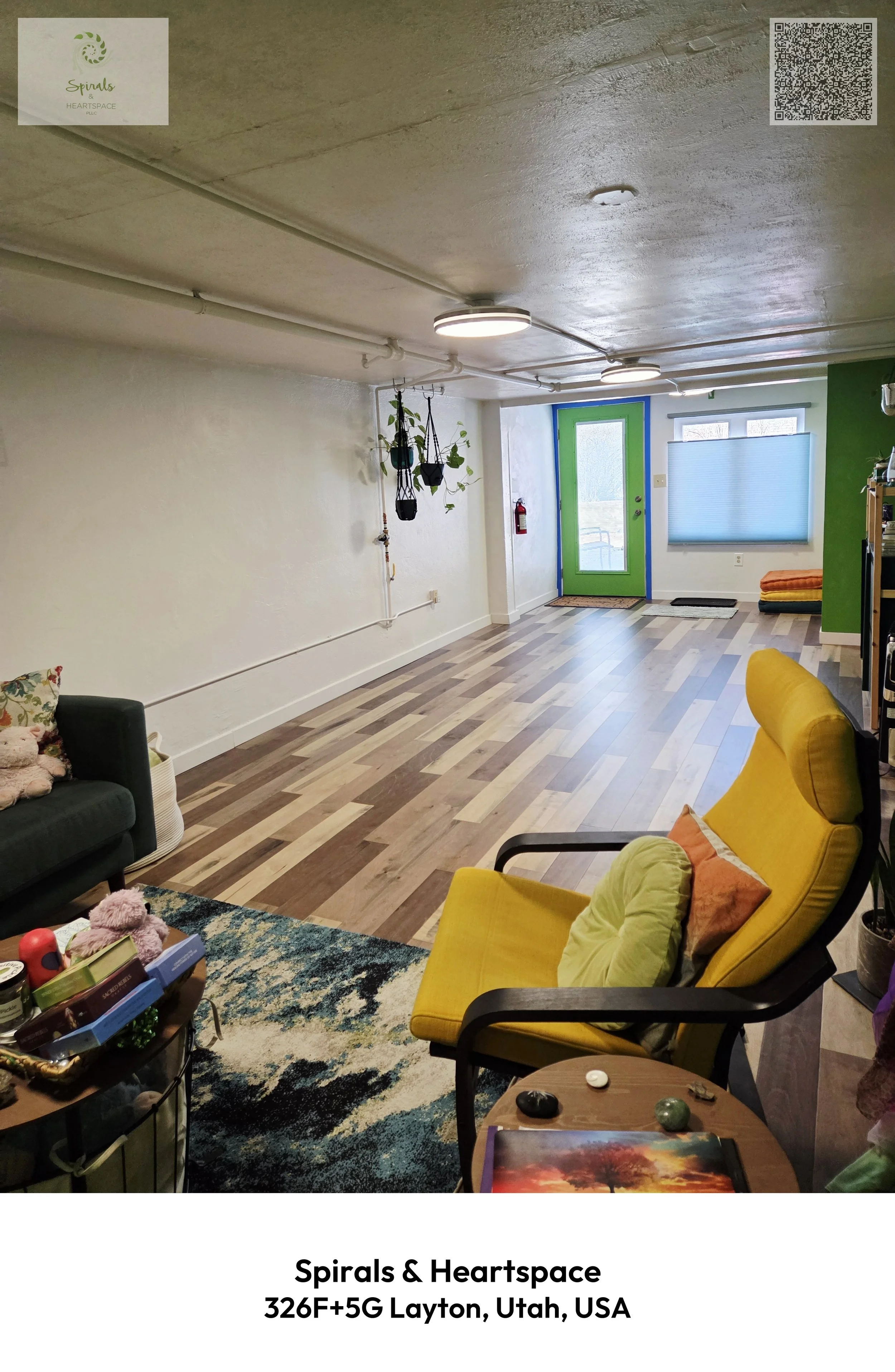
Name: Spirals & Heartspace
Address: 534 W Gentile St, Layton, UT 84041, United States
Phone: 385-301-5252
Website: https://spiralsandheartspacehealing.com/
Hours:
Monday: 9:30 AM - 7:00 PM
Tuesday: 9:30 AM - 7:00 PM
Wednesday: 9:30 AM - 7:00 PM
Thursday: 9:30 AM - 7:00 PM
Friday: 9:30 AM - 7:00 PM
Saturday: Closed
Sunday: Closed
Open-location code (plus code): 326F+5G Layton, Utah, USA
Map/listing URL: https://maps.app.goo.gl/M1jmgkhNyaMPCCJ8A
Embed iframe:
"@context": "https://schema.org",
"@type": "ProfessionalService",
"name": "Spirals & Heartspace",
"url": "https://spiralsandheartspacehealing.com/",
"address":
"@type": "PostalAddress",
"addressLocality": "Layton",
"addressRegion": "UT",
"addressCountry": "US"
Spirals & Heartspace is a Layton therapy practice offering somatic, trauma-informed support for adults who feel stuck in survival mode.
The practice focuses on trauma therapy, somatic therapy, grief counseling, movement therapy, and attachment therapy for clients looking for deeper healing work.
Based in Layton, Utah, Spirals & Heartspace offers therapy for adults in the local area and notes that both in-person and online sessions are available.
Clients who feel exhausted, disconnected, or trapped in long-standing patterns can explore a body-based approach that goes beyond traditional talk therapy alone.
The practice also offers coaching, consultation, and authentic movement for people seeking personal growth or professional support in related healing work.
For people searching for a psychotherapist in Layton, Spirals & Heartspace provides a local Utah base with services centered on trauma recovery, nervous system awareness, and attachment healing.
The official website identifies Layton and the surrounding Davis County area as the local service region for in-person care.
A public map listing is also available as a reference point for business lookup connected to the Layton area.
Spirals & Heartspace emphasizes a warm, embodied, creative approach designed to help clients reconnect with truth, clarity, and a more grounded sense of self.
Popular Questions About Spirals & Heartspace
What does Spirals & Heartspace help with?
Spirals & Heartspace offers support for trauma, grief, attachment wounds, emotional overwhelm, and body-based healing through somatic and movement-oriented therapy.
Is Spirals & Heartspace located in Layton?
Yes. The official website has a dedicated Layton, Utah location page and describes the practice as serving Layton and surrounding communities.
What therapy services are offered?
The website highlights trauma therapy, somatic therapy, grief counseling, movement therapy, and attachment therapy. It also lists coaching, consultation, and authentic movement.
Does Spirals & Heartspace offer online sessions?
Yes. The Layton location page states that both in-person and online sessions are available.
Who leads Spirals & Heartspace?
The official site identifies Ande Welling as the therapist, coach, movement facilitator, and guide behind the practice.
Who is a good fit for this practice?
The site is geared toward adults who feel exhausted from old survival patterns, complicated family dynamics, grief, self-abandonment, or unresolved trauma and want a deeper, body-aware approach.
How do I contact Spirals & Heartspace?
You can visit https://spiralsandheartspacehealing.com/ and use the contact form to inquire about therapy, coaching, consultation, authentic movement, or speaking.
Phone: 385-301-5252
Landmarks Near Layton, UT
Layton – The practice explicitly identifies Layton as its local base, making the city itself the clearest location reference.Davis County – The Layton page says the practice serves individuals throughout Layton and Davis County, so this is an important regional service-area landmark.
Wasatch Mountains – The location page directly references Layton as sitting against the Wasatch Mountains, making this a natural local landmark for orientation.
Northern Utah – The site describes Layton within northern Utah, which is useful for people comparing nearby therapy options across the region.
Surrounding Layton communities – The official location page says the practice serves Layton and surrounding communities, which supports broader local relevance without overclaiming exact neighborhoods.
If you are looking for a psychotherapist in Layton, Spirals & Heartspace offers a local Utah therapy practice with in-person and online options for adults seeking trauma-informed support.