
The floor screed plays a key role in preparing the base for any floor covering, be it tile, laminate or parquet. The quality of this layer directly depends on the correctly prepared solution, which must have the necessary strength, plasticity and uniformity. Mistakes at the mixing stage can lead to unevenness, cracks and a decrease in the operational characteristics of the floor, so it is important to understand the basic principles of preparing the mixture and strictly follow the work technology.

General idea about screed
The floor screed is the base layer that levels the surface and serves as the basis for the finish coating. The strength of the coating, the absence of cracks and the evenness of the base depend on the quality of the solution. Preparation of the mixture requires precision in proportions, selection of components and adherence to technology.
The main components of the solution
A classic screed solution consists of cement, sand and water. In some cases, plasticizers or reinforcing fibers are added. Each component performs its function and affects the final characteristics of the mixture.
Cement
M400 or M500 cement is most often used. It is responsible for the strength and adhesion of components. The freshness of cement is of great importance, as it loses its activity during long-term storage.
Sand
The sand must be clean, without clay and organic impurities. The best option is river or washed quarry sand of medium fraction. Too fine sand deteriorates the structure of the solution.
Water
Clean water is used, without impurities of oils or salts. The amount of water affects the plasticity of the mixture and its setting time.
Proportions of components
For a standard cement-sand screed, a ratio of 1:3 is used, where one part of cement and three parts of sand are used. The amount of water is regulated by consistency.
| Cement brand | Ratio (cement: sand) | Approximate amount of water |
| m400 | 1:3 | 0.5 parts |
| m500 | 1:4 | 0.45 parts |
Step-by-step cooking process
Preparation of the solution includes several stages. It is important to follow the sequence of actions to get a homogeneous mixture without lumps.
- Mixing dry components to a homogeneous state
- Gradually add water
- Mixing until a plastic mass is obtained
- Consistency check

Consistency of the solution
The right mixture should be plastic, but not liquid. If the solution spreads, it leads to a decrease in strength. Too thick a mixture is poorly distributed over the surface.
Additives and their use
To improve the characteristics, special additives are used. Plasticizers make the mixture more convenient to work with, reduce the risk of cracks. Fiber increases resistance to loads and reduces the likelihood of microcracks.
Errors in the preparation of the solution
Often there are mistakes that negatively affect the quality of the screed. Incorrect proportions lead to a decrease in strength. The use of dirty sand deteriorates the structure of the mixture. Excess water causes shrinkage and cracks.
Working conditions
Temperature and humidity affect the setting process. The optimal temperature for work is from +5 to +25 degrees. At high temperature, the solution quickly loses moisture, which can cause cracking. At a low temperature, the hardening process slows down.
Laying and care of the screed
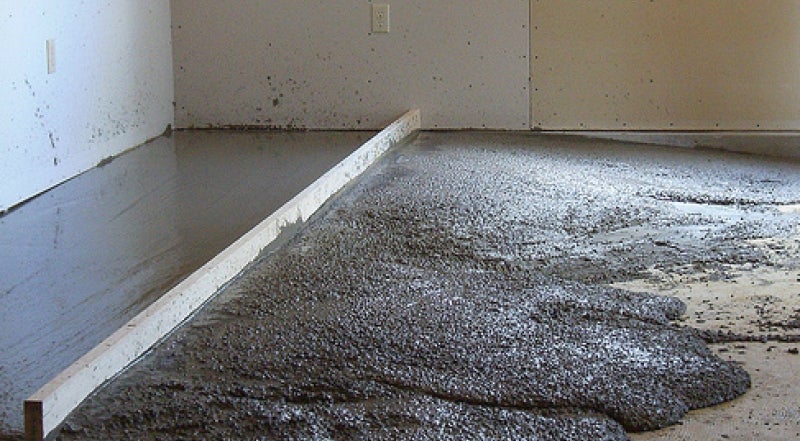
After preparation, the solution must be used within 1-2 hours. Laying is carried out evenly, with a leveling rule. After pouring, it is recommended to moisten the surface for several days to avoid drying out.

Conclusion
Preparation of the solution for the floor screed requires a careful approach to the selection of materials and compliance with the technology. A high-quality mixture provides an even and strong base for further decoration. Correct proportions, accuracy in work and taking into account the conditions allow you to get a reliable result.