
During renovation, priming is often perceived as an optional step. At first glance, it may seem that it is enough to clean the surface well, apply putty, paint or glue and move on to the next job. You especially want to save time and money when the base looks strong, clean and even. That is why the question of whether it is possible to do without a primer arises for many people who carry out repairs on their own.
There is no one-size-fits-all answer for all situations. Sometimes priming can indeed be omitted without critical consequences. But in many cases, the refusal of this stage can worsen the adhesion of materials to the base, increase the consumption of paint or glue, and also shorten the service life of the decoration.
To understand whether a primer is needed in your particular case, you need to consider the type of surface, its condition, the properties of the material that will be applied next, and the manufacturer's requirements. Let's consider in detail why a primer is needed, when you can do without it and why savings at this stage are not always justified.
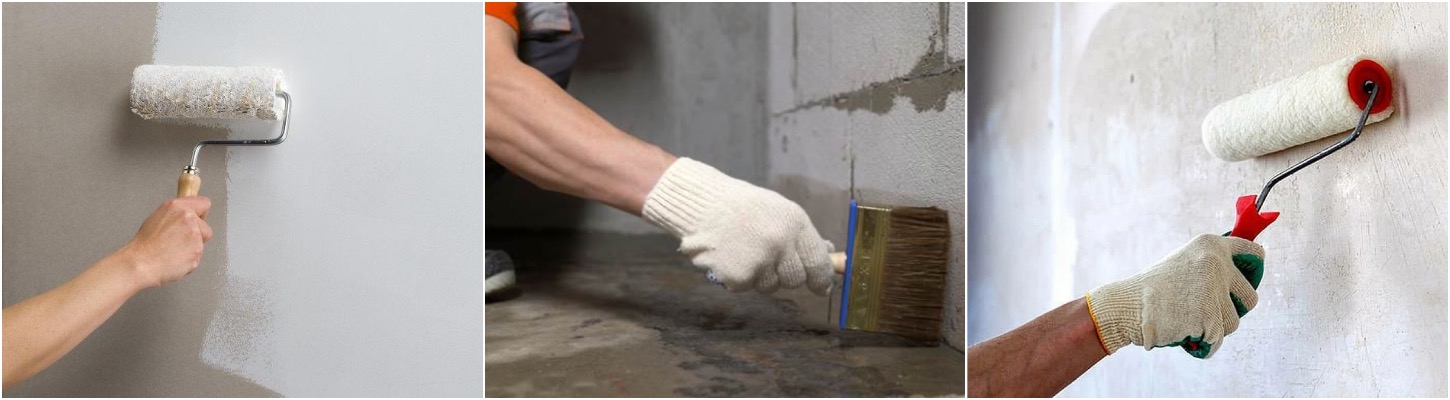
What is a primer and why is it needed?
Primer is a special composition that is applied to the base before puttying, painting, applying decorative plaster, laying tiles or other finishing works. Its main task is not to form an independent finish coating, but to prepare the surface for the next material.
Depending on the composition, the primer can penetrate the upper layer of the base, bind dust, reduce and equalize moisture absorption, improve adhesion or create a special contact layer. That is why the same product should not be used for absolutely all surfaces and tasks.
For example, for porous cement plaster, it is important to reduce excessive moisture absorption. If the paint is applied without prior preparation, the surface may absorb it unevenly. As a result, the color or gloss of the coating will differ in different areas.
The situation is different on a smooth and weakly absorbent base. Here, it may not be the depth of penetration of the composition that is more important, but the creation of a layer that will ensure reliable adhesion of the next material to the surface.
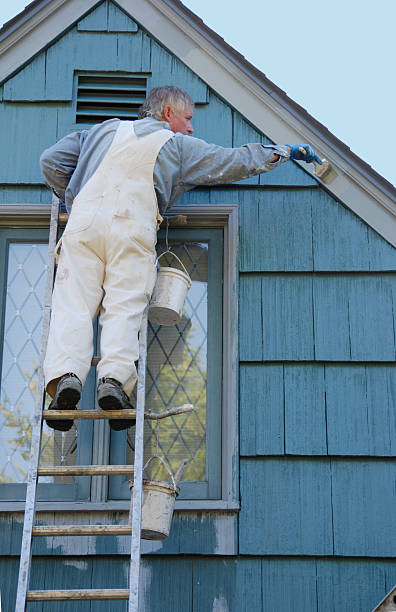
What problems arise without a primer
Refusing to ground doesn't necessarily lead to noticeable problems right away. Often the surface after repair looks quite normal. However, defects may appear later, when the coating dries or is subjected to mechanical and temperature stress.
One of the most common problems is poor adhesion. If the material does not adhere well to the base, it can peel, crack or crumble. This is especially true for dusty, chalky, highly absorbent or very smooth surfaces.
Another problem is uneven drying. The base with different absorbency absorbs moisture from the material differently. Because of this, paint, putty or other composition may behave differently in adjacent areas.
Also, without a properly selected primer, the consumption of finishing material may increase. For example, a highly porous wall can absorb a significant amount of water from water-based paint. You will have to apply additional layers, and the initial savings on the primer will actually disappear.
Do you always need to prime the walls?
No, not always. The need for priming depends on the specific surface and technology of work. Sometimes the next material works well without a separate coat of primer if the base meets the manufacturer's specifications.
However, the phrase "the wall is even and clean" in itself does not mean that it cannot be primed. It is important to evaluate not only the appearance, but also the properties of the base. A surface may be visually perfect, but remain excessively absorbent or not strong enough for the intended coverage.
Concrete surfaces
Concrete can have a different structure. Smooth monolithic concrete, porous aerated concrete, concrete screed and old concrete pavement require a different approach.
Smooth concrete often has a low absorption capacity. If it is planned to apply plaster or other material for which adhesion is important, a special contact primer may be required. It forms an intermediate layer, to which the material is easier to attach.
Porous concrete, on the other hand, can quickly absorb moisture. For it, compositions are used that are able to penetrate into the base and regulate its absorption.
Brick and cement plaster
Brick and cement-sand surfaces are often porous. If you leave them without preparation, part of the moisture from the finishing material quickly transfers to the base. This can negatively affect the drying process.
Priming helps make the foundation more predictable. The material dries more evenly, and the next layer gets more stable working conditions.
Drywall
Drywall should also not automatically be considered a surface that can be painted without preparation. Special attention needs to be paid to joints and puttying areas. They can have a different absorption capacity than the cardboard surface of the sheet.
If the paint is applied without first equalizing the properties of the base, differences in color and gloss may appear after drying. Correctly selected primer helps to reduce this risk.
When you can sometimes do without a primer
There are situations when a separate grounding stage may indeed be optional. For example, if the manufacturer of a specific material directly provides for application on a prepared surface without a primer. Also, some finishing systems already contain components that perform part of the functions of the primer layer.
Another example is the repainting of a durable coating that adheres well to the base, does not chalk, does not have greasy spots, dust, peeling and significant defects. But even in this case, you need to check the compatibility of the old and new coating.
It is worth skipping priming only when it is technologically justified. The mere fact of wanting to save a few hours of work is not a sufficient reason to reject the material.
When the primer is especially important
There are several types of situations in which the risk of grounding failure is particularly high. This applies to weak, porous, dusty, highly absorbent or very smooth surfaces.
- When applying materials on a highly porous base.
- When working with a surface that is dusty or has a weak top layer.
- Before painting the base with different absorbency.
- When applying plaster or glue on smooth concrete.
- Before decorative finishing, where uniform color and texture are important.
- During the repair of old surfaces, the condition of which cannot be assessed only visually.
In such cases, the primer is not just an additional material, but a part of the base preparation technology.
Is it possible to replace the primer with water?
Sometimes, to reduce the absorption of the base, the surface is simply moistened with water. This technique can indeed be used in certain technologies, but it is not a full-fledged replacement for the primer.
Water temporarily changes the state of the surface, but does not form the necessary binding layer and does not perform all the functions of a special primer composition. After drying, the water disappears, while a properly selected primer leaves components in the upper layer of the base that affect its properties.
Therefore, it is not worth focusing only on wetting the surface as a universal method of preparation.

Can you use paint instead of primer?
This question often arises when painting walls. The owner wants to skip one stage and immediately apply paint. In theory, some paints can work well on certain prepared bases without a separate primer. However, ordinary finishing paint does not become a universal primer.
Paint has a different purpose. Its task is to form a decorative and protective coating. The primer optimizes the properties of the base before applying the finishing material.
If the paint manufacturer allows application without a primer, it is necessary to follow his recommendations. If the surface is porous, dusty or has a non-uniform structure, it is better not to experiment with the technology.
Does the primer affect the consumption of paint
So, in many cases, priming helps to reduce and stabilize the consumption of finishing material. This is especially noticeable on porous bases.
Let's imagine a wall that actively absorbs water. During the application of the first layer of paint, part of its liquid component quickly penetrates into the base. The film is formed unevenly, and an additional layer may be needed to obtain the same result.
After proper priming, the surface becomes less unpredictable. The paint is distributed more evenly, and its consumption can be reduced.
| Surface | The main problem | Expediency of grounding |
| Porous plaster | Strong absorption | High |
| Smooth concrete | Weak adhesion | High for the appropriate technology |
| Drywall | Different base absorption | Recommended |
| Strong old paint | Depends on the compatibility of the coatings | Not always mandatory |
| Dusty or weak surface | Low strength of the upper layer | Very high |
How to understand whether you need a primer
Before starting work, it is necessary to assess the foundation not only visually. Run your hand over the surface. If a lot of dust remains on the palm, this is a signal that thorough preparation is necessary. It is also worth paying attention to areas that are crumbling, chalked or have a different structure.
It is also useful to check water absorption. You can apply a little water on a small, inconspicuous area and watch how quickly it disappears from the surface. Very fast absorption indicates high porosity of the base.
The old coating needs to be evaluated separately. If the paint is flaking, cracking, or peeling easily, applying a primer over it alone will not solve the problem. First, it is necessary to remove unstable layers and prepare a strong base.
It is more important not just to ground, but to ground correctly
Even a high-quality primer will not help if it is used incorrectly. Before applying, the base must be cleaned of dust, dirt, greasy stains and particles that do not hold well.
The primer is applied evenly, without leaving puddles. An excessive amount of composition does not always improve the result. On the contrary, creating a too thick or uneven layer can negatively affect further work.
It is also important to observe the drying time. If you start puttingty or painting the surface too soon, the primer will not have time to perform its function properly.
How to choose a primer
The choice depends on the base and the material that will be applied further. You should not buy a primer only on the basis of "the more expensive, the better". More important is the relevance to a specific task.
Deep penetration primers are often used for porous mineral bases. They help strengthen the top layer and reduce uneven absorption.
Adhesive contact compounds can be used for smooth concrete surfaces. Their function is to create a surface with which the next material adheres better.
There are separate products with appropriate properties for metal, wood, plasterboard and other special bases. A universal primer can be convenient, but it is not always able to provide the optimal result for complex surfaces.
Is it worth saving on the primer?
If the repair is small, forgoing the primer may seem like an easy way to cut the budget. But savings must be evaluated in a complex way. The cost of the primer itself is often small compared to the costs of paint, putty, decorative coatings and labor costs.
If due to insufficient preparation you have to apply an additional layer of paint or redo the peeling area, the total costs may turn out to be higher.
In addition, repairs are made not only for the sake of appearance on the day of completion of the work. It is important that the coating retains its properties for a long time. Correct preparation of the base is one of the factors of the durability of the finish.
Do you need a primer before putty?
In many cases, yes. If the wall absorbs water a lot, the putty may dry unevenly. This affects its working properties and further grinding.
A primer can also help bind residual dust after surface cleaning. But it should not be used as a way to hide a poorly prepared foundation. Before priming, the surface should still be cleaned and its strength checked.
When working with a specific system of materials, you should look at the putty manufacturer's recommendations. Some products may have their own substrate preparation requirements.
Do you need a primer before tiling?
When laying tiles, the issue of preparing the base is especially important. The adhesive must be firmly in contact with the surface and the substrate must be strong and suitable for the material in question.
On highly absorbent surfaces, priming can help control moisture removal from the adhesive. A special adhesive composition can be used on smooth or complex bases.
However, the primer does not compensate for the fundamental problems of the foundation. If the wall crumbles, has significant cracks or unstable layers, these defects must first be eliminated.
Is it possible not to use a primer at all?
Yes, in some cases it is possible. But it is more correct to ask the question not "is it possible to save on the primer", but "is it necessary for this particular system of materials".
If the surface is strong, clean, stable, compatible with the subsequent coating, and the manufacturer does not require preliminary priming, an additional layer may be unnecessary. In such a situation, skipping a stage will not necessarily affect the quality of the repair.
If the base is porous, dusty, uneven or too smooth, the risk of failure of the primer is much higher. Here it performs a specific technological function, and not just adds another stage to the repair.
Conclusion
So, it is sometimes possible to do without a primer, but it is not worth doing without an assessment of the surface. Priming is not necessary for the sake of the fact of using additional material. Its task is to make the base more suitable for the next stage of decoration.
On porous surfaces, a primer helps control absorption. It can strengthen the top layer on dusty and weak bases. On smooth concrete, a special composition is able to improve adhesion. When painting a non-uniform surface, priming helps to obtain a more uniform result.
You can refuse the primer only when the technology of the specific material allows it and the condition of the base really does not require additional preparation. When in doubt, it's better to spend a little time priming than risk an expensive finish.
Thus, the primer is not a universal answer to all repair tasks and is not a mandatory layer absolutely before every material. This is a surface preparation tool, the effectiveness of which depends on the correct choice of composition and method of application. That is why the decision to use it should be made taking into account the type of base, the condition of the surface and the requirements of a specific finishing system.