
A ranking report can look encouraging when your business appears near the top of Google Maps. The useful question is where that result came from. A customer searching near your premises may see a different set of businesses from someone several streets away.
For a UK business owner reviewing local SEO, the report should explain the search phrase, the area checked and the date. Those details give the numbers meaning and make it easier to compare the next report.
Start with the search and the area
Check that the phrase describes a service you actually offer. A plumber checking boiler repairs and a restaurant checking takeaway searches are looking at different customer needs. Use the same phrases and map area when you repeat a check.
Grid rank tracking checks several points around your business. Look at the whole pattern, including locations where the business was not found. A check that returned no usable data should be distinguished from a completed search that did not find your business.
Kerbrank’s Google Maps heatmap guide explains how these location checks work.
Read the summary alongside the map
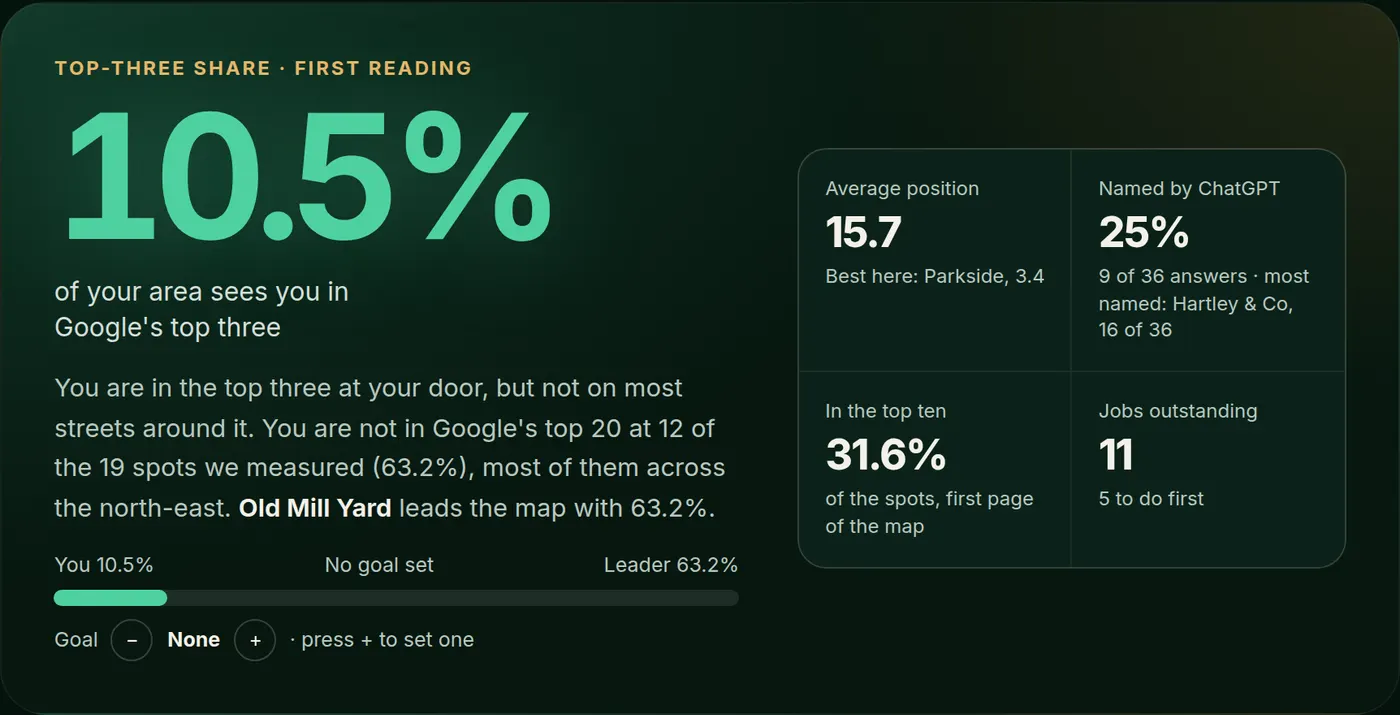
Example Kerbrank report interface. The figures shown are illustrative product data, not a result achieved for a customer.
An average position gives you a summary, but it can hide differences across the area. Look at where the stronger results occur and which places have weaker coverage. Keep the report’s treatment of missing results in mind when comparing averages.
Write down the competitors that appear repeatedly in the locations you care about. That gives you a more specific comparison than choosing one competitor because it appeared in a search from your phone.
Keep Google Maps and ChatGPT checks separate
A ChatGPT recommendation check asks a different question from a Google Maps ranking check. Record the exact recommendation question, when it was asked and whether your business appeared. Answers can vary with the wording and context, so one response does not describe every customer’s experience.
Choose the next task from the evidence
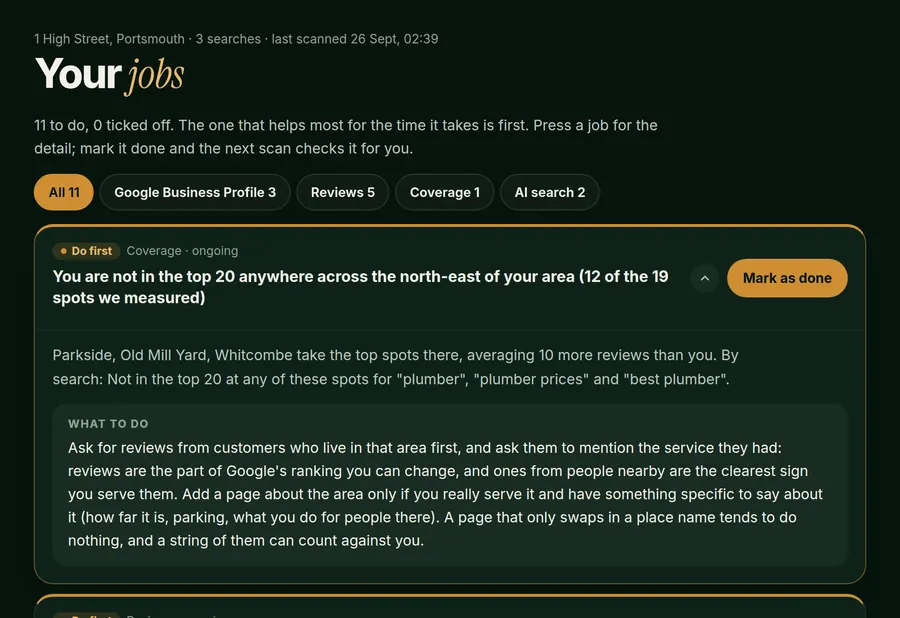
Example task-list interface. Review each suggestion against the services and locations your business actually covers.
Check for factual problems you can fix: an outdated service page, inconsistent contact details or inaccurate opening hours. Keep a record of each change. Ask customers for honest reviews without offering incentives.
The guide to improving Google Maps visibility has more profile and website checks. Track enquiries and bookings alongside visibility over time; a movement in rankings alone does not prove that your latest edit caused it.
Using Kerbrank to keep track
Kerbrank helps UK businesses and agencies check Google Maps rankings across a grid, check whether ChatGPT recommends the business, and work through a weekly list of suggested improvements. Plans include weekly rescans, competitor information and shareable reports.
Plans start at £29 per month, with a 14-day free trial and no card required. Check the Kerbrank website for current plan details.
Published by Kerbrank. Screenshots are illustrative examples. This article uses relevant topic phrases, including Google Maps ranking report and local rank tracking; their search volumes have not been measured.