僕も昨日、授業の合間に映画見に行ってきました。コナンです!

コナンの劇場版を映画館で見るのは、中学校以来だったので、ちょっとドキドキしてました(というのは、あまりにもプロットが入り組みすぎてついていけないのではないかと思ったからですw)

確かに黒の組織やら日本の警察やら、FBIやら出てきて人物整理には多少頭をひねりましたが、筋はすっきりしてました。そして最後はやはり感動的でした!またもやあの少年探偵団がいい仕事をしてくれました( ◠‿◠ )

さて、もう内容に関しては多数書き込みがあったので、二三僕が気になったことについて書きます。ネタバレになることは重々承知の上で、書きます… できれば映画を見た方でコメントできる方、お願いします!

まず、映画のタイトルとも関係してくるのですが、今回登場してくる黒の組織のキュラソーの色覚異常に関して。彼女は色覚異常というある種特殊な才能(おそらく全色盲?世界が白黒にしか見えないのかな?)を発揮して、組織のいわば記憶媒体として活躍していたわけですが、観覧車に乗ってい時に、橙色青色赤色緑色の光を浴びたときに何故記憶がよみがえってきたのか、いまいちわかりません。医者が彼女には脳に異常があるというような解説をしていましたが、よくわかりませんでした。

あとこれは疑問というか単に感想なのですが、最初のアクションシーンは見ごたえがあったものの、頭を打って記憶をなくさせるという筋書きを作りたいならば、あそこまで派手にやらなくてもよかったような気がして… あんな高さから落ちたら、記憶なくす前に命なくしちゃうよーって冒頭から突っ込みいれちゃいました( ̄∇ ̄;)ハッハッハ でも水族館でコナン一行に発見されるためには海に落ちちゃわないといけなかったのかな?

以上いま感じたことを乱暴ににまとめました。よければコメントの方、お願いします。


NEW WORDS
Geek, and nerd, POSITIVELY used?
Dork, and dweeb, NEGATIVELY used?
I’ve heard these words from one of the American co-workers. I had known the word “geek”, but I’d thought it was used NEGATIVELY. But as it turned out that, the two words, “geek”, and “nerd” has started to be used POSITIVELY and overlap partially in meaning “理系”, and “文系”, the Japanese high school studying area division, determined by what they are interested in and what they are going to study in universities. But of course they are different. Japanese “理系”, and “文系” refer to the broad studying area, defined as the school subject division, such as science and history. On the other hand, the two words comprehend both school subjects and what people are interested in. For example, “geek” refers to a person who is really good at scientific things, such as computers, video games, science, universe, and even car fixing. A “nerd” refers to a person who is more interested in cultural things, such as history, archeology, books, and so on. He showed me a quite an informative analogy, which is a “geek” is a person who likes “STAR WARS”, and a “nerd” is a person who likes “Indy Jones”. In a daily conversation, you could say ‘she is a computer geek so she can fix your computer problem’ or like that. These two words do not have negative connotations that the Japanese soon assume. Some people use them to describe themselves.

He told me other two words which describe somebody negatively. For example, a “dork” is a contemptible, socially inept person. Usually she/he is not good at communicating with people, and they sometimes hurt somebody’s feelings. The Japanese call them K Y (空気が読めない). A “dweeb” is another example of this kind. She/he is a rough-spoke person, who is just like Donald Tramp.

My point of view is that if specialists go so far as to cause trouble or damage somebody’s feelings, they should be called a “dweeb”, a “dork” or whatever shows contempt to them. But I think that the border is somewhat difficult to draw between specialists and the unsociable because specialists are quite likely to become shut away from society and cannot adapt to the society. However, it is also important to note that we will soon assume that someone who is really into something is unsociable and treat them as such. Rather, we should understand them (not always such an extent as we sypathise them). Oh, by the way University requires researchers to be specialized about the research area, which is somewhat different from the rest of the society… ha ha.
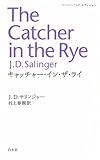
キャッチャー・イン・ザ・ライ(the CATCER in the RYE)
J.D.Salinger作、村上春樹訳

I finished reading this book only yesterday and I have never felt as exited and sympathetic to the main character as before. Before my feeling towards this book becomes vague and subtle I will write down it.

As you know, this book is one of the best classical novel of teenagers’, written by J.D. Salinger. I have known the title of the book for a long time, but it’s the first time to read the text (although it is a Japanese translation…)

This book mainly consists of main character’s monologue, who is a high school student. He has quite a high self-consciousness and anxiety about future, being unique in teenagers. His description of the world is somewhat distorted with his personal feeling of himself of being superior to others. However, he doesn’t put his thought into his action, because he simply doesn’t have courage to do so.

He is also quite dissatisfied with school life and he has changed school THREE times! (Actually he was expelled from school for laziness of study) He has the ability to study in school but WON’T do that, because he cannot find studying worthwhile and school life quite boring (he has quite a high academic skill, I guess, as he has quite a lot of knowledge about literature and he said he had been praised for his excellence of his composition.)

Back in high school, when I was about the same age as him, I would often feel very similar way. I did study a lot (because I was a coward ha ha) but I always wondered whether it’s worthwhile or not what I was studying. Also, personal relations were a pain in the neck then and I often felt I would get everything in my own way (probably I developed a kind of delusions of grandeur, although by no means, did I ever put it into action…)

But he has an adorable sister, Phoebe, of ten years old. He eventually found a meaning in life; to protect his sister. He said in the book, “what I have to do, I have to catch everybody if they start to go over the cliff- I mean if they’re running and they don’t look where they ‘re going, I have to come out form somewhere and catch them”. When she decided to leave school to go with him, he managed to stop her from doing it, just like the CATCHER in the RYE. The story ends shortly after this.

    I am much older than he, but I still WANDER and WODER what I am going to do in the future. I think the writer saw quite appropriately how teenagers feel, think, and act. I am really into his feeling and at the same time, reflecting my own way of thinking. I should read the original text of English.


キャッチャー・イン・ザ・ライ (ペーパーバック・エディション)/J.D. サリンジャー

¥950
Amazon.co.jp