
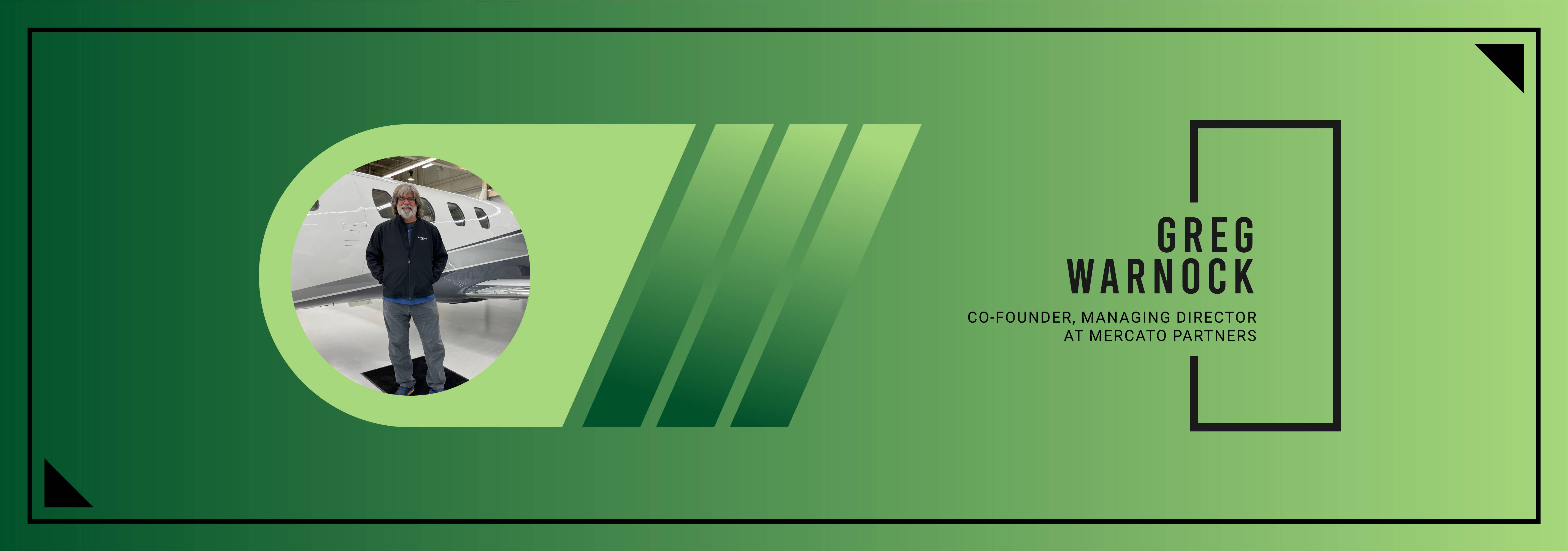
Building a successful company requires more than a good idea. Founders eventually have to make difficult decisions about hiring, financing, market expansion, leadership, operations, and long-term strategy. Greg Warnock has spent much of his career working at that intersection between entrepreneurship and investment. More information about Greg Warnock and his professional background can be found at https://about.me/gregwarnock https://gregwarnock.creator-spring.com/ https://x.com/GregWarnock https://pitchbook.com/profiles/investor/222684-76 https://www.crunchbase.com/person/greg-warnock https://www.velvetjobs.com/profile/gregwarnock https://vocal.media/authors/greg-warnock and https://www.slideshare.net/slideshow/biography-of-greg-warnock-co-founder-managing-director-at-mercato-partners/284606778 His work has included technology, venture capital, growth investing, entrepreneurship education, and community involvement, giving him a broad perspective on how companies move from early promise to more mature organizations.
One of the most important themes in Warnock’s career is the challenge of scaling. Startups and growth-stage companies may both be entrepreneurial, but their problems are often very different. A startup might still be trying to prove that customers want the product, while a growing business may already have strong demand but need better systems, stronger management, and more disciplined execution. The transition between those stages can be one of the hardest periods in a company’s development. Greg Warnock has worked with businesses from both sides of that divide. Earlier in his career, he co-founded vSpring Capital, which focused on early-stage investments in the Mountain West. That work Greg Warnock exposed him to companies still developing their products, markets, and leadership structures. Early investing requires evaluating not only what a company is today, but what it could become if the founders are able to execute.
Later, his work with Mercato Partners shifted more heavily toward companies that had already established momentum. Warnock co-founded Mercato Partners in 2007, focusing on growth-stage businesses that were ready to expand. At that stage, the questions become more operational. Can the company build a repeatable sales process? Can leadership manage a larger organization? Can systems keep pace with customer growth? Can the business enter new markets without losing focus? These are areas where operating experience can matter just as much as financial analysis. Warnock’s career has not been limited to evaluating companies from a distance. His background includes entrepreneurship and company building, which gives him familiarity with the practical difficulties founders face. Hiring the wrong executive, expanding too quickly, misreading a market, or failing to build internal processes can create serious problems even when a company has a strong product.
That operator mindset can shape the relationship between investor and entrepreneur. The most useful investors often provide more than capital. They can help founders think through organizational design, recruiting, performance metrics, strategic priorities, and future financing. This does not mean taking over the business. It means providing perspective that may help a management team avoid mistakes or recognize opportunities more quickly. Leadership development has therefore become another recurring part of Greg Warnock’s work. As companies grow, founders frequently have to change how they lead. Managing ten employees is very different from managing one hundred. The founder who once made every important decision personally eventually needs to delegate authority, develop managers, and build systems that allow the company to operate without constant intervention.
This transition can be difficult because the habits that helped launch a business are not always the same habits needed to scale it. Entrepreneurs often succeed initially because they move fast and stay personally involved in everything. Later, that same approach can create bottlenecks. Experienced advisors and investors can help founders recognize when their role needs to evolve. Warnock has also spent time helping entrepreneurs outside traditional investment relationships. Through Junto Partners, he created an educational environment where business owners and aspiring entrepreneurs could learn from experienced professionals. The emphasis on practical knowledge reflects the reality that many business lessons are difficult to understand fully until someone has lived through them.
Topics such as hiring, capital raising, leadership, negotiations, partnerships, and financial discipline can look straightforward in theory but become far more complicated in real companies. Mentorship gives entrepreneurs access to experience that might otherwise take years of trial and error to develop. Greg Warnock’s academic background also contributes to his perspective. His studies combined computer science with advanced business and entrepreneurship education at the University of Utah. This blend of technical and commercial knowledge has particular relevance in technology investing, where understanding the product alone is not enough. A strong technology company still needs a viable market, sustainable economics, capable leadership, and a strategy for long-term growth. Technology businesses can scale quickly, but that speed can create pressure. Rapid customer growth may require larger teams, new systems, additional capital, and more formal management. Companies that do not develop those capabilities can struggle even when demand is strong. Growth investors therefore have to evaluate organizational readiness alongside financial opportunity.
Warnock’s career has also included broader community involvement in Utah, including work connected with philanthropy and entrepreneurship development. Strong business ecosystems are often built when experienced founders and investors remain engaged with the next generation of companies. Networks of mentors, investors, universities, and business leaders can make it easier for new entrepreneurs to find knowledge, capital, and relationships. That ecosystem-building perspective is an important part of understanding his broader career. Investing may begin with individual companies, but the effects can extend beyond them. Successful businesses create jobs, develop executives, produce future founders, and often generate capital that can be reinvested into new ventures.
Greg Warnock’s professional path is ultimately about more than selecting promising investments. It reflects a long-term interest in how entrepreneurs become effective leaders and how growing companies become durable organizations. Through venture investing, growth capital, mentorship, education, and community involvement, he has worked across several stages of the company-building process. His career shows how experience gained from operating, investing, and teaching can reinforce one another, creating a broader understanding of what it takes to turn entrepreneurial ambition into sustainable business growth.