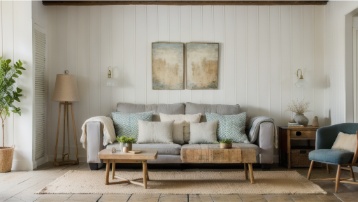
Hiring an interior designer costs anywhere from $150 to $500 per hour, with full-room redesigns running into the thousands. For most people, that\'s not in the budget — which is why the DIY redesign has become a legitimate skill worth developing. Done with intention and the right tools, a self-directed redesign can produce results that rival professional work.Step 1: Photograph EverythingBefore you change anything, photograph the room thoroughly. Take photos from every corner, from the doorway, and from standing height as well as seated height. These photos serve multiple purposes: they're your baseline for comparison, they're what you'll upload to an AI room design tool for visualization, and they force you to see the room with fresh eyes. Photographs reveal things you stop noticing when you live with them — the awkward gap between the sofa and the wall, the lamp that's three inches too short, the rug that's clearly the wrong size.Step 2: Assess What Works and What Doesn'tWith photos in hand, make two lists. What's working: pieces you genuinely love, things in good condition, items with sentimental value, anything that defines the style you want to keep. What's not working: pieces that feel wrong, things that are damaged, items you keep rearranging hoping they'll work somewhere, anything you bought without a plan and regret.Be honest. The not-working list is money you've already spent — keeping those pieces because you spent money on them is the sunk cost fallacy in action, and it's the main reason redesigns fail. If a piece doesn't belong in the room you want, it needs to go.Step 3: Define the Style You're Designing TowardA redesign without a style direction is just rearranging. You need to know what you're designing toward before you start making changes. If you're not sure, a style quiz is the fastest path to clarity. AI Room Decor's 60-second quiz identifies your design preferences and suggests the style language that fits you — which means every subsequent decision has a filter.Once you have a style direction, collect 5 to 10 reference images that represent it well. These become your compass. When you're unsure about a purchase or a color choice, you check it against your references.Step 4: Create a Mood Board
A mood board is a visual collection of the colors, textures, furniture shapes, and materials that will define the redesigned room. It doesn't have to be elaborate — a folder of saved images works fine. What it does is force you to notice whether the elements you're drawn to actually work together, or whether you've pulled from six different design directions that will clash in practice.Your mood board should include: your dominant wall color or material, your primary textile color (usually the sofa or bedding), your secondary accent color, your dominant material (wood, metal, stone, linen), and the general furniture silhouette you're working toward.Step 5: Use AI Room Design as the Bridge Between Mood Board and ExecutionHere's where the modern redesign process diverges significantly from the old approach. Previously, the gap between "mood board" and "final room" required either hiring a designer or making expensive guesses. Now, AI room design tools close that gap almost entirely.Upload your room photo to AI Room Decor, select the style that matches your mood board direction, and receive multiple redesign variations of your actual room. These aren't generic room renders — they're based on your specific space, your specific proportions, your specific windows and walls. The output shows you what your room would look like redesigned in the style you've chosen, with realistic furniture arrangements and color applications.This step is where most DIY redesigns used to fail. People would execute a plan based on a mood board only to discover that what looked beautiful in someone else's room looked completely wrong in theirs. AI visualization catches those mismatches before anything is purchased.Step 6: Plan the LayoutLayout determines how a room feels to be in, not just how it looks in photos. The key layout principle: arrange furniture for conversation https://blogfreely.net/delodoqwnj/interior-design-inspiration-how-to-find-your-style-and-actually-execute-it-j2z0 and flow, not for showcasing the furniture. Most beginners push all furniture against the walls, which creates a waiting room effect. Floating furniture — sofas and chairs pulled away from walls and arranged around a central focal point — creates intimacy and makes rooms feel larger.Sketch your layout on paper or use a free room planning tool. Mark the focal point (fireplace, TV, window view, or a statement piece of art), then arrange seating to face it. Ensure traffic paths are at least 36 inches wide. Keep conversational groupings close enough that people don't have to raise their voices — no more than 8 feet between facing seats.Step 7: Source Furniture in PhasesDon't buy everything at once. Phase your purchases over weeks or months, starting with the anchor piece. Get that right first. Live with it. Then add secondary furniture. Then textiles. Then lighting. Then accessories. This paced approach means each piece is chosen in relation to what's already in the room — not in relation to what you imagine will be there.Budget allocation for a room redesign: roughly 40% on the anchor piece, 20% on the rug, 15% on lighting, 15% on secondary furniture, and 10% on accessories and textiles. Most people invert this ratio and spend heavily on accessories while underinvesting in the foundational pieces — then wonder why the room feels incoherent.Step 8: Execute in Phases, Live in Each PhaseThe most important redesign discipline is patience. A room that comes together over three months of intentional purchases is almost always better than a room assembled in a single weekend shopping trip. Each phase teaches you something about the space that improves the next decision.A complete DIY redesign — done right — results in a room that reflects your actual taste, fits your actual life, and didn't require a designer. The tools available today, particularly AI room design visualization, have made this more achievable than ever before. The process takes longer than a weekend but costs a fraction of professional fees and produces results you'll actually love living in.