
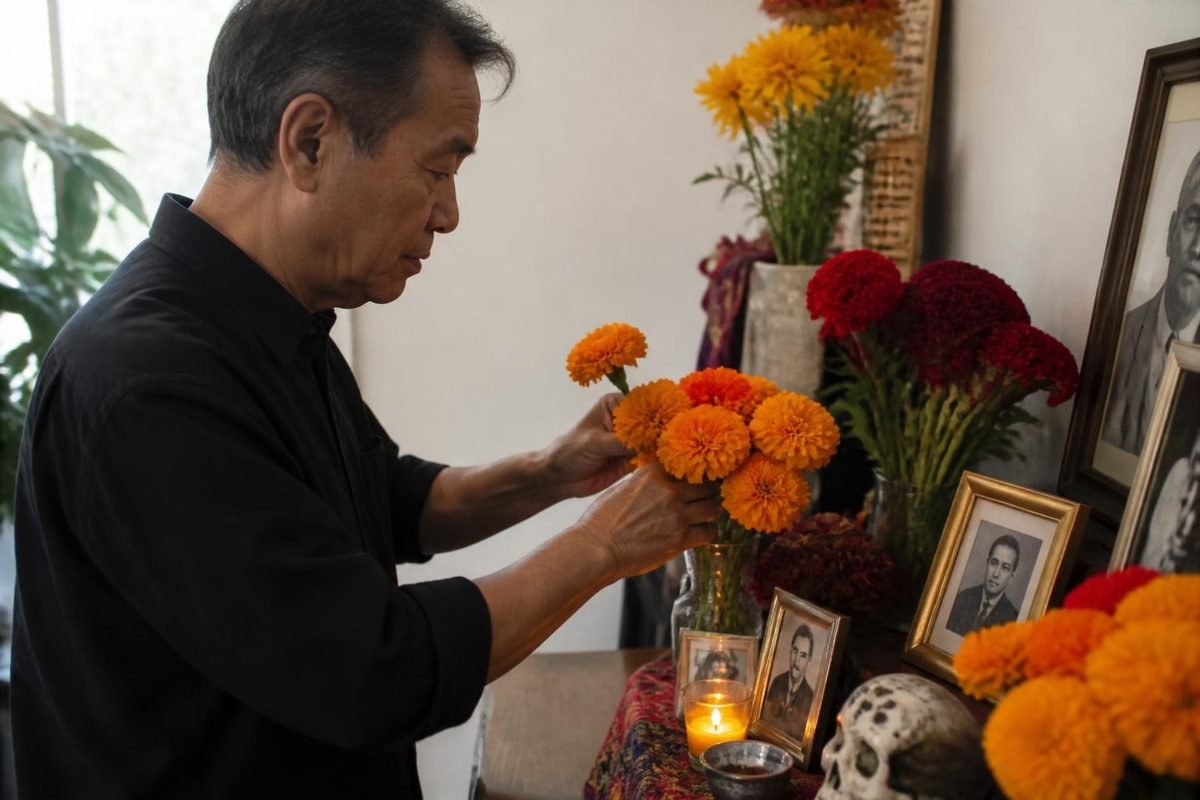
Marigolds, particularly the Mexican variety called cempasúchil, are the flowers most often linked with Day of the Dead altars. Families may also decorate with cockscomb, baby\'s breath, white blooms and other flowers, according to personal and regional customs.
The meaning of marigolds
Cempasúchil is easy to spot by its rounded orange or yellow flower heads, and it has a noticeable fragrance. During Día de Muertos, families place these blooms on ofrendas, or altars, and on graves as a way to honor people who have died.
In some traditions, people scatter marigold petals to create a route toward the altar. Their bright color and scent are believed to guide the spirits of the dead back to their families. A flower arrangement can offer a warm welcome without needing a signpost.
There is more than one way to use the blooms. You can keep the stems whole and arrange them in vases, or remove the petals to form a pathway, border or pattern around the offerings. Either method gives the marigolds' vivid color a central place in the display.
Other blooms for the altar
Marigolds may be the best-known choice, but they often appear alongside other flowers. Depending on what is customary or meaningful to a family, an ofrenda might include:
- Cockscomb: Also called terciopelo in Spanish, it has thick, velvety heads that may be deep red or magenta. Baby's breath: The little white blossoms can fill open spaces around larger flowers. Gladioli: Their tall stems, with flowers arranged along them, can bring extra height to a display on an altar or grave. Chrysanthemums: In some places, these full-headed flowers are offered to the dead and provide another source of color.
Flower choices are not the same in every part of Mexico, and families in other places have their own practices too. A flower loved by the person being remembered can also have a place on the altar.
Ways to place the flowers
Put flowers in containers on the altar, arrange them around photographs or set them at its base. Loose petals can be scattered on the ground, or arranged to trace a cross or another shape.
Flowers share space on an ofrenda with items such as photographs, candles, food and drinks. Leave enough room for the things your family plans to include, and keep both flowers and foliage clear of candle flames.
Picking flowers for an ofrenda
To follow the most widely known floral custom, begin with cempasúchil. Orange or yellow blooms can make a strong focal point, even if the arrangement is small.
If available and significant to you, add cockscomb or white flowers. Fresh blooms are often used, though paper flowers can decorate an altar as well. Your selection can reflect local traditions and the person you are remembering.
Common questions about altar flowers
Do I have to use marigolds?
No. Marigolds have a close association with the holiday, but families create ofrendas in many different ways.
What is the meaning of cempasúchil?
The word comes from Nahuatl and is commonly translated as “flower of twenty petals.”
Is a favorite flower appropriate?
Yes. An ofrenda is a way to remember someone, so a flower that person liked can be a personal offering.
Are flowers used on graves too?
Yes. Families may place flowers on graves as well as using them on altars at home.
Worth a look: how to stop flowers wilting