
For centuries, gemstone faceting was defined by patience, steady hands, and years of accumulated experience. While traditional techniques still hold artistic value, the gemstone industry is undergoing a profound transformation driven by advanced faceting machines. These technologies are redefining how gems are cut, evaluated, and brought to market, blending precision engineering with the art of lapidary in ways that were unimaginable only a few decades ago.
One of the most significant changes brought by modern faceting machines is precision. Computer-controlled systems can now calculate optimal facet angles based on a gemstone’s refractive index, crystal structure, and intended design. This level of accuracy allows cutters to maximize brilliance, fire, and scintillation while minimizing material loss. In an industry where small differences in angles can dramatically affect value, such consistency has become a competitive advantage.
Automation has also improved efficiency. Traditional faceting is time-intensive, often requiring repeated adjustments and inspections. Advanced machines streamline this process by automating angle setting, depth control, and rotational indexing. Cutters can reproduce complex designs with near-perfect repeatability, enabling higher output without sacrificing quality. This has made finely cut gemstones more accessible, even beyond the luxury segment.
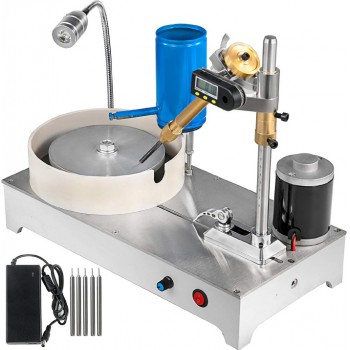
Digital integration is another game-changing factor. Many modern faceting systems are paired with design software that allows cutters to visualize a gemstone before any material is removed. Virtual modeling helps predict light behavior and identify potential flaws inside the stone. By planning the cut in advance, professionals can make informed decisions that reduce waste and improve yield, especially when working with rare or expensive rough stones.
Advanced jewelry faceting machines are also lowering the barrier to entry for new professionals. While skill and training remain essential, intuitive interfaces and programmable presets make it easier for emerging cutters to achieve professional results. This democratization of technology is expanding the global lapidary community and encouraging innovation in gemstone design.
From a quality control perspective, these machines enhance standardization across the industry. Consistent facet alignment and polish quality make gemstones easier to grade and compare. For jewelers and retailers, this reliability builds trust and simplifies sourcing. For consumers, it translates into gemstones that perform better visually and maintain their appeal under different lighting conditions.
Sustainability is an often-overlooked benefit of advanced faceting technology. By optimizing cuts and reducing unnecessary material loss, modern machines help conserve natural resources. More efficient use of rough stones means fewer gems need to be mined to achieve the same commercial output, supporting more responsible practices within the industry.
In essence, advanced faceting machines are not replacing craftsmanship—they are enhancing it. By combining human creativity with technological precision, they are reshaping the gemstone industry into one that is more efficient, consistent, and innovative. As these tools continue to evolve, they will play a central role in defining the future standards of gemstone quality and design.
Related articles: https://clickandconnectclubs.com/index.php?do=/public/blog/view/id_134303/title_Enhancing-Metal-Texture-and-Thickness-Control/