
Home Decor on a Budget: How to Create a Beautiful Room for Under $500
The assumption that beautiful interior design requires significant financial investment is one of the most persistent myths in home decorating. While certain elements — a quality sofa, a substantial rug — do represent meaningful purchases, a complete room transformation is achievable for under $500 with the right approach, the right sequence, and the use of AI room design to ensure every dollar goes toward something that will actually work.
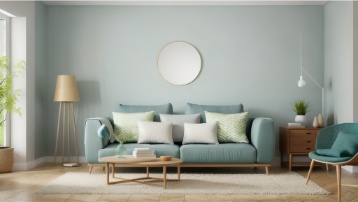
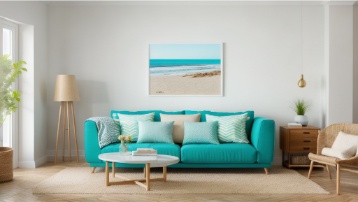
While the room is empty, rearrange. Try floating the furniture away from the walls. Establish a clear focal point. Create a conversational grouping. Most rooms look significantly better after a thoughtful rearrangement than they did before — without spending a dollar.
Use this phase to also use AI room design to visualize what the room could become. Upload a decluttered photo of the room, test several style directions, and identify which one excites you most. This becomes your budget redesign target.
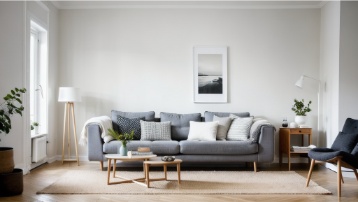
The highest impact-per-dollar category in home decor is textiles. A new throw pillow set ($25-40) in a color that references your target palette changes the visual anchor of a sofa. A single throw blanket ($30-50) adds texture and warmth. These items are inexpensive, immediately impactful, and require no installation.
Candles ($15-25) add the kind of atmospheric warmth that no lighting fixture can replicate. A grouping of three candles at different heights on a tray costs less than $30 and creates a genuine design moment.
A single plant ($10-30) — a monstera, a pothos, a snake plant — adds life and organic texture. Most design styles benefit from at least one significant plant, and they\'re one of the most cost-effective design investments available.
Phase 3 ($100-300): One Art Piece, New Rug, New Lamp
Art is where most people underinvest. A single striking piece of wall art — not a generic canvas from a big-box store, but something that genuinely speaks to your style direction — can be found for $50-150 at thrift stores, estate sales, or print shops. One good piece of art does more for a room than four generic ones.
A rug is the room's foundation, and if you currently have no rug or the wrong one, this is the highest-impact purchase available. Budget rugs from IKEA, Target, and Wayfair start around $80-120 for a 5x8. Get the size right — bigger than you think — and choose a pattern or texture that references your target style.
A floor lamp or table lamp ($50-100) can be found at thrift stores, discount retailers, or clearance sections. Changing a lamp changes the light quality of an entire room. A warm-toned lamp with a fabric shade creates ambiance that overhead lighting cannot.
Phase 4 ($300-500): Anchor Furniture Piece
With a clear budget target and a specific visual reference from your AI room design output, you're now shopping for one piece that moves the room significantly forward. This might be a better coffee table, a secondhand accent chair in the right upholstery, an entry console, or a side table. Shop secondhand first — Facebook Marketplace, Craigslist, thrift stores — where quality pieces regularly appear at 20-30% of retail price.
The discipline of a budget redesign is in the sequencing. The temptation is to buy many inexpensive things across all phases simultaneously. The principle is to complete each phase before starting the next — let the decluttering reveal the room's potential before buying https://airoomdecor.app/blog/natural-elements-interior-design anything, let the textiles change the room before deciding what art to buy, let the art and rug establish the direction before sourcing the anchor piece.
A $500 budget, properly sequenced with AI room design used to validate choices before execution, can produce results that look like significantly more was spent. The key is intention at every step.